
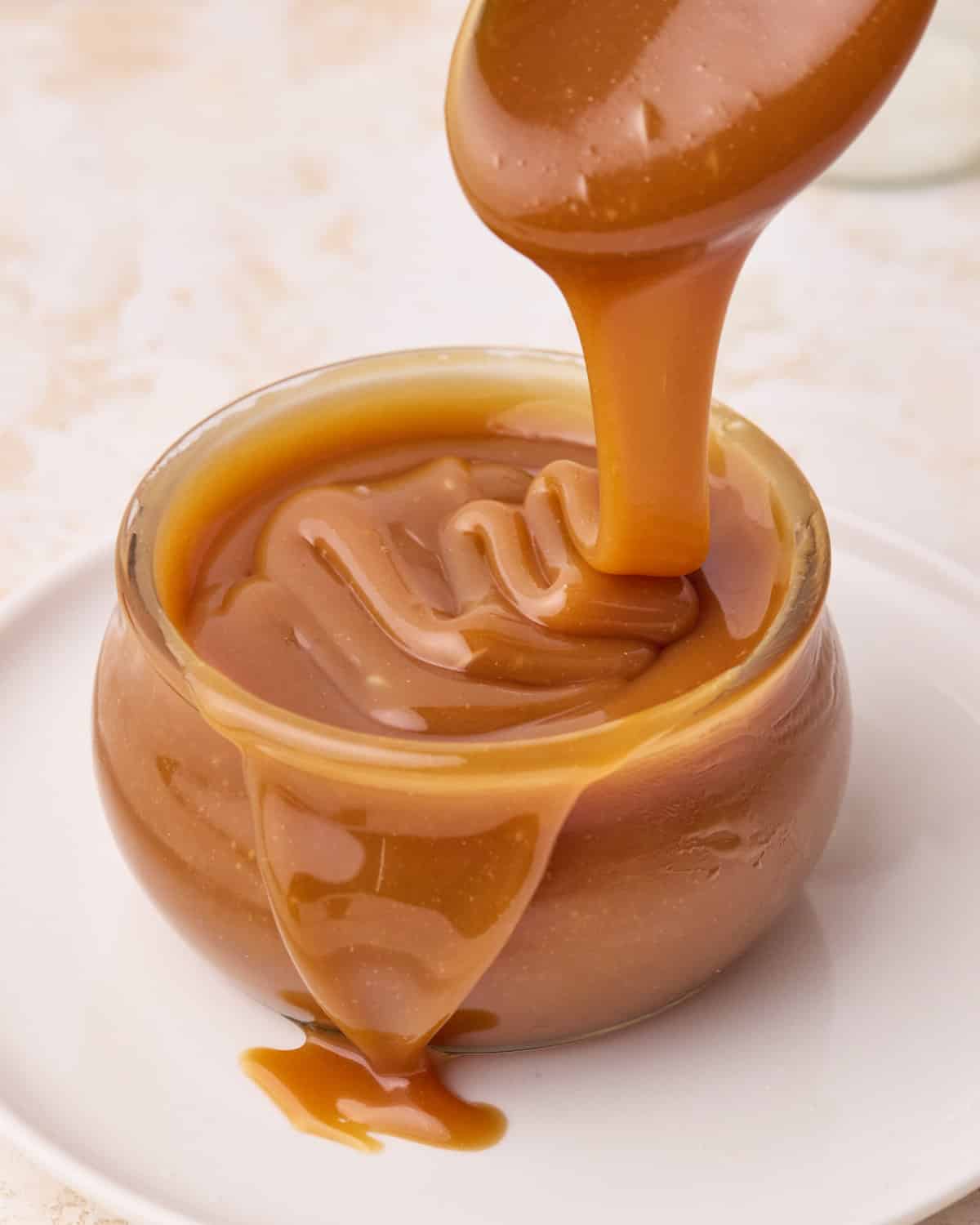
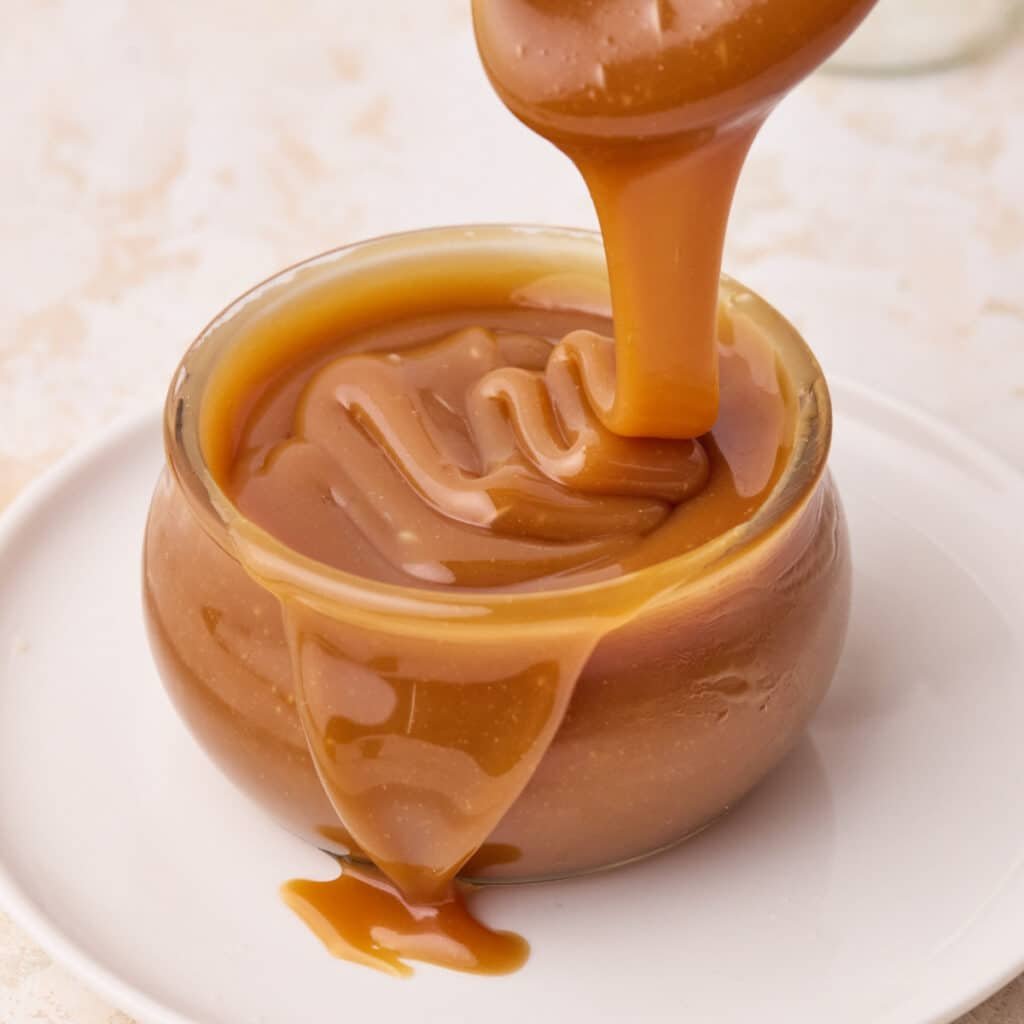
Rich, silky homemade caramel sauce, with every stage explained so you'll know exactly what to look for as it cooks.

Homemade Caramel Recipe Snapshot
Method: The wet caramel method is slower than the dry method, but much more forgiving and foolproof.
Texture: Glossy, pourable caramel that thickens as it cools, but never sets firm.
Best For: Drizzling over desserts, filling cakes, swirling into buttercream, or eating straight from the spoon.
Making caramel is one of those baking skills that sounds way more complicated than it really is. I made caramel hundreds of times during my years running my bakery, and I learned that the trick really has nothing to do with the recipe itself. It's knowing what you're actually looking for.
I use the wet caramel method for this recipe because it's more forgiving than the dry method, giving you a little more time and control as the sugar caramelizes. I'll show you exactly what to watch for at every stage, so you can make rich, buttery caramel sauce with confidence, even if it's your first time.
Jump to:
Ingredients
You'll need 4 simple ingredients to make the perfect caramel.

- Sugar - Stick with regular white granulated sugar for this recipe. It caramelizes predictably and makes it much easier to judge the colour as it cooks. Brown sugar already contains molasses, so harder to judge (plus that's technically butterscotch!)
- Unsalted Butter - Adds a rich, buttery flavor and glossy texture to the caramel sauce.
- Heavy Cream - Use heavy cream, heavy whipping cream, or double cream.
- Corn Syrup - This is optional, but it helps to prevent crystallization and gives a smoother final texture. You can also use another inverted sugar like liquid glucose or golden syrup. qw2a1
- Salt - Even regular caramel needs a touch of salt to balance out the sweetness, but you can also add a little more salt to make a salted caramel version.
See the recipe card for measurements in both cups and grams (though I always recommend using a kitchen scale).
Wet vs Dry Caramel
There are two ways to make caramel: the dry method, where sugar is melted on its own, and the wet method, where it's first dissolved in water.
The dry method is faster, but it is a little trickier to get right, as the sugar can burn quickly and is more prone to clumping and crystals.
For this recipe, I use the wet caramel method because it's more forgiving. Dissolving the sugar first gives you a little more time to watch the colour develop and reduces the risk of crystallization, which gives you the best chance of making a perfectly smooth homemade caramel sauce.
How To Make Caramel
Get ready to become a caramel master! This homemade caramel recipe only has a few simple steps, but there are key details that may seem small that will contribute to its success.
Before You Begin...
- Use the right pan - For best results, use a stainless steel pan. Avoid using nonstick, as it doesn't play nicely with the high temperatures needed for caramel. Even better if it is a light colored pan so you can see the color change clearly.

Make A Sugar Syrup
Add the sugar, cold water, and corn syrup to a stainless steel saucepan. Whisk it together a little to combine, then place the pan over a low heat - don't stir it anymore once it's on the heat.
If you notice any dry spots whilst the sugar heats, you can slowly move the pan in a circular motion to gently swirl the liquid around.
Heat until the mixture is simmering, and let the sugar dissolve - you'll know when this occurs because the mixture will turn clear instead of cloudy, just like with simple syrup.

Boil Sugar Syrup
Once the sugar has dissolved, turn it up to a medium heat and let it bubble - don't stir or swirl it at all after this point.
If you see any sugar crystals forming on the sides of the pan, use a wet pastry brush to 'paint' the inside edges of the pan to melt those crystals back into the syrup before they can cause problems. If they fall in dry, they can start a chain reaction of crystallization.

Caramelize
You'll see the syrup start to thicken, and the bubbles will become slower.
Eventually, it will start to change color - the caramel needs constant attention at this point, as it can go from ready to burnt very quickly.
Once it reaches a deep amber color, remove it from the heat.
If you want to use a thermometer for absolute accuracy, the caramel should reach 340°F / 165°C.

Add Butter
Gradually add in the butter one chunk at a time, whisking until completely melted.
It may froth up a bit if the butter is cold, so I would recommend using it at room temperature.

Whisk in Cream
Slowly pour in the heavy cream whilst whisking until it is all combined. It may also bubble up as you add it, so be careful.
Then, add the salt and whisk it in.

Return to the Heat
Place the pan back on the heat and simmer for 1-2 minutes, whisking constantly, but slowly.
Remove from the heat and let the caramel cool in the pan for 10-15 minutes before transferring it to a jar or heat-safe container. It will still be quite runny, but it will thicken up as it cools.
How It Should Look
In this video, you can see exactly how the caramel sauce should look when it's ready.

Troubleshooting
Here are the common issues people ask about when making homemade caramel:
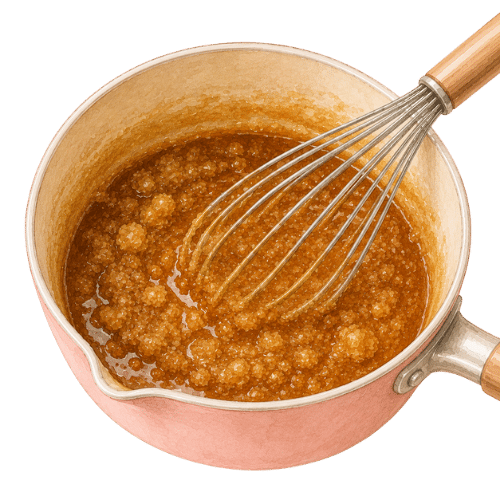
Caramel Crystallized
Most likely cause:
Sugar crystals formed and started a chain reaction.
Fix:
Unfortunately, it can't be saved - see tips below to prevent crystallization.
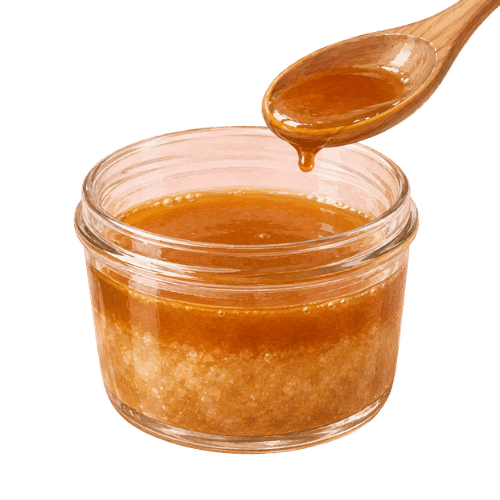
Caramel Separated
Most likely cause:
Butter or cream didn't emulsify properly.
Fix:
Return to a low heat and whisk continuously until it comes back together.
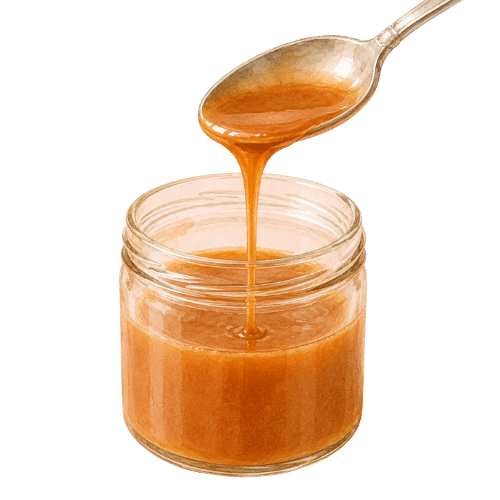
Caramel Too Runny
Most likely cause:
Wasn't cooked long enough after adding the cream.
Fix:
Whisk over low heat and simmer for a few minutes to thicken it up some more.
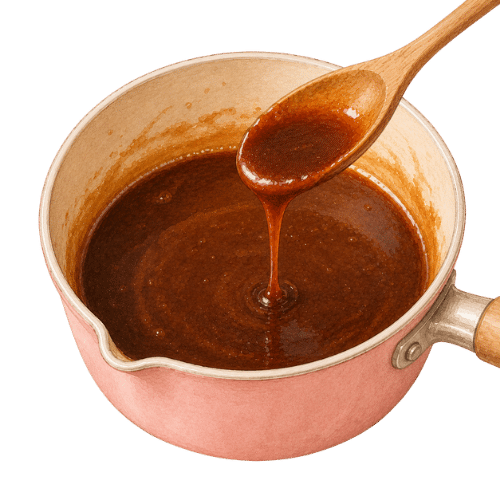
Caramel Tastes Bitter
Most likely cause:
Cooked for too long and sugar started to burn.
Fix:
Remove from the heat as soon as it reaches a deep amber color.
Why Caramel Crystallizes
Sugar crystals can trigger a chain reaction that turns the whole batch grainy. The wet caramel method, avoiding stirring, and brushing down crystals around the edge of the pan all help reduce the risk.

Ways To Use Caramel
Once you've made a batch of homemade caramel, you'll find yourself reaching for it all week. Here are some of my favourite ways to use it:
- Drizzle over desserts - Spoon it over vanilla ice cream, brownies, cheesecake, pancakes, waffles, or warm apple desserts for an instant upgrade.
- Fill cakes and cupcakes - Use it as a filling for layer cakes, cupcakes, donuts, choux buns, or macarons.
- Swirl into buttercream - Mix a few spoonfuls into buttercream to make a smooth caramel frosting.
- Dip fresh fruit - Apple slices, bananas, peaches, and strawberries are all delicious with homemade caramel.
- Enjoy it by the spoonful - I won't judge!
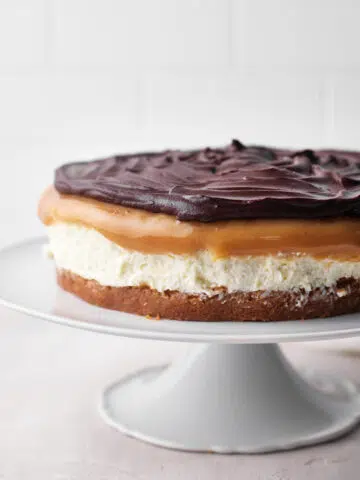
Recipes That Use Caramel


Storage
Store your lovely caramel in the fridge in a jar or an airtight container for up to 2 weeks. Bring it up to room temperature or reheat gently before using.
FAQ
If you have a question about this recipe that isn't answered here, please write it in the comment section and I will get back to you as soon as I can.
The end consistency of caramel depends on how it is cooked. If you want a caramel that will harden, heat the sugar to the hard-ball stage and don't add any additional ingredients such as butter or cream. This is the method used in my floating island dessert recipe, and it's the same process used for the topping of crème brûlée.
Sugar that is only heated to the soft-ball or firm ball stage will not harden, and adding ingredients like butter and cream will help it to maintain a soft, silky consistency once it has set.
No! This is probably the most important step of the entire process. Stirring the caramel whilst it is heating can cause sugar crystals to form, triggering crystallization, which will leave you with grainy caramel. Let it bubble undisturbed for the best texture.
It takes about 10-15 minutes to make caramel if you're using the wet method, like this recipe.
Caramel is made by heating sugar until it melts and browns, developing a rich, toasty, sweet taste - it is sometimes mixed with butter or cream to make caramel sauces or candies.
Dulce de Leche, on the other hand, is made by heating sweetened milk (condensed milk) until it thickens and turns golden brown through a process called the Maillard reaction (the same thing that happens when you make brown butter at home).
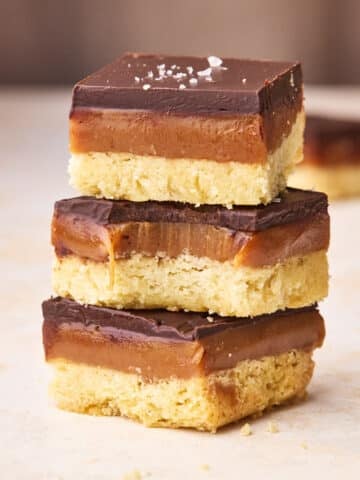
Caramel Desserts
If you love caramel, try some of these other caramel dessert recipes:
Homemade Caramel Recipe
Ingredients
- 200 g (1 cup) Granulated Sugar (Caster sugar)
- 60 ml (¼ cup) Water
- 86 g (¾ stick) Unsalted Butter (room temperature)
- 120 ml (½ cup) Heavy Cream (Double Cream) room temperature)
- 1 tablespoon Corn Syrup (or liquid glucose, or golden syrup)
- ½ teaspoon Salt
Equipment
- Stainless Steel Sauce pan (dont use non-stick)
Instructions
- Add the sugar, water, and corn syrup to a stainless steel saucepan. Whisk together briefly to combine, then place over low heat.200 g (1 cup) Granulated Sugar, 60 ml (¼ cup) Water, 1 tbsp Corn Syrup
- Don't stir it anymore once it's on the heat. If you have any dry spots, you can slowly move the pan in a circular motion to gently swirl the liquid. Heat until it is simmering and the sugar has dissolved - you'll know because the mixture will turn clear instead of cloudy, just like with simple syrup.
- Once the sugar has dissolved, turn the heat up to medium and let it bubble - don't stir or swirl it at all after this point. If you notice any sugar crystals forming on the side of the pan, you can use a pastry brush dipped in water to 'paint' them with water so they slide back into the caramel in a liquid state.
- You'll see the syrup start to thicken, and the bubbles will become slower. Eventually, it will start to change color - don't take your eyes off of it at this point, as it can go from ready to burnt very quickly. Once it reaches a deep amber color, remove it from the heat. If you want to use a thermometer for absolute accuracy, caramel should reach 340°F / 165°C.
- Add the butter, one chunk at a time, whisking until melted. It may froth up a bit if the butter is cold.86 g (¾ stick) Unsalted Butter
- Slowly pour in the heavy cream while whisking until it is all incorporated. It may also bubble up as you add it, so be careful. Then add the salt and whisk it in.120 ml (½ cup) Heavy Cream, ½ tsp Salt
- Return the pan to the heat and simmer for 1-2 minutes, whisking constantly, but slowly.
- Remove from the heat and let the caramel cool in the pan for 10-15 minutes before transferring to a jar or heat-safe container. It will still be quite runny, but it will thicken as it cools.


Piper Penny says
To make more than one cup of caramel, should the ingredients be doubled or tripled?
Chris says
I made this recipe and as a novice baker, I found it really easy to follow. You provided such detailed information so I felt confident I could make this. It turned out great and my family was impressed I could make such a thing. I have saved some and will try it out with your caramel cheesecake recipe.