
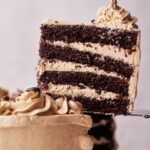
Chocolate Espresso Cake that actually tastes like coffee - not just chocolate cake with a hint of it! Moist mocha cake stacked with silky coffee buttercream.
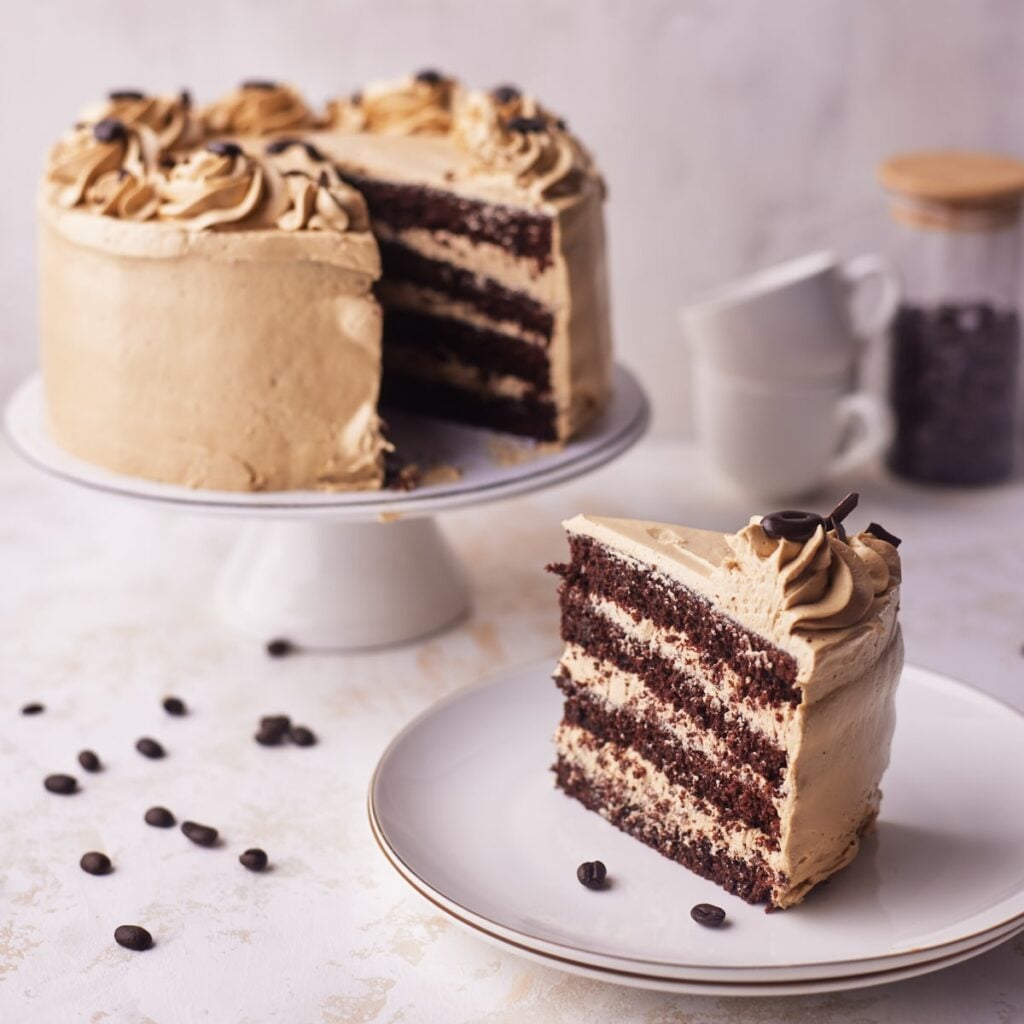
Quick Look: Chocolate Espresso Cake
Rich mocha cake filled with silky espresso buttercream frosting.
☆ Why make THIS version? This recipe uses an espresso-flavored condensed milk buttercream with no powdered sugar, which makes a super silky, less sweet frosting that lets the coffee flavor really shine.
SUMMARIZE AND SAVE THIS POST ON
This chocolate espresso cake is what my husband requests for his birthday every year. It's rich, moist, and deeply flavourful. As a coffee lover, this is his favorite because the espresso comes through clearly in both the cake and the frosting.
The mocha cake is filled and frosted with silky espresso buttercream that's simple, smooth, and actually tastes like real espresso (no artificial coffee flavouring here).
Reader Review:
This cake and the frosting came out beautifully! I made it for Mother's Day and it was perfect. Thank you so much for this wonderful recipe! We love it and plan to make again!
⭐⭐⭐⭐⭐ - Clarissa
Why This Recipe Works
- Espresso powder is used in both the cake batter and the frosting to give a strong coffee flavor without messing up the consistency.
- The chocolate cake uses oil instead of butter for a soft crumb that stays moist for days.
- Hot water is mixed into the cake batter at the end to dissolve the espresso powder and bloom the cocoa powder for a richer flavor.
Jump to:
Key Ingredients
This chocolate espresso cake recipe uses my classic chocolate cake as a base layer, then adds in espresso powder to turn it into a mocha cake.
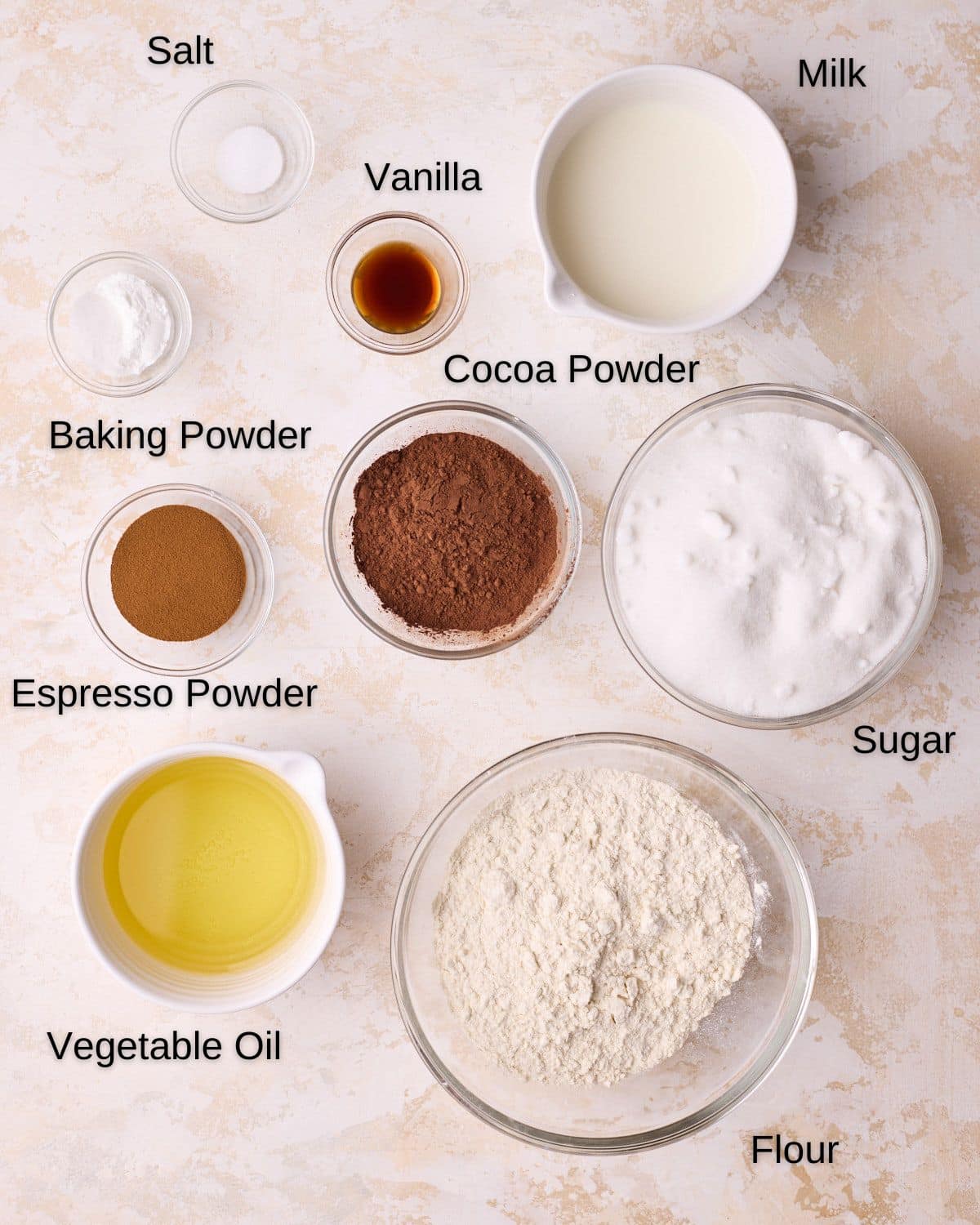
- Cocoa Powder - Dutch-processed cocoa powder gives the cake its deep color and smooth chocolate flavor.
- Oil - Using oil instead of butter keeps the cake moist. You can use any neutral oil; I like to use vegetable oil.
- Espresso Powder - Use a fine, soluble espresso powder or instant espresso - not ground coffee or espresso beans. It should dissolve completely in hot water.
- Condensed Milk - This is for the frosting. Be sure to choose sweetened condensed milk and not evaporated milk, which can look similar.
- Butter - For the glossy coffee buttercream. It's best to use unsalted butter, and it's essential that it's room temperature before you begin whisking it.
See the recipe card for measurements in both grams and cups (though I always recommend using a kitchen scale).
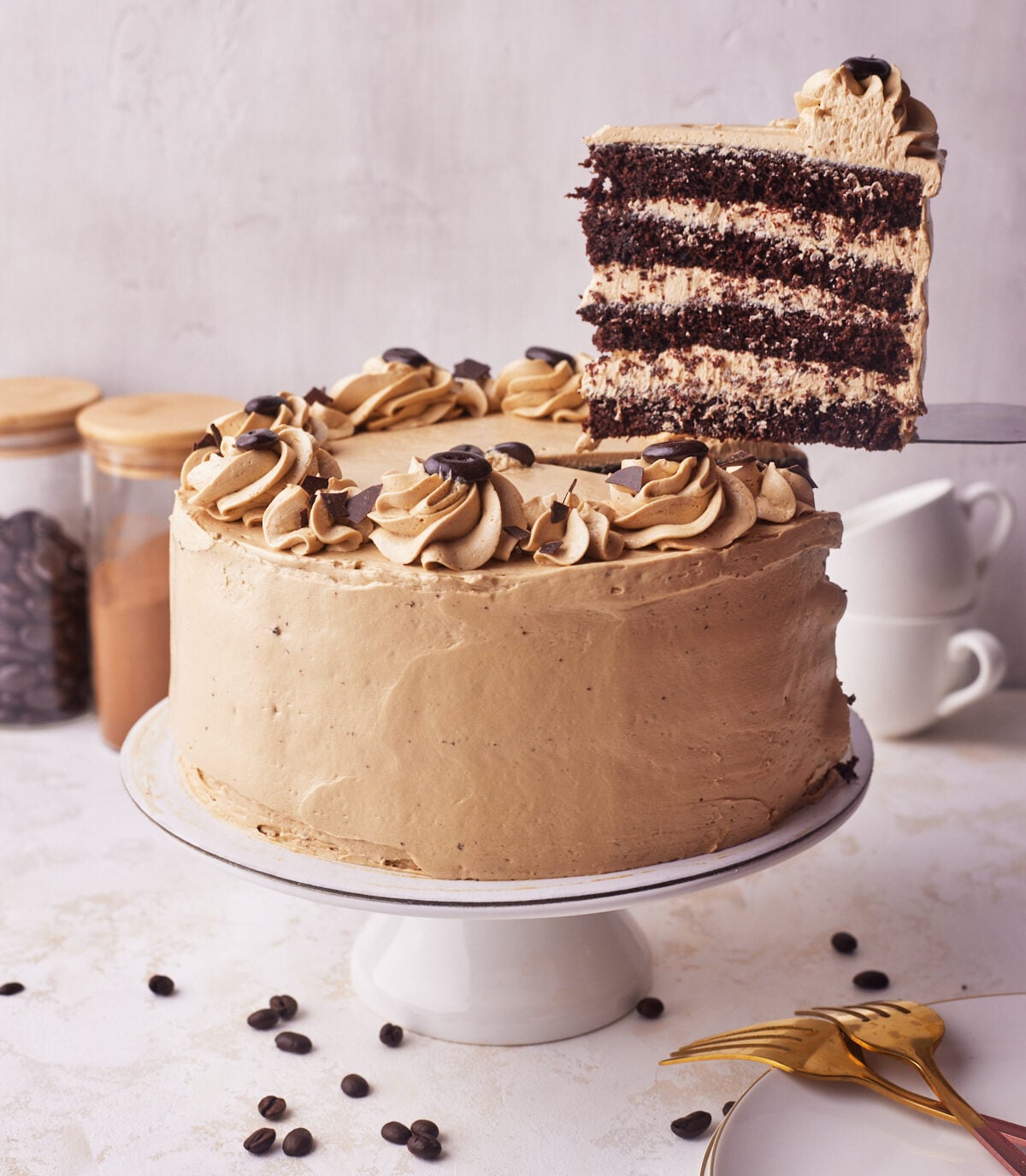
How to Make Chocolate Espresso Cake
There are two components to this cake: the chocolate espresso cake layers and the espresso Russian buttercream. Make the cakes first, then prepare the buttercream while they cool.
Make The Mocha Cake
This espresso chocolate cake recipe is incredibly easy to make and will take just a few minutes to prepare the batter. You can add more espresso powder if you would like an even stronger coffee flavor in your mocha cake.
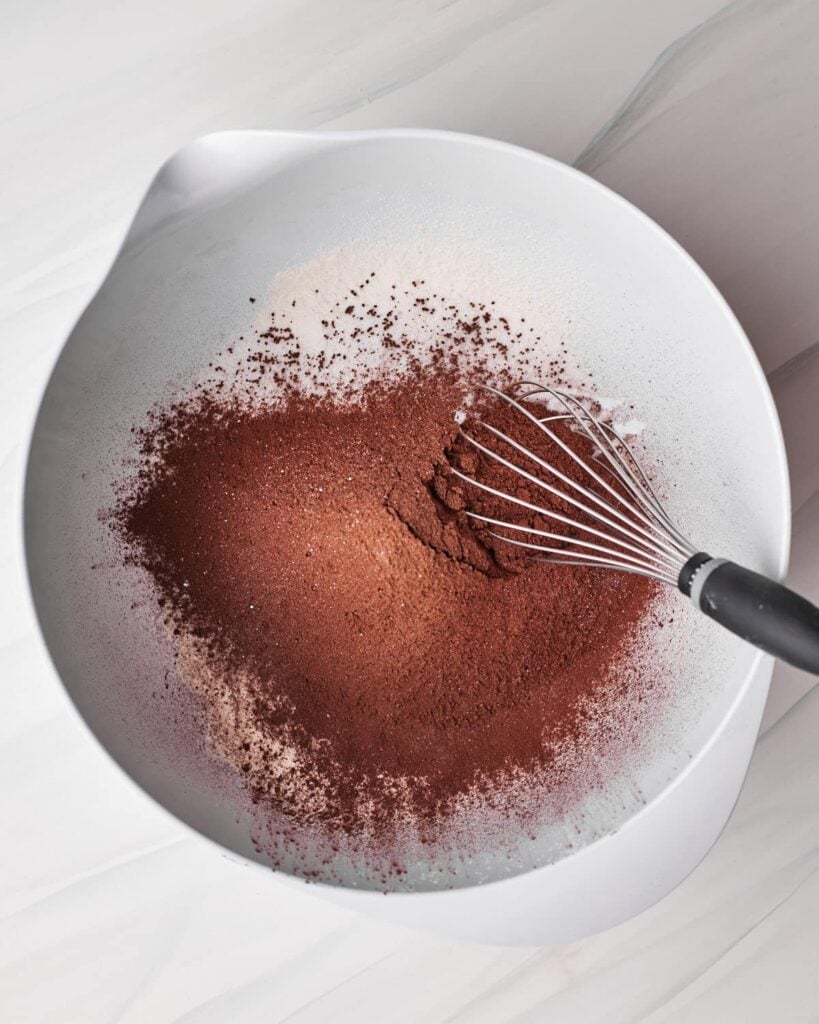
Mix Dry Ingredients
Preheat the oven to 350°F / 180°C (160° fan) and grease two 8-inch cake pans.
Sift the flour, sugar, cocoa powder, baking powder, and salt in a large bowl and combine.
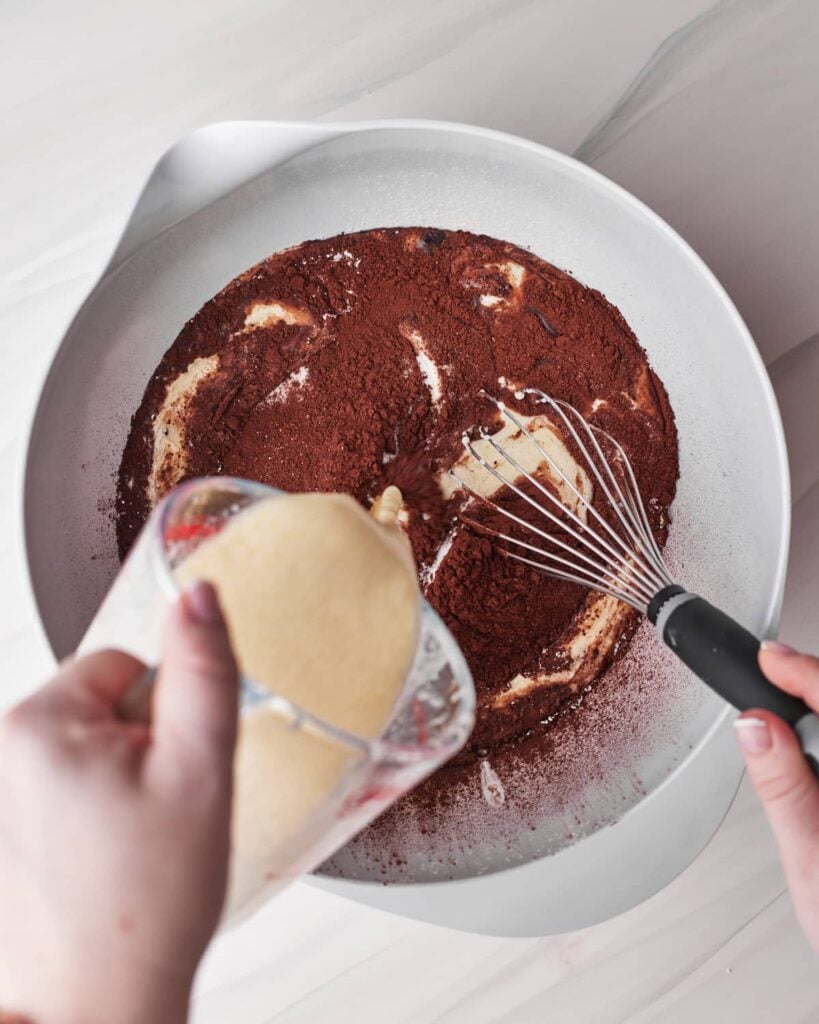
Add Wet Ingredients
In a separate bowl or jug, whisk together the eggs, vegetable oil, milk and vanilla.
Pour the wet ingredients into the dry ingredients and whisk gently until combined, scraping the bottom and sides of the bowl to catch any pockets of flour.
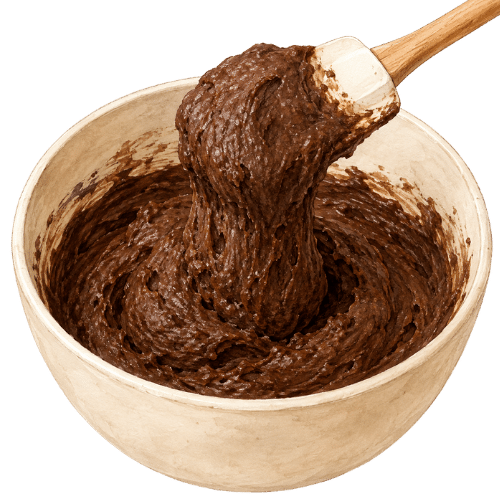
The batter will be quite thick at this stage.
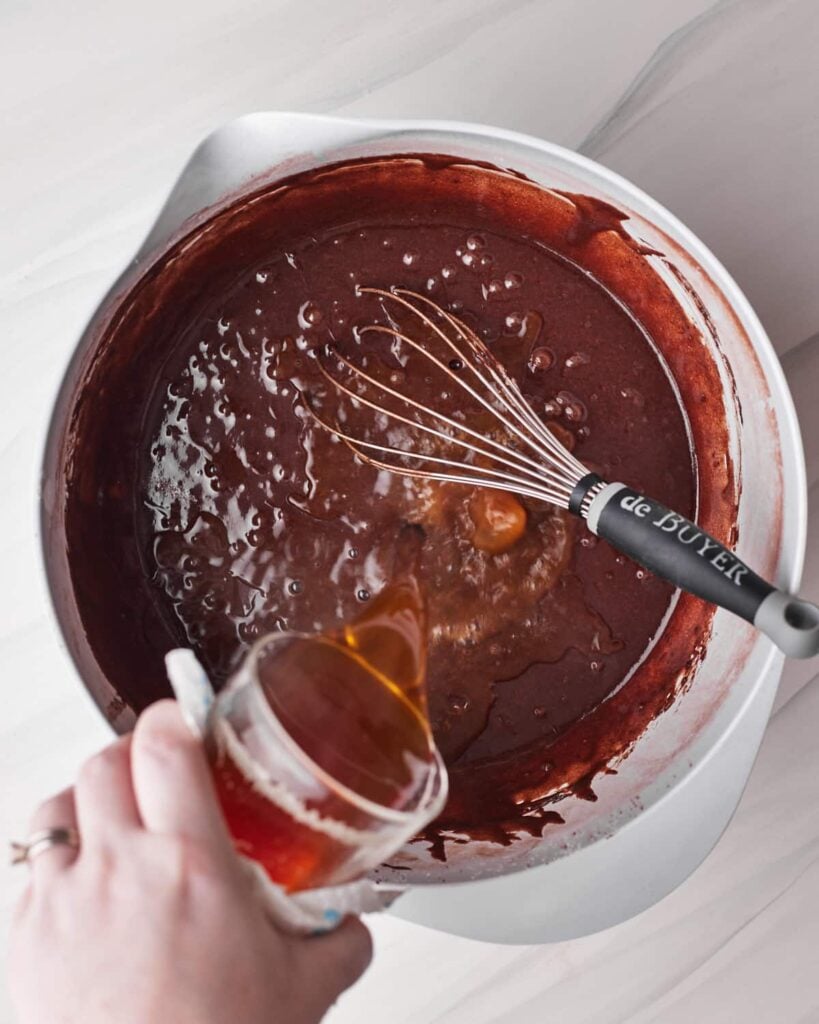
Add Hot Coffee
Dissolve the espresso powder completely in the recently boiled water. Pour it into the batter and whisk just until everything is smooth and evenly combined.
The finished batter should be loose, smooth, and easily pourable.
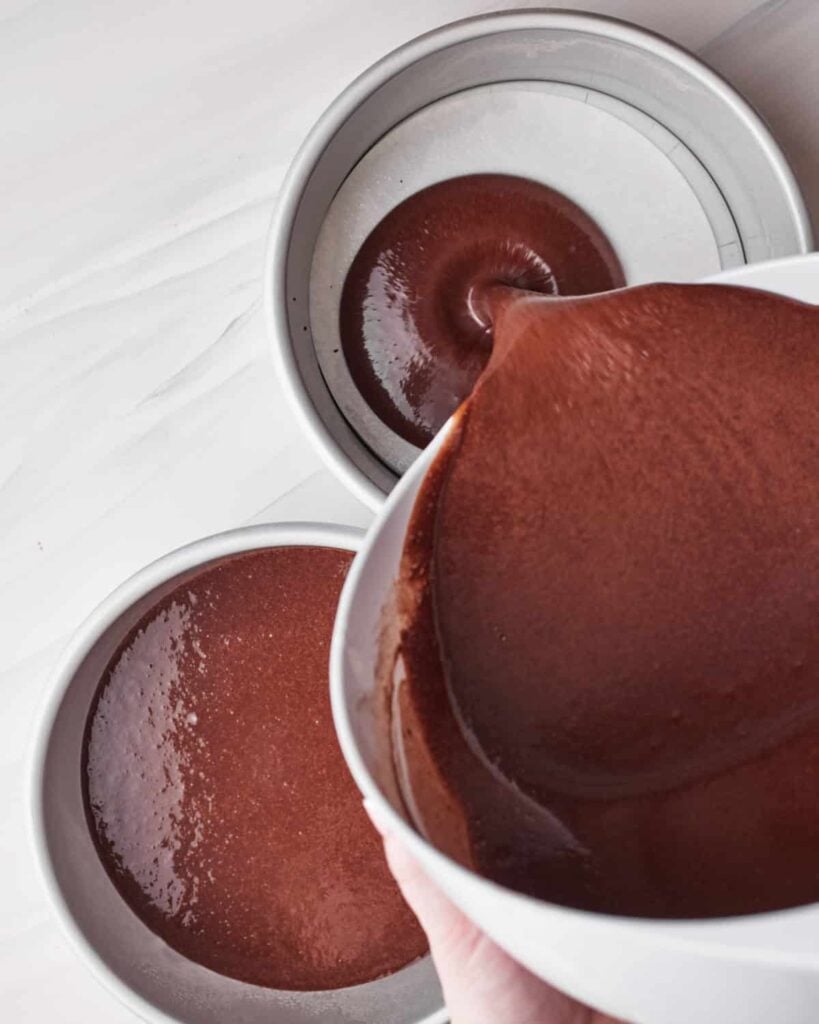
Bake
Divide the batter evenly between the prepared pans and bake for 30-40 minutes. Avoid opening the oven before 30 minutes, as the sudden change in temperature can cause the centres to sink.
The cakes are ready when the tops spring back lightly when touched and a toothpick inserted into the centre comes out with a few moist crumbs but no wet batter.
Leave the cakes in their pans for 30 minutes before carefully turning them onto a wire rack to cool completely.
Make The Espresso Buttercream
This is a coffee-flavoured version of my Russian buttercream, made by whipping sweetened condensed milk into butter. For more detailed guidance on the technique, see my complete Russian buttercream recipe.
Before You Begin...
- Let butter come to room temperature - It's super important that the butter is not too cold or too warm. It should be soft enough that you can easily indent it with your finger, but not greasy or melty.
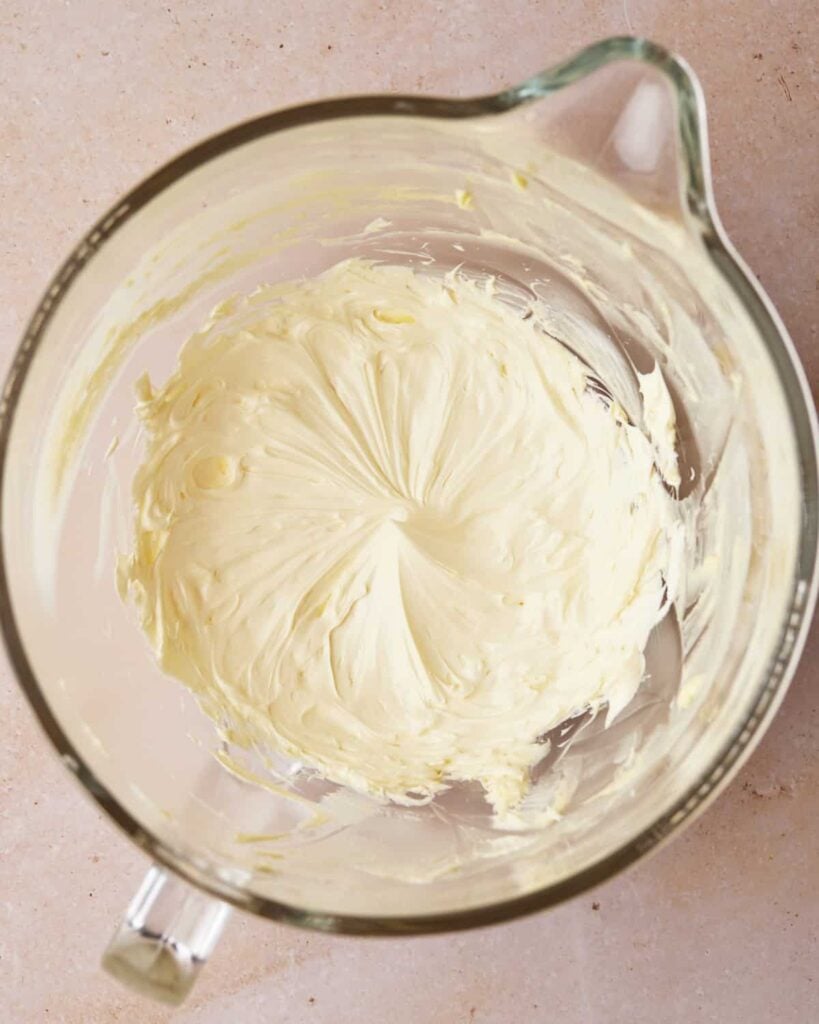
Whip the Butter
Whip the softened butter in a stand mixer with the whisk attachment on high speed for five full minutes, stopping regularly to scrape down the bowl.
It should be pale, creamy and glossy.
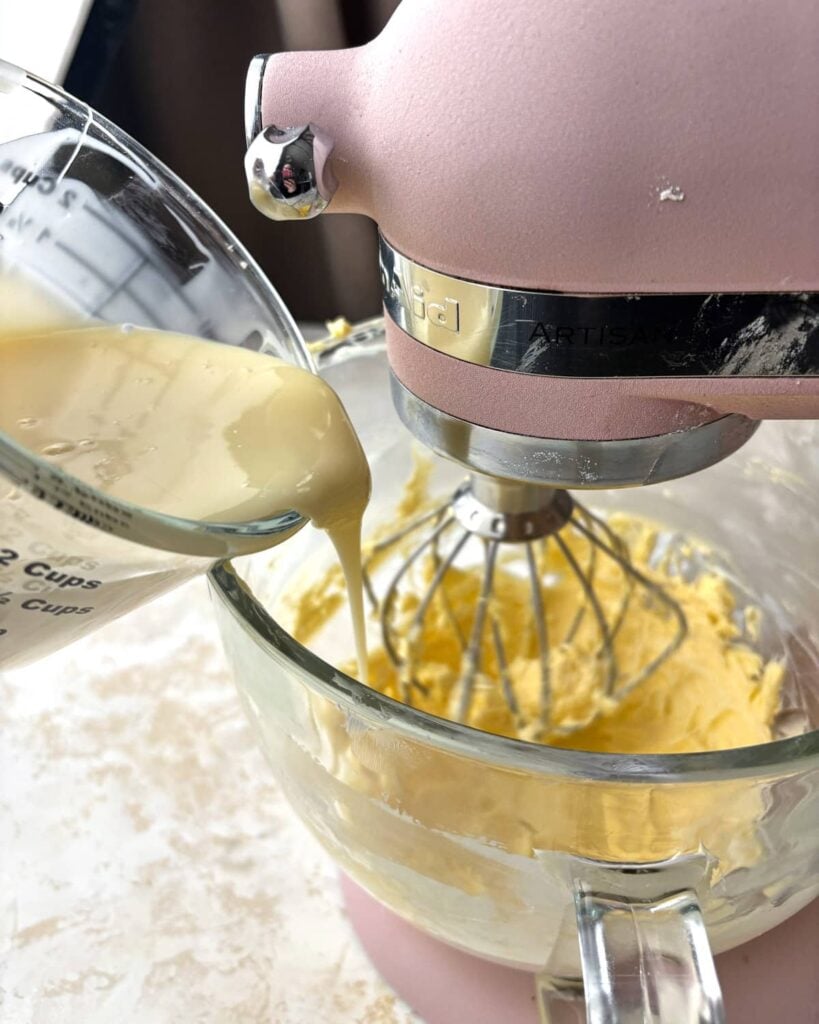
Add Condensed Milk
Turn the mixer down to a medium speed and very gradually drizzle in the condensed milk.
Let it mix and incorporate as you go to avoid splitting.
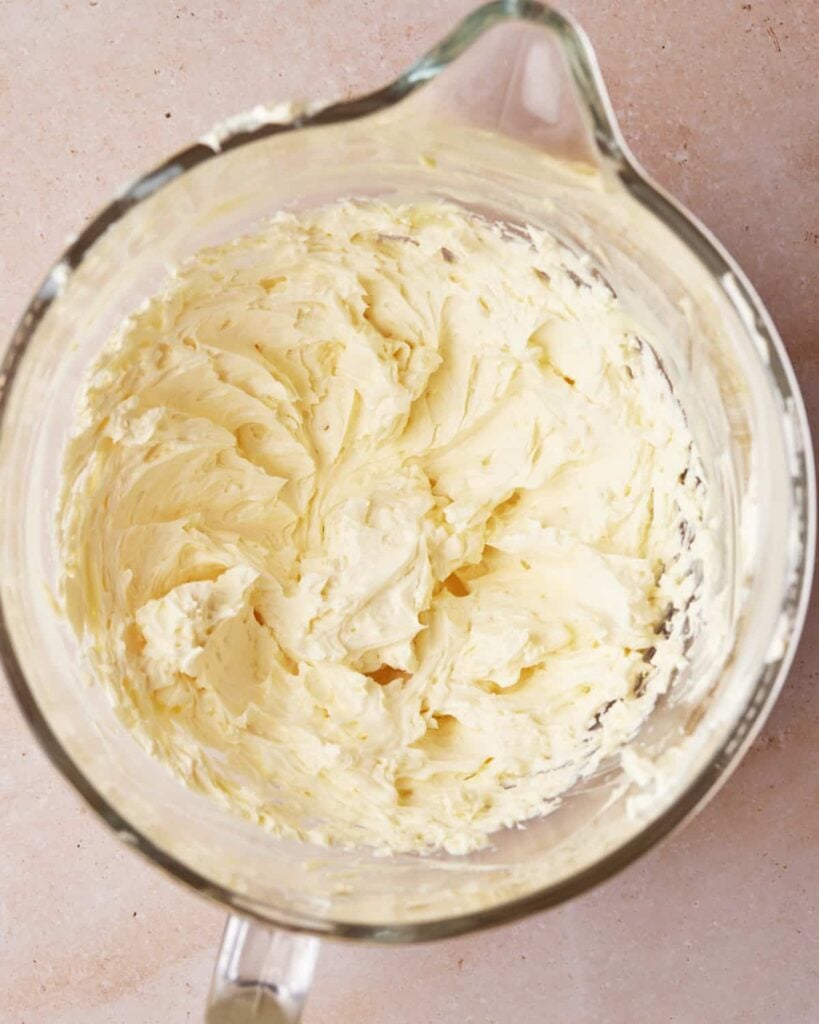
Keep Mixing
Once all the condensed milk is incorporated, turn the mixer back up to high speed and whip for another minute.
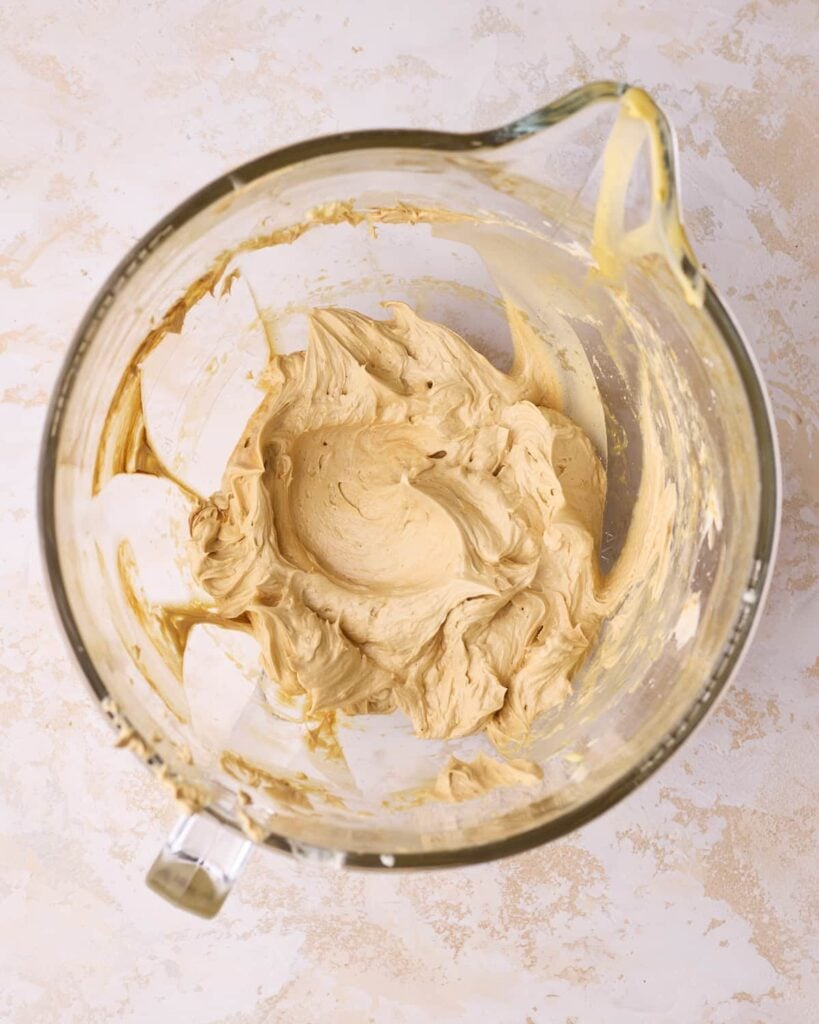
Add Espresso
In a separate small bowl, stir the espresso powder into 1-2 tablespoons of hot water until totally dissolved.
Add the espresso mix to your frosting along with a teaspoon of vanilla and a pinch of salt, then continue to whip the espresso Russian buttercream for a further minute on maximum speed.
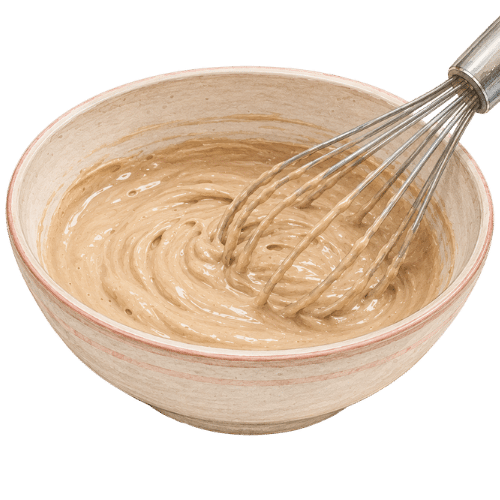
It should be thick, glossy, and a spreadable consistency.
Jules' tip
If your buttercream has lots of visible air bubbles, switch to the paddle attachment and mix on the lowest speed for one minute to smooth it out.
Assemble the Cake
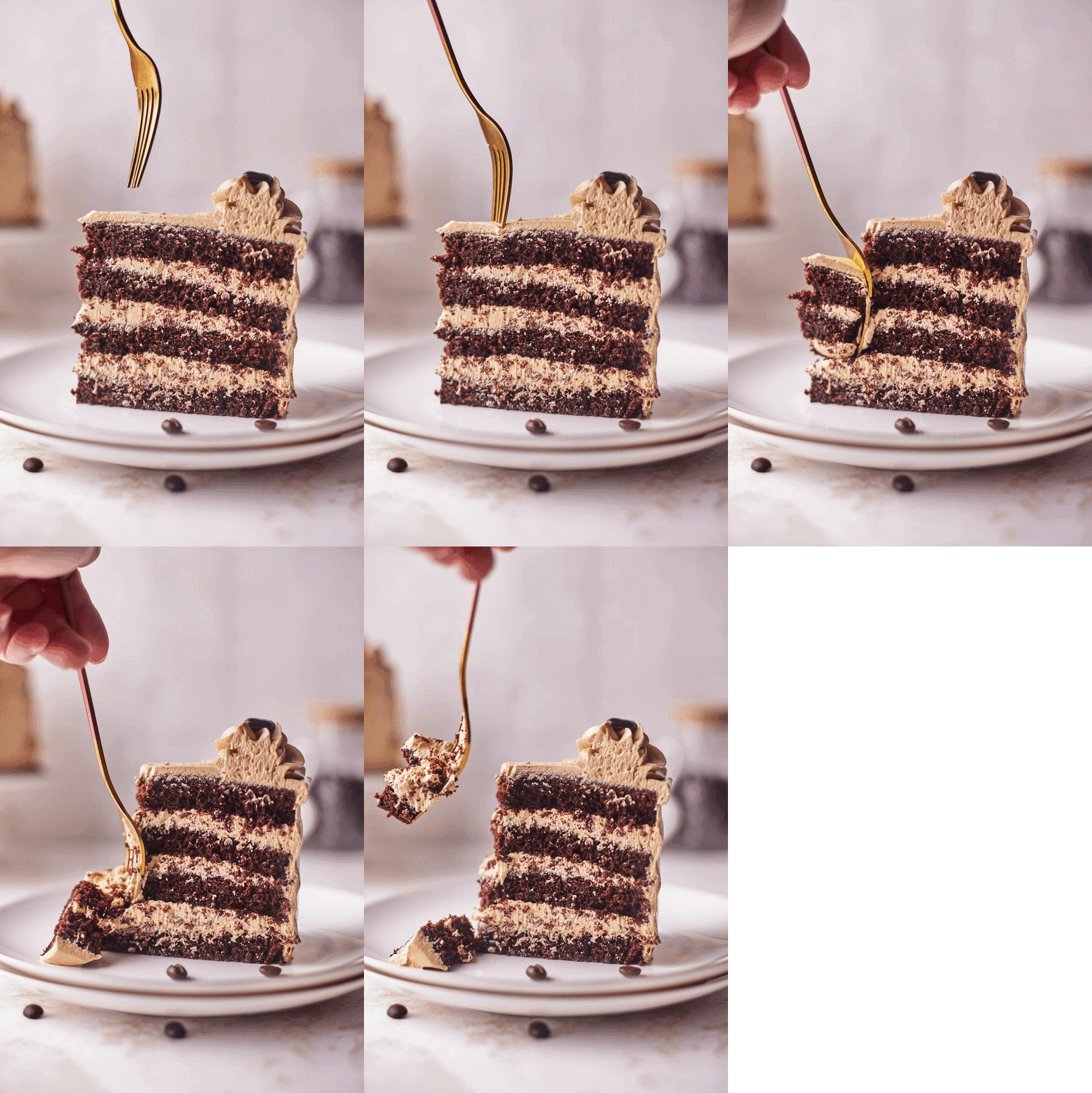
Once completely cool, use a cake leveler or serrated knife to level the cakes if necessary and slice each one horizontally to make four thin layers.
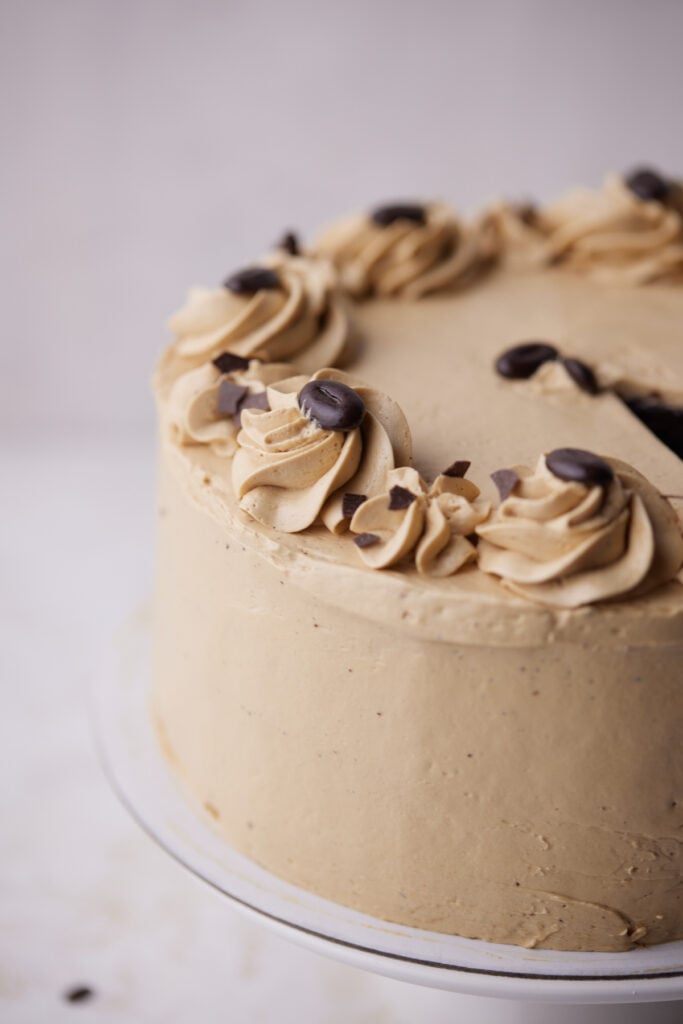
Stack them with espresso buttercream between each layer, then use the remaining buttercream to cover and decorate the cake.
Decorating Idea
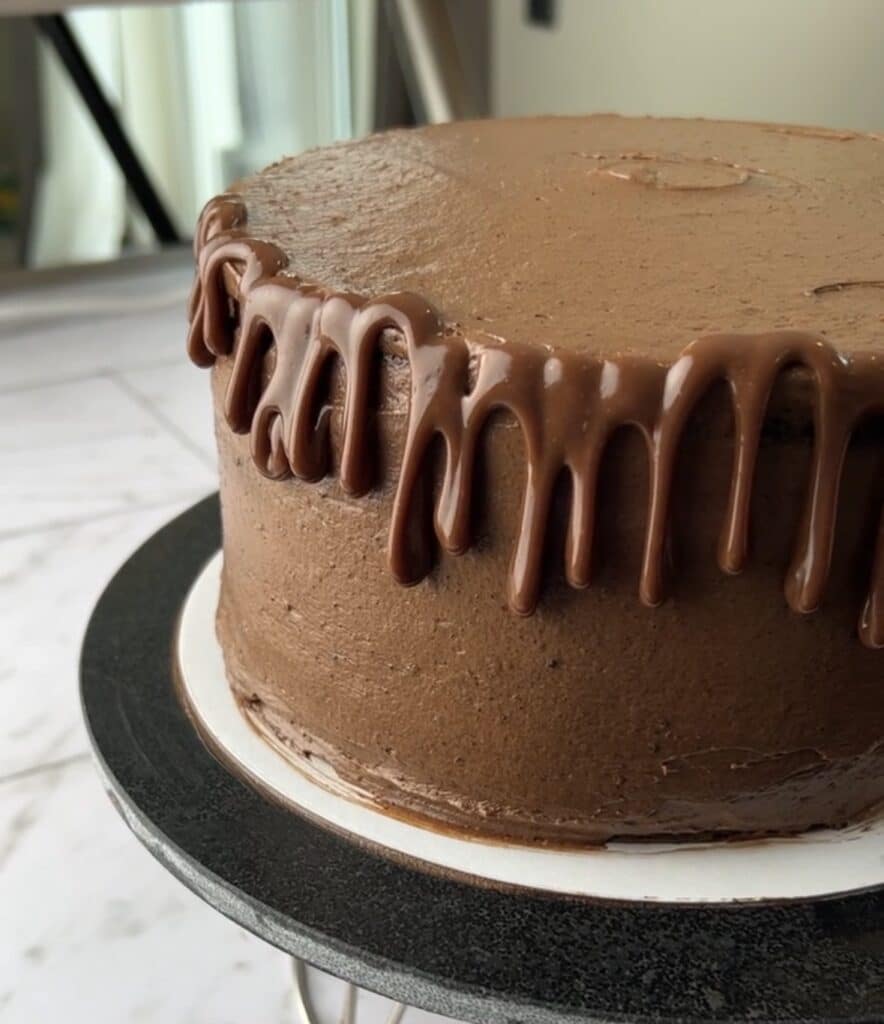
For an extra chocolate finish, chill the frosted cake and add a chocolate ganache drip before decorating the top.

Troubleshooting
If your cake or buttercream isn't turning out as expected, use the troubleshooting tips below to identify the most likely cause and fix it.
Batter Too Thick
Why it happens:
The full amount of water was not added, or the flour/cocoa powder was overmeasured.
What to do:
Use a kitchen scale to weigh all your dry ingredients, and don't skip any of the water.
Buttercream Too Soft
Why it happens:
The butter was too warm before whipping, or there was too much hot water added.
What to do:
Refrigerate for 15 minutes, then try whipping again.
Cake Layers Sank
Why it happens:
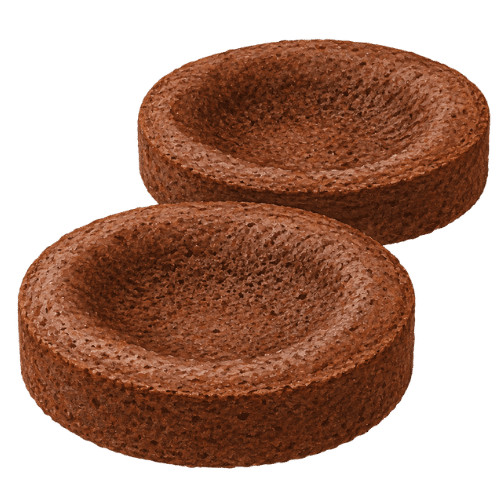
The oven was opened before the centre had set, the cakes were underbaked, or the baking powder was no longer active.
What to do:
Avoid opening the oven before 30 minutes, and bake until a skewer comes out with moist crumbs but no wet batter
Buttercream Curdled
Why it happens:
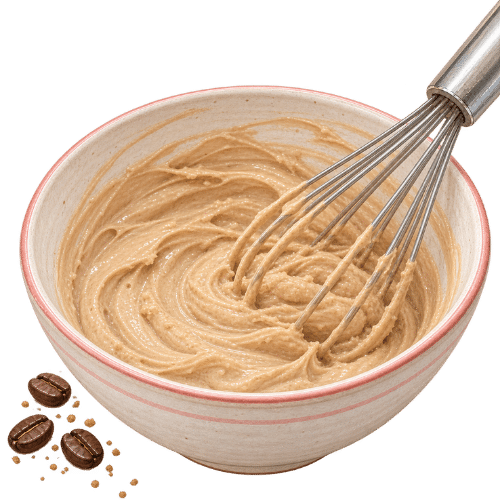
The butter was too cold, or the condensed milk was added too quickly.
What to do:
Gently warm the bowl and whisk until the frosting comes back together into a smooth mixture.
See my buttercream troubleshooting guide about why buttercream splits and how to fix it →
Storage + Make Ahead
Store the finished cake in an airtight container at a cool room temperature for 2-3 days. If your kitchen is particularly warm, refrigerate it and bring it back to room temperature before serving so the cake and buttercream can soften.
The unfrosted cake layers can be made 1-2 days ahead. Once completely cool, wrap them tightly and store at room temperature until you are ready to assemble the cake.
The espresso buttercream can be made up to one week ahead and stored in an airtight container in the fridge. Let it return to room temperature, then rewhip it before using.
The cake layers, finished cake, or individual slices can also be frozen for up to two months. Wrap them well and thaw at room temperature before serving.
Chocolate Espresso Cake FAQs
If you have a question about this recipe that isn't answered here, please write it in the comment section, and I will get back to you as soon as I can.
I don't recommend it. I have experimented with using freshly brewed espresso in baking, but always come back to espresso powder. The problem with fresh espresso is you need much more liquid to achieve the same strength of coffee flavour, which can affect the texture of the cake. Espresso powder gives the concentrated flavour without disrupting the liquid ratio.
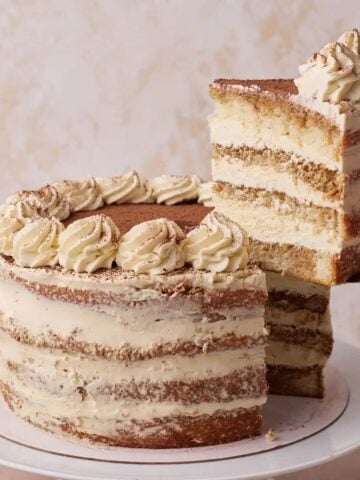
If you'd like a recipe that does use freshly brewed espresso, check out my Tiramisu Cake with espresso soak.
Regular instant coffee granules are quite a bit milder than instant espresso, so it won't give the cake and buttercream the same bold coffee flavour. I recommend using espresso powder if you can find it, but if you are using coffee granules, you may just need to add much. more to get the same flavour.
Yes! You don't have to cut the cake layers in half to make four layers, you can just fill them as two thick layers instead.
Watch How To Make It (Video)
Watch a full video tutorial of exactly how to make this delicious mocha cake:
P.S. Subscribe to my YouTube channel for future video updates!
More Coffee Desserts
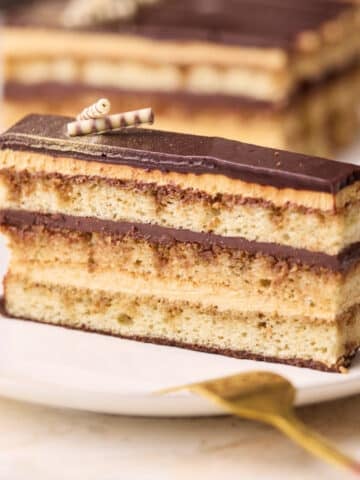
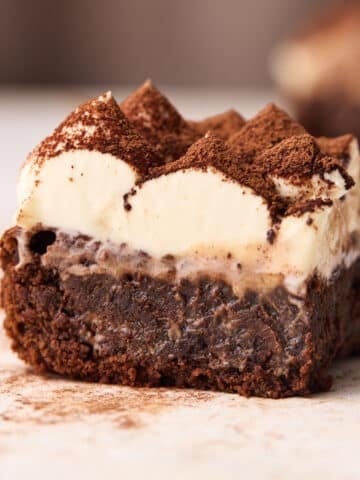
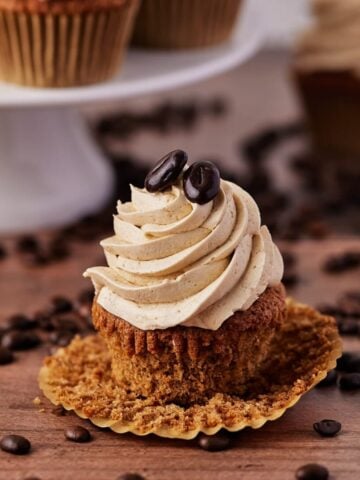
If you love getting your caffeine and sugar fix together, you might enjoy some of these other coffee dessert recipes:
Show Me Your Bakes!
If you tried this recipe, I'd love to know how it turned out in the comments!
Want to share a photo? You can send me a pic or tag @bonni_bakery on Instagram - I love seeing all your creations.

Chocolate Espresso Cake Recipe
Ingredients
- 240 g (2 cups) All-purpose Flour (Plain flour)
- 400 g (2 cups ) Granulated Sugar (Caster sugar)
- 2 teaspoon Baking Powder
- ¾ teaspoon Salt
- 3 Large Eggs room temperature
- 65 g (⅔ cup) Dutch Processed Cocoa Powder
- 120 ml (½ cup) Vegetable Oil
- 120 ml (½ cup) Whole Milk room temperature
- 1 teaspoon Vanilla Extract
- 3 tablespoon Espresso Powder
- 120 ml (½ cup) Hot Water
- 790 g (28 oz) Sweetened Condensed Milk
- 452 g (4 sticks) Unsalted Butter room temperature
- 1 teaspoon Vanilla Extract
- ½ teaspoon Salt
- 3 tablespoon Espresso Powder
- 1 tablespoon Hot Water
Equipment
- Stand Mixer for frosting
Instructions
- Preheat oven to 350°F / 180°C (160° fan-assisted) and grease and line two 8-inch cake pans.
- Sift the dry ingredients (except the espresso powder) into a large bowl and mix together.240 g (2 cups) All-purpose Flour, 400 g (2 cups ) Granulated Sugar, 2 tsp Baking Powder, ¾ tsp Salt, 65 g (⅔ cup) Dutch Processed Cocoa Powder
- Stir the wet ingredients (except the hot water) together in a separate bowl until combined, then pour them into the dry ingredients and whisk gently until combined and free from lumps. Make sure to scrape down the bottom of the bowl. You can use a stand mixer for this if you want, but it's very easy to do with just a bowl and a hand whisk.3 Large Eggs, 120 ml (½ cup) Vegetable Oil, 120 ml (½ cup) Whole Milk, 1 tsp Vanilla Extract
- Stir the espresso powder into a cup of recently boiled water, then add it to the cake batter and mix it in. The batter will be quite runny, don't worry, this is how it's supposed to be!3 tbsp Espresso Powder, 120 ml (½ cup) Hot Water
- Divide cake batter evenly between cake pans and bake for 30 - 40 minutes. The cakes are ready when the centres spring back when gently pressed and a toothpick comes out with a few moist crumbs but no wet batter.
- Whip butter with a whisk attachment on high speed for 5 full minutes until pale and creamy. Make sure to pause periodically to scrape down the sides of the bowl.452 g (4 sticks) Unsalted Butter
- Turn the mixer down to medium-high speed and drizzle in the condensed milk very slowly and gradually, a little at a time, whipping in between additions. It is important not to add the condensed milk too quickly, or it won't emulsify and the buttercream will split.790 g (28 oz) Sweetened Condensed Milk
- Add the vanilla and salt and whip on high speed for a minute. The frosting should be smooth, thick and glossy.½ tsp Salt, 1 tsp Vanilla Extract
- Mix the espresso powder in 1 tablespoon of hot water and add it to the buttercream, whip until combined.3 tbsp Espresso Powder
- Check my Russian Buttercream recipe post for more details on this buttercream and a troubleshooting guide.
- Once the chocolate cakes have completely cooled, use a cake leveler or serrated knife to cut off the tops to make them level. Slice each cake in half horizontally to make four thin layers.
- Put one layer of your cake onto a cake plate or board and add an even layer of coffee buttercream, then add the next layer and repeat until all your layers are used.
- Cover the cake with the remaining buttercream and decorate as desired.
Nutrition
Notes
- Espresso powder: Use a fine, soluble espresso powder or instant espresso - not ground coffee or espresso beans.
- Batter consistency: Once the hot espresso mixture is added, the batter should be thin and pourable. This is normal. If it remains unusually thick, check that the flour was measured accurately.
- Cake pans and layers: This recipe was developed for two 8-inch cake pans. For the four-layer cake shown, slice each cooled cake horizontally in half. Alternatively, leave them whole to make two thicker layers.







Barbara Nettles says
I am making for granddaughter’s birthday you said mix thin. Mine is so thick couldn’t hardly stir. Added bit more milk and oil hoping it works. Where did I go wrong?
Janice says
I made this a while back for a fundraiser dinner and everyone wanted the recipe. It was very good. I thought it was easy to follow instructions and I used the cup measurements not the grams. I did use the mixer for the batter, but used it on low and was very careful not to over mix as I know that can cause a cake not to rise. The frosting is delicious, one of the best I've had. Im making it again tomorrow for a club mtg.