

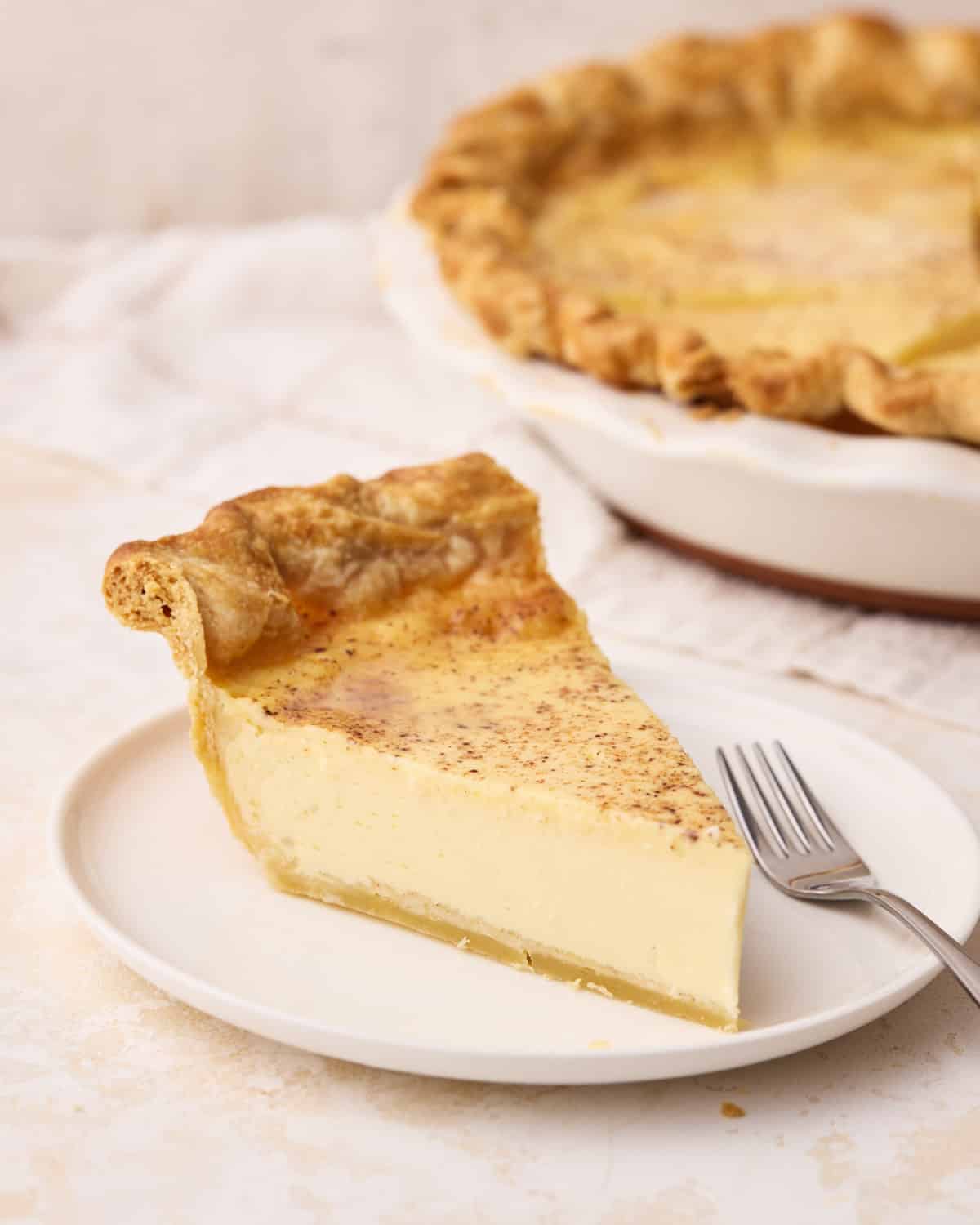
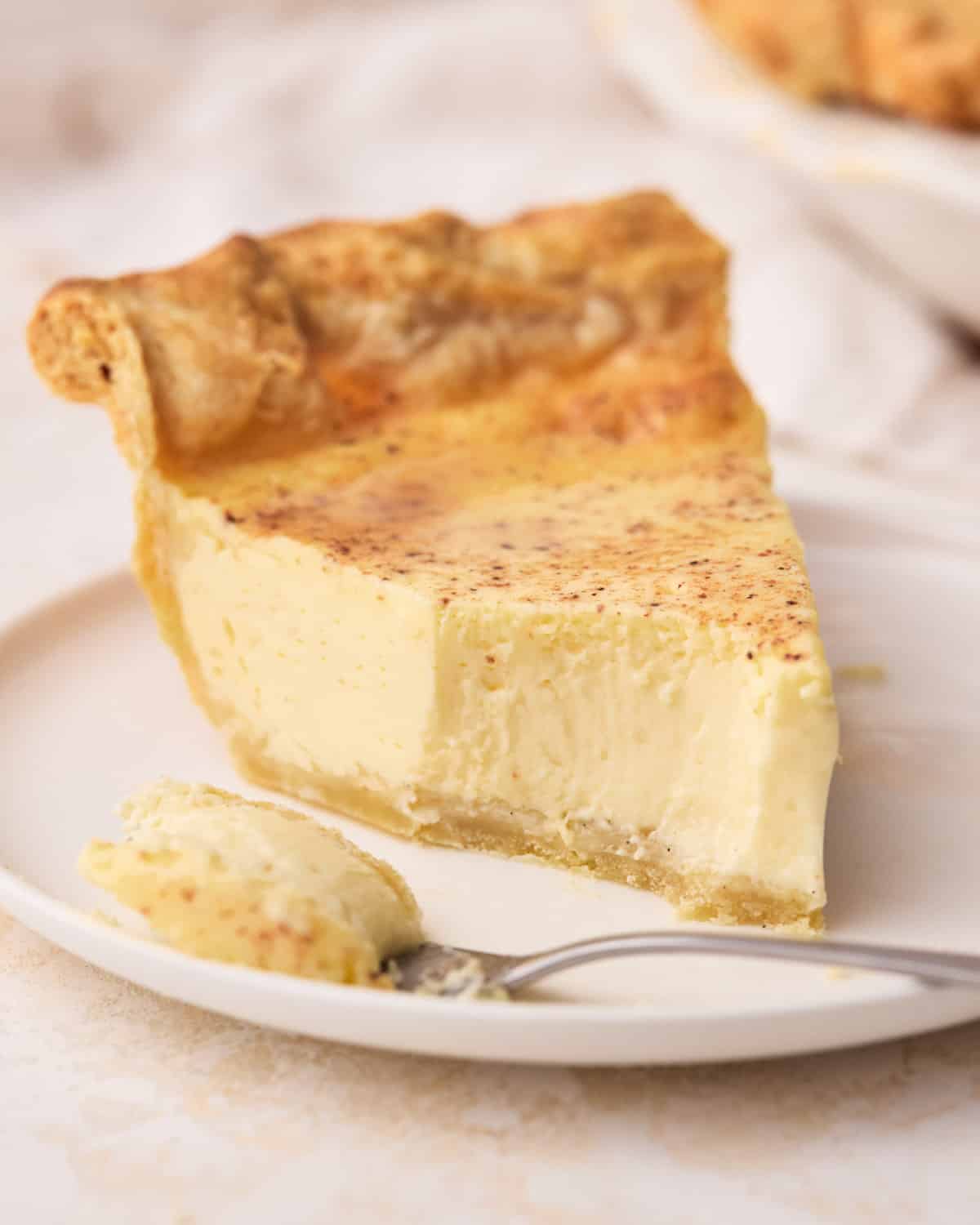
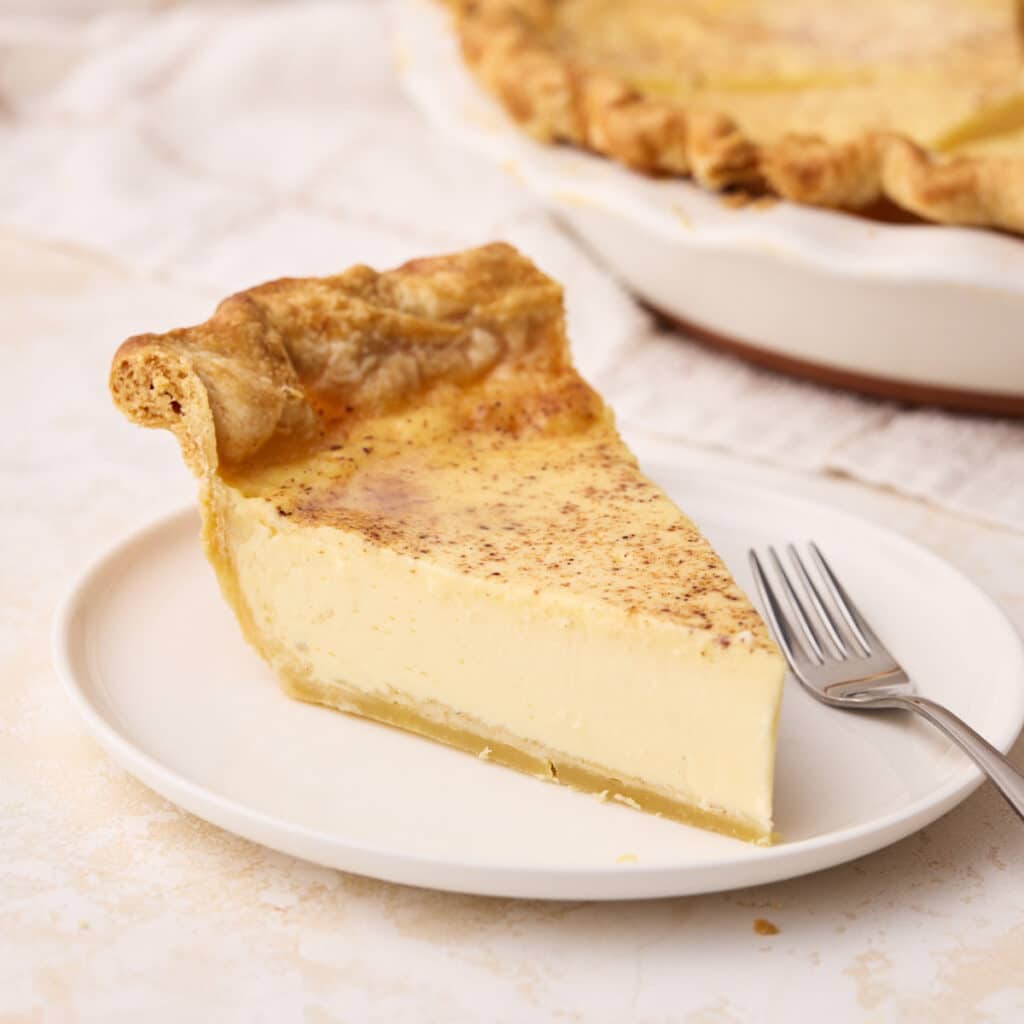
This Custard Pie has an irresistibly creamy, silky-smooth vanilla filling with a hint of warm nutmeg. I'll show you exactly what to look for so yours comes out beautifully smooth and perfectly set.
Quick Look: Custard Pie Recipe
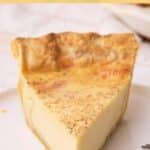
Silky egg custard baked until just set inside a flaky pie crust and topped with ground nutmeg.
☆ Why make THIS version? All the flavour of an old-fashioned custard pie, with clear visual cues from a professional baker to help you get that silky texture just right.
SUMMARIZE AND SAVE THIS POST ON
Custard Pie is a nostalgic classic that looks simple, but is surprisingly tricky to get right. A few small details can mean the difference between a silky, delicate custard and sweet scrambled eggs in a pie shell.
I spent three days researching custard science, testing oven temperatures and standing watching pies bake to figure out the exact moment to take it out for the perfect creamy texture.
After several different versions (happily eaten by my custard-obsessed husband), I've broken down the timing, visual cues, and reasoning behind every important step, so you'll know exactly what to look for.
Reader Review:
Thank you for your recipe for custard pie! It was absolutely the BEST I have ever had! And your instructions are wonderful!
⭐⭐⭐⭐⭐ - Louise
Jump to:
Why This Recipe Works
- Milk and cream balance richness and texture - Cream gives the custard its luxurious flavour, while milk keeps it delicate rather than overly heavy.
- An extra yolk makes it silkier - Whole eggs provide enough structure for clean slices, while the additional yolk creates a richer, smoother texture.
- Gentle baking prevents a rubbery custard - A low oven temperature bakes the filling gradually, while the visual cues show you when to remove it so it can finish setting as it cools.
Ingredient Notes
Most custard pies are made with the same handful of simple ingredients, but how you handle those ingredients makes the biggest impact on the final texture.
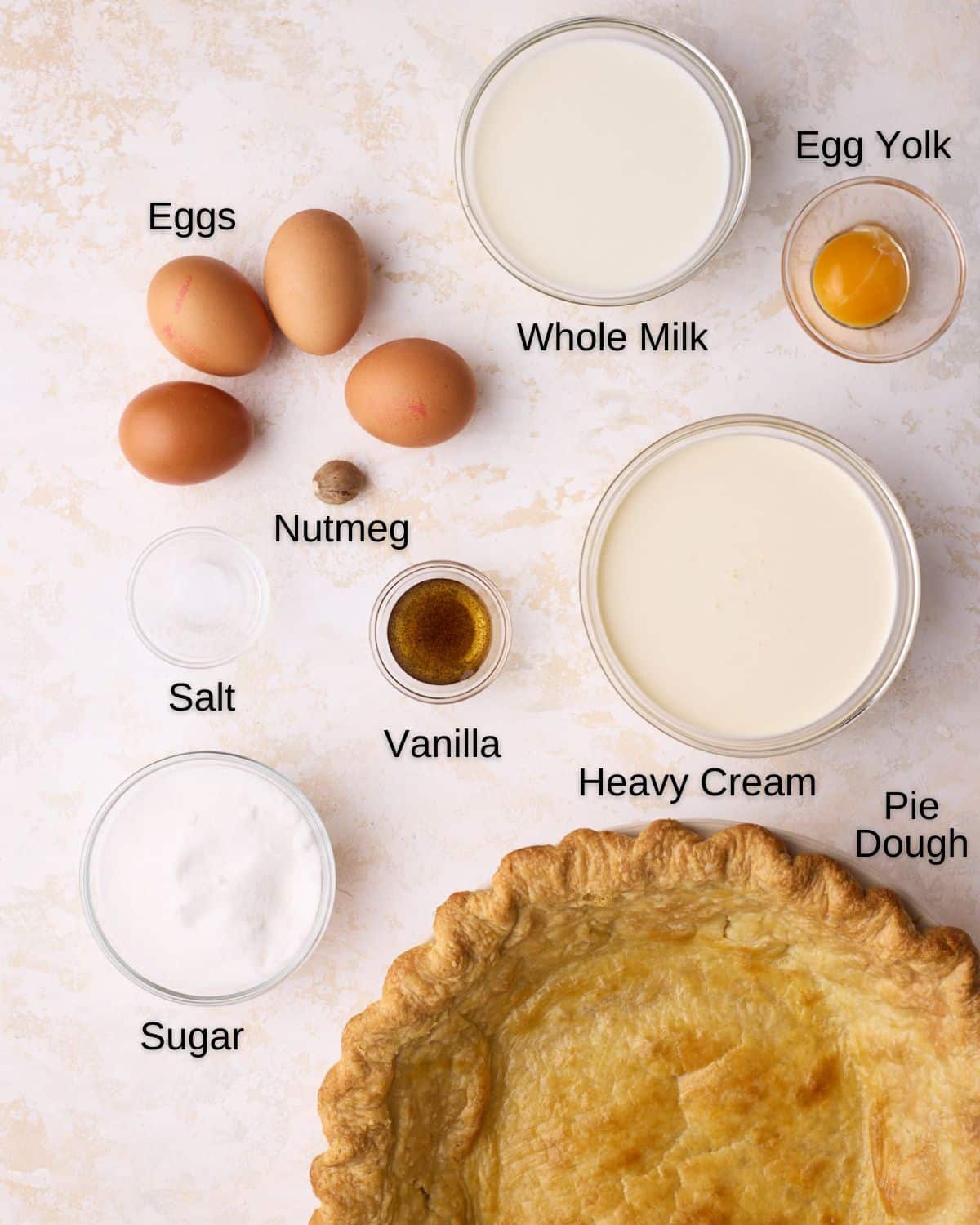
- Eggs - Use four whole eggs plus one extra yolk. Choose large eggs in the US or medium eggs in the UK. Read about differences between UK and US baking ingredients.
- Milk + Cream - After testing various ratios of dairy, I found a 1:1 ratio of whole milk and heavy cream makes the creamiest, most flavorful filling.
- Vanilla - Vanilla bean paste gives the strongest flavour and visible specks, although extract also works.
- Nutmeg - Freshly grated nutmeg is lovely, but ground nutmeg is good too.
- Pie Crust - Use one unbaked 9-inch deep-dish crust, either store-bought or made with ½ batch of my flaky homemade pie crust recipe.
See the recipe card for the full recipe and measurements in both cups and grams.
How to Make Custard Pie
These steps have all the important techniques and visual cues to look for to take this from a good custard pie to an exceptional one.
Par-bake The Crust
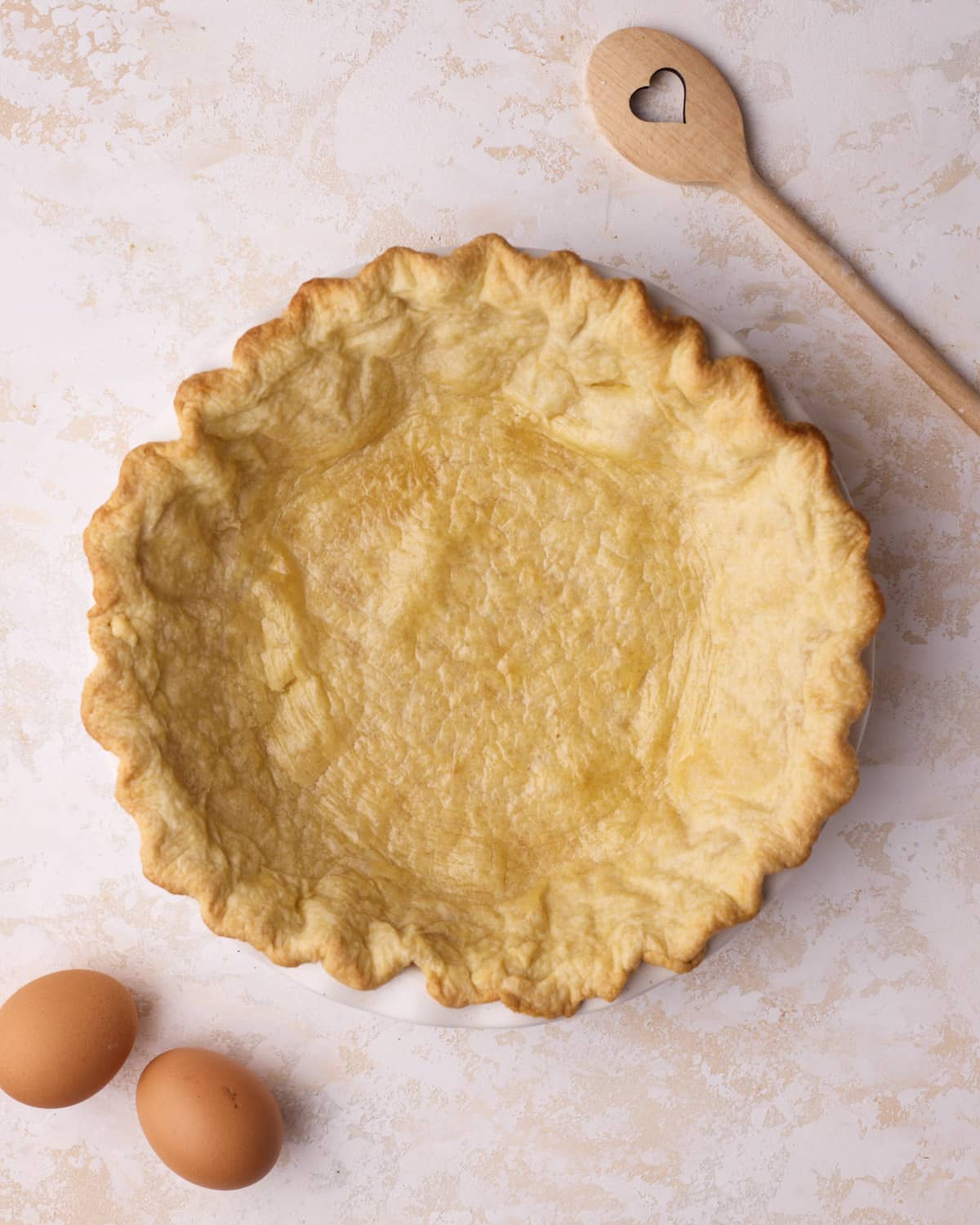
Blind-bake the pie crust until the edges are golden, then remove the weights. Brush the base with a thin layer of egg white (you'll use the extra yolk in the custard later) and bake again until it looks dry and lightly golden. This helps seal the crust against the liquid filling.
Once you are ready to start the custard filling, set the oven to 325°F / 160°C (140° fan).
Technique guide
New to blind baking? My complete guide to blind baking a pie crust walks you through the process step by step.
Whisk Eggs + Sugar
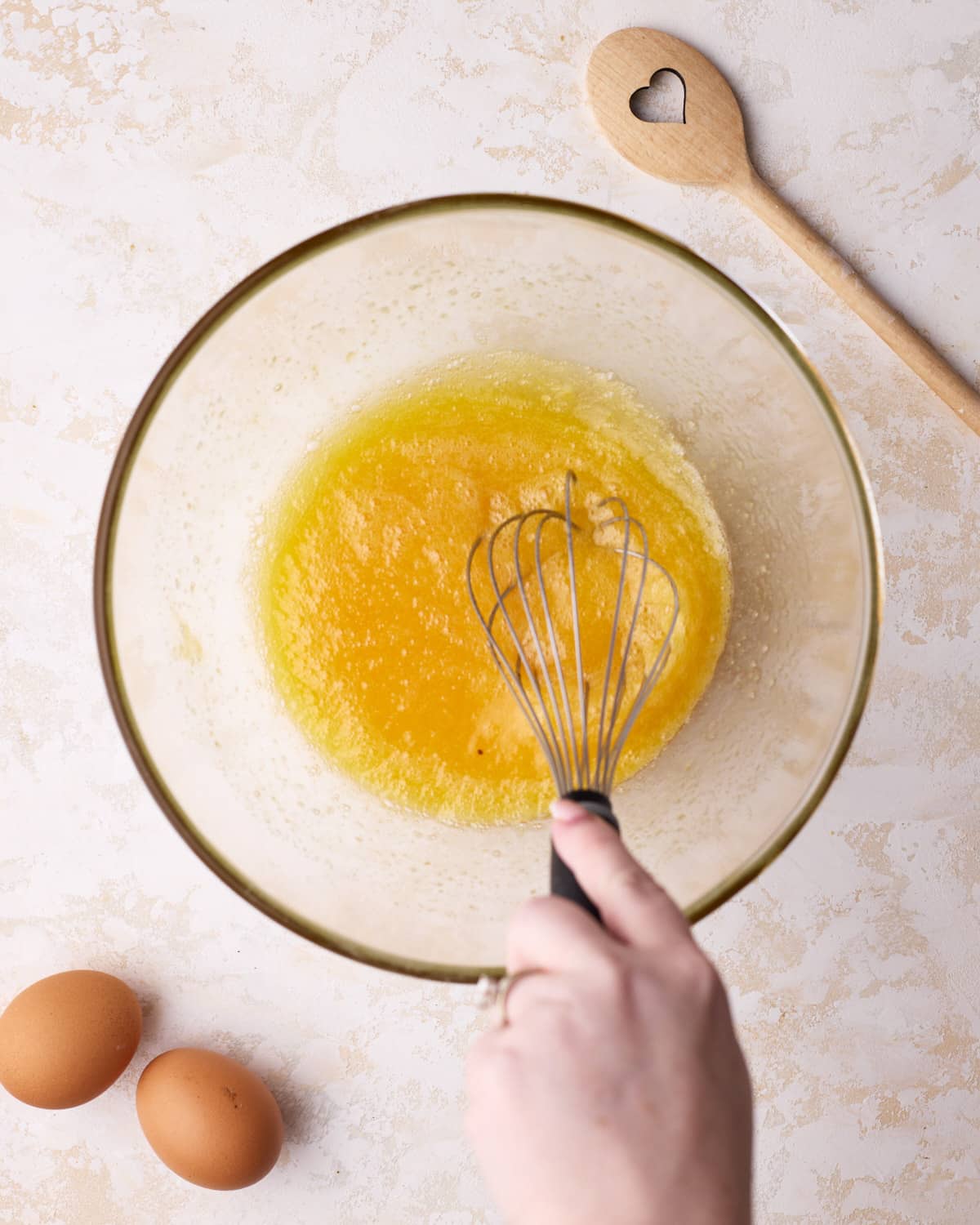
Gently whisk the eggs, extra yolk, sugar, and salt until combined without incorporating too much air.
Pro tip: Don't leave the sugar sitting on the eggs before whisking - it can 'burn' the egg yolks and create lumps.
Scald The Milk + Cream
Heat the milk and cream in a saucepan over medium heat, stirring occasionally, until steaming with tiny bubbles on the surface. This is called scalding. Don't let it boil.
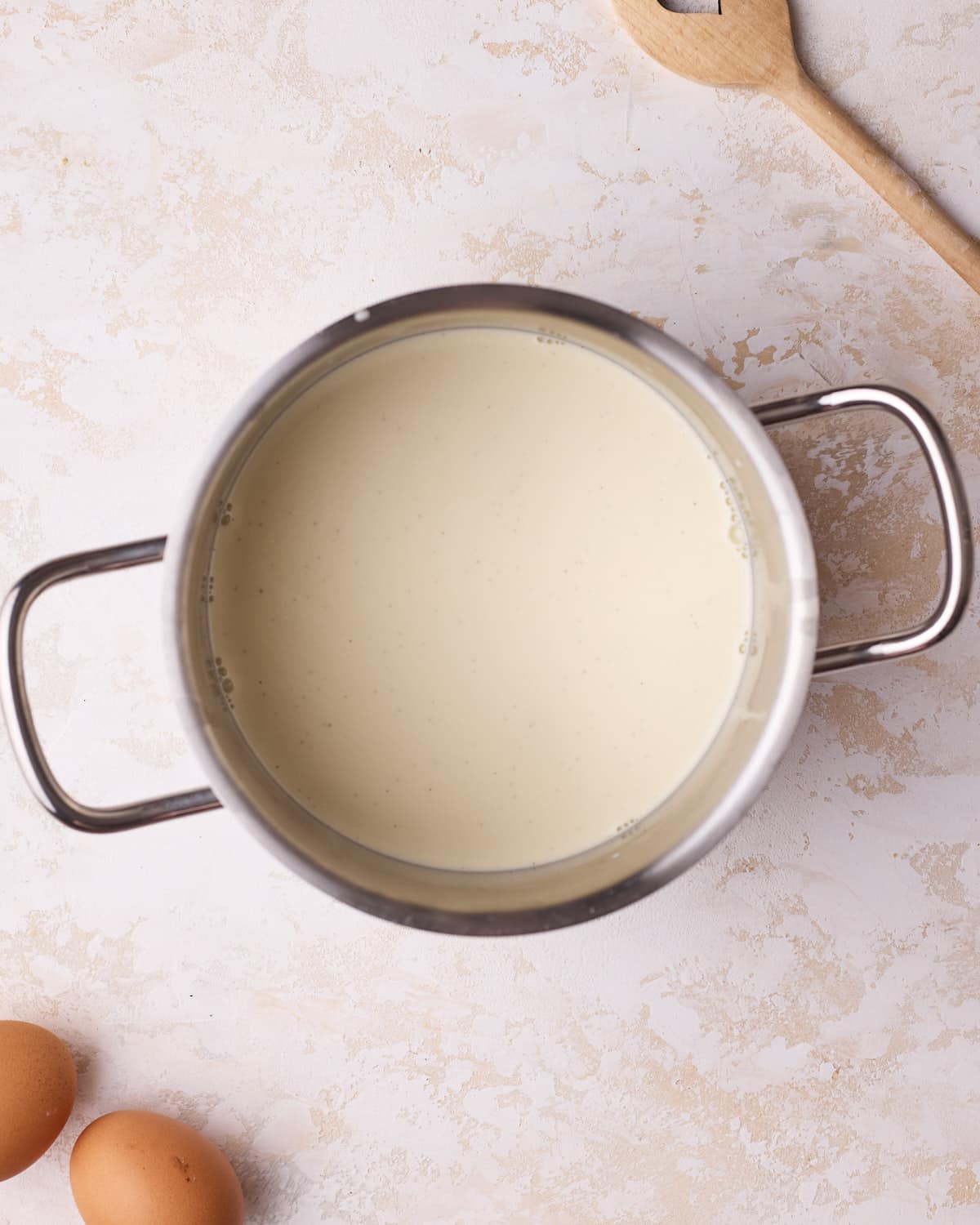
Most modern recipes skip this step because pasteurised milk no longer needs to be scalded for safety. I still recommend it because starting with warm custard reduces the time it needs in the oven, helping prevent the edges from overcooking before the centre is ready.
Temper The Eggs
Slowly pour the hot milk and cream into the egg mixture, whisking constantly. This warms the eggs gradually to prevent them from scrambling.
Adding the hot dairy too quickly is one of the main places I see people go wrong with custard recipes, so I have added a quick clip so you can see the speed to go at.
Once combined, whisk in the vanilla. Adding it now instead of earlier helps to preserve the vanilla flavor.
If you are not confident pouring and whisking at the same time, you can just pour in a little at a time, whisking in between.
You'll use the same gentle tempering method when making other custard-based recipes like crème anglaise.
Strain The Custard
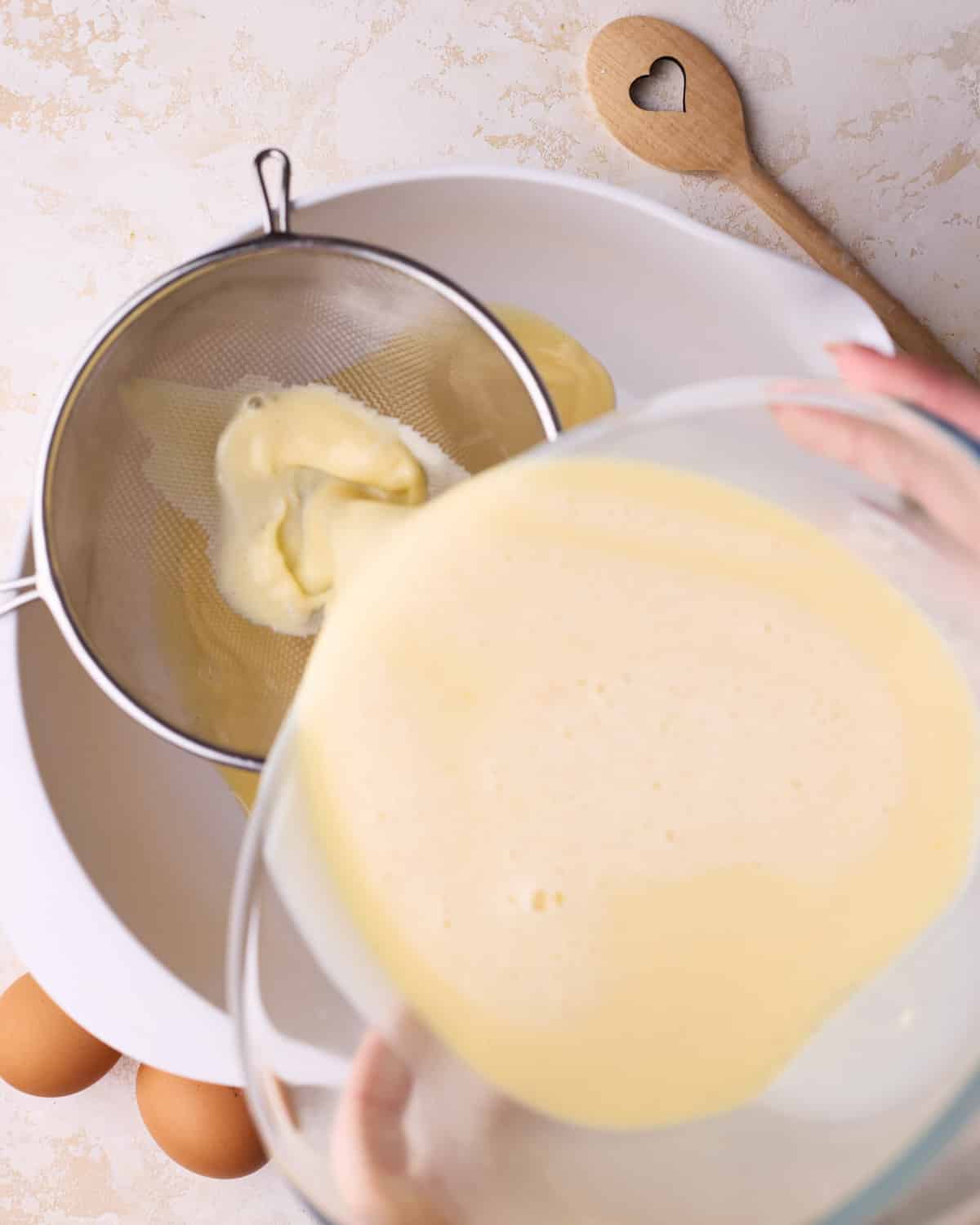
Pour the custard mixture through a fine mesh sieve into a large jug or a bowl with a spout on it. This will remove any lumps of egg and make sure the pie is completely smooth.
Then give the jug a few firm taps on the counter to release any air bubbles.
Pour Filling Into Pie Crust
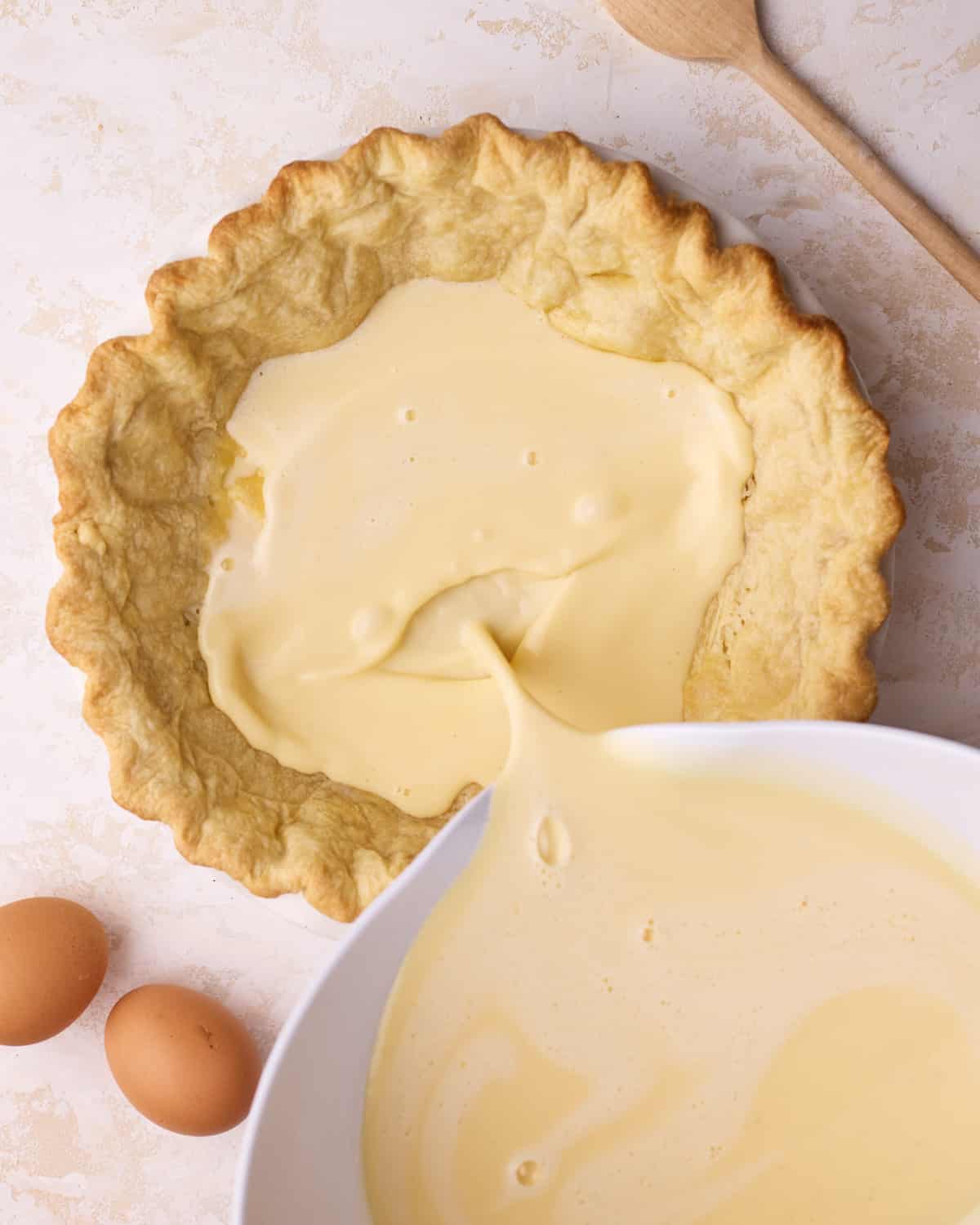
Carefully pour the custard filling into the par-baked crust.
The filling is very liquid, so it's easiest to do this on a pulled-out oven rack, or right beside the oven to avoid carrying the filled pie across the kitchen.
Sprinkle the top of the pie generously with freshly grated nutmeg (or ground nutmeg).
Bake
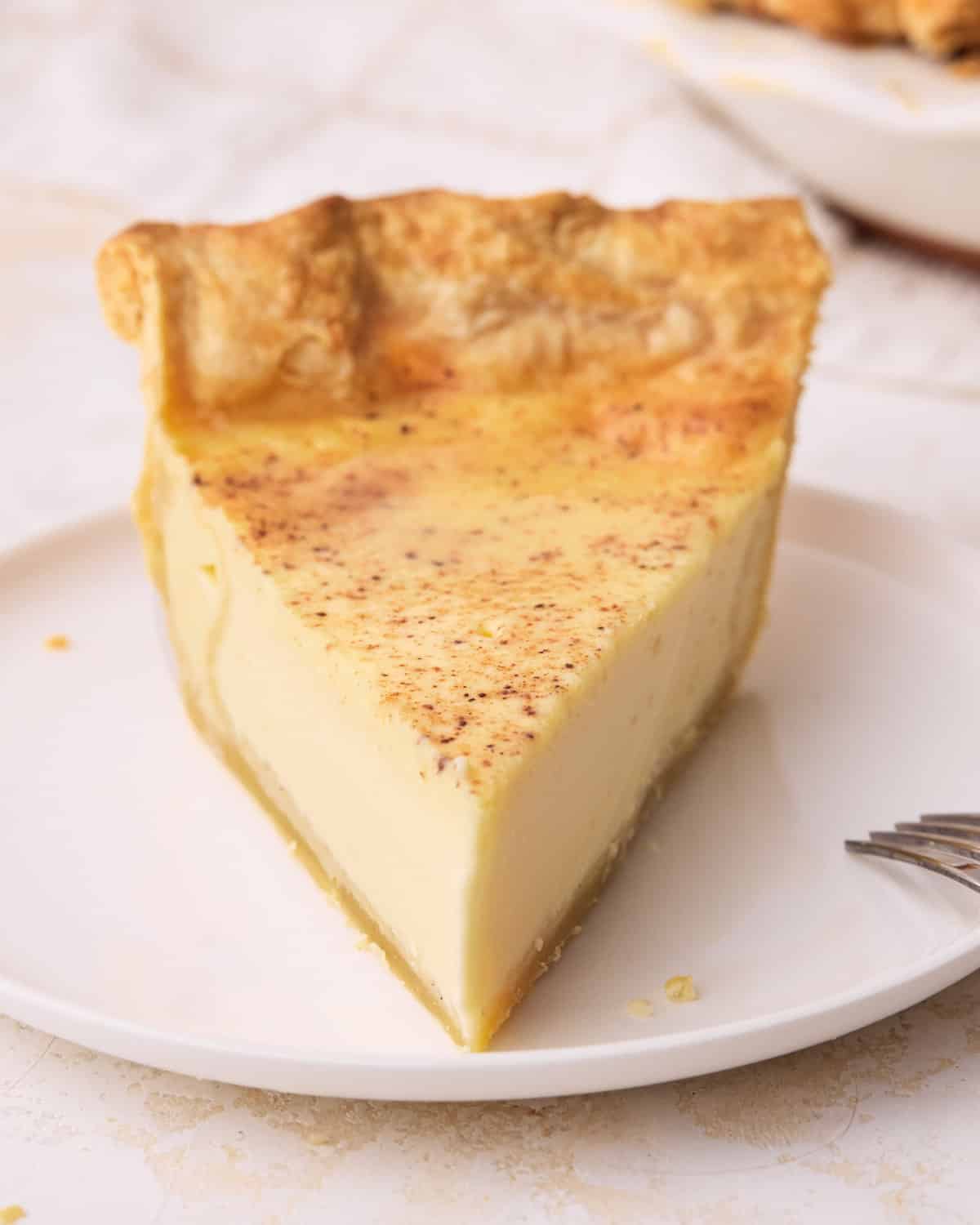
Bake the pie for 40-50 minutes or until the outer edges are set but the middle still jiggles when the dish is nudged. It will continue to bake as it cools.
It will still look slightly underdone when you take it out, but trust the process!
Let the pie cool to room temperature before covering it with plastic wrap and transferring it to the fridge to chill for at least 4 hours, preferably overnight.
How To Know When Custard Pie Is Done
Custard pie is a bit of a Goldilocks bake: take it out too soon, and it won't set; leave it too long, and the custard can become eggy, rubbery, or curdled.
The challenge is that custard continues to bake as the pie cools, so if you wait until it is fully baked to take it out of the oven, you will end up with an overbaked pie.
Baking times vary between ovens and pie dishes, so use the time as a guide and let the movement of the filling tell you when it's ready, so it sets into a beautifully silky pie.
visual cue
The Jiggle Test
About five minutes before the minimum baking time, leave the pie in the oven and tap the side of the dish to see how it moves.
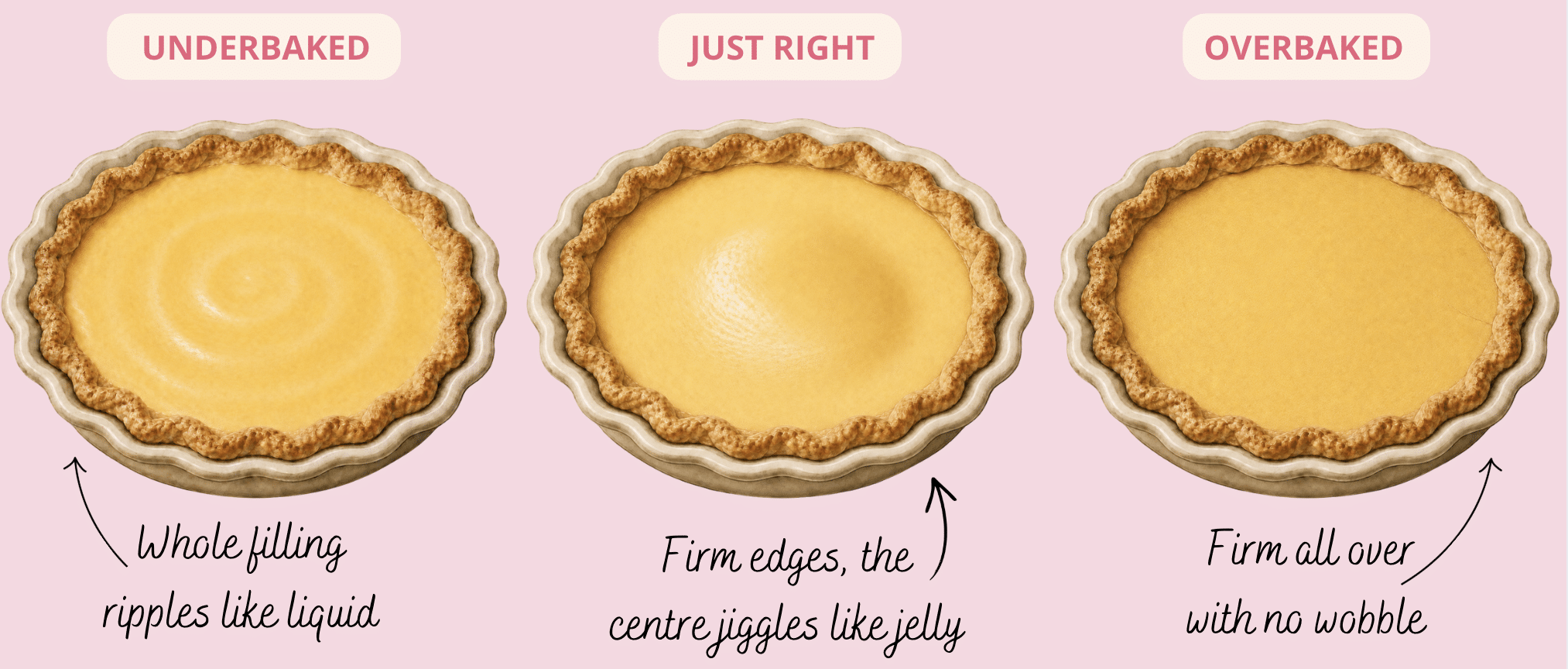
- Needs longer - The filling ripples or sloshes like liquid across most of the pie.
- Just right - The outer edges are set (1-2 inches), but the middle still has a noticeable wobble. It should move together like soft jelly rather than ripple like liquid. It may look slightly underdone, but it will finish setting as it cools.
- Overbaked - The centre is completely firm and barely moves. The filling may also look puffed or begin to crack around the edges.

Troubleshooting
These are some of the most common mistakes when making custard pie.
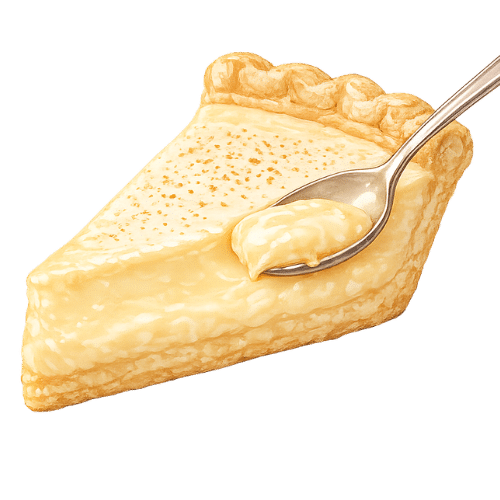
Filling Didn't Set
Why it happens:
The pie was either taken out of the oven too soon, or was sliced before it had fully chilled.
What to do:
Use the jiggle test above to take it out at the right time, and chill for at least 4 hours before slicing.

Custard Curdled Or Rubbery
Why it happens:
It was either overbaked or the hot milk was added too quickly, and the eggs have scrambled.
What to do:
Temper the eggs gradually and take the pie out of the oven before the middle sets.
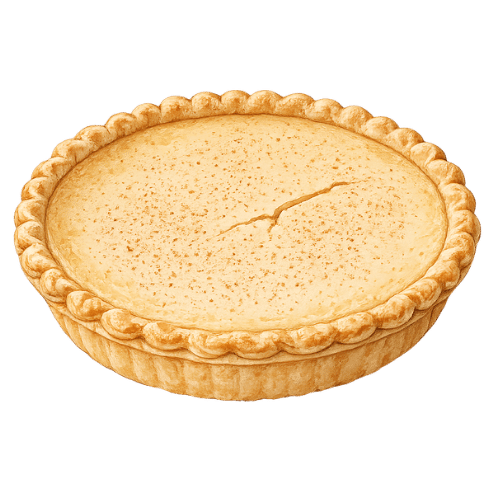
Cracked Pie
Why it happens:
Sudden temperature changes. Either the oven was too hot, or the pie was put into the fridge too soon.
What to do:
Bake it low and slow, and let the baked pie cool completely before moving to the fridge.

Soggy Pastry
Why it happens:
The crust wasn't baked enough or had holes or tears that let the custard filling in.
What to do:
Use the leftover egg white to seal the pie crust, and patch up any holes while baking. Bake until golden all over.
Take it up a notch...
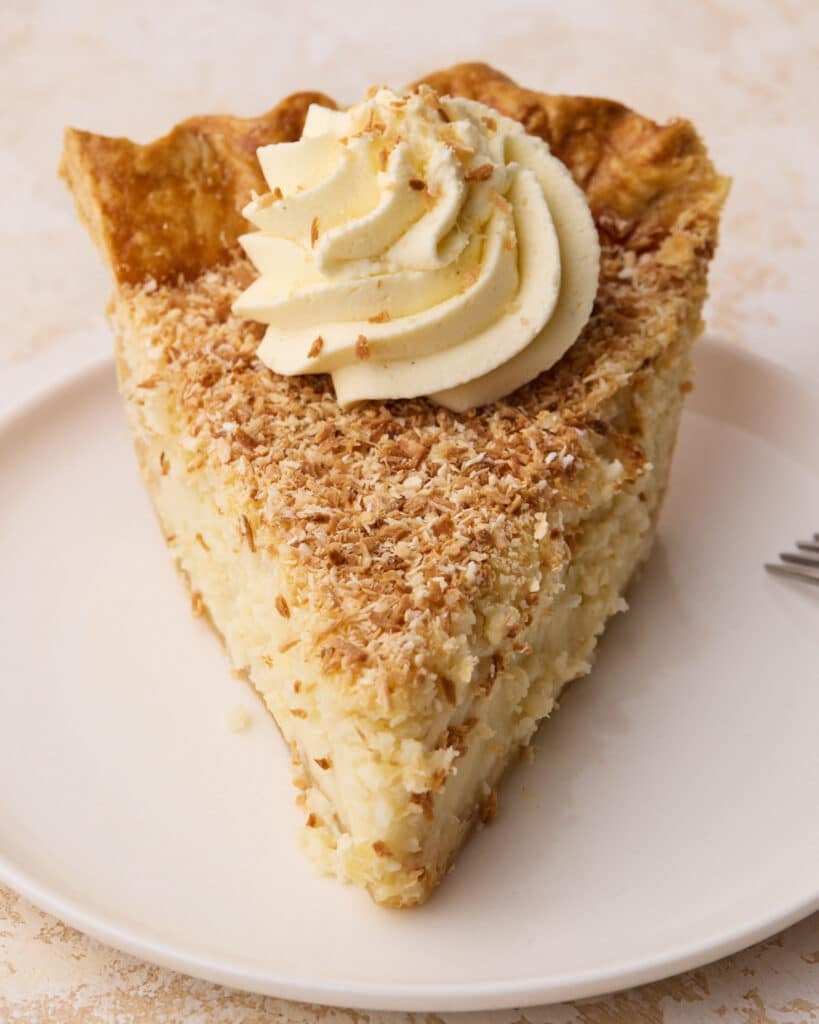
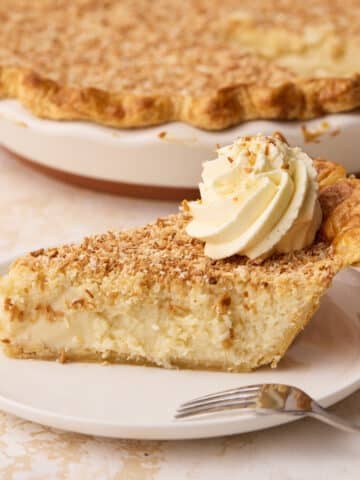
Coconut Custard Pie
After I first shared this classic custard pie, so many readers asked for a coconut version in the comments that I had to make one!
You can now try my coconut custard pie with toasted coconut too.
How To Serve
Custard pie needs to be chilled to set, but for the best flavour and texture, take it out of the refrigerator 20-30 minutes before serving. This lets the custard soften slightly and brings out more of its flavour.
Serve it on its own or with a little freshly whipped cream and an extra dusting of nutmeg. For neat slices, use a sharp knife and wipe it clean between each cut.
Storage
Cover and refrigerate for up to three days. Don't leave it at room temperature for longer than two hours.
I don't recommend freezing it, as the custard can become watery or grainy once thawed.
Custard Pie Recipe FAQs
If you have a question about this custard pie recipe that isn't answered here, please write it in the comment section, and I will get back to you as soon as I can.
Yes, custard pie and egg custard pie are the same dessert: an egg-thickened milk custard baked inside a pastry crust. "Egg custard pie" just distinguishes it from cream pies with starch-thickened vanilla pastry cream.
No. The low oven temperature cooks the filling gently without one. A water bath is helpful for crustless baked custards, like my homemade crème brûlée recipe, or baked caramel cheesecake, but here it could introduce moisture around the par-baked pastry.
You can reduce the sugar slightly, but I don't recommend taking out more than a few tablespoons, as the sugar plays an important role in forming the texture, so removing too much could make the pie rubbery or taste eggy.
It depends on the type of flan. Traditional caramel flan is a crustless baked custard, whereas French flan pâtissier is a thick custard tart made with eggs and starch.
Custard pie has a more delicate, egg-set filling baked inside a flaky pastry crust. My French chocolate flan is a rich chocolate version of the thicker French-style custard tart.
More Custard Desserts
I have a lot of delicious custard dessert recipes on my site. If you love custard, try some of these recipes:

Show Me Your Bakes!
If you tried this recipe, I'd love to know how it turned out in the comments!
Want to share a photo? You can send me a pic or tag @bonni_bakery on Instagram - I love seeing all your creations.
Custard Pie Recipe
Ingredients
- 1 Unbaked Pie Crust 9-inch, deep dish. Homemade or store-bought.
- 4 Large Eggs
- 1 Large Egg separated - use the white for the pie crust and the yolk for the custard filling.
- 300 ml (1¼ cups) Heavy Cream (Double cream in the UK)
- 300 ml (1¼ cups) Whole Milk
- 150 g (¾ cup) Granulated Sugar (Caster sugar in the UK)
- 2 teaspoon Vanilla Bean Paste or vanilla extract
- ¼ teaspoon Salt
- ¼ teaspoon Nutmeg ground or freshly grated
Equipment
- 9-inch Pie Dish deep dish
- Pie Weights or uncooked rice
Instructions
- Blind-bake the pie crust until par-baked, using my guide on how to blind bake a pie crust. When you reach the egg wash step, use lightly whisked egg white instead of the standard egg wash suggested in the post. This will create a much better seal to stop the filling from making the crust soggy.Brush a very thin layer over the base and inside sides of the crust, then return the crust to the oven and continue baking until par-baked (dry and lightly golden all over).
- Set the oven temperature to 325°F / 160°C (140° fan).
- In a large bowl, whisk together the eggs, egg yolk, sugar, and salt. Whisk gently just until combined - don't try to incorporate any air into the mixture.4 Large Eggs, 1 Large Egg, 150 g (¾ cup) Granulated Sugar, ¼ tsp Salt
- Add the heavy cream and milk to a saucepan and warm over medium heat, stirring occasionally, until it is scalding (you can see steam rising from it and tiny bubbles on the surface). Don't let it boil.300 ml (1¼ cups) Heavy Cream, 300 ml (1¼ cups) Whole Milk
- Slowly pour the hot milk and cream into the egg mixture, whisking constantly. This warms the eggs gradually to prevent them from scrambling.If you are not confident pouring and whisking at the same time, you can just pour in a little at a time, whisking in between.
- Add the vanilla and mix it in.2 tsp Vanilla Bean Paste
- Pour the custard mixture through a fine mesh sieve into a large jug or bowl with a spout to remove any lumps of coagulated egg. Then tap the jug firmly on the counter a few times to release any air bubbles.
- Carefully pour the custard filling into the par-baked crust.The filling is very liquid, so it's easiest to do this on a pulled-out oven rack, or right beside the oven to avoid carrying the filled pie across the kitchen.Sprinkle the top of the pie generously with nutmeg, then close the oven and bake.¼ tsp Nutmeg
- Bake the pie for 40-50 minutes. Baking time can vary massively, so it's better to judge by how the pie looks, rather than the timer. After 35 minutes, tap the pie dish gently and watch how the filling moves. When custard pie is properly baked, the outer 1-2 inches of pie will be set and firm, but the middle will still jiggle. If it is sloshing around like it's fully liquid, it needs longer. It will still look slightly underdone when you take it out, but trust the process!
- Remove the custard pie from the oven and let it cool to room temperature before transferring it to the refrigerator to chill for at least 4 hours - preferably overnight.





M. B. in L.A. says
Great detailed explanations & variations. I used Half & Half instead of the milk & heavy cream because its easier/quicker. The texture was perfect.
Next time I'll use 2 Tablespoons less sugar.
Is there anyway to use less egg?
Thank you!
Martha says
This is an awesome recipe
Julia Griffin says
I have to say, this did not work for me. Much too sweet, and too high a temperature for custard.
Jules Grasekamp says
Hi Julia,
Sorry to hear you weren't a fan of the custard pie - it's one of the most popular recipes on my site!
You can definitely reduce the sugar or vanilla next time to make it less sweet.
As for the oven temperature, 325°F / 160°C (140° fan-assisted) is a pretty standard temp to bake custard, but the important thing is that you know the signs that it is done so feel free to bake lower if you like.
Jules
Jackie says
I’m 81 years old and have been unable to make a custard pie or even custard without burning it so thank you lm dying to try this one out on Sunday and let you know how it goes it’s not that I don’t bake I I’ve always baked from scratch but not custard. By the way congratulations on your new daughter and best wishes for the new year Jackie
Jules Grasekamp says
Thank you so much Jackie!
I hope you love the custard pie recipe, I'm looking forward to hearing how it turns out!
Let me know if you have any questions about the process at all.
Enjoy!
Jules
Judy says
When do I add the salt? I put it in the milk. I used a nine inch pan and had some filling left. This could have gone in a ten inch pan. It's baking!! Thank you
Jules Grasekamp says
Hi Judy,
I hope your custard pie turned out great!
The salt is added to the eggs along with the sugar in step 2 of the custard filling instructions.
Yes it does make quite a deep pie, I use a deep-dish pie dish, but if you aren't using deep-dish then a 10-inch regular dish would definitely work too.
Jules
Louise Villa says
Thank you for your recipe for custard pie! It was absolutely the BEST I have ever had! And your instructions are wonderful!
Jules Grasekamp says
Thank you so much Louise, you have made my day!
Jules
Rhonda Rasmusson says
Heavenly! This was my first time making a custard pie. I usually opt for fruit pies, but wanted a high protein option. Following your very clear, step by step instructions, I used fresh eggs with raw, whole milk and cream. Also, I used my pie crust made with avocado oil, milk, and a combination of all purpose and almond flours. Thank you for sharing this wonderful recipe
Erin says
Hi! I’m going to attempt to make this pie today . The only thing is that my husband is lactose intolerant so I bought lactose free whole milk . I just noticed it has heavy cream as well. Will using all milk spoil the texture? Thanks !
Jules Grasekamp says
Hi Erin,
I hope I have managed to reply to this on time!
Using all milk will definitely change the texture but it won't necessarily spoil it. The pie may be a little softer and more delicate, and not quite as rich. I'd keep an eye on it and check for doneness as it could also alter the amount of time it takes in the oven.
I'd love to hear how it turns out and hope you both love the custard pie 🙂
Jules
Eleanor says
Came out perfect! Amazing recipe, very clear, produces a lovely silky textured custard pie.
Jules Grasekamp says
Thank you so much for your kind words Eleanor - I'm so glad you loved the custard pie!
Jules
Joanne says
Can you add coconut to this to make it a coconut custard pie? And if so how much would you add?
Misty Evans says
I'm thinking about 1 cup of coconut flakes but IDK haven't made one.
Jules Grasekamp says
Hi Joanne,
After a lot of requests, I have now made a coconut custard pie recipe as well - you can find it here - https://bonnibakery.com/coconut-custard-pie/ 🙂
Enjoy!
Jules