
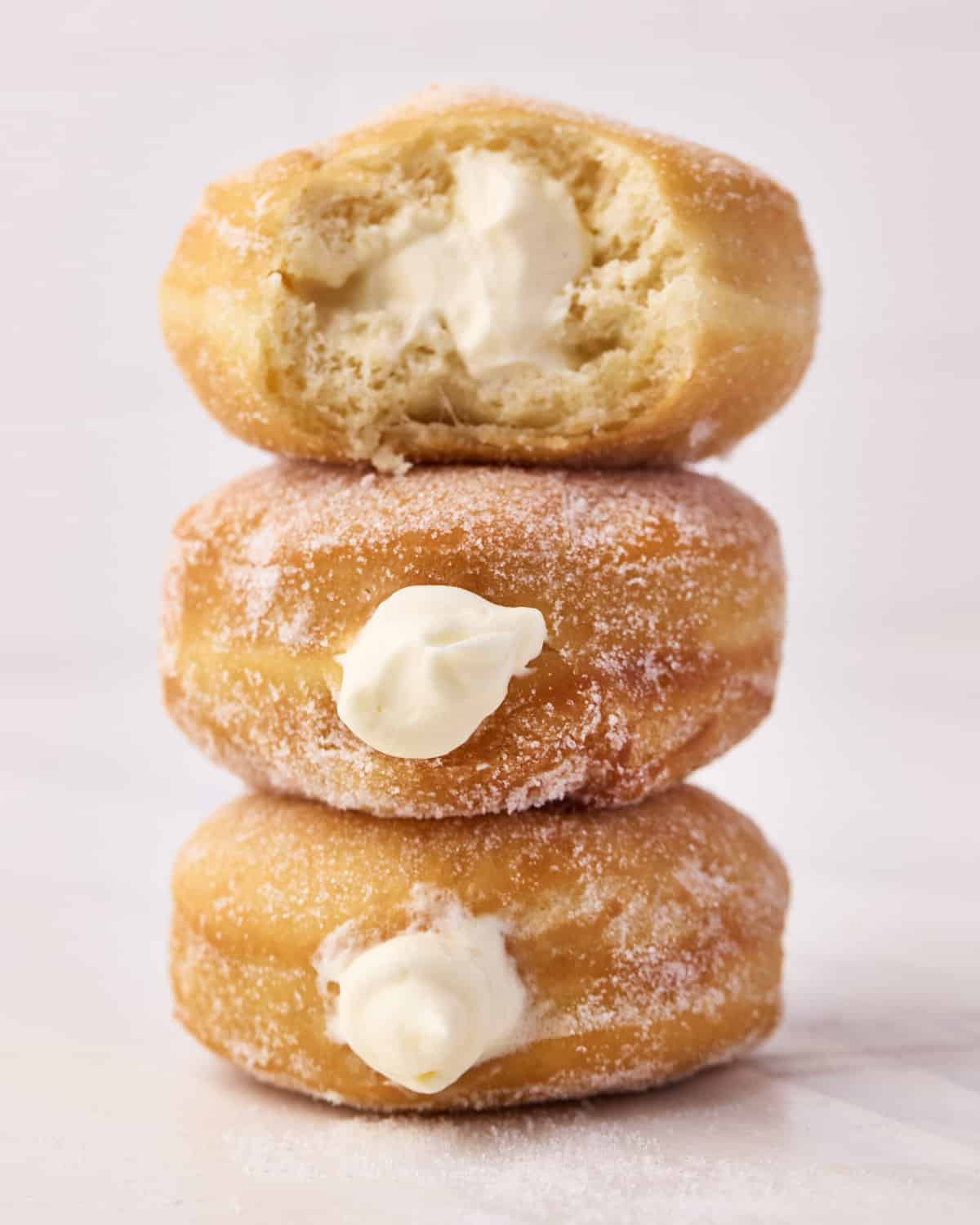
This Bavarian Cream Donut recipe makes the fluffiest, softest fried donuts with a silky-smooth Bavarian cream filling. If you've ever wondered how to make cream-filled donuts at home, this step-by-step recipe will walk you through everything, from making the dough to frying and filling them perfectly.
Bavarian Cream Donut Recipe Snapshot
What it is: Fluffy yeast donuts stuffed with a silky-smooth vanilla cream filling.
Why you'll love it: Step-by-step recipe with process pictures so even a beginner baker can make cream-filled donuts that are so much better than store-bought.
How to make it: Prepare the pastry cream in advance. Then, make the dough, cut out thick round shapes, deep-fry, and coat in sugar.
I avoided making homemade donuts for years because the process felt intimidating - but after plenty of experimenting, I'm sharing all the tips and tricks I wish I'd known from the start, so you can confidently make perfect donuts at home.
This Bavarian Cream Donut recipe guides you through every step, from preparing the dough and letting it rise to frying like a pro and filling each donut with a rich, silky cream. You'll never want to buy a store-bought donut again after tasting what you can create in your own kitchen!
What Is A Bavarian Cream Donut?
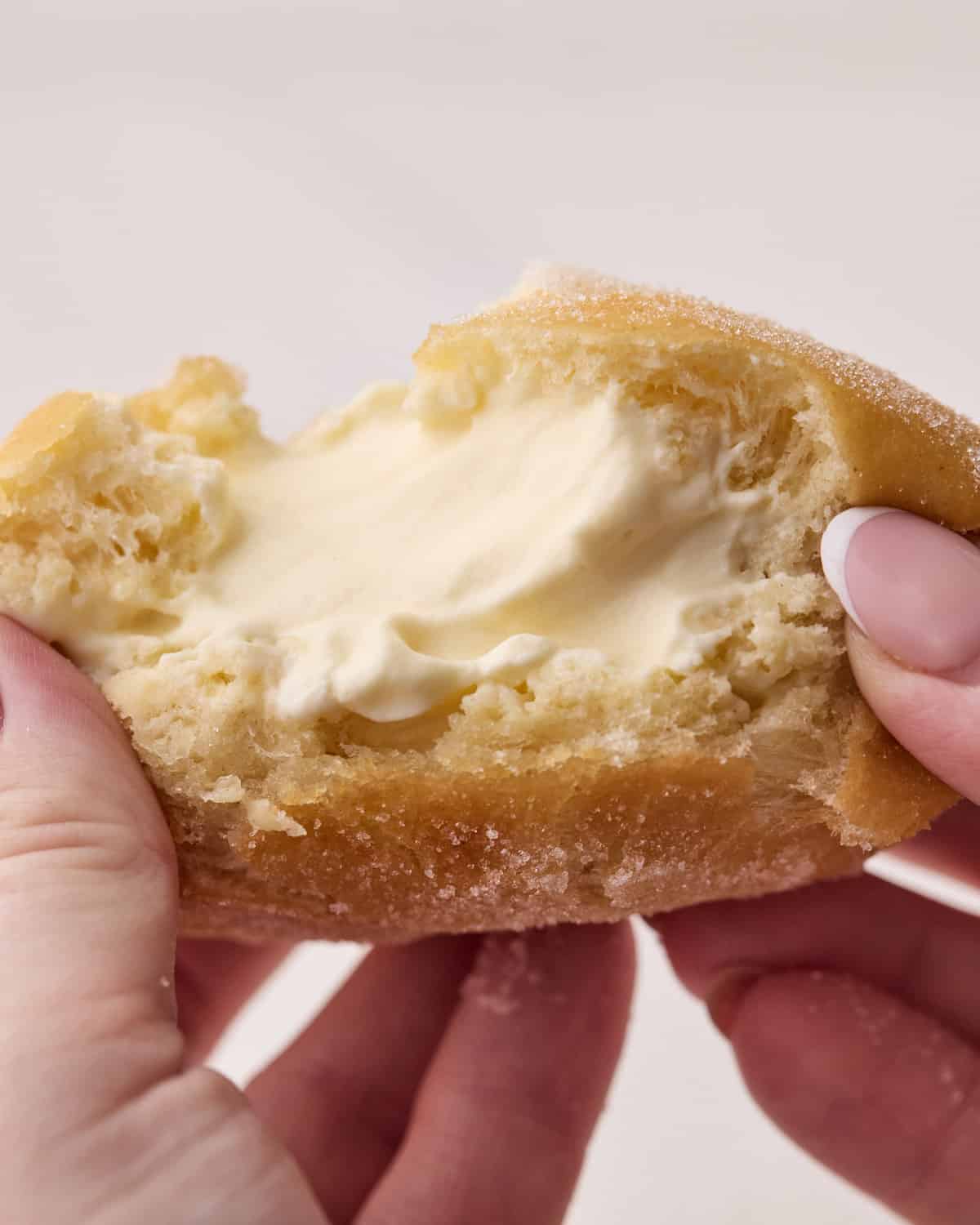
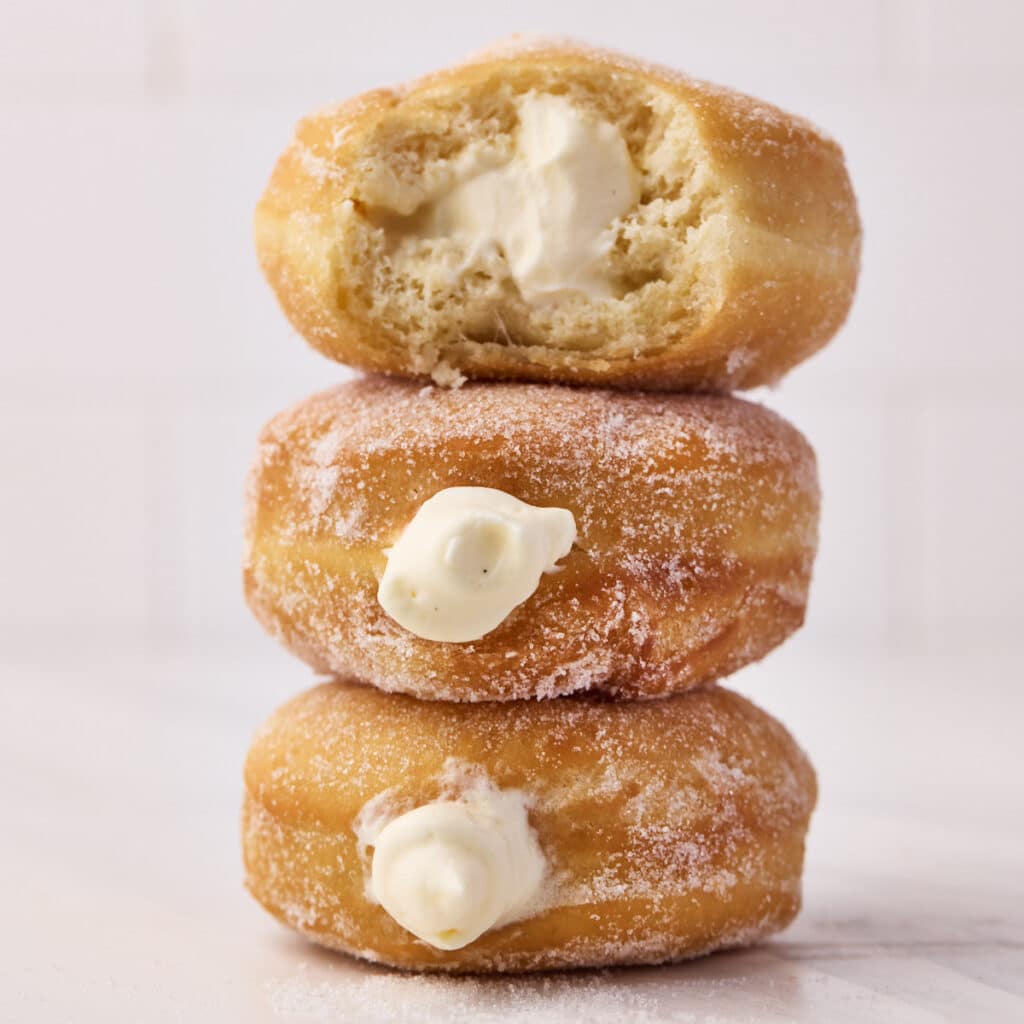
Bavarian cream donuts are yeast-raised donuts filled with a silky, creamy custard filling and coated in sugar.
What Is The Filling in A Bavarian Cream Donut?
Funnily enough, the filling inside Bavarian cream donuts is actually not Bavarian Cream (which is a set dessert made with crème anglaise).
Bavarian cream donut filling is actually crème légère - a light vanilla cream made by folding chantilly cream into vanilla pastry cream (like crème diplomat, but without gelatin). It's the same filling used in my cream puffs recipe.
Jump to:
Ingredients
This Bavarian cream doughnut recipe uses simple ingredients, with lots of overlap between the dough and filling - so your shopping list stays short.
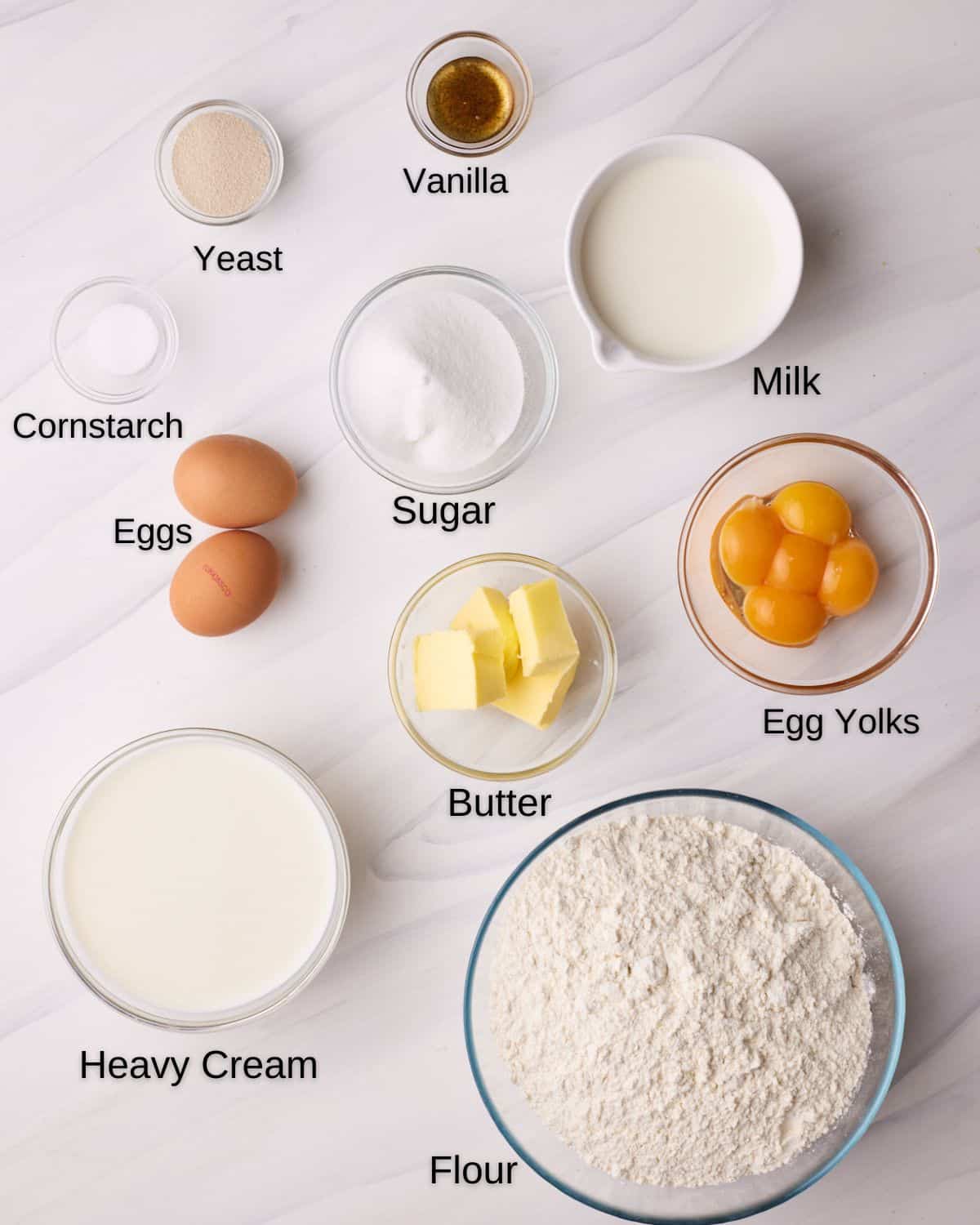
- Flour - All-purpose flour gives the best structure for donuts.
- Sugar - Granulated sugar (caster sugar in the UK).
- Yeast - You can use active dry yeast or instant yeast.
- Milk - Use whole milk for the donuts and the filling to give them a tasty richness.
- Eggs - We'll need whole eggs for the donuts and egg yolks for the pastry cream. Use large eggs.
- Butter - I use salted butter for this recipe, but you can use unsalted butter - add a pinch of salt to the donut dough and the filling.
- Vanilla - A good-quality vanilla bean paste or vanilla extract is essential as it is the star flavor in the filling.
- Cornstarch - This helps to thicken up the donut filling.
- Heavy Cream - Make sure you use heavy cream or heavy whipping cream. It must contain at least 35% fat.
- Frying Oil - To fry the donuts, you'll need a good amount of vegetable oil (2-3 inches deep in the pan), or other flavorless oils like canola or sunflower oil.
See the recipe card for quantities and the full recipe.
Things You'll Need
- Stand Mixer - With the dough hook and the whisk attachment.
- Large Bowl - Big enough for the dough to double in size.
- Rolling Pin
- Round Cookie Cutter - About 2 ½ to 3 inches wide.
- Baking Sheet
- Large Pan - Deep enough to hold 3 inches of oil comfortably.
- Frying Spoon - Any metal slotted spoon.
- Thermometer - Must withstand high temperatures.
- Wire Racks
- Whisk - For making the pastry cream.
- Rubber Spatula - For folding.
How to Make Bavarian Cream Donuts
The filling in Bavarian cream donuts is a crème légère (like crème diplomat, but without gelatin) - it's the same filling used in cream puffs. The pastry cream needs to be made at least 2 hours in advance to cool properly.
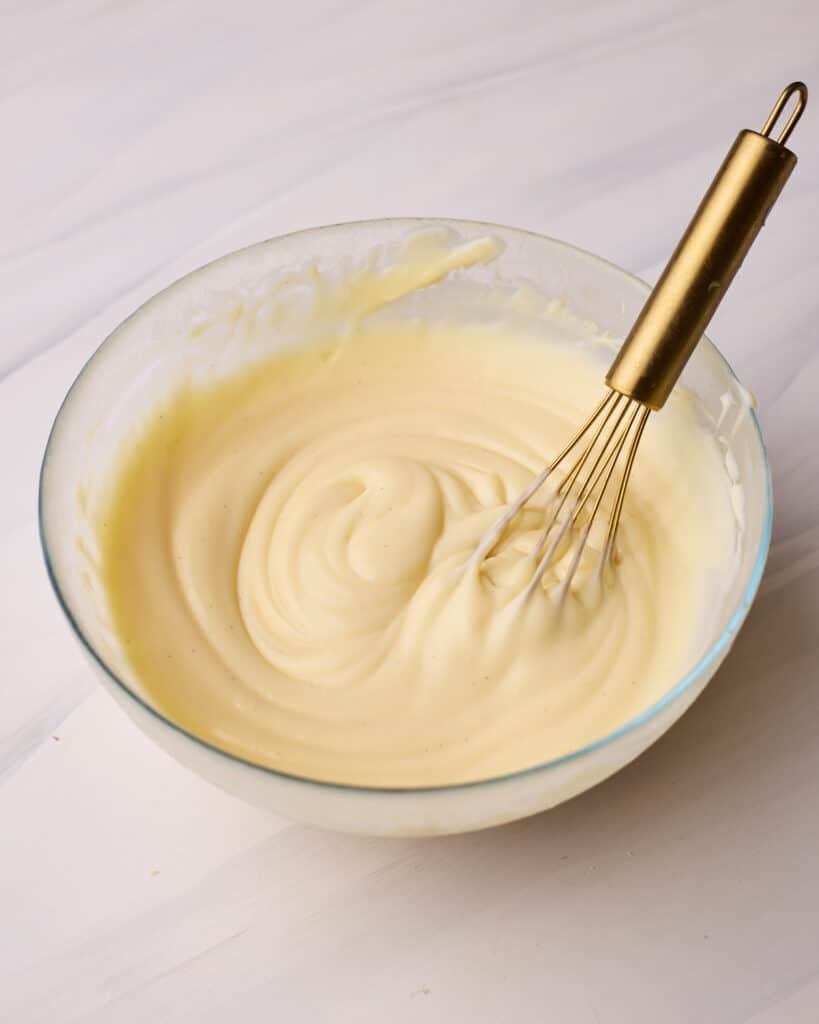
Make Pastry Cream
Make the pastry cream at least 2 hours ahead, ideally the day before, for a deeper flavor.
If this is your first time making pastry cream, you might like to check out my vanilla pastry cream recipe post for extra tips.
How To Make Yeast Donuts
These are yeast donuts, which means they get their rise from yeast in the dough. If this is your first time making yeast-raised donuts, it might sound intimidating, but I have included a detailed step-by-step guide to walk you through it.
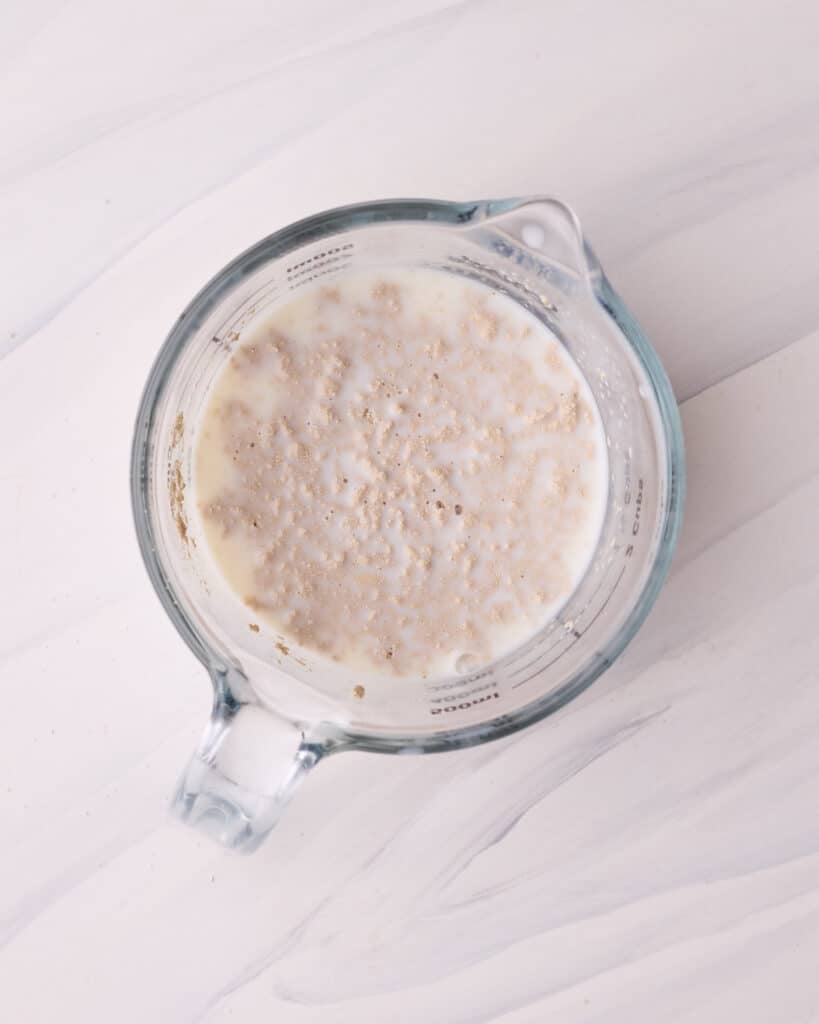
Activate Yeast
Warm the milk to about body temperature. Mix the dry yeast and a tablespoon of sugar into the warm milk, then let sit for 5-10 minutes to activate; it should become frothy.
If you are using instant dry yeast, skip this step.
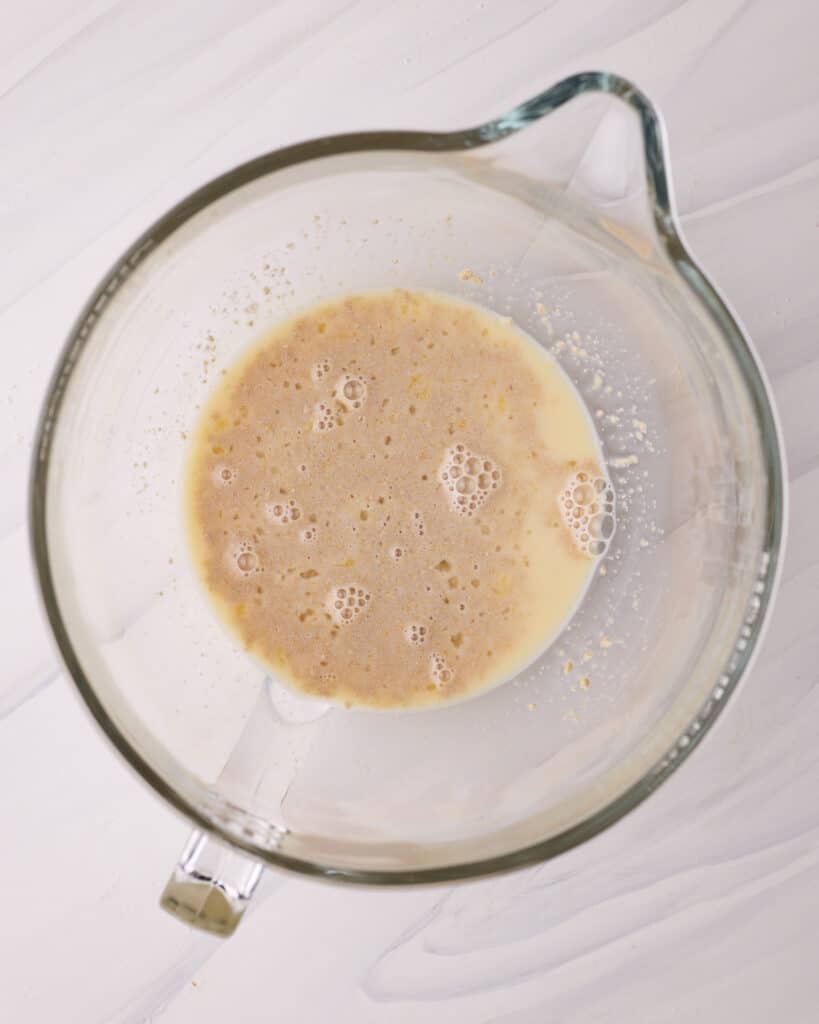
Wet Ingredients
In the bowl of a stand mixer fitted with a dough hook, add the eggs, sugar, and salt.
Once the yeast has activated, add the milk/yeast mixture to the bowl and mix until combined.
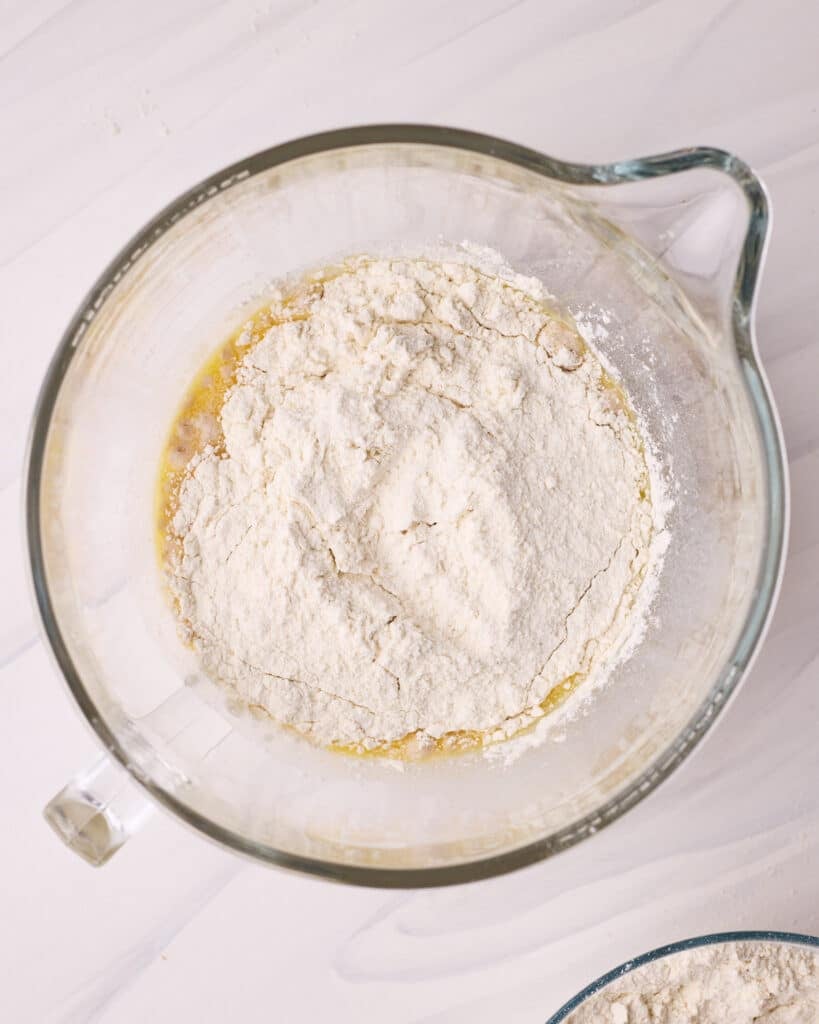
Dry Ingredients
Add the flour and mix on low speed for about a minute until combined.
Gradually drizzle in the melted butter while continuing to mix.
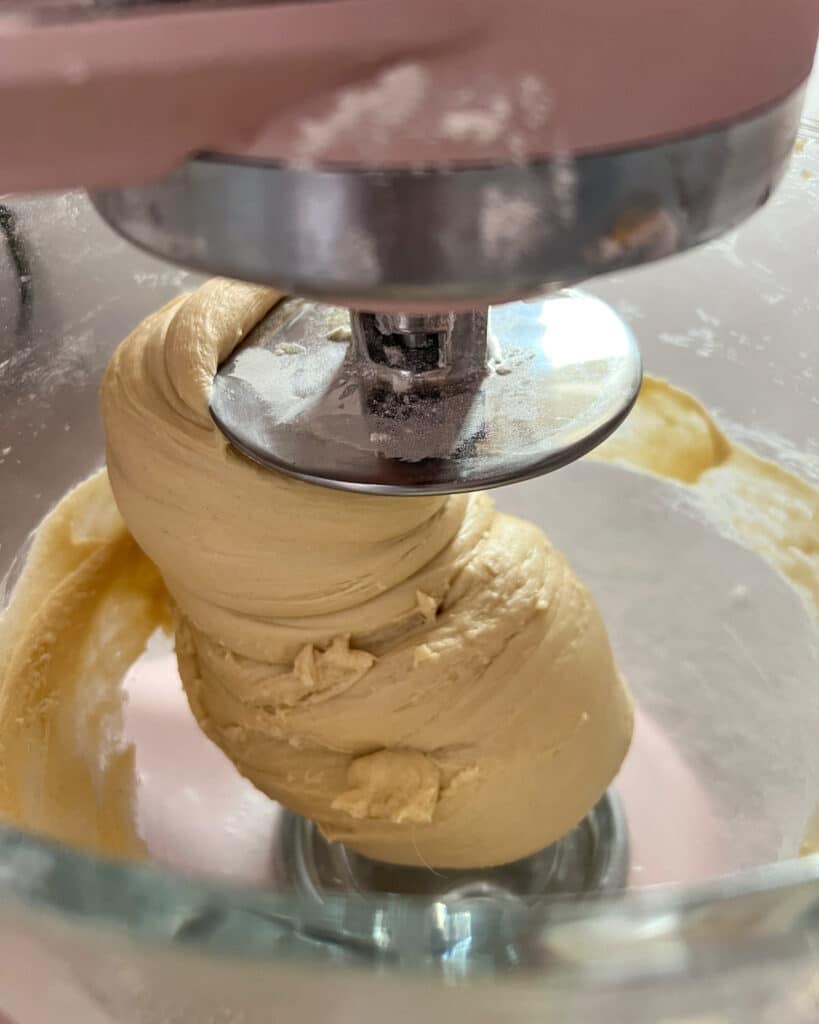
Knead the Dough
Turn the mixer up to medium-high speed for 3-5 minutes, or until the dough no longer sticks to the sides of the bowl.
If it seems too sticky, add an extra tablespoon of flour and keep mixing.
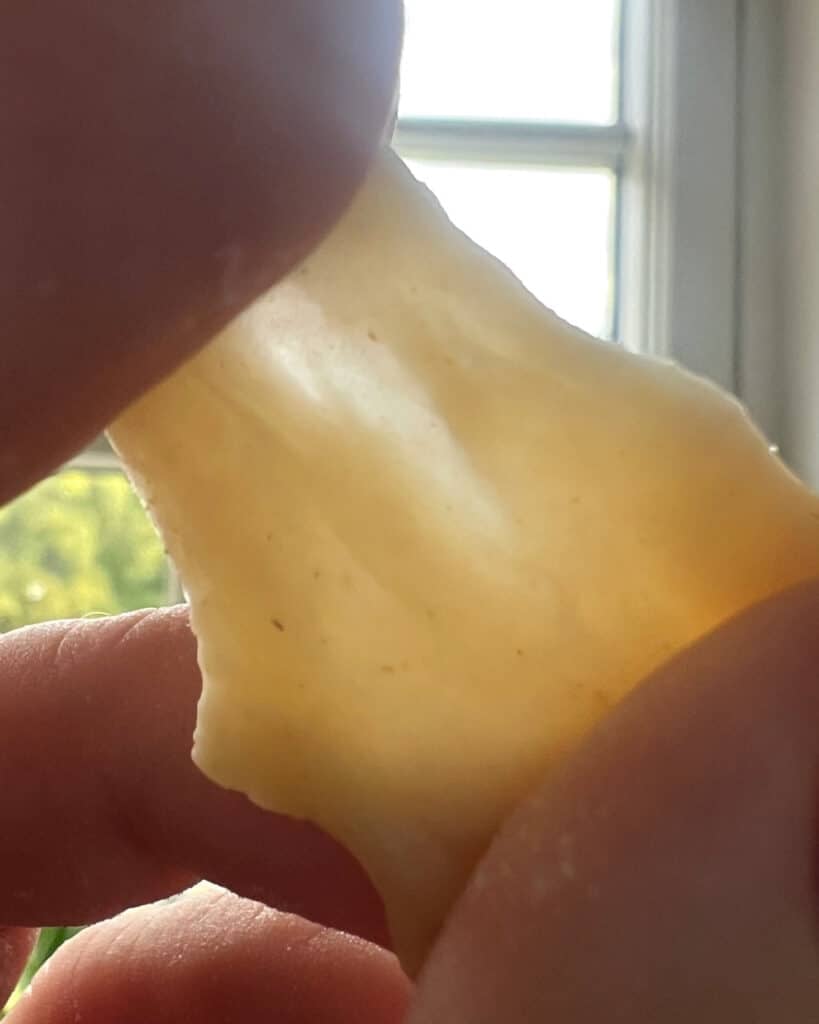
Windowpane Test
Tip the dough out onto a lightly floured work surface and knead by hand until it is no longer sticky.
Check if the dough is ready with the windowpane test: stretch a small piece - if it becomes thin enough to let light through without tearing, it's done.
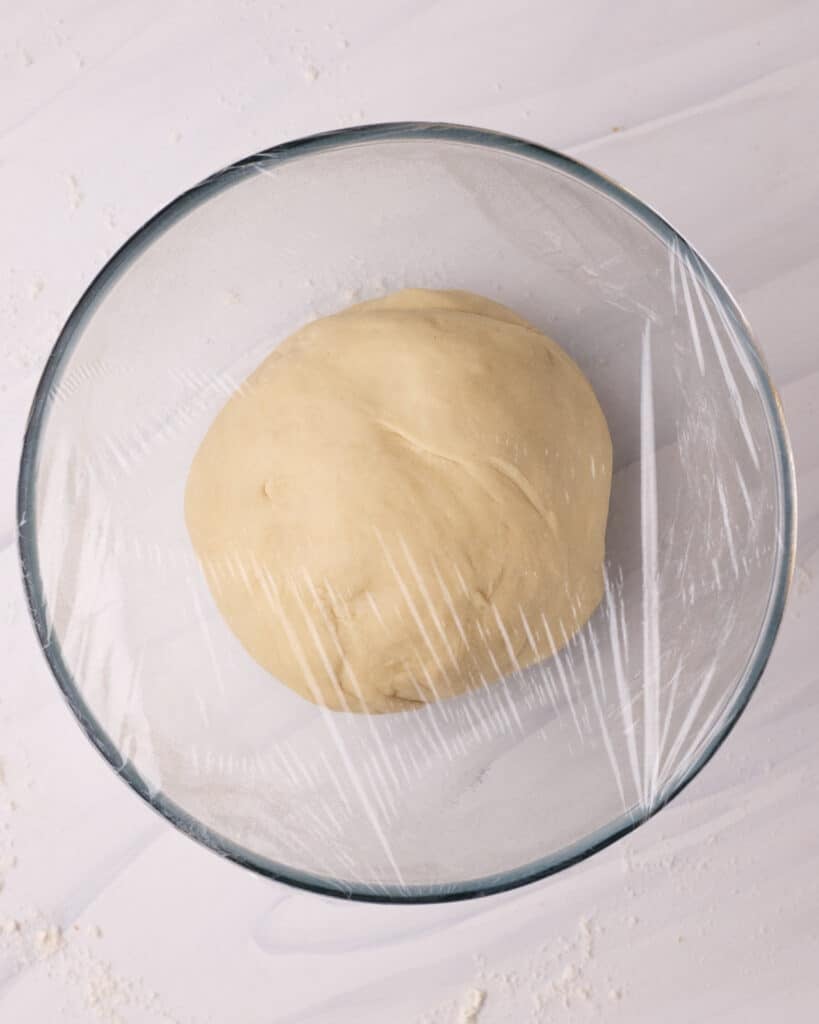
First Proof
Shape the dough into a smooth ball and place it in an oiled bowl. Cover with plastic wrap and leave it on the worktop or in a warm spot to rise until doubled in size.
This first rise will take 1-2 hours, depending on the temperature of your kitchen.
How to Know When Dough Has Fully Proved
Once your dough has doubled in size, you can test if it's ready by pressing on it with your finger.
- Underproofed dough will bounce back immediately.
- Perfectly proofed dough will come back slowly, and only about halfway, so you'll still see a small indent.
- Overproofed dough won't spring back at all and may even deflate a little when you touch it.
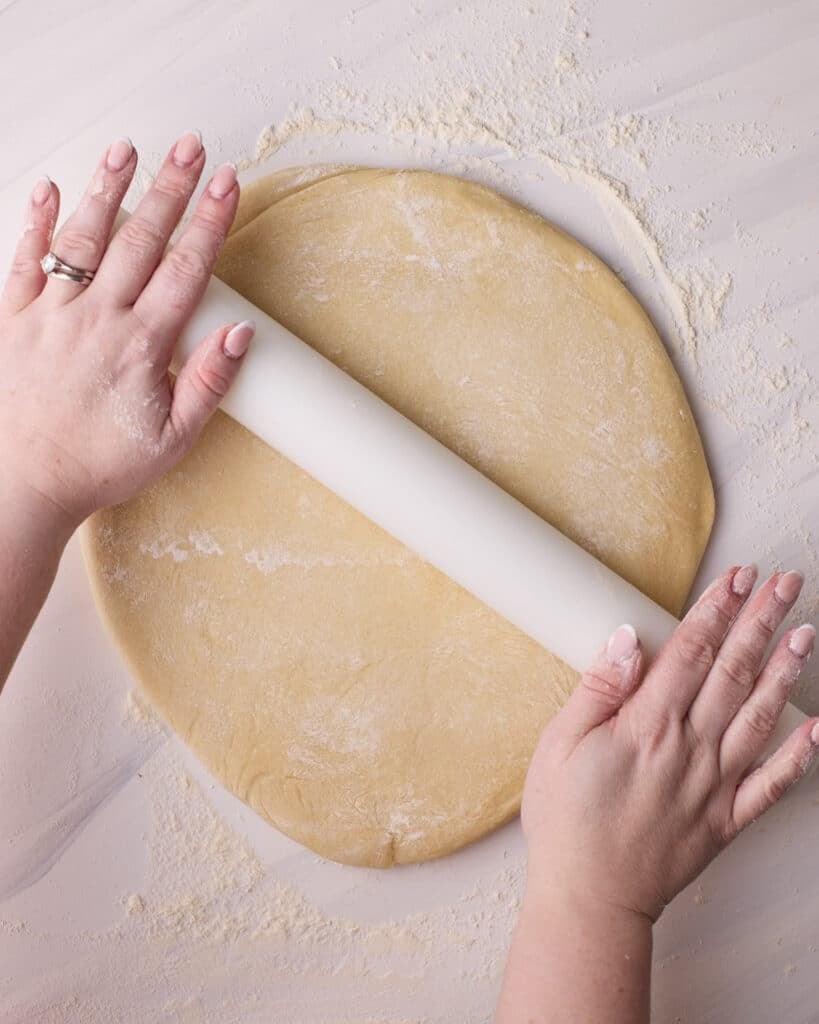
Roll Out the Dough
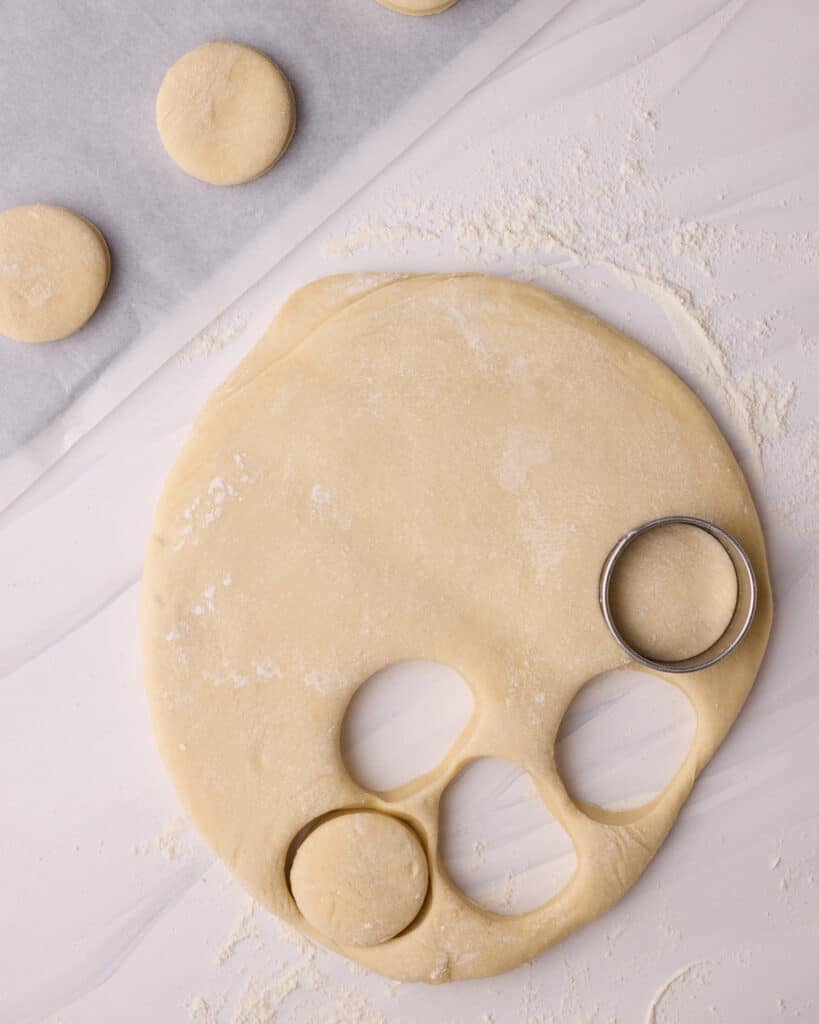
Once the dough is ready, punch it to release excess air. Tip it out onto a floured work surface and roll it to about ½ inch thickness.
Cut Out the Donuts
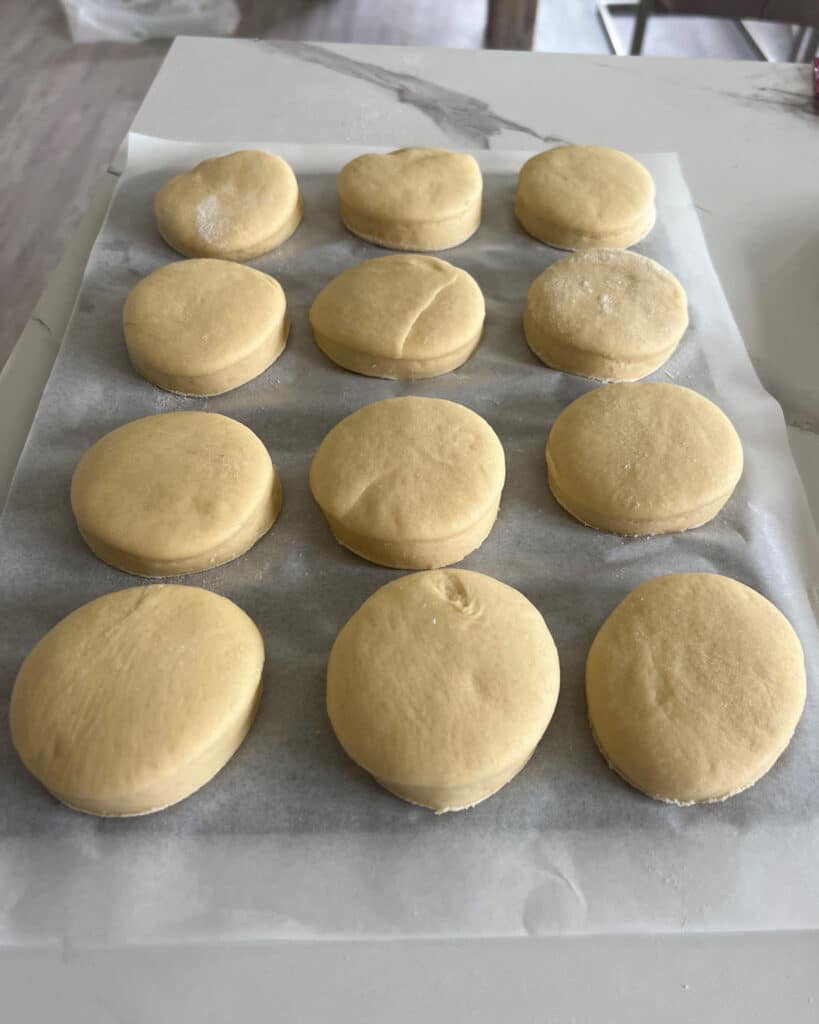
Use a cookie cutter to cut rounds from the dough and place them on a lined baking sheet, leaving a little space between them.
The scraps can only be re-rolled and cut out once, so aim to cut your circles close together to use the dough efficiently.
Second Proof
Cover the donuts loosely with plastic wrap or a kitchen towel and let them rise at room temperature for about 45 minutes. Use the finger prod test again, and if they're not ready, check every 10-15 minutes.
Once risen, uncover the donuts and heat 2-3 inches of oil in a saucepan.
Fry the Donuts
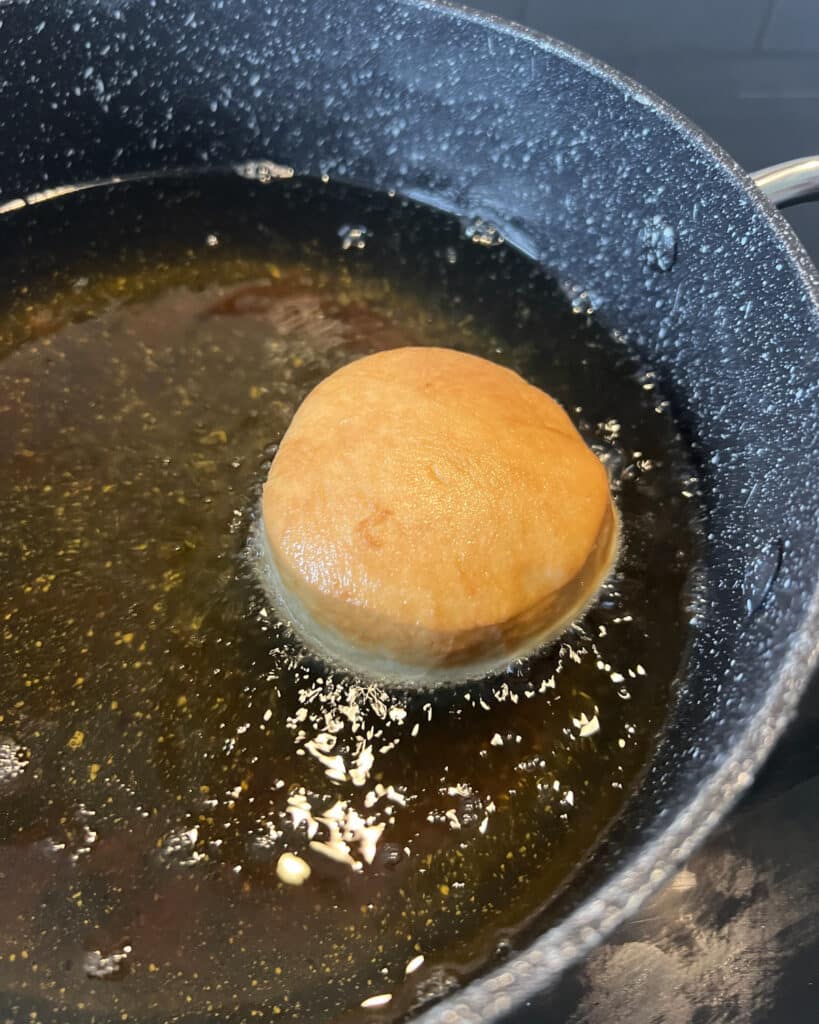
Use a thermometer to heat the oil to about 340°F (171°C).
Use a metal slotted spoon to lower a donut into the hot oil - it should bubble immediately. Fry until the underside is light golden brown, then flip and cook the other side for about 1-2 minutes.
Remove the donut from the pan and place it on a wire rack lined with paper towels to drain excess oil. Fry in small batches (2-3 at a time), letting the oil return to temperature between batches.
Oil Temperature
I have tested this homemade donut recipe many times with different temperatures, and I found that about 340°F/170°F is optimal to cook the donuts through thoroughly without them turning too dark or taking on too much oil.
The temperature will fluctuate as you fry the donuts, so check it and let it come back to temperature in between every batch. Try to keep it between 325° and 350°.
Sugar Coating
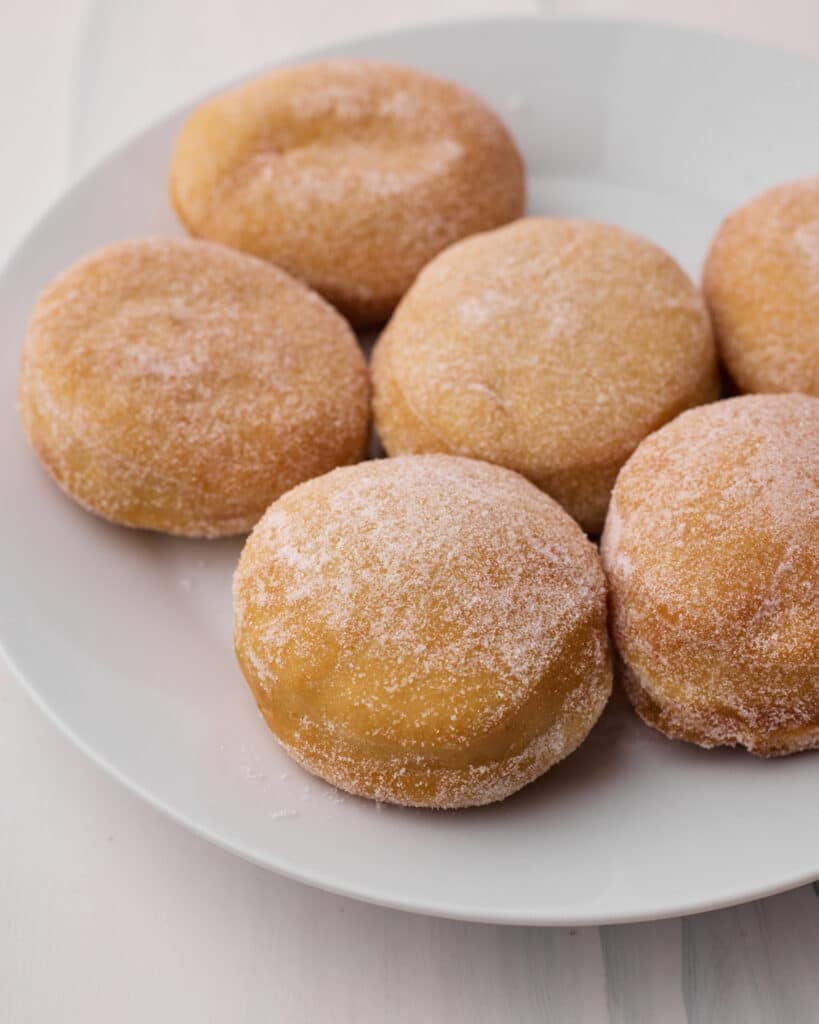
Once the donuts are still hot but cool enough to touch, roll them in a small bowl of sugar to coat entirely, then leave them to cool completely.
You can roll them in granulated sugar or powdered sugar according to preference.
Expert Tips For Perfect Donuts
These are a few important notes to keep in mind when making fried donuts. These frying tips apply to both yeasted donuts and pastry donuts like French crullers.
- Maintain the temperature: Keep the oil between 325°F and 350°F for best results. Hotter oil browns the outside too quickly, while cooler oil makes the donuts greasy. Use an instant-read thermometer and let the oil return to temperature between batches.
- Avoid finger indents: Cut the parchment under each donut into small squares and use them to gently lower the donuts into the hot oil without touching them and leaving finger indents.
- Set up in advance: While the donuts are in their second proof, set out your thermometer, cooling racks lined with paper towels, a bowl of sugar for rolling, and a plate to rest your frying spoon between batches. Trust me, you'll be glad you did!
- How to know when donuts are done: The bubbling will slow as the donuts cook. Look for a light golden brown colour - they'll continue to darken slightly after removing from the oil.
Make the Cream Donut Filling
Before you make the crème légère filling, the pastry cream we made earlier needs to be chilled for at least 2 hours (or up to 72 hours).
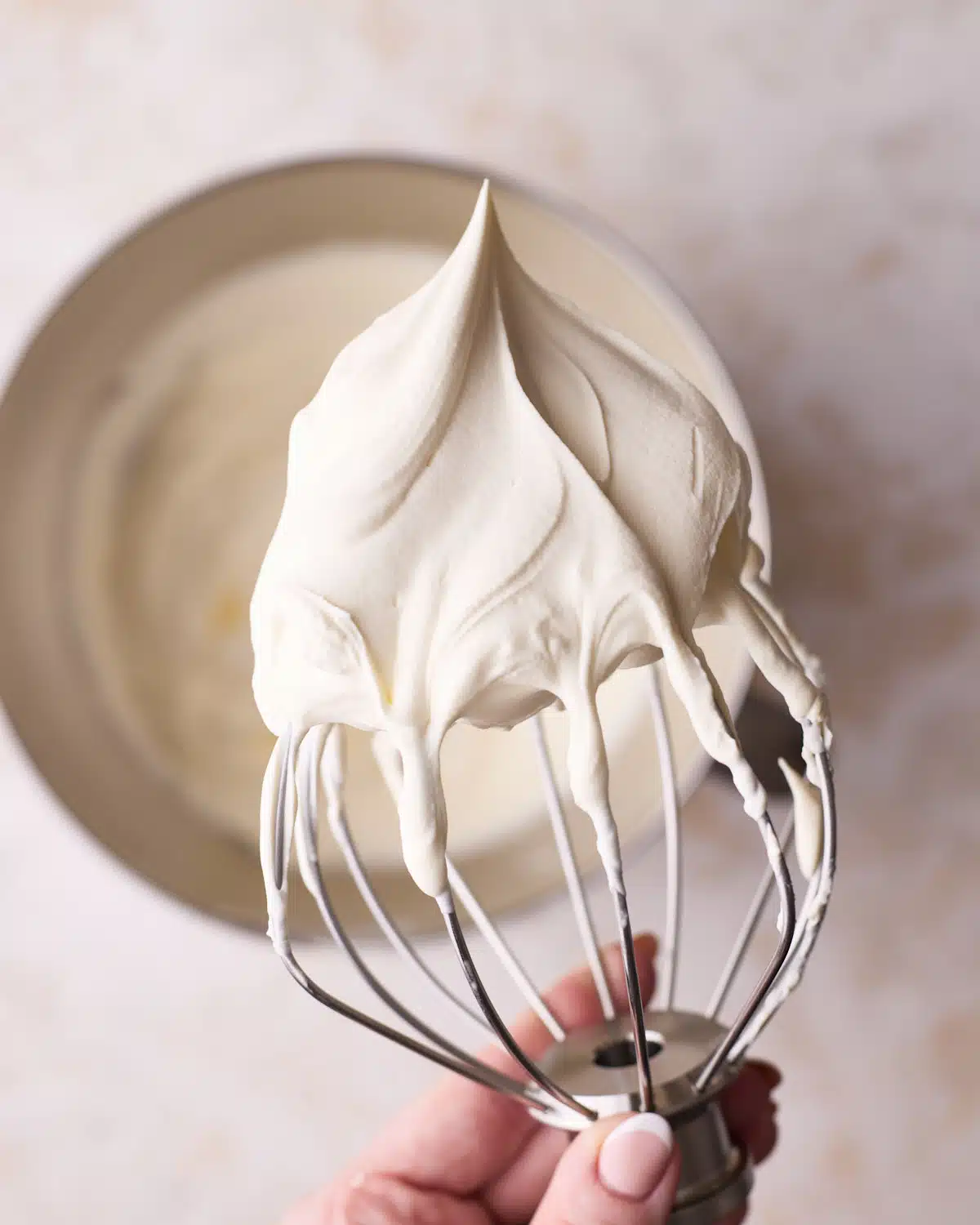
- Whip the cold heavy cream to medium peaks, being careful not to overwhip - it should still be soft enough to fold in easily.
Check my whipped cream guide to see what medium peaks look like.
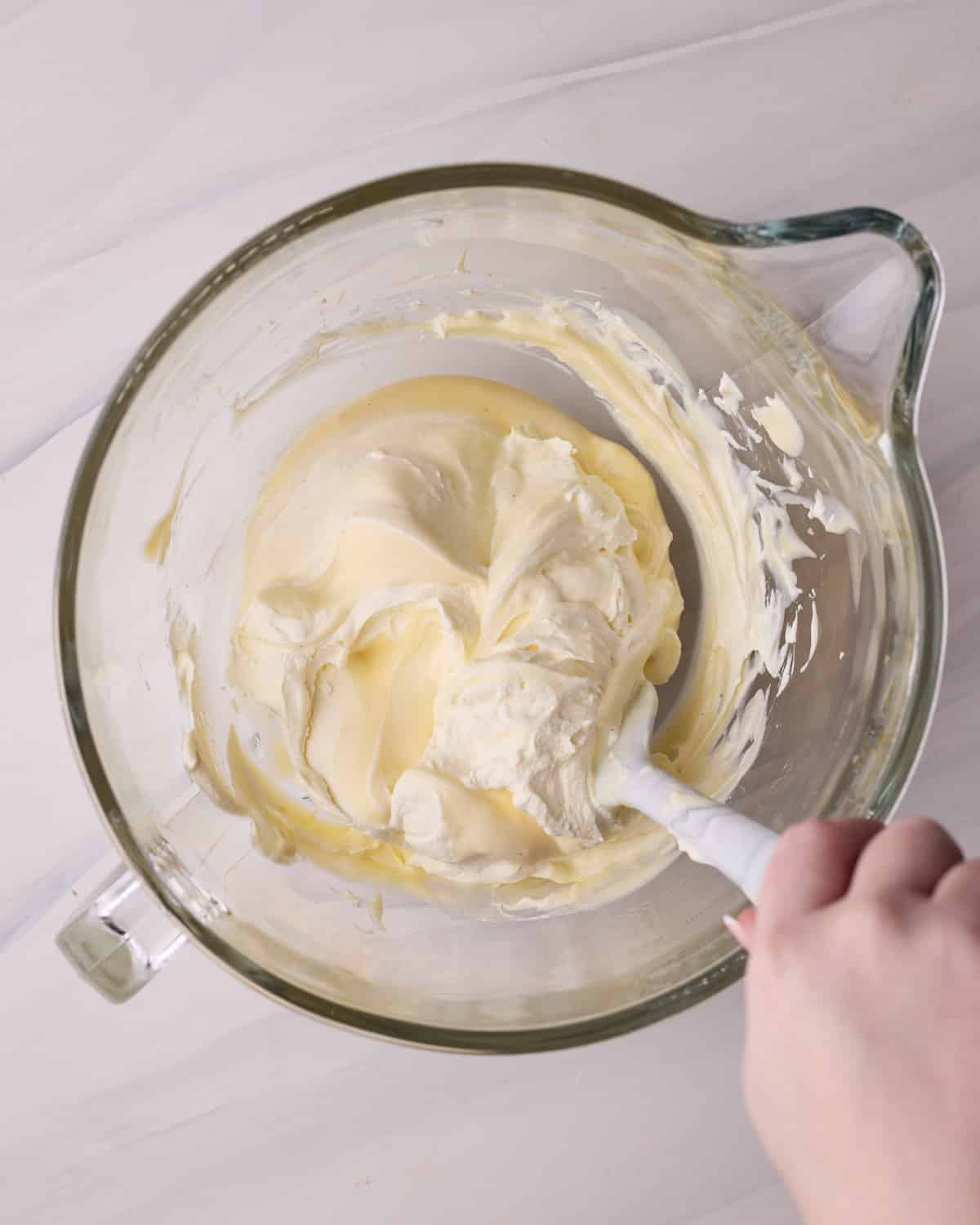
- Take the chilled pastry cream out of the fridge and stir until smooth. Fold in the whipped cream in two batches; the first one will lighten the mixture, and the second will keep it airy.

- Use a long, thin object, like a metal straw or a chopstick, to poke a hole in the side of each donut. Wiggle it around inside to create space for the filling.
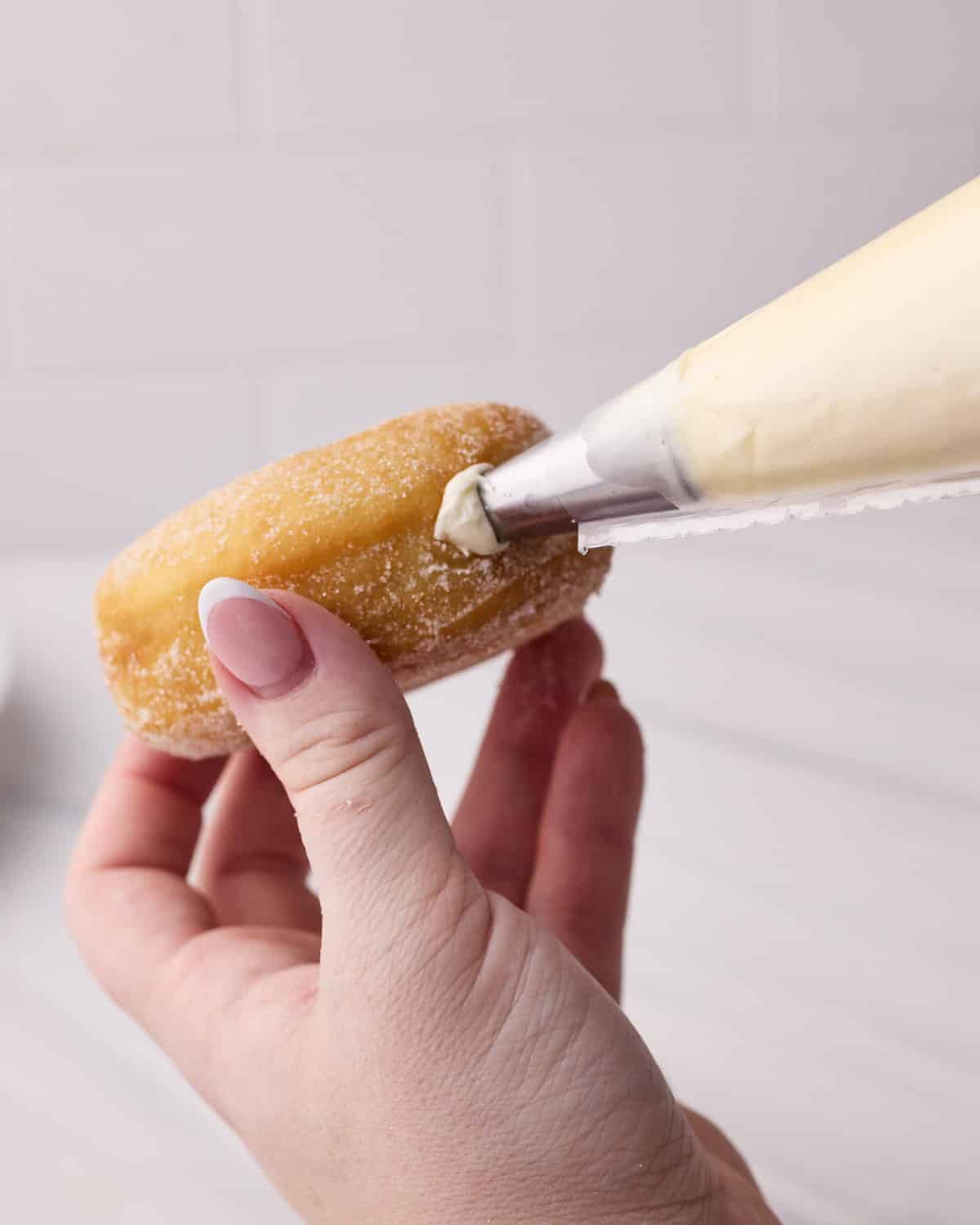
- Scoop the filling into a piping bag, then gently squeeze the Bavarian cream into the center of the doughnut until it feels heavy.
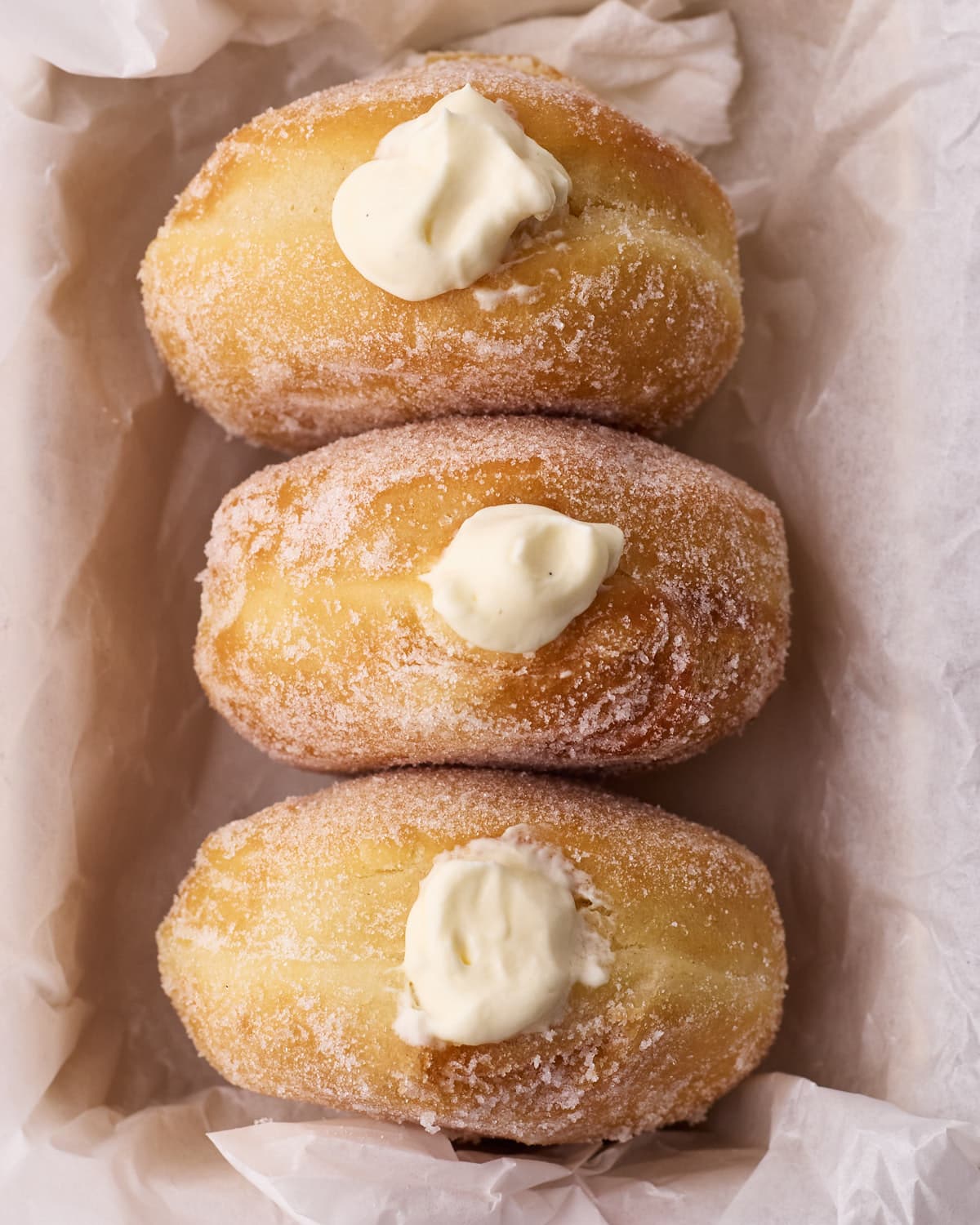
Slowly pull the piping bag out of the donut, leaving a little blob of cream showing.
Common Donut Mistakes
Here's a quick guide to common donut issues and how to fix them.
- Yeast isn't frothing: Your yeast is likely dead - it's time to replace it!
- Donuts are flat: Overproofing is usually the culprit, either from rising too long or in a warm environment. Yeast-based dough likes a bit of warmth to work, but if it's too hot, it will take on too much air. Room temperature should be fine unless you live in a very hot climate.
- Donuts are raw inside: This usually means that the oil was too hot, so the outside of the donuts likely browned before the inside cooked.
- Donuts are dense: If your donuts are dense or don't puff up when fried, they were probably underproofed.
- Donuts are oily: If the donuts are super oily, the oil probably wasn't hot enough. The longer the donuts are submerged in the oil, the more time they have to absorb it.
- Trouble maintaining oil temperature: To keep the oil temperature steady, it's best to keep the hob at medium or medium-low heat. It also helps to use a generous amount of oil (around 3-5 inches), as shallow oil fluctuates faster. The oil will cool each time you add donuts, so find a gentle, steady, slightly rising heat that works with your stovetop.
Variations
Some tasty ways to switch things up and put your own spin on these tasty, filled donuts.
- Different flavors - While the creamy vanilla filling is super tasty, it's so easy to adjust this recipe to make a variety of different flavors. Try using my pistachio pastry cream instead of vanilla, or swirl Nutella or peanut butter into the filling! If you're a classic custard fan, fill the donuts with my homemade custard pastry cream - just like my custard donuts.
- Cinnamon Sugar - Add a tablespoon of cinnamon to the bowl of sugar before rolling the donuts in it for a cozy cinnamon-sugar flavor.
- Add a glaze - For an extra touch of sweetness, top these donuts with a vanilla glaze or cream cheese glaze. Check out my mini bundt cake post for inspiration on different flavored glazes!
- Boston Cream Donuts - With just a few small tweaks to this recipe, you can make Boston Cream Donuts as well! You could even make both kinds of donut from the same batch. Check out my homemade Boston cream donut recipe for details.
Storage
For best results, enjoy these donuts the same day.
You can prepare the dough overnight (see FAQ) and make the pastry cream up to 3 days in advance.
Store unfilled donuts in an airtight container with paper towels or in a paper bag. Filled donuts must be kept in the fridge because of the cream filling.
FAQ
Yes! You can do the first proof in the fridge overnight. The cold slows down the fermenting process, giving the dough a slow rise and a fluffy texture. Place the covered dough in an oiled bowl in the fridge for 8-10 hours. The next day, let it sit on the counter for about 40 minutes to warm slightly, then shape.
The filling inside a Bavarian cream donut is crème légère - it's made by folding chantilly cream into vanilla pastry cream to make it lighter.
Bavarian cream (or crème Bavaroise) is actually a set dessert made from crème anglaise (custard sauce), whipped cream, and gelatin. However, the delicious, creamy filling inside Bavarian cream donuts is made from pastry cream and whipped cream, folded together to make
Yes! I have an induction stovetop and had no problems frying these donuts. In fact, the way an induction stovetop provides heat can even make it easier to control the temperature of the oil.
Bavarian cream donuts are rolled in sugar and filled with a mixture of pastry cream and whipped cream. Boston cream donuts are not coated in sugar, are filled with straight pastry cream, and are topped with a chocolate glaze.
Show Me Your Bakes!
If you tried this recipe, I'd love to know how it turned out in the comments!
Want to share a photo? You can send me a pic or tag @bonni_bakery on Instagram - I love seeing all your creations.
More Custard Desserts
If you love these Bavarian cream donuts, you might enjoy some of these other custard recipes:

Bavarian Cream Donut Recipe
Ingredients
- 3 (3 Large) Large Egg Yolks
- 50 g (¼ cup) Granulated Sugar (caster sugar)
- 240 ml (1 cup) Whole Milk
- 25 g (3 tablespoon) Cornstarch
- 1 teaspoon Vanilla Extract or vanilla bean paste
- 1 pinch Salt
- 1 tablespoon Unsalted Butter
- 240 ml (1 cup) Heavy Cream (double cream)
- 600 g (5 cups) All-purpose Flour (plain flour)
- 100 g (½ cup) Granulated Sugar (caster sugar) plus extra for coating
- 2 packs Active Dry Yeast 14g (or instant yeast*)
- 240 ml (1 cup) Whole Milk
- 2 Large Eggs
- 80 g (⅔ stick) Unsalted Butter melted
- 1 teaspoon Salt
- Vegetable Oil for frying
Equipment
- Stand Mixer with dough hook attachment
- Round Cookie Cutter 2½ - 3 inches wide
- Large Pot
Instructions
- *The filling is made by folding whipped cream into chilled vanilla pastry cream. This means the pastry cream must be made ahead of time so it has the chance to cool. Make the pastry cream at least 2 hours in advance. If this is your first time making pastry cream, you might like to check out my vanilla pastry cream recipe post for extra tips and guidance.
- Whisk the egg yolks together with the cornstarch and sugar until pale and thick. It might look at first like it won't go smooth, but just keep whisking.3 (3 Large) Large Egg Yolks, 25 g (3 tablespoon) Cornstarch, 50 g (¼ cup) Granulated Sugar
- Heat the milk in a saucepan over medium heat until scalding hot - this means there is steam rising from it and tiny bubbles appearing on the surface. Don't let it boil.240 ml (1 cup) Whole Milk
- Gradually pour the hot milk into the egg yolk mixture, a little at a time, whisking as you go. It's important not to add it too quickly to avoid scrambling the eggs.
- Once all the milk has been added, pour the whole mixture back into the saucepan and continue to cook, whisking constantly until the pastry cream begins to thicken and boil with thick bubbles bursting on the surface.
- Let the pastry cream boil for 1-2 minutes. It should be thick and glossy.
- Remove from the heat and add the vanilla and salt. If you have any lumps in your pastry cream, you can pass it through a fine-mesh sieve to remove them.1 tsp Vanilla Extract, 1 pinch Salt
- Whisk in the butter.1 tbsp Unsalted Butter
- Cover with plastic wrap, so the plastic is touching the surface of the pastry cream, and let cool. Then refrigerate for at least 2 hours or up to 72 hours.
- Warm the milk to roughly body temperature and mix in the active dry yeast and 1 tablespoon of the sugar. Let it sit for 5-10 minutes or until it starts to froth up.If you are using instant yeast you can skip this step.240 ml (1 cup) Whole Milk, 2 packs Active Dry Yeast
- In the bowl of a stand mixer with a dough hook attachment, add the remaining sugar, salt, and eggs.100 g (½ cup) Granulated Sugar, 2 Large Eggs, 1 tsp Salt
- Once the yeast is frothy, pour the milk/yeast mixture into the mixer bowl and stir everything together to combine.
- Add the flour and turn the mixer on low speed for 1 minute until it incorporates slightly.600 g (5 cups) All-purpose Flour
- With the mixer still on low speed, slowly drizzle in the melted butter.80 g (⅔ stick) Unsalted Butter
- Turn the mixer up to high speed and let it mix for 3-5 minutes or until the dough is no longer sticking to the side of the bowl.
- Tip the dough out onto a lightly floured work surface and knead it by hand until it is no longer sticking to your hands.
- Form the dough into a smooth ball and place it in an oiled bowl. Cover with plastic wrap and leave it on the countertop to rise until it has doubled in size ( 1-2 hours depending on the temperature of your kitchen.
- Once the dough has doubled in size, check if it is ready by pressing on it lightly with your finger. If the indent disappears immediately, it needs longer to prove. If the indent comes back slowly and only about halfway, then it is ready to use.
- Punch the dough to release the excess air then tip it onto a floured work surface and roll it out to ½ an inch thick.
- Use a round cookie cutter (2½- 3 inches wise) to cut rounds out of the dough and place them on a lined baking sheet, with a little space between them. You can re-roll and cut out the scraps, but only once.
- Cover the donuts loosely with plastic wrap or a kitchen towel and leave to prove again for roughly 45 minutes. Do the indent test again to see if they are ready and if not, leave them for another 15 minutes.
- Once the donuts are ready, uncover them and start heating up the oil. Make sure the oil in your pan is at least 2-3 inches deep.Vegetable Oil
- Using a candy thermometer, bring the oil to a temperature of 350°F / 180°C.
- Next to your stovetop, set up a wire rack lined with paper towels (this is to absorb the excess oil).
- Test out your first donut by lowering it gently into the oil with a metal slotted spoon. It should start to bubble around the edges.
- Fry the donut until it is a pale golden brown color (it will continue to brown after). Then flip the donut over and fry the other side until it is the same color. This should take about 1-2 minutes per side.
- I find the optimum temperature for frying these donuts is 325° - 340°F ( 165° - 171°C). Make sure you let the oil come back up to temperature in between donuts as it may cool down as you are frying.
- Remove the donut from the oil and place on the wire rack lined with paper towels. Let cool for a minute or two then roll in sugar. Let them cool completely before filling.
- Repeat with all the donuts, I don't recommend doing more than 2 or 3 at a time to help regulate the oil temperature.
- Remove the chilled pastry cream from the fridge and whisk it gently to bring it back to a smooth consistency.
- Whip the cold heavy cream up to stiff peaks.240 ml (1 cup) Heavy Cream
- Fold half of the whipped cream into the pastry cream until almost completely combined, then fold in the other half of the whipped cream.240 ml (1 cup) Heavy Cream
- Use a long thin object like a chopstick or a metal straw to poke a hole in the side of each donut and move it around to create space in the middle.
- Put the filling into a piping bag with any kind of nozzle and squeeze it into the donuts. Once the donut feels heavy you will know it is full.
















Nicole Jackson says
Am I the only one that noticed that the ingredients for the Bavarian cream call for 1cup of whole milk and 1cup of heavy cream but the heavy cream is never added in? The directions never state when to add it and only list the milk and vanilla was being added. Not wanting to ruin it completely I didn’t add. This is more like a Boston cream than a Bavarian. It’s good but not what I was looking for.
Jules Grasekamp says
Hi Nicole,
The cream is whipped and folded into the pastry cream, right before filling the donuts. You can see this both in the 'Fill the Donuts' section in the recipe card and in the step-by-step instructions in the post. There is even a picture of the cream being whipped and folded into the custard 🙂
Also the post addresses the fact that 'Bavarian Cream' is actually a different kind of dessert, but the popular 'Bavarian Cream Donuts' that everyone knows and loves are filled with a filling like this, which is closer to a creme diplomat. I hope this helps 🙂
Nicole Jackson says
Thank you, I read and re-read those directions looking for it, but I did not read about how to fill the doughnuts because I know how to do that already. It might be good to note earlier in the directions that the cream will be folded in later.
Jules Grasekamp says
That is a really good point, I will update the recipe card to reflect this. Thank you Nicole!
Jules
Sonnet Adcox says
Is the dough supposed to be tough
Jules Grasekamp says
Hi Sonnet,
No the dough shouldn't be tough - at what stage did it get like this? I can try to help you troubleshoot!
Jules
Sonnet Adcox says
It got tough after I had put it in a bowl with Saran wrap over top of it and let it double in size and then when I went to do the test it was good so I took it out to roll it and use the cookie cutter to cut out the donuts and let them rise again but it was too tough to use the cookie cutters
Chris Radwanski says
What can I tell you, other than these are the most fluffy amazing donuts I have EVER had the pleasure of eating. I sat down, ate one, then two, then three and after my fourth one, I decided that was enough. I had to stop myself honestly.. Delicious!