
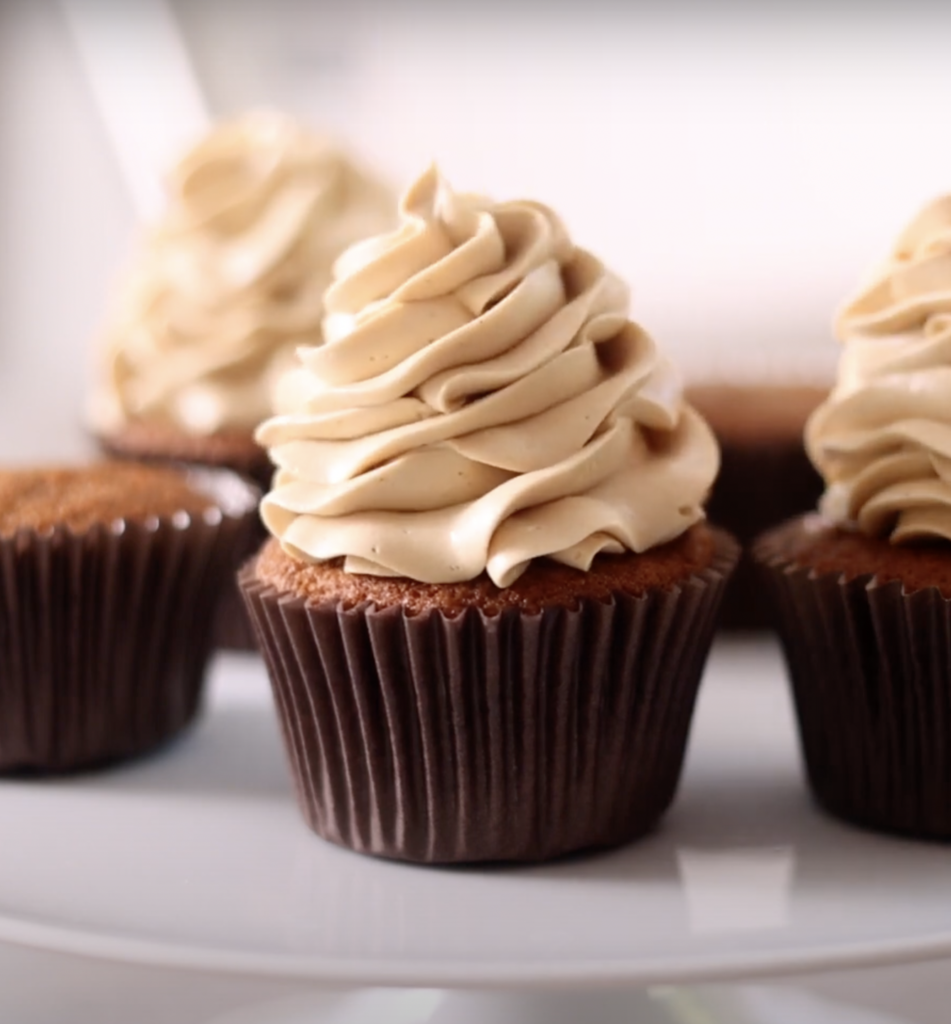
Russian buttercream is one of the fastest ways to get silky, glossy frosting on your cake. Its two-ingredient base comes together in under 10 minutes, with no eggs, powdered sugar, or hot sugar syrup.
Quick Look: Russian Buttercream Recipe
A quick and easy condensed milk frosting that gives you the silky texture and glossy finish of meringue buttercream, without eggs, powdered sugar, or hot sugar syrup.
☆ Why make THIS version? It's a simple, two-ingredient buttercream with all the temperature cues, technique details, and troubleshooting you need to make it silky and glossy without splitting.
SUMMARIZE AND SAVE THIS POST ON
When I first heard of Russian buttercream, I was skeptical. A frosting made with just condensed milk and butter didn't sound like it could hold a candle to Swiss or Italian meringue buttercream.
But after testing it, I was completely converted - and it's now my default frosting whenever I need something fast, reliable, and beautiful.
It has the same silky texture and glossy finish as a meringue buttercream, but comes together in minutes with no eggs, double boiler, or sugar syrups. It flavors very well, but is also delicious completely plain on a simple vanilla cake.
That said, the recipe is simple, but not completely foolproof. The temperature of the butter and the speed at which you add the condensed milk make the difference between a smooth, glossy buttercream and a curdled mess.
I'll show you exactly what to look for, and how to rescue it if it does split.
Reader Review:
This is my second time trying this recipe. I LOVED how it came out the first time so I gotta try it again to see if I can do better! The instructions were very easy for me to read and understand and the correction tips were super helpful. Definitely recommend trying this recipe!
⭐⭐⭐⭐⭐ - Saydee
Jump to:
- Quick Look: Russian Buttercream Recipe
- Key Ingredients
- How to Make Russian Buttercream
- How To Fix Broken Buttercream
- Russian Buttercream vs Other Buttercreams
- What You Can Do With It
- Flavor Variations and Coloring
- Storage
- Russian Buttercream FAQs
- Watch How To Make It (Video)
- More Frosting Recipes
- Russian Buttercream Recipe
Key Ingredients
The base recipe for Russian buttercream only has two ingredients, but the beauty of this frosting is how well it takes on flavor, so it's super versatile. As standard, I always add a little bit of vanilla and salt, just for depth of flavor.
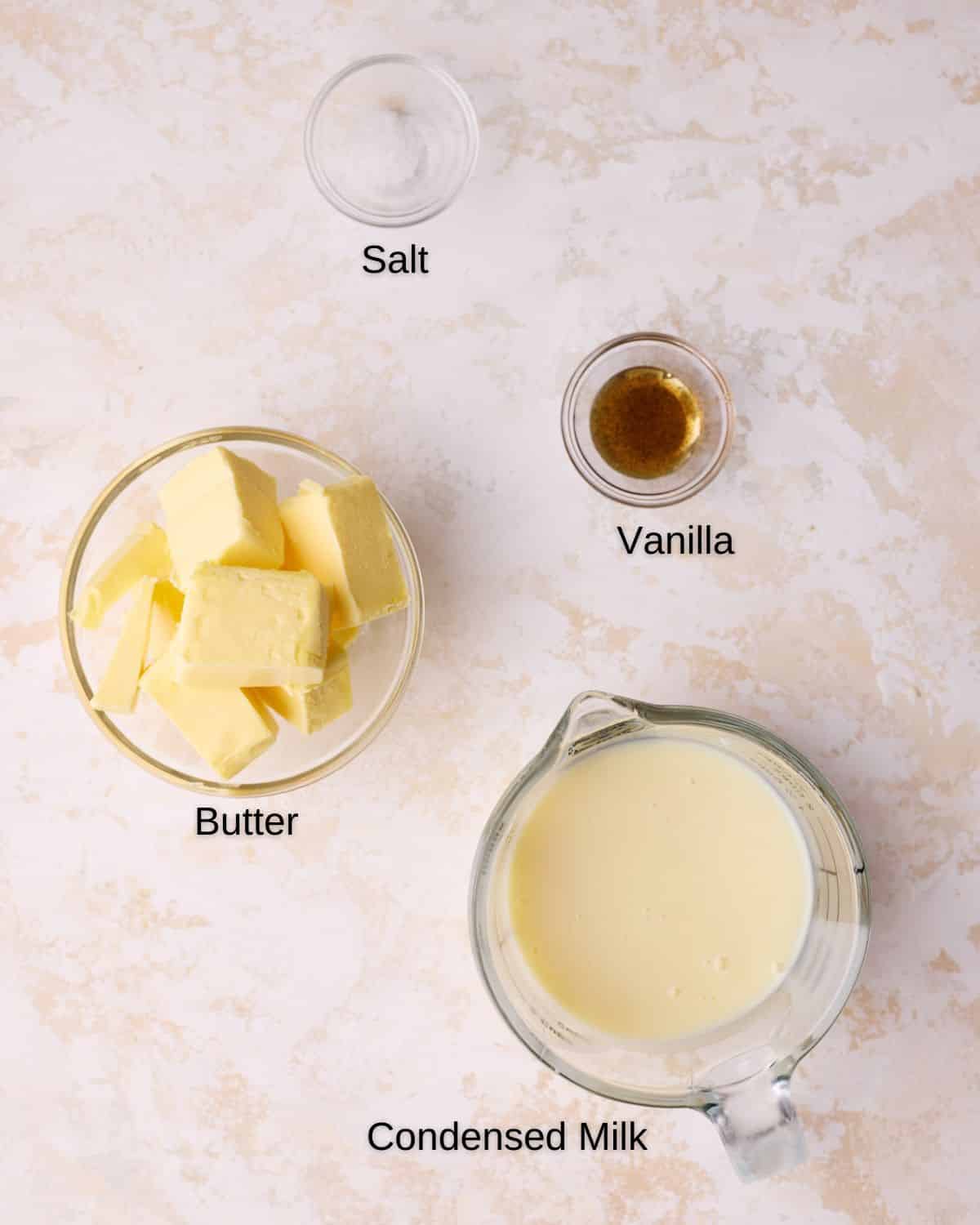
- Unsalted Butter - Use unsalted, not salted butter. Make sure the butter is room temperature before beginning.
- Condensed Milk - A can of sweetened condensed milk adds all the sweetness to this frosting. I was concerned about the 'milky' flavor coming through, but it doesn't; it just makes it glossy and sweet. Make sure you get condensed milk and NOT evaporated milk!
- Flavor - I always add a dash of vanilla and a pinch of salt to round out the flavor, but Russian buttercream also takes on other flavors really well (see below).
See the recipe card for measurements in both cups and grams (though I always recommend weighing your ingredients).
How to Make Russian Buttercream
Because it's so quick to make, this is the frosting I rely on when I realise I need to frost a cake TODAY and haven't planned ahead. (It happens a lot...)
Before You Begin...
- It is extremely important to use room temperature butter in this recipe. It should indent easily when pressed but still look matte, not shiny or greasy.
Cold butter may cause the buttercream to separate; overly warm butter will make it soft and soupy.
I typically take mine out of the fridge 1-2 hours before I need to use it. The aim is for the butter and condensed milk to be as close as possible in temperature, so they will emulsify smoothly.
Whip the Butter
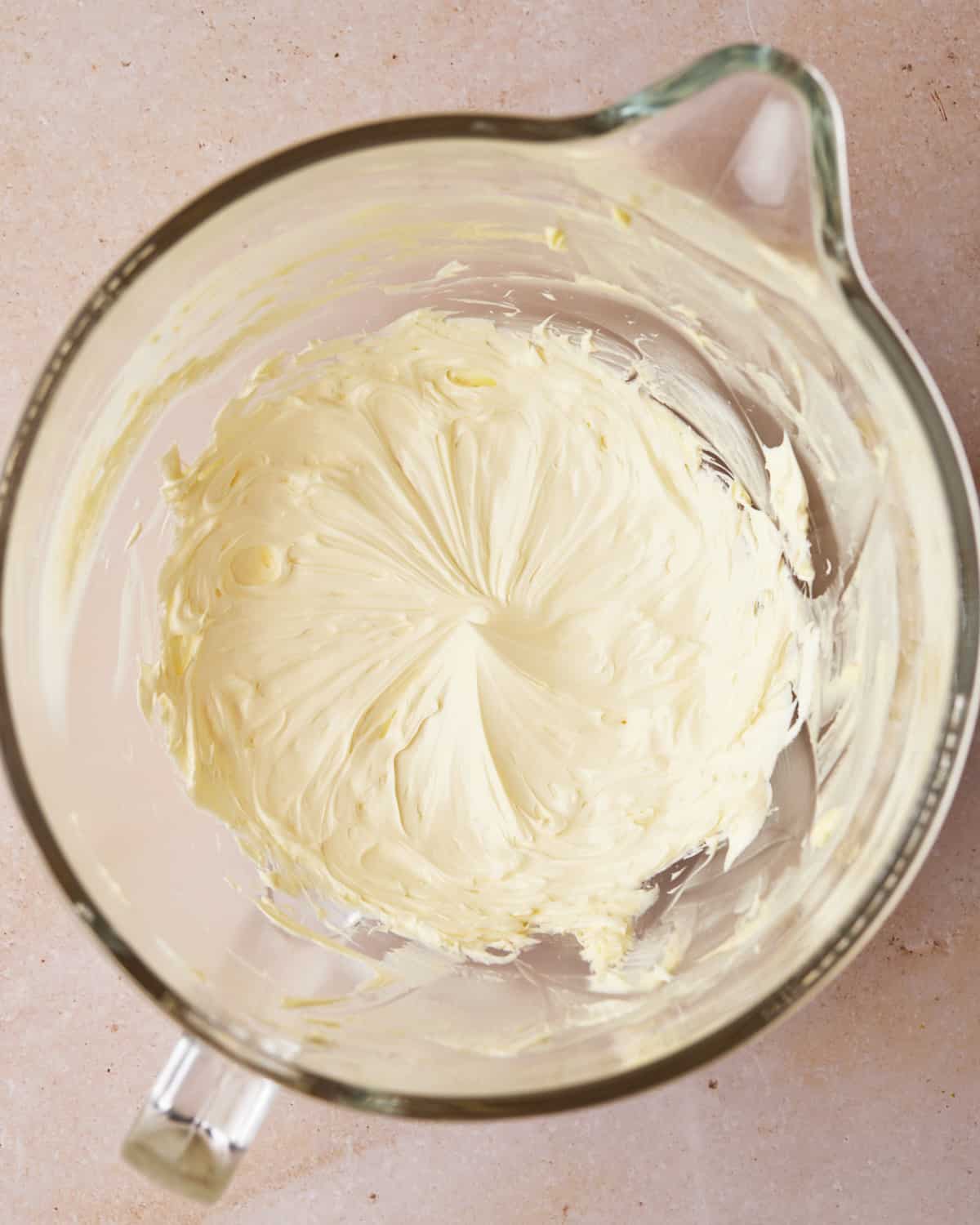
Whip the butter on high speed for 5 full minutes. Make sure you stop a few times to scrape down the sides of the bowl.
The whipped butter should be thick, glossy, and very pale. If in doubt, go a bit longer; it has to be whipped very well in order to support the condensed milk and hold its shape.
Add Condensed Milk
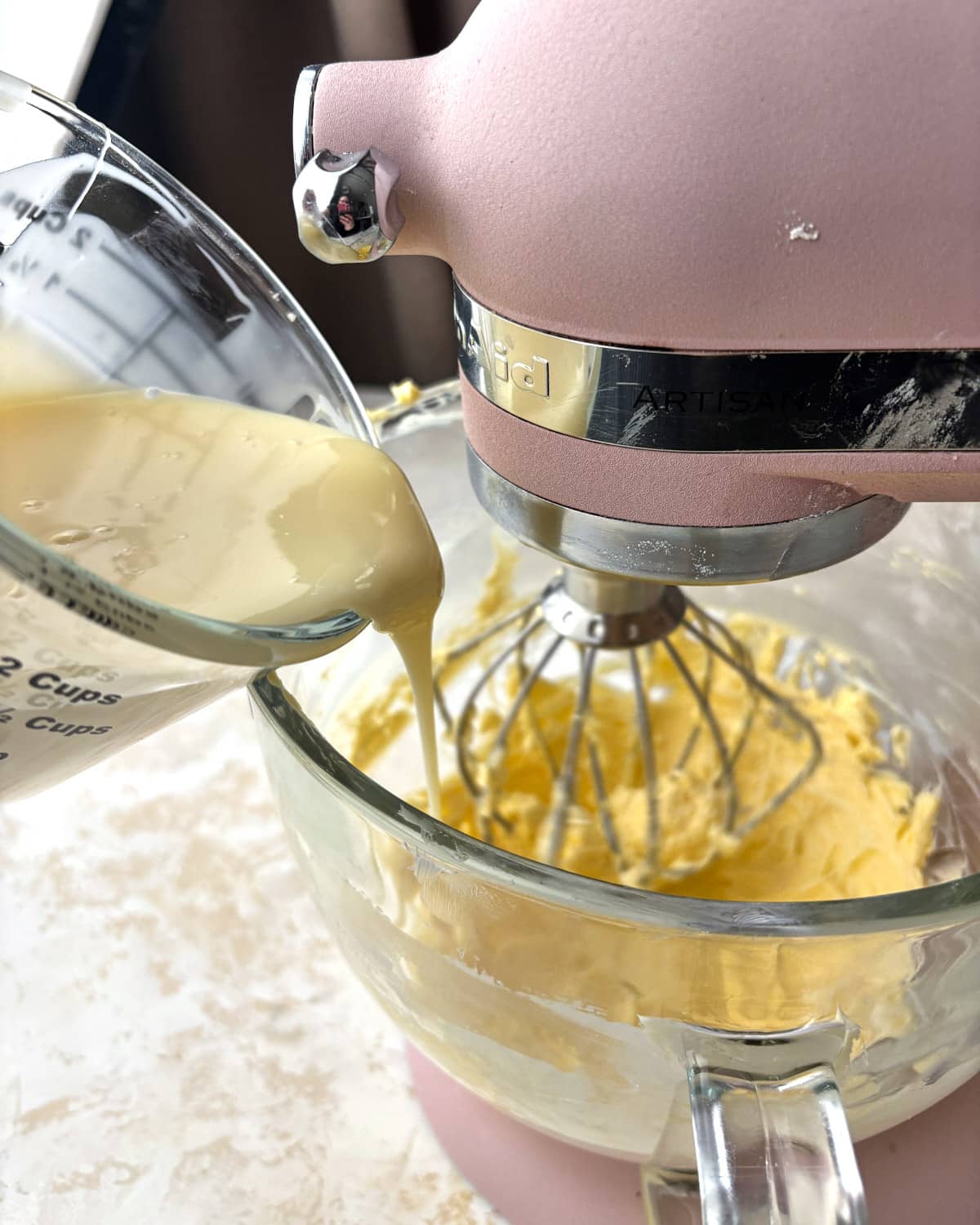
Turn the mixer down to medium speed and drizzle in the condensed milk in a very slow, steady stream.
It's important to add it very gradually to allow it to emulsify properly and stop it from splitting.
Jules' Note
When I first started making this frosting, I thought pouring the condensed milk in a few batches would be slow enough. But adding even ¼ can all at once often caused the buttercream to split.
I tried drizzling it in slowly like this, and I've never had a broken batch since! Definitely worthwhile to go slow.
Whip More
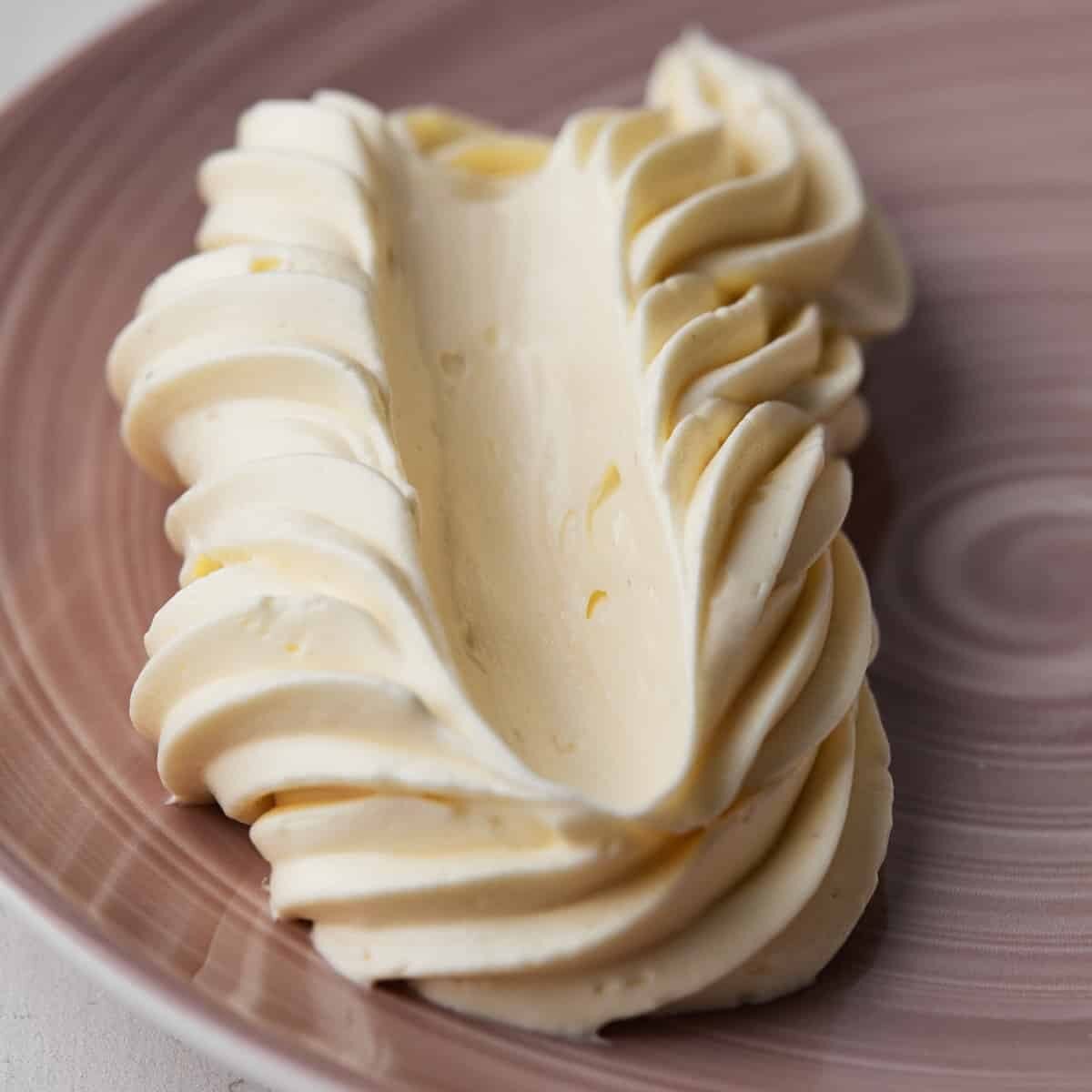
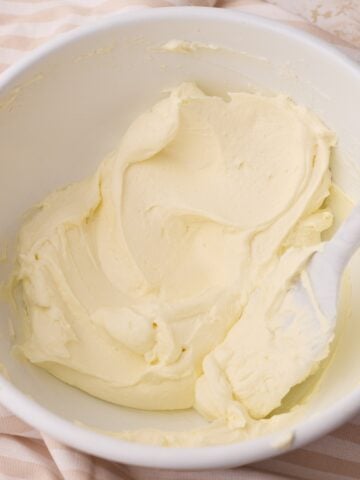
Turn the mixer back up to high speed and whip for another minute. This is where the magic happens - the frosting should thicken into a fluffy texture and start to look beautiful and silky-smooth.
If it seems like it's not the right consistency, here's How To Fix Broken Buttercream.

Add Flavor
Add the vanilla and salt, and if you are adding any additional flavorings or colors, add them now (see below for ideas!)
Whip until everything is combined.
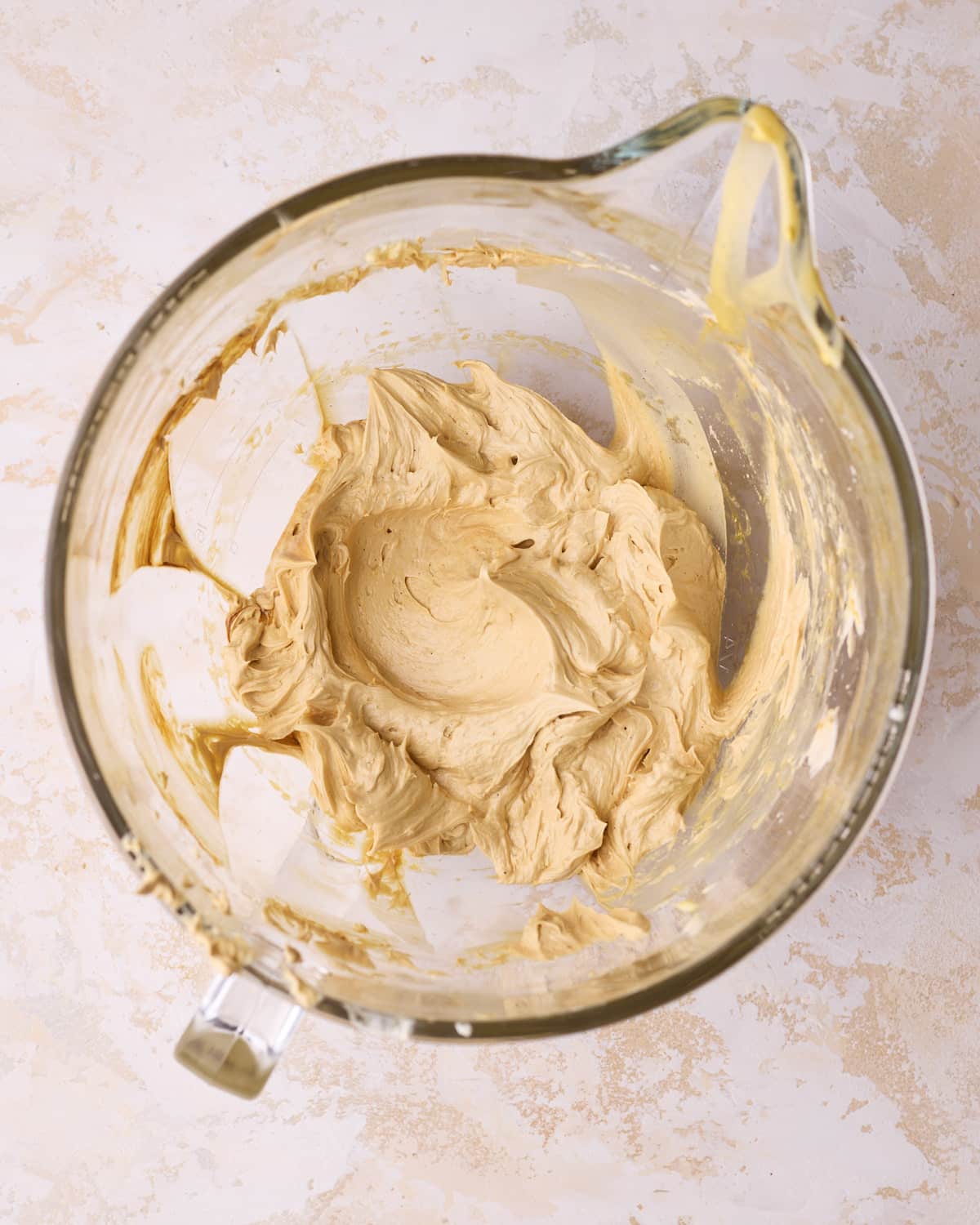
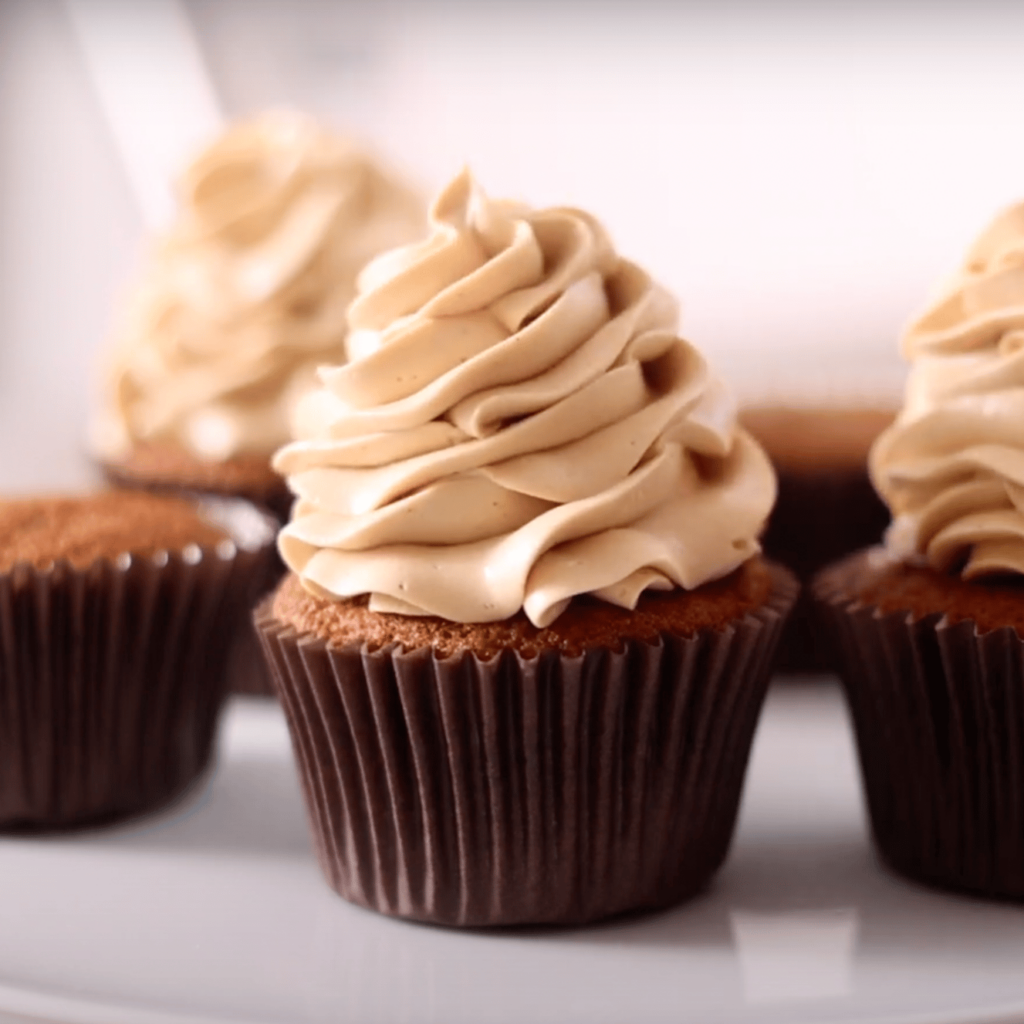
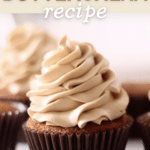
This batch is flavored with espresso powder for my coffee cupcake recipe.
How To Make It Extra Smooth
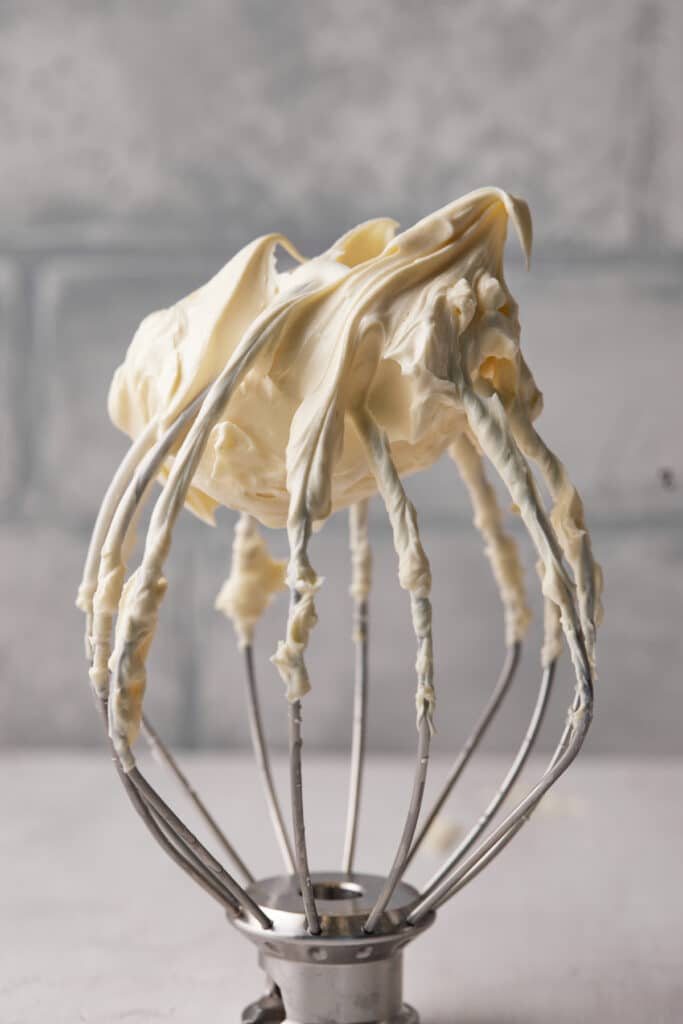
For an ultra-smooth finish, you can get rid of large air bubbles after whipping.
Once the buttercream is fully mixed, switch to a paddle attachment and mix on low speed for 1-2 minutes. This will smooth out the texture and give you a more polished finish.
This step is definitely not essential, but it does make a noticeable difference if you want it to look perfectly smooth.
How To Fix Broken Buttercream
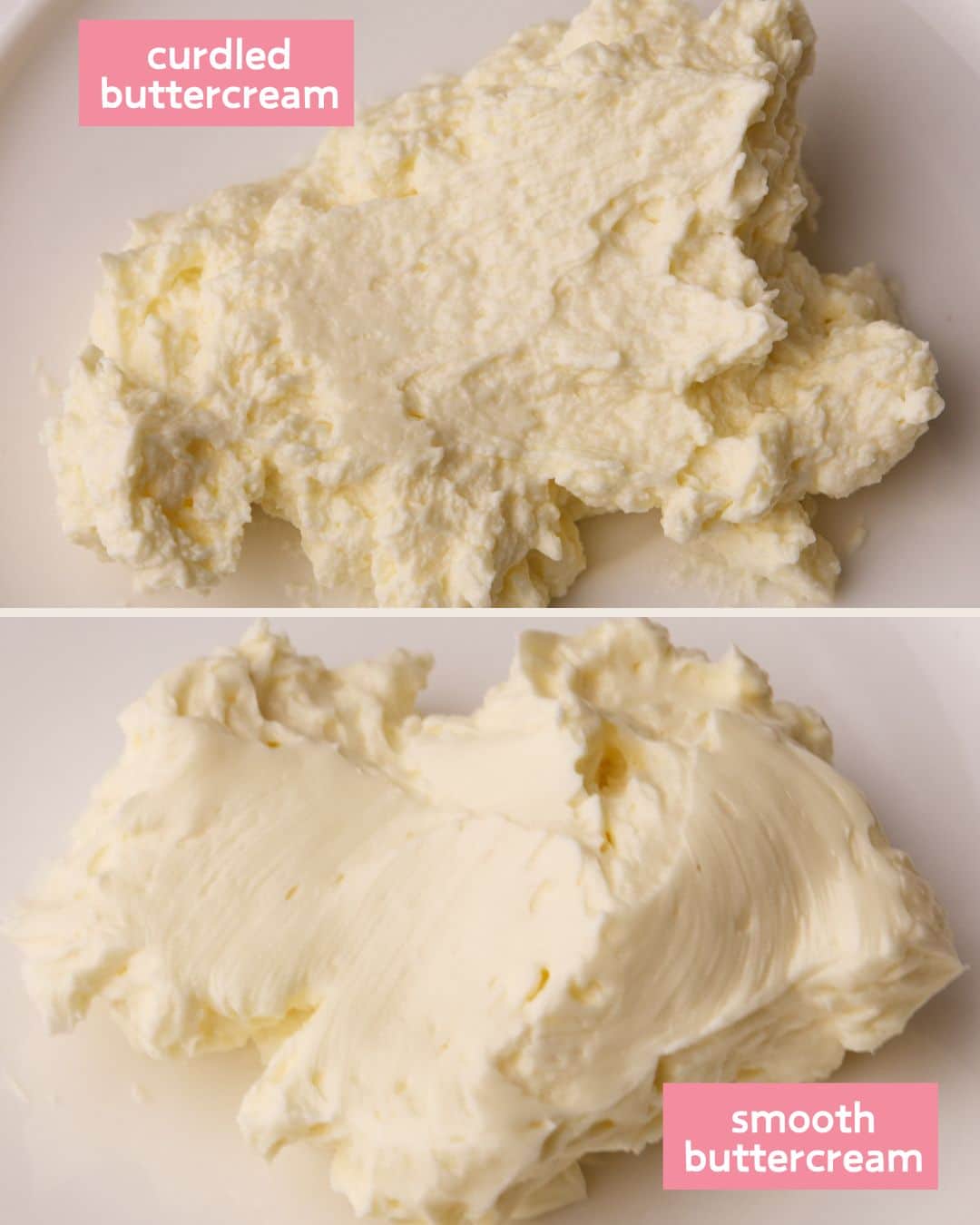
While it's an easy recipe, Russian buttercream can split - it usually comes down to butter temperature or adding the condensed milk too quickly. Don't panic, it's fixable!
Frosting looks curdled or lumpy → Gently warm it and keep whisking until smooth
Frosting is too soft or soupy → Chill for 15 minutes, then whip again
When it comes together properly, it should be smooth, glossy, and hold its shape well.
I have a full troubleshooting guide for more information on how to fix broken buttercream.
Russian Buttercream vs Other Buttercreams
If you're trying to decide which type of buttercream to use, here is how Russian buttercream compares to the others:
- Russian buttercream - Silky, glossy, quick to make. Slightly heavier than meringue buttercreams, but not overly sweet.
- American buttercream - Very easy, but sickly sweet and often grainy from powdered sugar (no thanks!)
- Swiss meringue buttercream - Light, silky, and more elegant, but it takes more time and a double boiler.
- Italian meringue buttercream - Very stable and smooth, but the most technical to make and involves a hot sugar syrup.
If you want something quick and easy with a professional finish, Russian buttercream is hard to beat.
What You Can Do With It
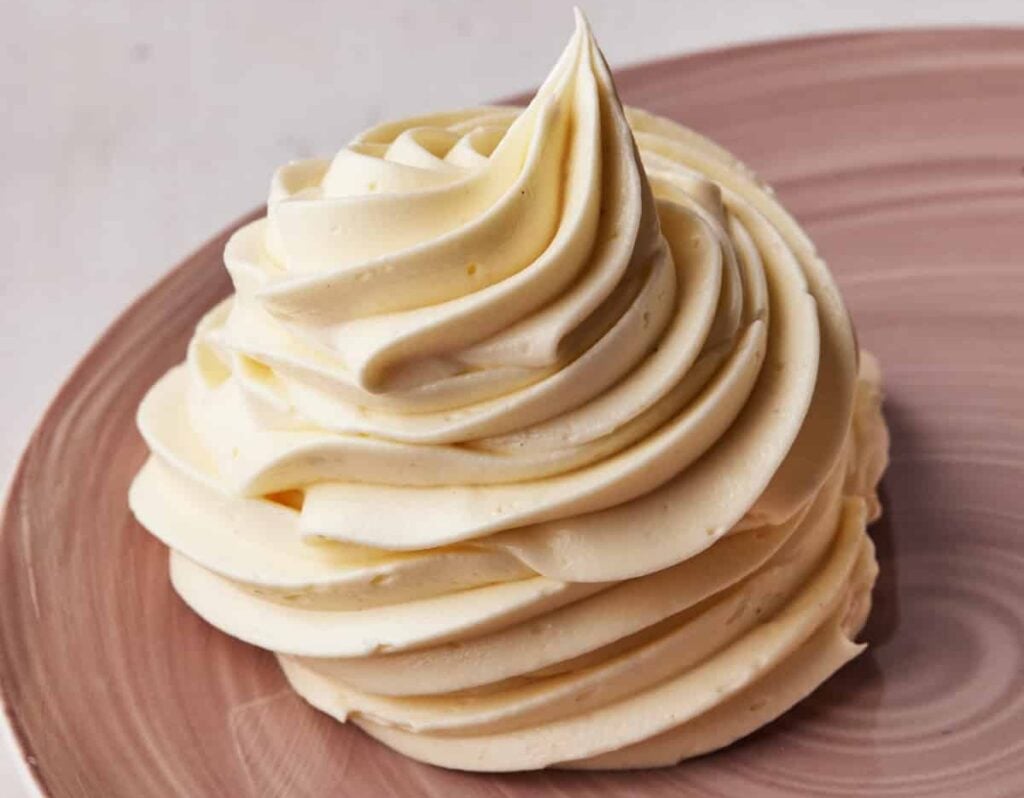
Russian buttercream is smooth enough for frosting cakes and sturdy enough to pipe simple decorations.
- Suitable for filling and frosting layer cakes.
- Holds cupcake swirls and many piped decorations at normal room temperature.
- Does not crust like American buttercream.
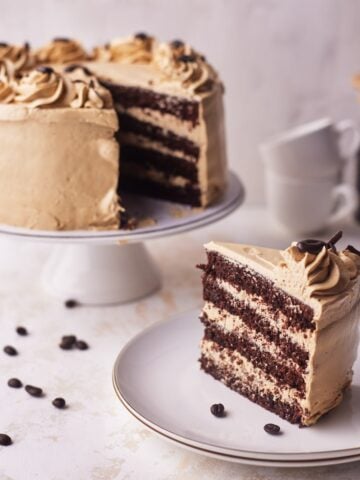
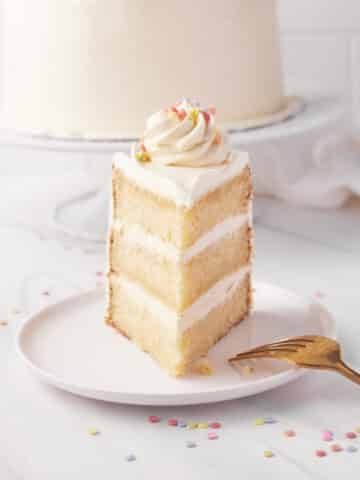
Recipes using Russian Buttercream:


Flavor Variations and Coloring
Russian buttercream takes on flavor and color very well, so it's a really versatile base frosting recipe to use for all kinds of desserts.
Flavor Ideas
- Berries - Add berry puree, like in my raspberry cupcakes with raspberry buttercream. (Avoid adding too much liquid by using something like my reduced strawberry puree for baking, as excess liquid could make the buttercream separate).
- Pistachio - Add a tablespoon of homemade pistachio paste for a creamy pistachio frosting.
- Coffee - Add 2 teaspoons of espresso powder dissolved in 1 tablespoon of hot water for an irresistible coffee buttercream like my Coffee Cupcakes or my Chocolate Espresso Cake.
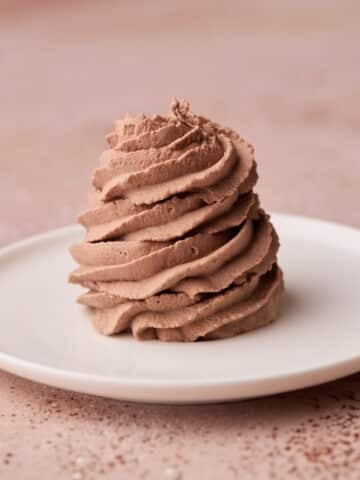
- Chocolate - I have an absolutely irresistible Chocolate Russian buttercream recipe using real melted chocolate.
Coloring
The natural colour is a pale yellow because of the butter, but it can be easily tinted with gel food colouring. Make sure you use gel colors rather than liquid, and add them gradually, as a little goes a long way. You can see an example of how it turns out in my Valentine's cupcake recipe.

Storage
Russian buttercream is stable at room temperature, but storing it in the fridge until ready to use will keep it at its freshest.
It can be made up to a week in advance and stored in an airtight container in the fridge. Bring it to room temperature and rewhip to bring back the texture before using it.
Russian buttercream can be frozen for up to 2 months, but it can be a little sensitive to temperature changes. Thaw at room temperature and rewhip before using. If it looks slightly split after chilling or freezing, don't worry - it will come back together as you rewhip it.
Russian Buttercream FAQs
If you have a question about this recipe that is not answered here, please leave it in the comments, and I'll get back to you as soon as I can.
Russian buttercream, when made without any other flavorings in it, has a subtly sweet flavor, but not sickly sweet like traditional buttercream. It doesn't taste overly like condensed milk, but you can probably detect the flavor of it if you are looking for it. I recommend always adding vanilla extract and a pinch of salt to give the flavor profile a little interest.
If your Russian buttercream isn't silky smooth, it may be curdled. This can happen because the ingredients were not the right temperature or because they were added together too quickly. See my buttercream troubleshooting guide for guidance on how to fix it.
Yes absolutely! When Russian buttercream is made correctly, it should be thick and glossy and stable enough to pipe with any piping tip.
I don't recommend using salted butter for buttercream. Because it is one of only two ingredients, you really will taste the salt. I have made that mistake before and ended up serving some very salty cupcakes!
Watch How To Make It (Video)
Watch me make this Russian buttercream frosting from start to finish in the video below.
Subscribe to
More Frosting Recipes
Here are some more fantastic frosting recipes you might like to try:
Show Me Your Bakes!
If you tried this recipe, I'd love to know how it turned out in the comments!
Want to share a photo? You can send me a pic or tag @bonni_bakery on Instagram - I love seeing all your creations.
Russian Buttercream Recipe
Ingredients
- 227 g (2 sticks) Unsalted Butter (room temperature)
- 395 g (14 oz) Sweetened Condensed Milk
- 1 teaspoon Vanilla Extract
- ½ teaspoon Salt
Equipment
- Stand Mixer with whisk attachment
Instructions
- Make sure the butter is completely at room temperature before beginning.
- Put the butter in a stand mixer fitted with the whisk attachment and whip on high for 5 full minutes, scraping down the sides of the bowl every minute or so. The whipped butter should be glossy and pale in color.227 g (2 sticks) Unsalted Butter
- Turn the mixer down to medium speed and drizzle in ⅓ of the condensed milk very slowly and gradually - whip until totally incorporated.395 g (14 oz) Sweetened Condensed Milk
- Repeat until all the condensed milk is added.
- Whip on high speed for 1 minute until the buttercream becomes thick, glossy, and shiny. If it isn't, see the troubleshooting guide above.
- Add vanilla and salt and any other flavorings you wish to add, then whip until incorporated.1 tsp Vanilla Extract, ½ tsp Salt





Barbara says
Sounds delicious. Could you pipe this buttercream with russian piping tips?
Jules Grasekamp says
Hi Barbara,
Yes absolutely!
Jules
OGGardenEnthusiast says
Have you ever tried using Russian buttercream as a filling for macarons, instead of the traditional ganache or buttercream? How did it turn out and did it enhance the overall flavor and texture of the macarons?
Jules Grasekamp says
Hi there,
You can definitely use Russian buttercream in macarons! The silky texture goes really nicely with the crunch of the macaron. I would say it would be best to add some kind of flavor to the buttercream to match the macaron flavor, it works really well with fruit purees, nut butters,and espresso powder, but the options are endless! I also have a recipe for chocolate Russian buttercream which is really delicious!
Wendy says
Very easy icing to make if the butter is the right temperature, and it pipes nicely. As you state in the FAQ, the finished frosting doesn’t “overly” taste like SC milk, but there is a definite aftertaste. Flavorings will mask it a bit, not completely.
Laura says
My batch tasted great! Not cloyingly sweet like American buttercream, and not overly buttery like Italian or Swiss meringue buttercream. I maybe due to my softening the butter to room temp via the microwave (just to the point of being able to make a dent with my finger), it doesn’t seem very stable. I wonder if cream of tartar would stabilize it to hold its shape better? Also, is it possible to freeze unused portions to reuse later?
Jules Grasekamp says
Hi Laura,
So glad you love the flavor of the Russian buttercream frosting! I definitely am not a fan of American buttercream so I like this as a substitute too.
In what way is it not stable? Is it too soft? It should be pipeable and able to hold its shape well. It could be because of the butter being microwaved, if you put it in the fridge for a while and then whip it up for a minute before using it should stiffen up if that is the issue.
Does it look smooth and homogenous? Or does the frosting look a little curdled? It should be glossy and smooth, if it isn't then the butter may still have been too cold in parts and hasn't emulsified properly.
Yes you can freeze it for up to 3 months then defrost to room temp and whip it up again to bring back the consistency.
Jules
Tiffany says
I tried this recipe. Absolutely love it!!! I let my butter sit out for quite a few hours before I started.
I wisked the butter until it was white. And then add it in the Sweetened condensed milk. And then I added a splash of vanilla and a whole bunch of cinnamon! (The cupcakes I made was a spice cake, with apple pie filling, and this frosting).
It was so simple, and piped so nice. Not only do they look amazing, but they taste absolutely like heaven.
My one complaint is when they sit, the frosting cries.. there's like drops of The Sweetened condensed milk dropping down my cupcakes. So they're kind of sticky. But the flavor absolutely makes up for the mess!
Thank you so much for this recipe, it has very quickly become a favorite in my house!
Aracelis says
I live in tropical island. You recommend those recipes? I want a try
Linda Smart says
Loved watching this video of your russian frosted cupcakes, they looked amazing and a treat for the eyes too. You always have such a lovely selection of delights to try and make everything look so easy with your very detailed recipes, love receiving your posts.
Joanna Mitchell says
I found the RBC easy to make but I highly recommend having a stand mixer - 5 minutes is a long time. I used 60% Kerrygold unsalted butter and 40% Crisco vegetable shortening hoping it would give the RBC some structure. Once I completed mixing (I added white gel coloring) I tested the RBC by applying it to a sheet of parchment paper with a frosting spatula, it was wonderfully smooth, no air bubbles and personally I prefer the RBC's taste over powdered sugar. I did not use any flavoring that could be overwhelmed with the taste of condensed milk. I refrigerated it overnight and the following day loaded my piping bag, using a Russian piping tip I applied it to parchment paper and found it too soft to create a clean design. After placing my experimental RBC flowers in the refrigerator the frosting remained soft. I live in southern California, it is fairly warm today but a cool coastal breeze is keeping my kitchen at an acceptable temperature.
If anyone has any ideas about how to give this RBC more structure I would be interested in your thoughts.
Jules says
Hi Joanna,
Yes, I agree a stand mixer is definitely best for this recipe!
I'm sorry to hear your buttercream was too soft - it sounds like maybe it could have done with being whipped a little longer or at a higher speed. (Not every mixer has the same power so it's hard to say exactly). Before the condensed milk is added, the whipped butter should be very thick and stable.
If you still have the buttercream, I would try putting it back on the stand mixer and whipping at the highest speed for a few more minutes to see if that improves the consistency. It should be thick, smooth and pipeable - and should definitely be able to hold its shape.
Other than that all I can think of is the Crisco, I have never tested this recipe with Crisco personally, so I can't say how that would affect it. I always use kerrygold butter as well.
I hope that helps and that your buttercream thickens up nicely!
Thanks for trying my recipe 🙂
Jules
Bonnie says
What temperature was your room? You mentioned that the temp was important. I live in thailand so room temp is about 40C/105F
Jules Grasekamp says
Hi there,
This is based on the average temperature indoors which is typically considered to be 20-22°C in the UK and US, or between 24-27°C in Thailand. As it is a bit warmer I would definitely leave you butter out for a little less time. The aim is that the butter is soft enough that you can easily make a finger indent in it, but not so warm that it is starting to look melty. Hope this helps!
Jules
Jodi says
Can this recipe be frozen?
Jules Grasekamp says
Hi Jodi,
Yes you can freeze buttercream for up to 3 months. Put it in a freezer bag or airtight container. When you want to use it, thaw it in the fridge overnight, then bring it out and let it come up to room temperature and whip it up for a minute or two to revive the texture before you use it 🙂
Jules
Czarina says
First time to try RBC. Everything was going great until I put in the last of the condensed milk, and then it became soupy even after putting it in the fridge for 15 minutes. Maybe less condensed milk is enough for this RBC for it not to become a soupy mess. I’m thinking to add more butter to it but I don’t have the luxury of having extra butter at the moment. I don’t know what to do with this now. I really needed this to come through.
Czarina says
I take that back. While the BC was soupy, I added the coffee, salt, and vanilla. Whipped again and noticed that the BC started curdling which is a sign that it’s starting to emulsify and firm up. So I put it back in the fridge for about 30 minutes and whipped it up again for about 5-10 minutes, scraping the sides every minute or so.
Having said all that, I can say trying your recipe is a success. My only other comment is that the RBC still tasted like condensed milk before I added the coffee, etc. I don’t know how it would have tasted if I only added the salt and vanilla. Guess i’ll have to try this recipe again some other time. Thank you!
Danielle says
Thank you for the recipe. I personally won't try this one again. I followed directions to a T and even did your troubleshooting technique of popping it into the fridge. My buttercream was too runny. You could not use it to decorate. It's not sturdy. It would stiffen up after being in the fridge but it would thin right back out as soon as it started to warm when working with it. You would have to store this in the fridge or it would be a soupy mess. The flavor isn't great either. You can taste the condensed milk. I wish I wouldn't have used this on my husbands birthday cake. I used this with the French vanilla cake recipe. The cake portion worked well, but this buttercream didn't. Maybe I messed it up somehow?
Danielle says
Also I gave this two stars but it changed it after I posted. Not sure why?
Cheryl Johnson says
You did not mess it up. Worst buttercream ever. I'm sorry but just my opinion. Taste awfull. Don't mean to be impolite. So sorry to say that and 2 soft. Could not pipe it at all. It was easy. That's all I can say. You do have some good stuff tho
Jules Grasekamp says
HI Cheryl,
Sorry to hear your buttercream didn't turn out. This is one of the most popular recipes on the site and if made correctly it should pipe like a dream. It sounds like maybe the butter was too soft or perhaps the ingredients were added together too quickly. I'm happy to help you troubleshoot!
Jules
Rick says
I had the same problem. It was a cool day, and yet the frosting was too way runny and wouldn't hold shape for piping. I tried popping it into the refrigerator. It did stiffen up enough to pipe. But, after 5-10 minutes at room temp, the piped frosting started to sag and eventually all of the frosting started to soften so much that it slipped down the sides of the cake. I found another recipe for the same frosting that suggested adding powdered sugar to get a stiffer result. The same thing happened. The frosting held its shape for about 5 minutes and then began to melt off the cake. Like some of the above replies, I followed the recipe exactly as read. I am a decent baker, so I doubt I made a mistake.
Jules Grasekamp says
Hi Rick, I'm sorry to hear your Russian buttercream didn't turn out. It sounds like maybe your buttercream didn't emulsify properly. This can happen if the butter and condensed milk are not at the same temperature, the fat and liquid can't combine properly into a homogenous mixture. Perhaps the butter was a little too cool when you made it? It's frustrating because the recipe itself is so simple but is super sensitive to temperature so it can easily go wrong if the butter is a little too cold or too warm! It's absolutely not a reflection on your skill level as a baker - it's just a fickle recipe when it comes to temperature.
Next time try getting your butter a little warmer first, fully at room temperature and if it happens again, I recommend 2 different things. 1 - you could try adding a tablespoon of recently boiled water to the mixture and whipping it on high speed to see if that is enough to bring it together. 2 - If that doesn't work, you can try following the instructions in the troubleshooting guide for if the buttercream separates - heating it all together and mixing it will allow the fat and liquid to melt together. Then you can re-chill it and whip it up.
I really hope this helps as Russian buttercream is such a wonderful and simple recipe when it works and it creates the most beautiful, glossy frosting that is so easy to pipe with!
Good luck!
Jules
Nicole says
Hi Bonnie, I see its an off white colour, Do you think I can make it white with a white gel colouring?
Addy B says
Is it sturdy enough to use on cakes?
Jules says
Yes! I used it to frost and fill both my Chocolate Espresoo Cake and my French Vanilla Cake if you want to see how it looks on cakes.
https://bonnibakery.com/chocolate-espresso-cake/
https://bonnibakery.com/best-french-vanilla-cake/
Holly says
Literally the best buttercream!!
Lisette says
I just hope those were not for sale as you doubble dipped the spatula in the buttercream and then pipped it .
Jules says
Hi Lisette, thanks for your comment. We are not a bakery and don't sell any baked goods - I just make this baking blog and the goodies are only eaten by myself and my family 🙂
Ruth Wallace says
Why don’t you not worry about it.
JM says
Gee. A good criticism is Always warranted
Chris Radwanski says
This stuff is silky smooth and oh so scrumptious. Its probably my favourite buttercream. I am always excited to see what you're making/posting so please, keep up the good work!
Jules says
Thank you 🙂 It's my favourite too!
Laura says
I am eager to try this!
Karenb says
I am eager to try this recipe but reluctant because of all the issues with the Butter being the "exact" room temperature. Do you think you can post an actual temperature the butter should be? This simple request sure seems like it would eliminate a lot of issues. Thanks!!!
Jules Grasekamp says
Hi Karen,
Sorry if my comments put you off, this is genuinely a very easy recipe! To clarify, the butter doesn't need to be an exact temperature, it just needs to be out of the fridge long enough that it is not cold and you can easily put a finger indent in it, but not so softened that it is beginning to get melty or sloppy. The reason I stress the point about the butter temperature so many times is because a lot of people don't read the recipe all the way through, so I want to make sure they see this part so that they have the best chance of success.
I take my butter out of the fridge 1-2 hours before I need it and that usually is enough. If you live in a very hot climate it won't need as long though.
Even if the butter temperature does cause problems, it's easy to fix the buttercream, I have full instructions for that in the troubleshooting guide.
I hope this helps ease your concern! Let me know if you try the recipe and how it works out for you!
Jules