
This is the traditional Scottish shortbread recipe I grew up making in Scotland. The secret to its signature melt-in-the-mouth texture is a traditional method that many modern recipes have replaced.

Quick Look: Scottish Shortbread Recipe
- 🧁 Makes: 15 shortbread fingers
- ⭐ Features: 3 Ingredients ✓ Make Ahead ✓ No Mixer Required ✓
- ⌛️ Prep Time: 10 mins
- 🍪 Bake Time: 25-35 mins
- 🕑 Total Time: 45 mins
- 👩🍳 Skill Level: Beginner
- 🏆 Why make THIS version? I'll show you the traditional way we make shortbread in Scotland, which gives the best crumbly texture.
SUMMARIZE AND SAVE THIS POST ON
Growing up in Scotland, we were taught to make traditional shortbread at school as kids, using this exact method. Even after ten years of owning a bakery, I won't make it any other way.
Most recipes treat it like sugar cookie dough and cream the butter, but that's not how traditional Scottish shortbread is made. Instead, you use softened butter and gently bring the dough together, which keeps the texture dense, rich, and crumbly rather than light and airy.
Reader Review:
For the first time ever, I was able to make a perfect traditional shortbread thanks to your recipe and instructions. I had always creamed the butter and it never turned out.
Thank you! I can now remove the tartan bag of shame off my head and proudly present this shortbread.
⭐⭐⭐⭐⭐ - Jan
This recipe makes thick, pan-baked Scottish shortbread fingers with the traditional crumbly texture. If you want shortbread you can roll and cut into shapes, use my cut-out shortbread cookie recipe that holds its shape instead.
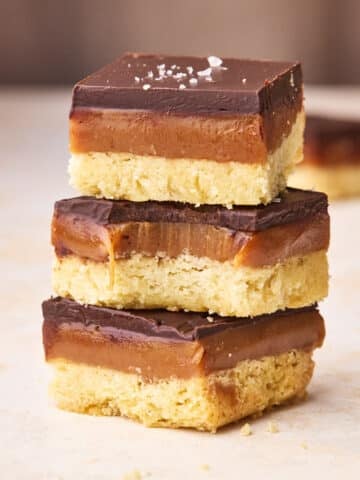
Or for something a little more indulgent, try my classic Scottish Millionaire's shortbread with homemade caramel, or some buttery Scottish chocolate chip shortbread cookies.
Jump to:
Ingredients
A proper Scottish shortbread recipe only has three ingredients, but the ratios of those ingredients, and the way you combine them, can change the texture and flavor of your finished shortbread.
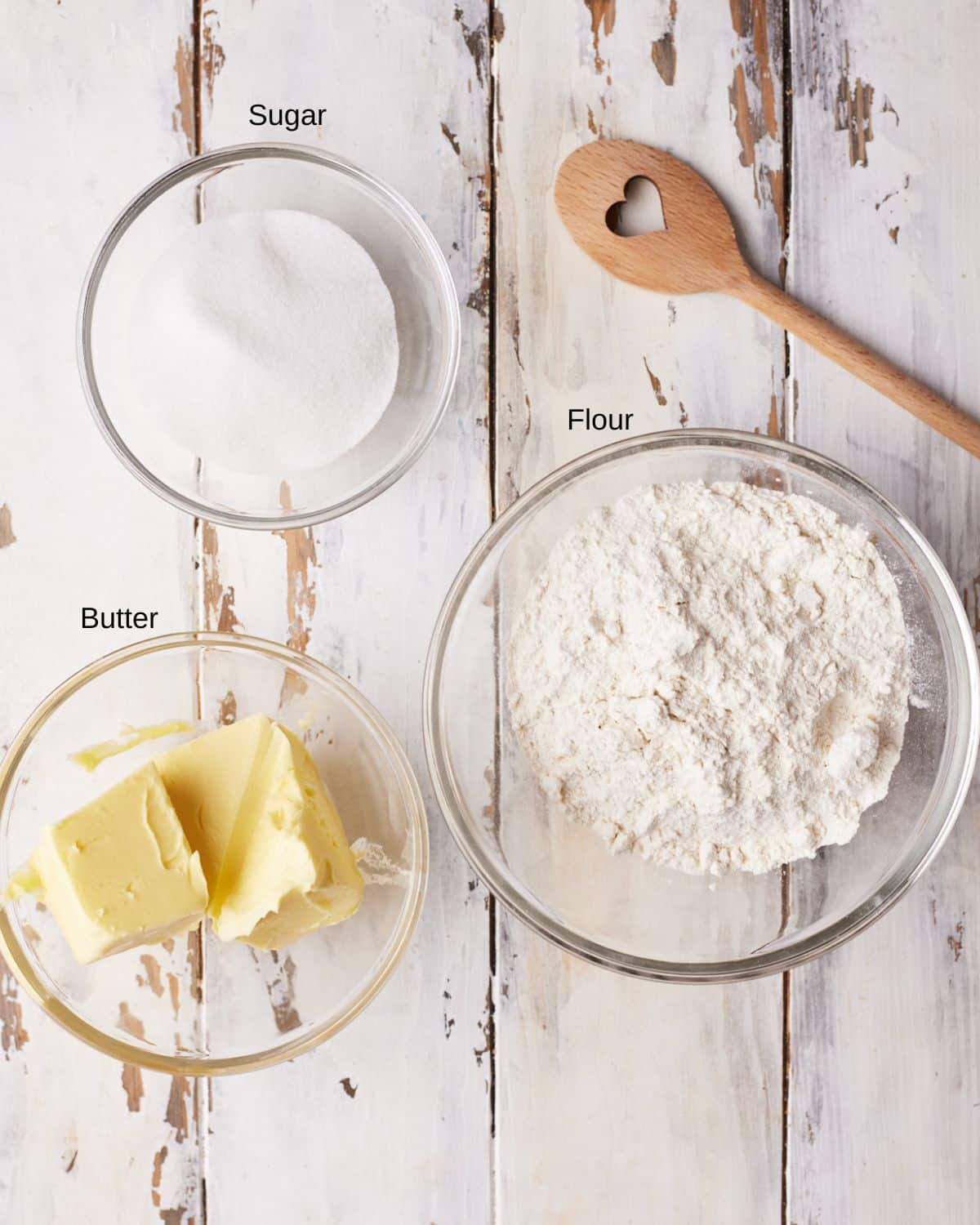
- Salted Butter - Butter is the star of the show, so use the best quality you can. European-style butter has a higher fat percentage, which works beautifully. I was taught to use salted butter, so that's what I use here. If you use unsalted butter instead, just add ½ teaspoon of fine salt to the flour.
- Sugar - We use caster sugar here in Scotland, but the closest equivalent in the US is what you would call Granulated sugar. (I have a post all about UK/US baking ingredient equivalents).
- Flour - All-purpose flour (Plain flour) gives shortbread just enough structure while still keeping it tender.
See the recipe card for the full recipe and measurements in both cups and grams (though I strongly recommend weighing your ingredients with a kitchen scale).
How to Make Scottish Shortbread
Traditional shortbread ingredients are typically in a 1-2-3 ratio (by weight). That's 1 part sugar, 2 parts butter, 3 parts flour.
I have experimented with those ratios a lot, trying to maximise the rich flavor and crumbly texture. After a few failed attempts, it became clear that you shouldn't stray too far from the traditional ratio, but I was able to find the perfect balance.
The final recipe I landed on has a little bit more butter than the straight 1-2-3 ratio, but I find it's just enough to get the best-tasting shortbread without compromising the structure.
Before You Begin...
- Let the butter come completely to room temperature: Take it out of the fridge 1-2 hours before you need to use it. It should be soft enough that you can easily make an indent in it with your finger, but not so warm that it is greasy or melting.
- Preheat your oven to 320°F / 160°C (140° fan-assisted) and line a metal 8-inch square baking pan with parchment paper.
Combine the Butter and Sugar
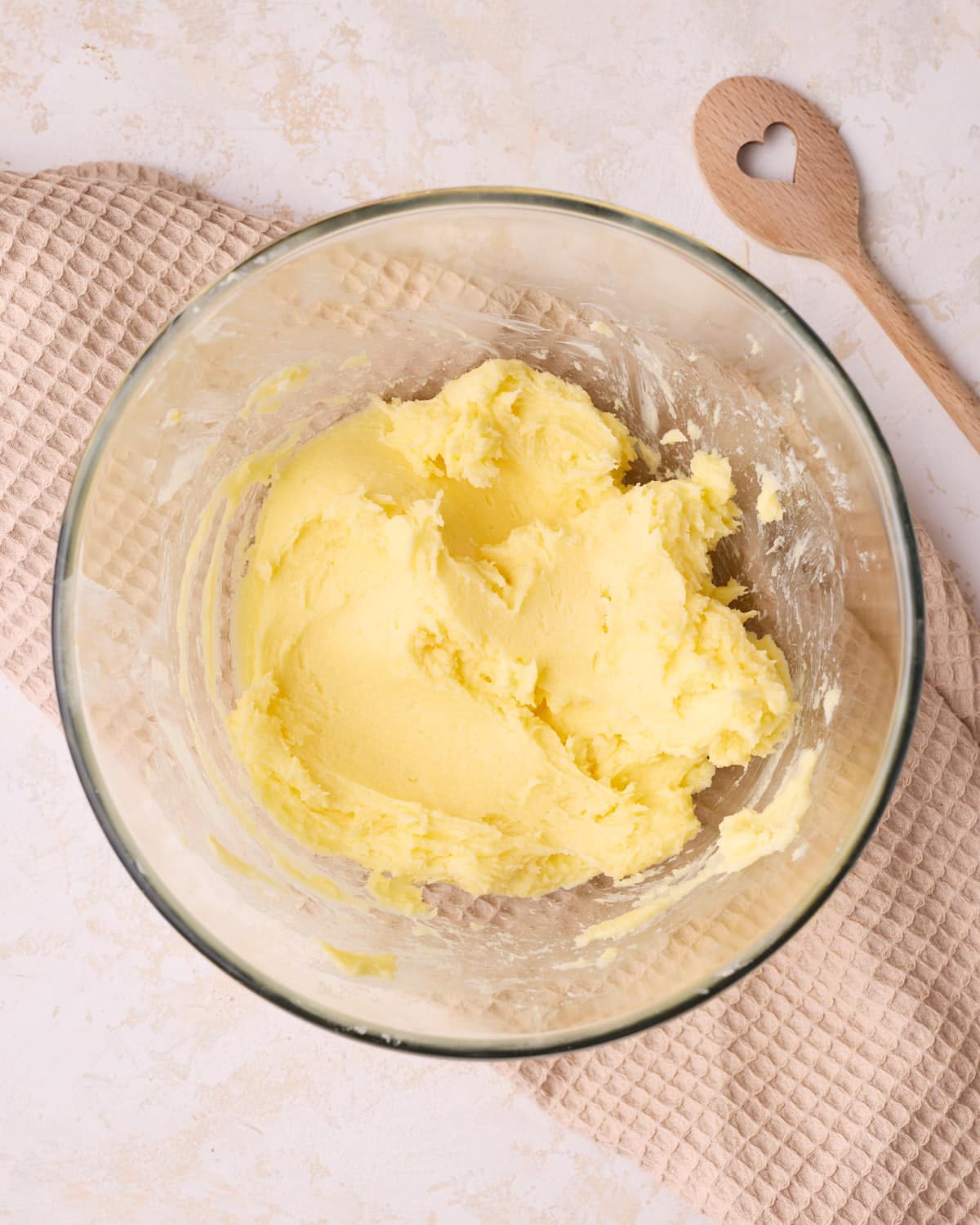
Put the softened butter into a large mixing bowl and use a wooden spoon or spatula to smooth it out.
Add the sugar and mix just until it's evenly combined. The mixture should look smooth and creamy, but not light or fluffy.
Gently Mix in the Flour
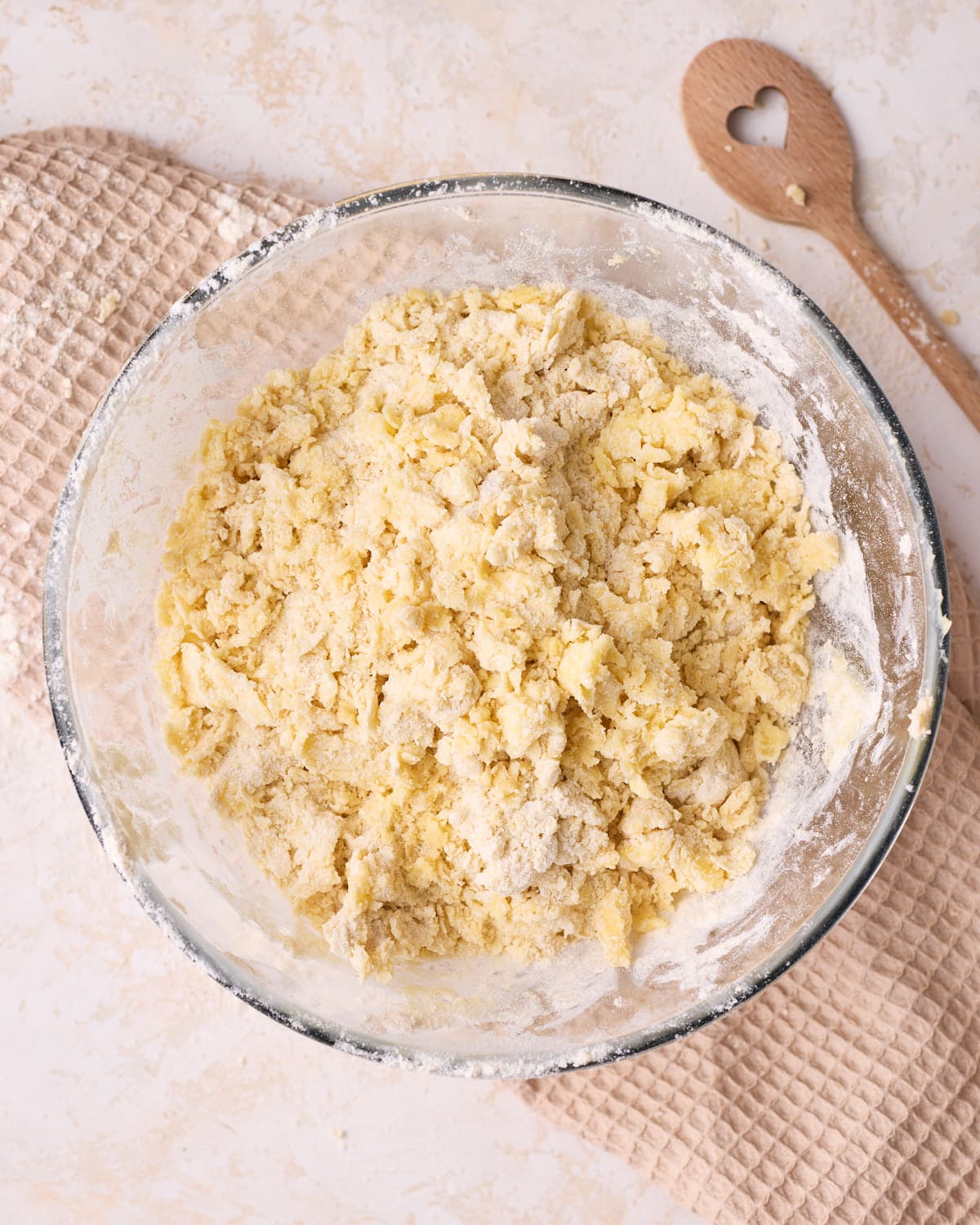
Sift in the flour and stir until the mixture looks crumbly with no obvious dry patches.
Ditch the spoon and use your hands to gently squeeze the mixture together into a smooth dough.
It may seem too dry at first, but keep gently pressing it together rather than kneading it. Stop as soon as there are no dry pockets of flour or visible lumps of butter.
Press into the Pan
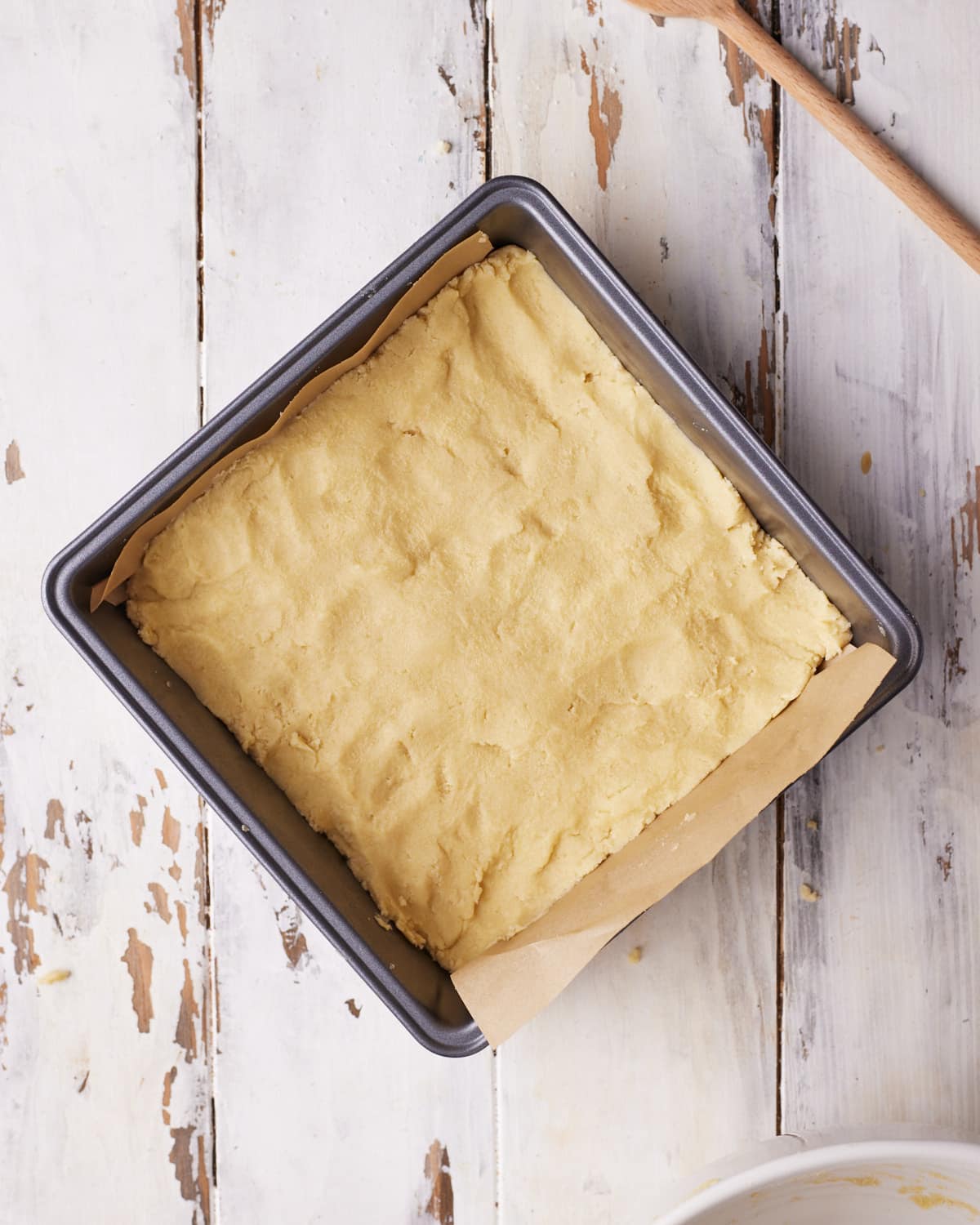
Put the dough into the prepared cake pan and use your hands to press it into all the corners and make it as flat and level as possible to help it bake evenly. It's a very soft dough, so it should be easy to manipulate into the pan.
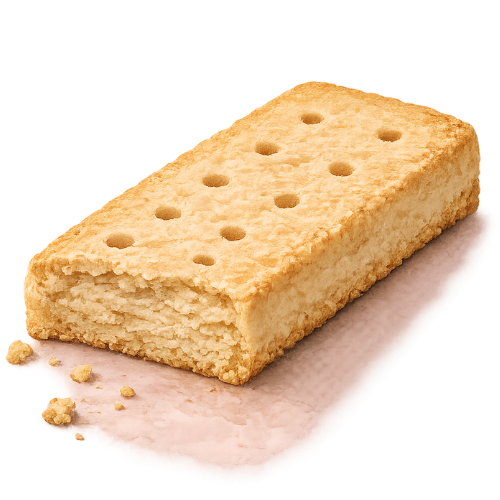
Dock (prick) the shortbread all over with a fork, pressing about halfway through the dough. This allows steam to escape as it bakes and helps the shortbread bake evenly.
Why do you prick holes in Scottish Shortbread?
The fork holes in traditional shortbread aren't just decorative. This is called docking; it lets steam escape and prevents the shortbread from puffing, bubbling, or cracking.
Don't worry if the holes disappear in the oven - they've already done their job. For more defined marks, chill the docked dough for 30 minutes before baking to firm the butter. Learn more about why cookies spread in the oven.
Bake the Shortbread
Bake for 25-35 minutes - the baking time can vary hugely depending on a few different things, so it's best to learn the visual cues that the shortbread is baked, rather than looking at the clock.
The shortbread is ready when the edges are just beginning to turn golden, but the top is still pale.
Remove from the oven and let cool for about 15 minutes before taking it out of the pan.

How To Tell When Shortbread Is Done
Look out for these visual cues that your shortbread is done baking and ready to come out of the oven:
- Edges just starting to turn golden
- The middle is still pale but doesn't look shiny or wet.
It may look underbaked coming out of the oven, but it will continue to bake a little in the pan as it cools.
Don't wait until the whole surface looks fully baked, or your shortbread will end up overbaked and crispy.
Slice into Fingers
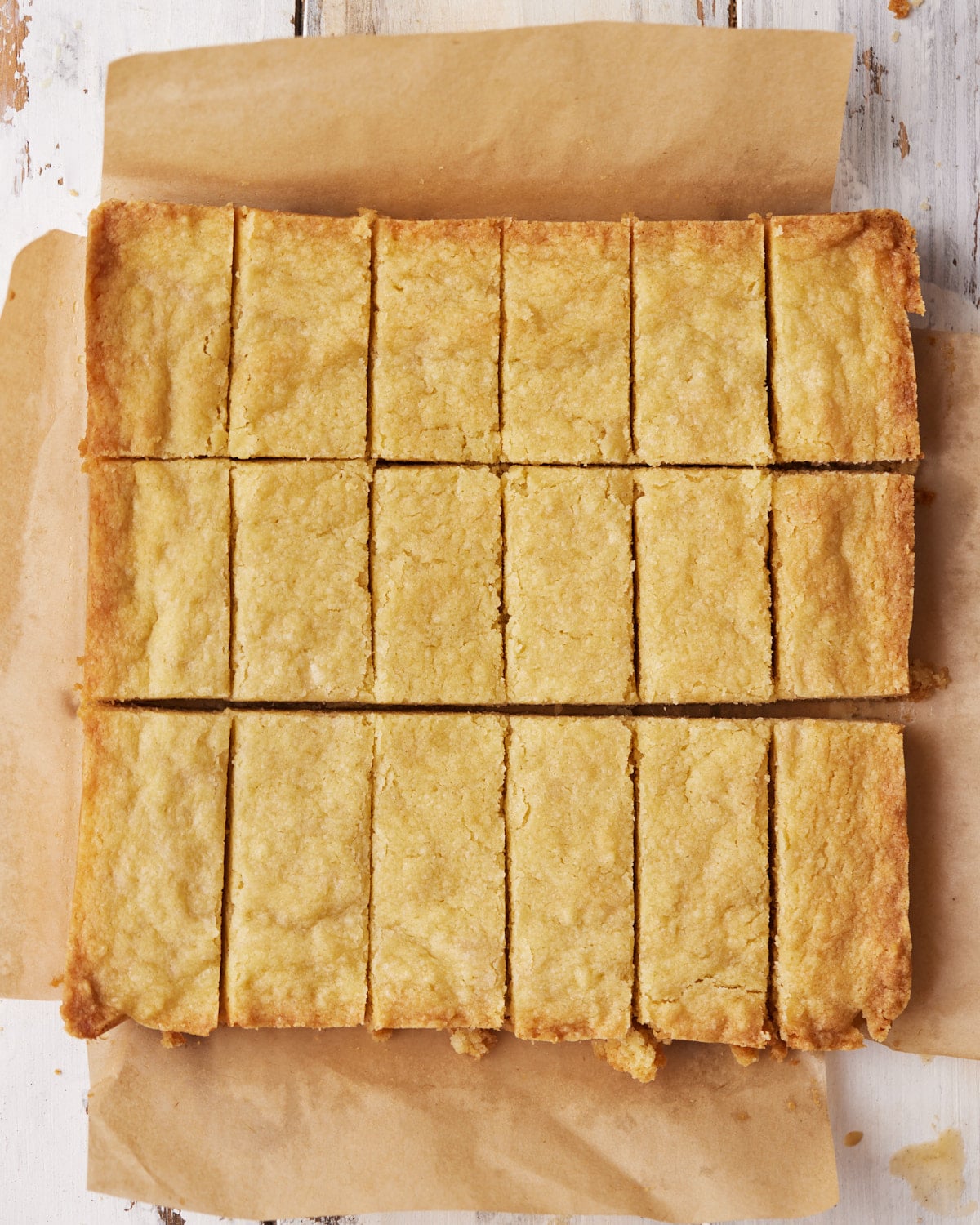
For clean slices, try to cut your shortbread while it is still slightly warm. Remove from the pan and use a long, sharp knife to cut straight down into the shortbread - make the pieces as big or small as you like!
The final (and arguably most important) step: Put the kettle on and enjoy your shortbread with a cup of tea. Any Scot will tell you that's the proper way to eat it. Mine is always Earl Grey.
Three Rules For Perfect Shortbread
If you only remember three things about making shortbread, let it be these:
- Don't cream the butter: Use softened butter and mix it with the sugar just until combined.
- Don't overmix: Once the flour is added, mix super gently, preferably with your hands, to just bring the dough together and no more.
- Use visual cues over bake time: Baking time varies so massively, so it's better to look for the visual signs that your shortbread is ready - pale with lightly golden edges.

Troubleshooting
Even though shortbread is a simple recipe, there are a few common issues that I get asked by readers making shortbread.
Doughy Middle
Why it happens:
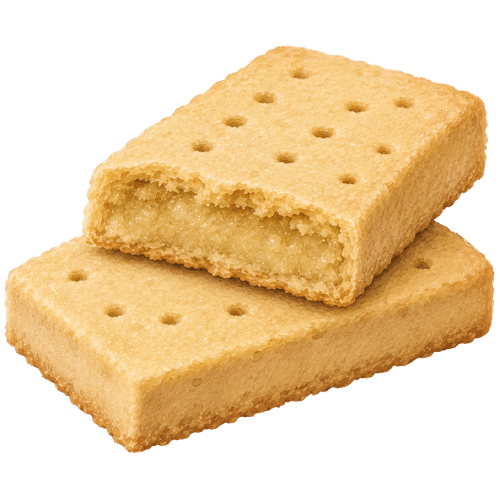
Shortbread was underbaked.
Fix:
Use a metal pan and rely on visual cues that the shortbread is fully baked.
Looks Greasy
Why it happens:
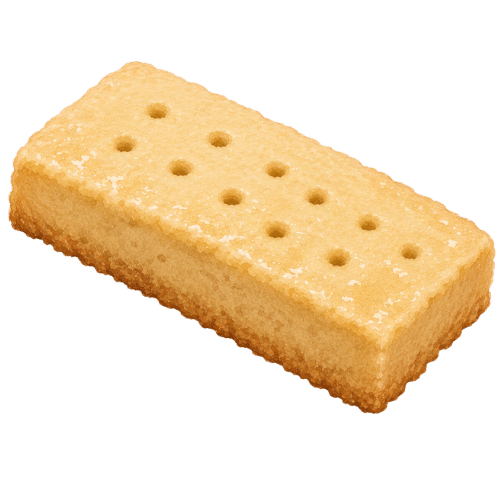
Butter likely got too warm while shaping.
Fix:
Don't handle the dough too long, and chill before baking if it looks greasy.
Tough Shortbread
Why it happens:
Dough was overworked, or too much flour added.
Fix:
Mix gently, preferably by hand, just until everything is combined. Only knead until smooth and no more.
No Docking Holes
Why it happens:
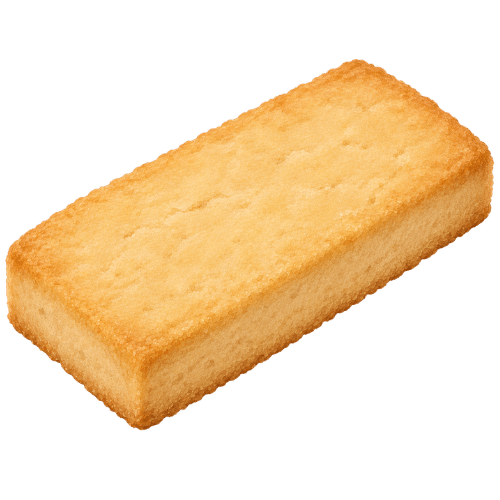
This is not bad; it just happens when the dough spreads in the oven.
Fix:
For defined docking holes in your shortbread, chill the dough before baking.
Traditional vs Modern Scottish Shortbread
Shortbread dates back to medieval Scotland, so it's no surprise that the recipe has evolved over the centuries. Here are some of the ways that the modern variations compare with the traditional method.
Ingredients
Traditional shortbread has just 3 ingredients - butter, sugar, and flour. It has no eggs, no baking powder, and no added liquid.
You may have seen shortbread recipes before that make substitutions or add additional ingredients. These recipes aren't 'wrong'; they all still make delicious shortbread - but you came to me for a traditional recipe, so that's exactly what you'll get!
That said, it's helpful to understand what those other ingredients do and why you might want to use them to tweak the results. So here are some of the most common ones:
| Ingredient | What it does | Why I don't use it |
| Cornstarch/cornflour | Lighter, softer texture | The right method makes a tender crumb without it |
| Powdered sugar | Makes a smoother dough and softer texture as it contains cornstarch | Caster/granulated sugar gives a more traditional flavour and texture |
| Vanilla Extract | Adds extra flavour | Good butter should be the star of the show |
| Unsalted butter | Gives complete control over the salt level | I just grew up using salted butter, but either will work. |
| Eggs | More elastic dough, firmer, more cookie-like texture | Once you start adding eggs, it's more like a Danish butter cookie than shortbread. Can be good for a shortbread tart crust that holds its shape. |
Method
Many recipes will tell you to cream the butter and sugar together, just as you would for easy three-ingredient sugar cookies or cake batter - but creaming adds air to the dough, which makes it rise more and gives a fluffy, light texture.
Mixing until just combined stops extra air from being incorporated. Then, gently bringing the dough together by hand prevents overmixing, which develops the gluten in the flour and can make the shortbread tough or chewy.
I have baked this recipe using both methods; neither was bad, but they did produce quite different results:
- The creamed batch rose more and had a lighter, more aerated crumb.
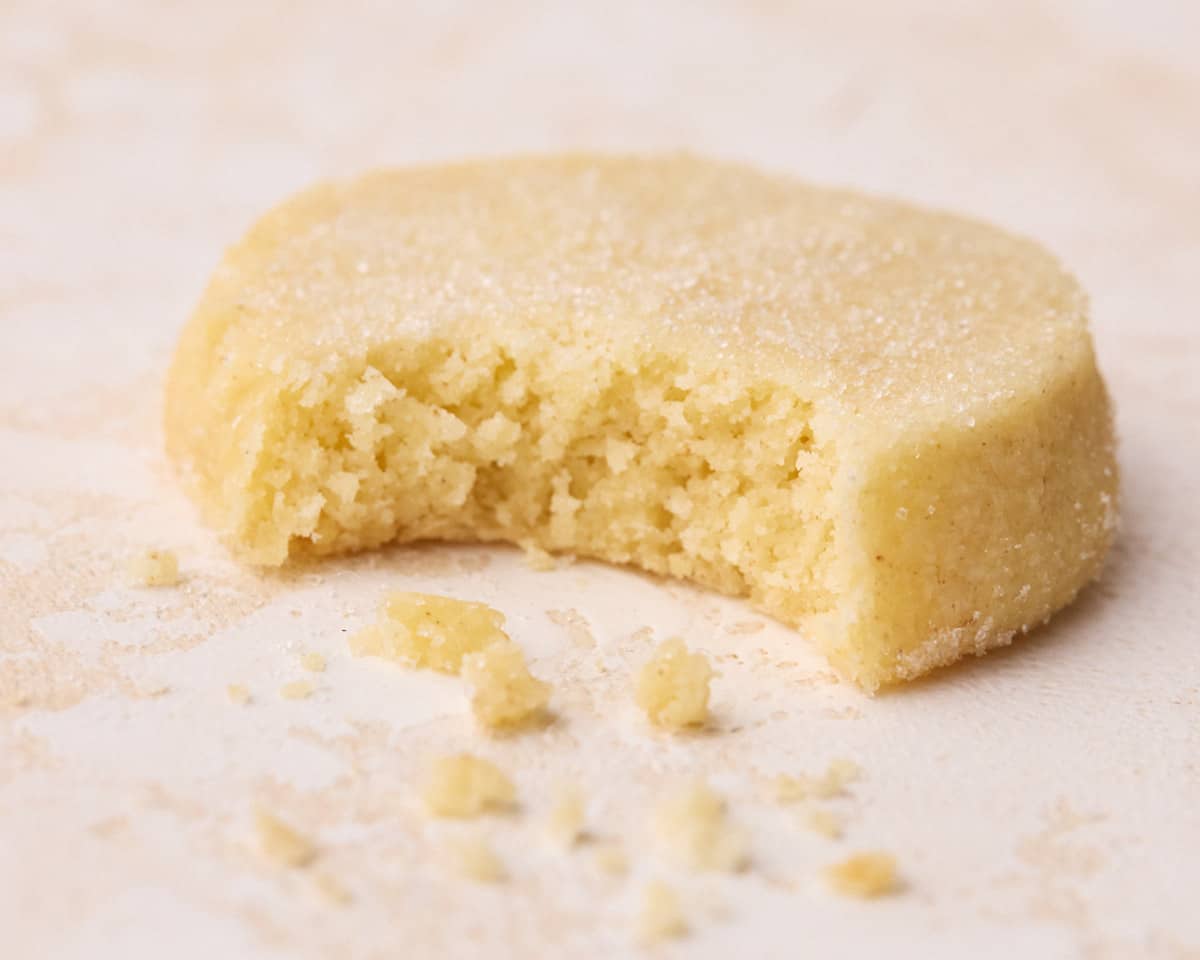
- The gently mixed batch was soft and buttery, but kept the signature crumbly texture.
On a personal note, making shortbread this way makes me feel connected to my roots. Before stand mixers and food processors, generations of Scottish bakers mixed shortbread by hand, feeling the dough come together as they worked. Every time I make it this way, I like to think I'm continuing that tradition.
Shape
Traditionally, Scottish shortbread is baked into 'fingers' (long, thick rectangles), wedges, or sometimes in a shortbread mold.
You can still make cut-out shortbread cookies that hold their shape with a Scottish base; there are just a few extra steps to make sure they don't spread.
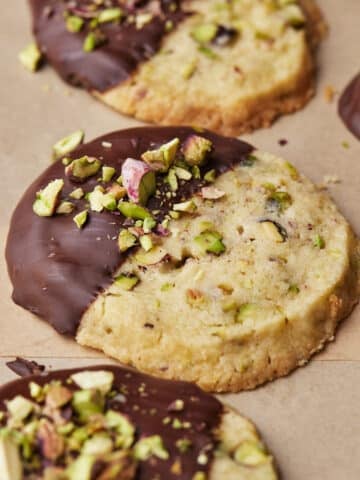
The slice-and-bake method also works with this recipe; you can see that in my slice-and-bake pistachio shortbread cookies.
Storage
One of the best things about traditional shortbread is that it keeps beautifully. In fact, it actually tastes even better after a day or two, once the buttery flavour has had time to develop.
Store the cooled shortbread in an airtight container at room temperature for up to 4 weeks. (Though the texture is best when eaten within about 10 days).
To freeze: Wrap the baked shortbread tightly or store it in a freezer-safe container and freeze for up to 3 months. Thaw at room temperature for a few hours before serving. Learn more about how to freeze shortbread dough and bake it later.
Make Ahead: Shortbread is a great make-ahead bake because it stays fresh for so long. You can wrap up the unbaked shortbread dough in plastic wrap and store in the refrigerator for up to a week, or in the freezer for up to 3 months.
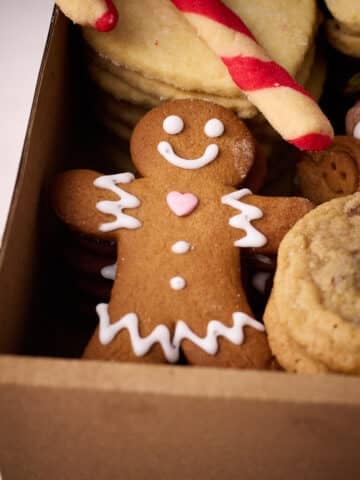
Because it keeps so well, shortbread also makes the perfect edible gift idea, or a homemade Christmas cookie box!
Scottish Shortbread FAQs
Traditional Scottish shortbread just contains 3 ingredients - butter, sugar, and flour. Modern adaptations of shortbread often contain other ingredients like leavening agents.
The 3-2-1 rule refers to the ratios of the ingredients used to make shortbread. The classic ratio is 3 parts flour, 2 parts butter, 1 part sugar.
The key things to keep in mind to make the best shortbread are:
- Using high-quality, room temperature butter.
- Mixing just until combined (preferably by hand).
- Baking at a low temperature.
More Scottish Desserts
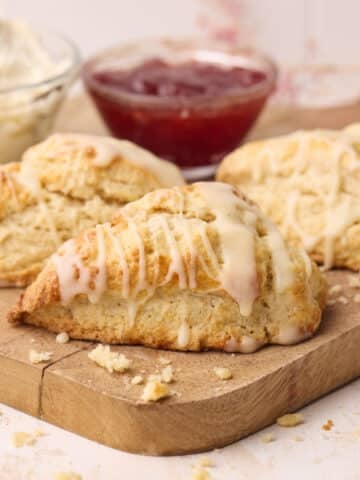
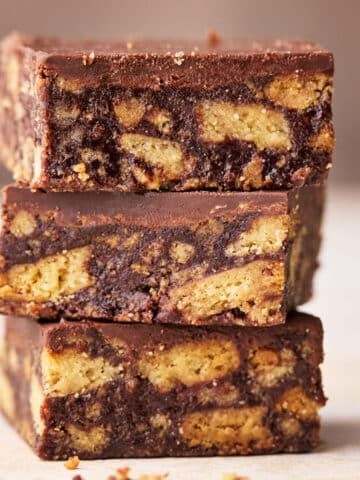
Want more of a taste of Scotland? Try my no-bake Scottish chocolate tiffin, nostalgic Scottish coconut truffles, or a batch of traditional buttermilk scones.
Show Me Your Bakes!
If you tried this recipe, I'd love to know how it turned out in the comments!
Want to share a photo? You can send me a pic or tag @bonni_bakery on Instagram - I love seeing all your creations.

Traditional Scottish Shortbread Recipe
Ingredients
- 227 g (2 sticks) Salted Butter room temperature
- 100 g (½ cup) Granulated Sugar (Caster Sugar)
- 300 g (2½ cups) All-purpose Flour (Plain Flour)
Equipment
- Metal 8-inch Square Pan
Instructions
- Preheat your oven to 320°F / 160°C (140° fan-assisted) and line an 8-inch square baking pan with parchment paper.
- Make sure the butter is completely at room temperature, then put it in a bowl and use a wooden spoon or spatula to soften it a little. Don't try to cream it, it's just to make it more pliable. You can use a stand mixer if you prefer, but be careful not to overmix.227 g (2 sticks) Salted Butter
- Add the sugar and mix it into the butter, just until well combined. It should be smooth and creamy, not pale and fluffy.100 g (½ cup) Granulated Sugar
- Sift in the flour and mix it together until the mixture starts to look crumbly. Then ditch the spoon and use your hands to squeeze it together into a smooth dough with no lumps of butter. Again, be careful not to overwork it, just go until it is incorporated.300 g (2½ cups) All-purpose Flour
- Put the dough into the prepared cake pan and use your hands to smoosh it into all the corners and make it as flat and level as possible.
- Use a fork to prick holes all over the dough in straight lines. Don't push the fork all the way through the dough, you just want to go about half way.
- Bake for 25-35 minutes until the shortbread is just starting to turn golden brown at the edges, it will still be very pale on top. Baking time will vary depending on a multitude of factors, so it's best to keep an eye out for the golden brown edges rather than relying on a set bake time.
- Remove from the oven and let cool in the pan for about 15 minutes before taking it out of the pan.
- For clean slices, try to cut your shortbread while it is still slightly warm. Remove from the pan and use a long, sharp knife to cut straight down into the shortbread - make the pieces as big or small as you like!
Nutrition
Notes
- Use a metal pan if possible. Glass and ceramic pans will heat more slowly and can easily add 20 minutes to the baking time. Use the colour and texture cues rather than the clock to judge when they are done.
- You can use a stand mixer if you really want to, but this shortbread recipe is easy to do by hand and often turns out better that way as there is less chance of overworking the dough.





Denette says
Good morning!
I have a recipe that has come down through the family for over 250 years (that is as far back as we can accurately track it). Your recipe is the exact same. My Grandmother guarded this recipe and would not give it out. We finally convinced her that is was time to share when she turned 90. She made all the women in the family make a batch so she could compare to hers and give us "critiques" on what we did wrong (or right). The doing by hand with no machinery is critical to having the perfect shortbread. There is another method of baking them that was not mentioned but was how Grandma made hers. She insisted that this was the correct way. You patted the dough into 6 inch circles. It had to show that you had done it by hand (not using a rolling pin) as there had to be light finger impressions in the dough. Then you had to dock each round 7 times with a four prong fork before baking. It had to be baked at 300 degrees for about 30 minutes until the edges just started to turn light tan. She also said it needed to "age" for at least 2 weeks before eating. I was very excited when I saw your recipe just because you really don't see authentic Scottish Shortbread recipes on line. Thank you for sharing yours. For all of you that are not sure if this recipe is authentic, I can tell you it is. Enjoy!
Bee says
Thank you for the tip about not creaming the butter and sugar. I've been making shortbread all my life but today, with your recipe, I made the perfect one. Light, delicate, and melts in the mouth.
Jules Grasekamp says
I'm so happy to hear that Bee! Thank you for trying my recipe and for taking the time to let me know you loved it!
Jules
Anna Gillard-Hughes says
I found this recipe needed a lot more cooking time! I had to put it back in the oven for a further 15 minutes. I followed it exactly but found when dividing it into portions it still wasn’t completely cooked through. I’m sure it will still taste lovely though.
Anna Gillard-Hughes says
I found this needed a lot more cooking time than stated. I had to put it back in the oven for a further 15 minutes. Tasted lovely though
Penny Freeman says
Recipe didn't work out. Followed to the letter but ended up with flat biscuits instead of thick shortbread
Steve says
This recipe resulted in shortbread just like my mother made for Christmas each year. Brings back lovely memories.
Gabby says
Hi there, will this recipe work with gluten free plain flour? 🙂
Daniel says
Best recipe for shortbread. Thank you so much
Elizabeth (MacPhail) Hathaway says
When my dad was dying of cancer, his sisters would send him homemade shortbread. it was so butter it just melted in your mouth. I never got the recipe from them, and I've always regretted that. I've tried many recipes, but yours comes the closest to what I remember. Thanks so much!!
Jules Grasekamp says
Elizabeth, what a wonderful message to receive, thank you so much for sharing this story with me.
I'm so sorry to hear about your dad. I'm so glad to hear that my shortbread recipe helped bring back some happy memories.
Thank you for trying it and for letting me know.
Sending love from Scotland!
Jules
Sandy says
I went to visit my son and family last month in Fife. After a month of being back home I found your recipe because I was hungry for shortbread. It turned out amazing. Thank you so much for offering your recipe.
Jules Grasekamp says
I'm so happy to hear that you loved the shortbread recipe Sandy, I hope you had a wonderful time visiting and I'm glad that you can enjoy a little piece of Scotland at home now!
Jules
Carrie Cusack says
Hi! I just got bake from a three week trip to your amazing country. My partner and I ate so much shortbread. I just baked your recipe and it is incredible. Not creaming the butter was the key! Thank you for a wonderful recipe.
Carrie Cusack says
Hi! I just got bake from a three week trip to your amazing country. My partner and I ate so much shortbread. I just baked your recipe and it is incredible. I baked a double batch and am taking to game night with the girls. I know it's going to be a hit. Thank you for a wonderful recipe.
Jules Grasekamp says
Hi Carrie,
I'm so glad to hear you loved the shortbread recipe (and your trip to Scotland!) I hope you had a great game night. Thank you for trying my recipe and for taking the time to let me know you loved it!
Jules
Carrie says
Hi! I just got bake from a three week trip to your amazing country. My partner and I ate so much shortbread. I just baked your recipe and it is incredible. I baked a double batch and am taking to game night with the girls. I know it's going to be a hit. Thank you for a wonderful recipe.
Jan says
For the first time ever, I was able to make a perfect traditional shortbread thanks to you recipe and instructions. Ihadalways creamed the butterand it never turned out. Thank you! I can now remove the tartan bag of shame off my head and proudly present this shortbread. Well done Jules, thank you.
Jules Grasekamp says
Thank you so much for your kind words Jan, I'm so happy to hear that your shortbread turned out so well!
Jules
F x says
Hello 🤗
If I use a mould with a pattern do I still use parchment to line? Or is the butter content enough to stop it sticking?
Many thanks
F x
Jules Grasekamp says
Hi F,
If you are using a mould with a pattern you definitely should not use parchment paper as it will stop the design from coming through onto the shortbread.
You can grease the mould with baking spray or butter to stop the shortbread form sticking.
Hope this helps!
Jules
Becca says
I made this shortbread for my Dad's birthday and everyone loved it! It was bloody gorgeous, so melt in the mouth yummy! It also went very quickly so next time I'll probably do 2 batches haha! Thank you so much for the recipe!! 🙂
Jules Grasekamp says
I'm so happy to hear you and your family loved the shortbread Becca! Thank you for trying my recipe and for taking the time to let me know 🙂
Jules