
How to make whipped cream, recognize soft, medium, and stiff peaks, and avoid common mistakes like overwhipping - so you can make soft, billowy whipped cream every time.
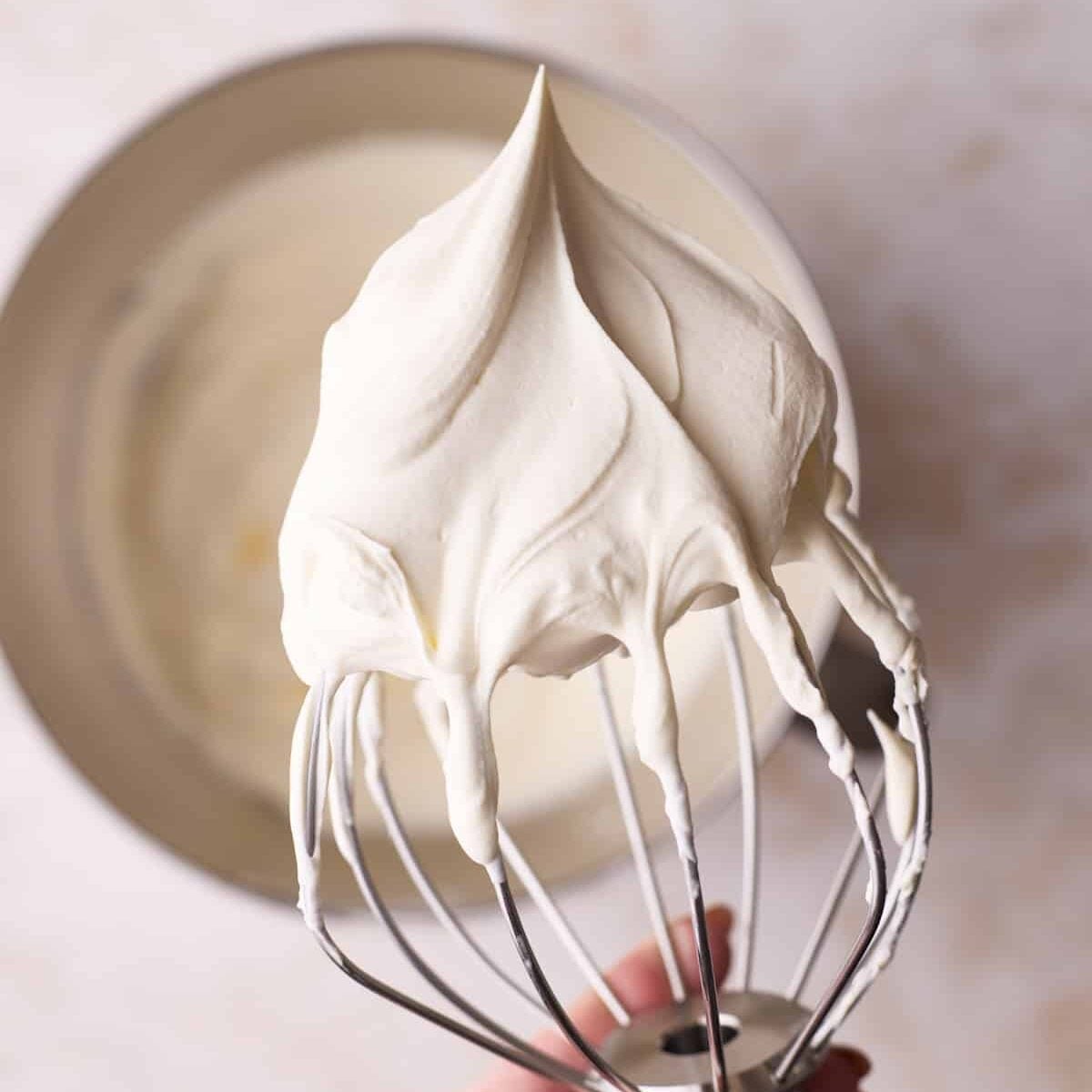
I have probably whipped cream thousands of times during my bakery career. It becomes one of those things you don't think about, like riding a bike, or absent-mindedly eating the snack in front of you...
Most recipes just say "whip to stiff peaks", assuming you know exactly what that means. The thing is that cream changes texture several times as you whip it, and different desserts need different stages.
A mousse needs something completely different from a cupcake frosting. If you whip it too much or not enough, it can ruin an entire dessert. I've never understood why more time isn't spent explaining what those stages actually look like.
This guide will show you exactly what each stage looks like, how to avoid overwhipping, and how to fix the most common problems.
Whipped Cream Peaks At A Glance
One of the most common mistakes I see is people whipping cream to stiff peaks every single time, either because they think it should be stiff or because they don't know the difference between the stages.
Different desserts need different stages of whipped cream. A chocolate mousse needs something completely different from a cake frosting, and using the wrong stage can affect the final texture of your dessert.
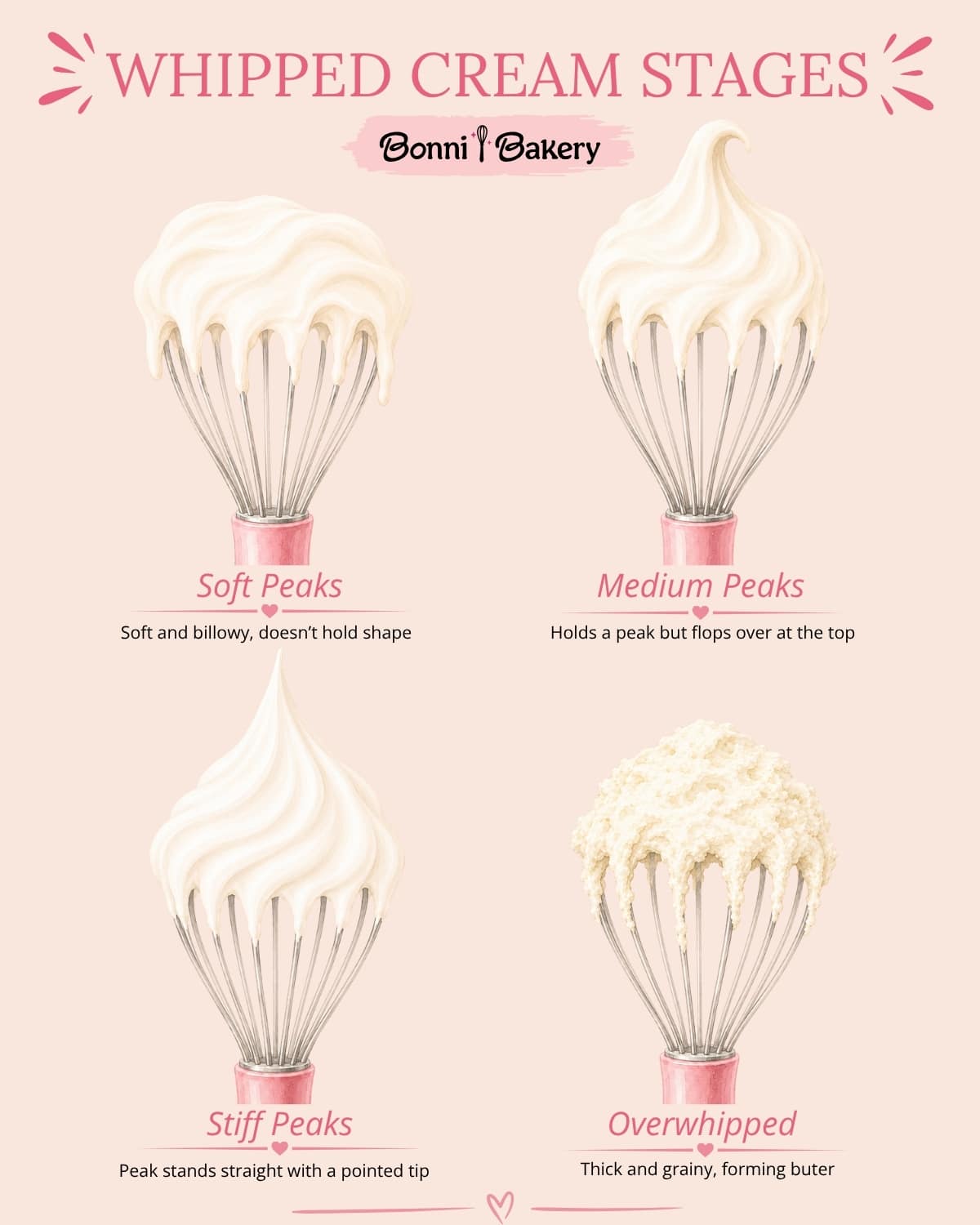
Here's a visual of what the cream should look like at each stage:
Most Important Tips for Perfect Whipped Cream
After whipping cream thousands of times in my bakery, these are the tips that I find make the biggest difference:
- Start with cold cream - right out of the fridge. And use a cold bowl too
- Watch for tracks forming - then don't take your eyes off of it
- Most recipes need medium peaks - not stiff peaks
- Don't walk away from the mixer - I've done this far too many times
- Finish by hand - stop just before the cream reaches the consistency you need and finish it by hand with a balloon whisk. This is the single best tip I can give you about making whipped cream!
How To Whip Cream
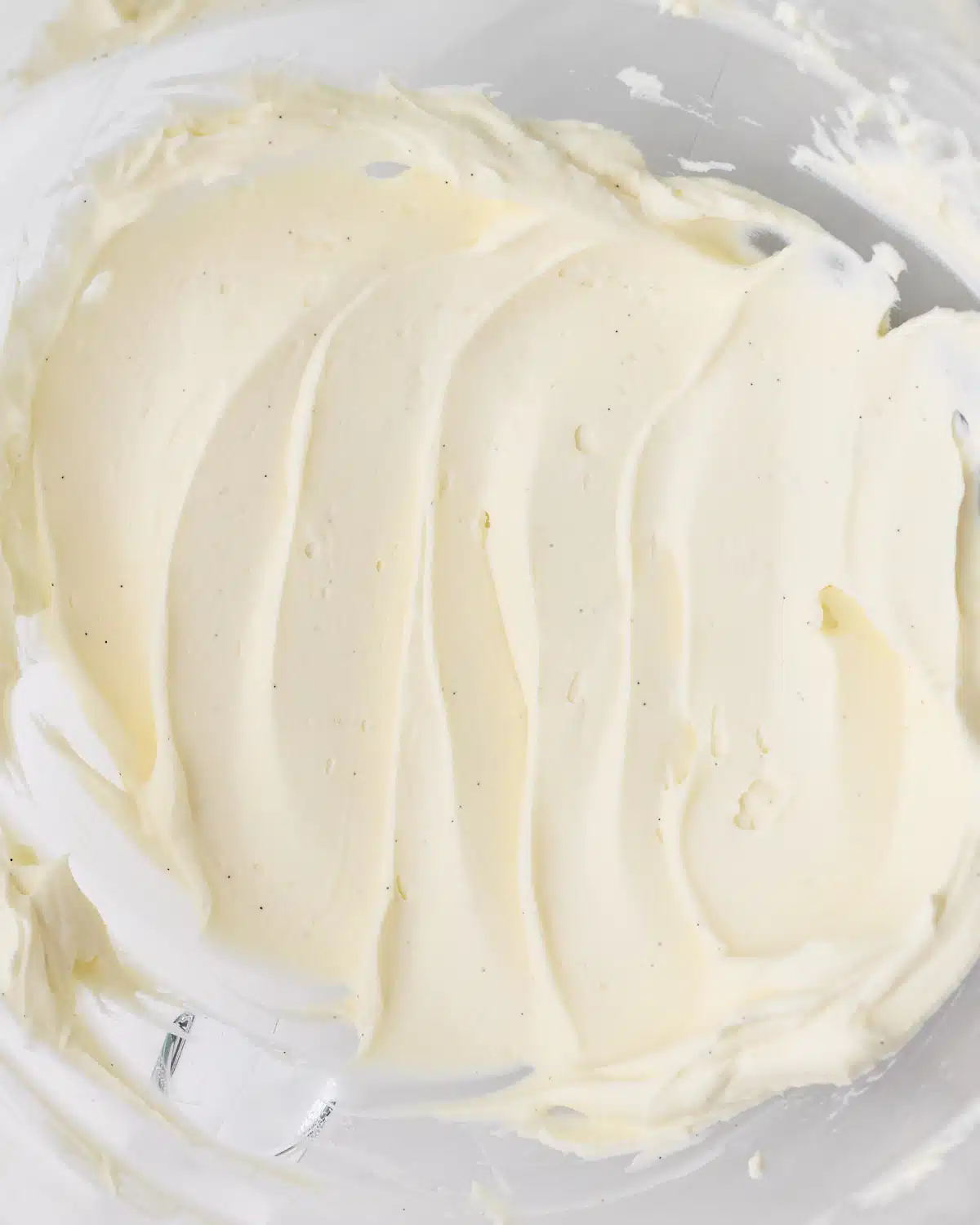
- Pour your cold heavy cream straight from the refrigerator into a bowl. If you'd like a sweetened whipped cream, you can add a few tablespoons of powdered sugar and a splash of vanilla.
- You can whip cream with a stand mixer, electric hand mixer, or by hand with a balloon whisk. Whipping by hand gives you the most control, while a stand mixer requires the least effort, but you'll need to watch it closely.
- Start whipping on medium speed. The cream will begin thin and frothy, then gradually thicken as more air is incorporated.
- Once you start seeing trails in the cream, stop every few seconds and lift the whisk to check the consistency. It will go through stages, from soft peaks to stiff peaks, and each stage is useful for different kinds of desserts. See the section below for visual cues for each one.
- The trick is to watch the cream, not the clock. Cream can go from perfectly whipped to grainy and overwhipped in a matter of seconds, so don't take your eyes off it!
What Kind Of Cream Should You Use?
Not all cream can be whipped.
The amount of fat in the cream is what allows it to trap air and hold its shape. If the fat content is too low, the cream will stay liquid no matter how long you whip it.
For the best results, use a cream with at least 30% milk fat. In most of my recipes, I use either UK double cream or US heavy cream. I always develop recipes to work with either of those options, so they can be made successfully no matter where you are in the world.
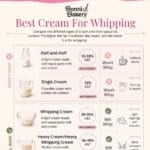
You can see the different types of cream, their fat content, and best uses in the graphic below:
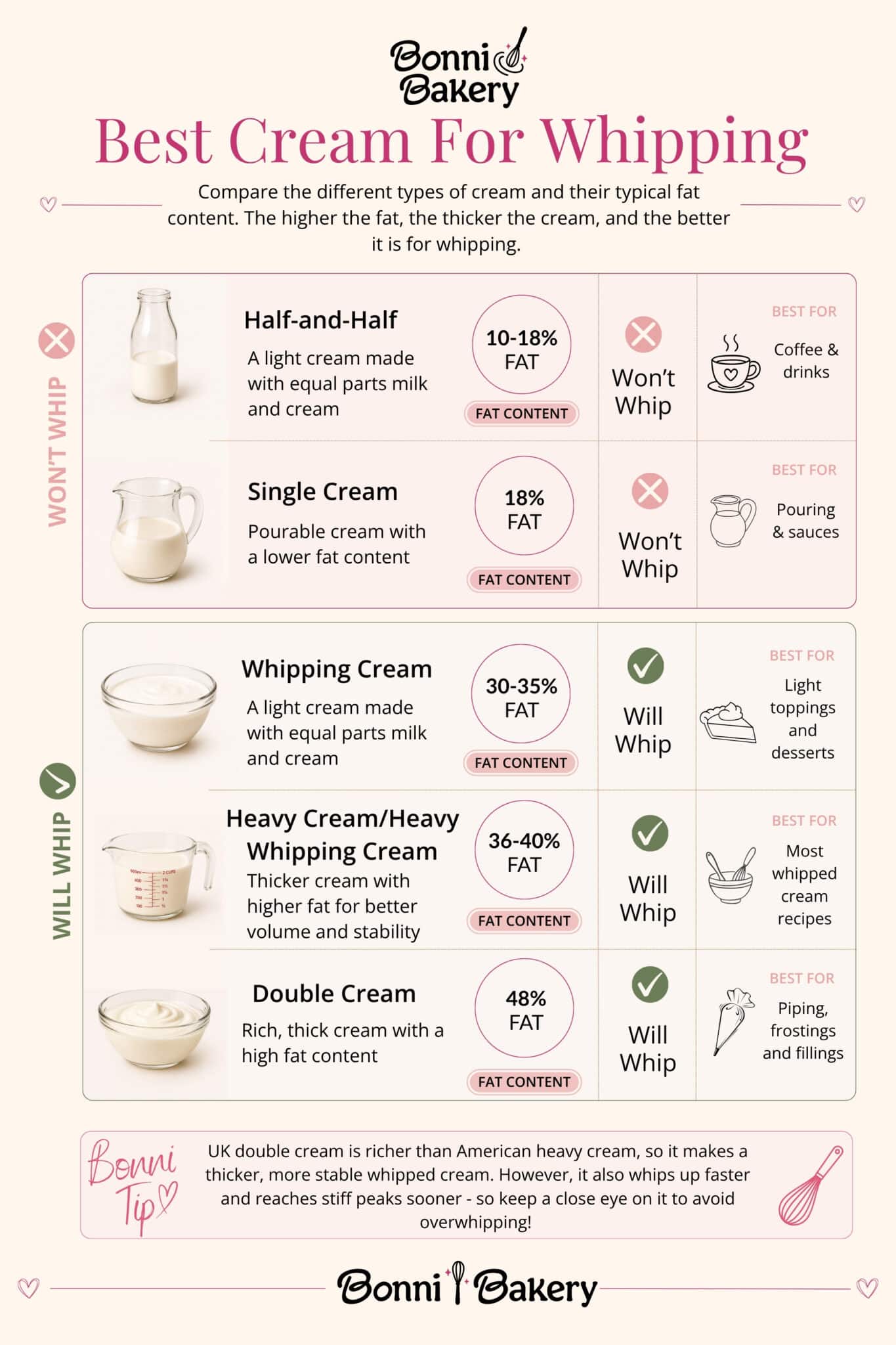
And here is a table of the types of cream for a quick glance at what you need:
| Cream Type | Fat Content | Does It Whip? | Best For |
| Half-and-half | 10-18% | No | Coffee and drinks |
| Single Cream | 18% | No | Pouring and sauces |
| Whipping Cream | 30-35% | Yes | Light toppings and desserts |
| Heavy Cream / Heavy Whipping Cream | 36-40% | Yes | Most whpped cream recipes |
| Double Cream | 48% | Yes | Piping, frostings and fillings |
The tricky thing is that cream names vary depending on where you live.
Having baked professionally in Scotland, Canada, the US, and Germany, I learned the hard way that what's sold as "cream" in one country can be a completely different product in another, which is why understanding the fat content is far more useful and reliable than focusing on the name on the carton.
In the US, heavy cream and heavy whipping cream can generally be treated as the same ingredient. Both contain at least 36% milk fat and whip very well.
In the UK, double cream contains around 48% milk fat, making it much richer than American heavy cream. This means it whips faster and reaches stiff peaks sooner, so you'll need to keep a closer eye on it to avoid over-whipping.
All of my recipes have the unique advantage of being developed with the different types of cream in mind, so they will work all over the world. But if you understand what to look for in your ingredients, you can adapt any recipe to work.
If you're interested in what other ingredients are different between the UK and the US, I have a post all about the differences in baking ingredients between countries.
summary
More Fat = Thickness + Stability
For most dessert recipes, you want to use heavy cream/heavy whipping cream or double cream. Anything with at least 36% fat content.
Should You Add Sugar To Whipped Cream?
This comes down to personal preference, but I have to admit I rarely make whipped cream without sugar these days.
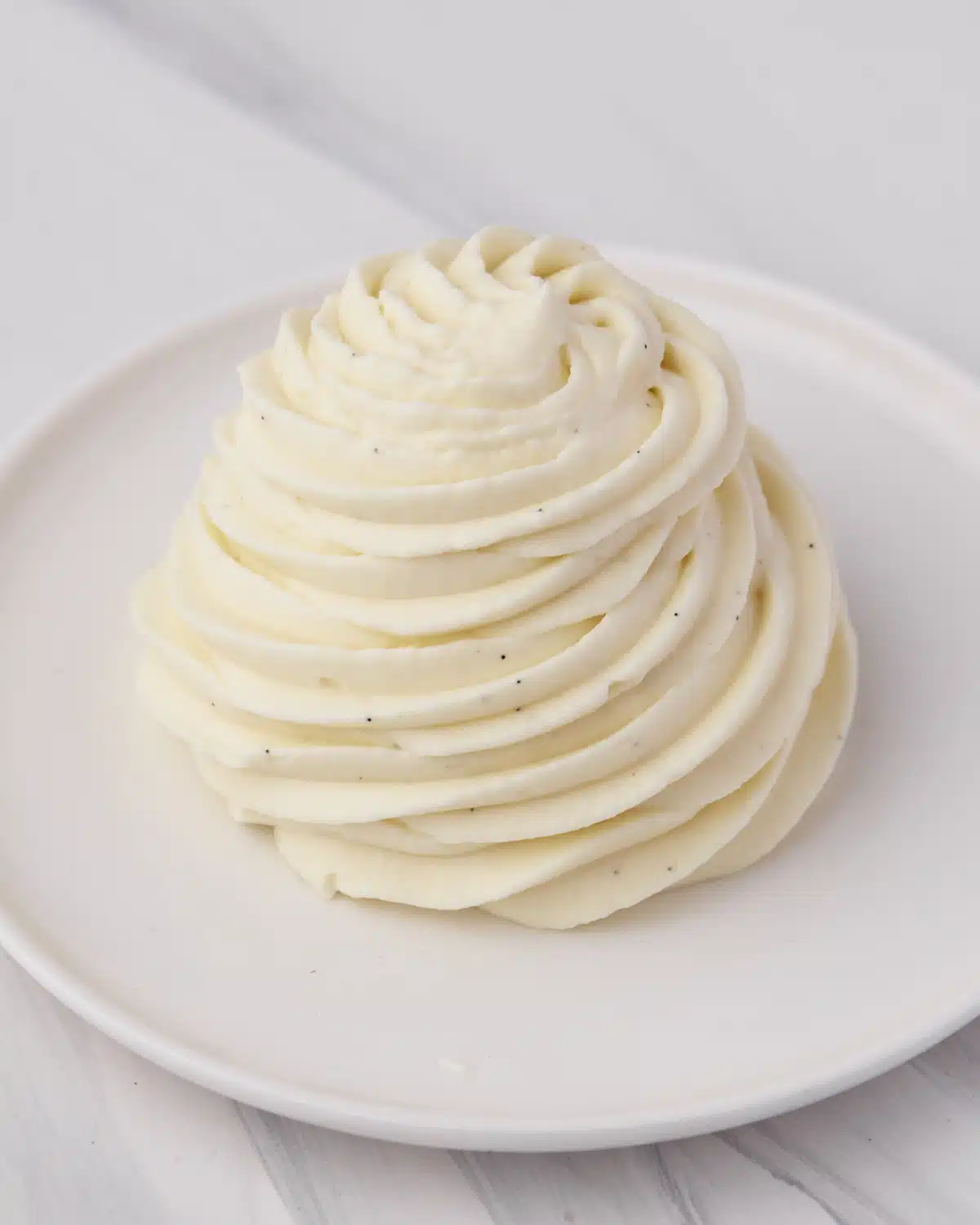
Add a little powdered sugar and vanilla extract, and you've got Chantilly cream. Restaurants love putting "served with Chantilly cream" on the menu because it sounds incredibly fancy, but it's really just whipped cream with a bit of sugar and vanilla.
This doesn't just make the cream sweeter, it also rounds out the flavor and makes it taste more 'finished'.
I prefer powdered sugar because it dissolves quickly and gives the smoothest texture. It also contains a small amount of starch, which can help stabilize the whipped cream slightly. Granulated sugar will also work, but it can sometimes leave a slight graininess if it hasn't fully dissolved.
I use Chantilly cream in all kinds of desserts, from cakes and cupcakes to trifles and fresh fruit. If you'd like exact measurements and more flavour variations, check out my Chantilly Cream recipe.
Stages Of Whipped Cream
It only takes a few seconds for homemade whipped cream to go from perfectly silky to grainy and overwhipped. Here is exactly what to look for at each stage.
Soft Peaks
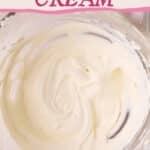
Soft peaks are the first stage of properly whipped cream.
As you whip, you'll start to notice tracks forming in the cream. This is the first sign that it is thickening and approaching soft peaks.
When you lift the whisk out of the bowl, the cream should form a peak that immediately flops back over on itself.
The texture should be light, airy, and quite loose. Soft peaks won't hold intricate piping, but they're perfect for folding into mousses and other desserts because they incorporate easily without knocking out too much air.
What Soft Peaks Look Like
- Visible tracks left by the whisk
- Light, fluffy texture
- Soft, rounded peaks
- The peak flops back over when the whisk is lifted
Best For
- Light creams and mousses
- Topping fruit and desserts
- Dolloping onto hot chocolate
Medium Peaks
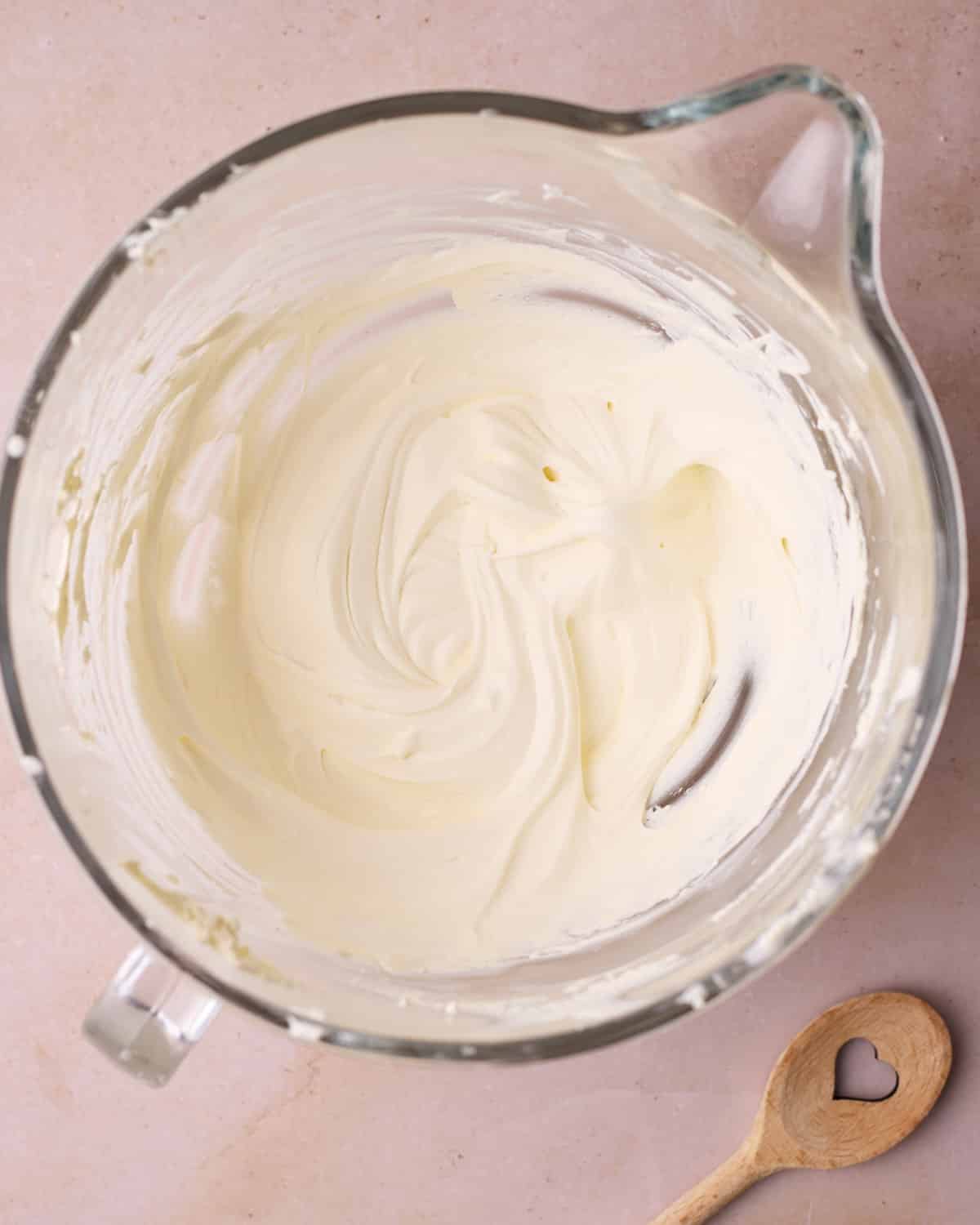
Medium peaks are what I think of as the Goldilocks stage of whipped cream. Not too soft, not too stiff. Just right.
Despite what many home bakers think, this is actually the stage you'll need most often. Many people automatically whip cream all the way to stiff peaks, but most fillings, layered desserts, mousses, and no-bake desserts are better with medium peaks.
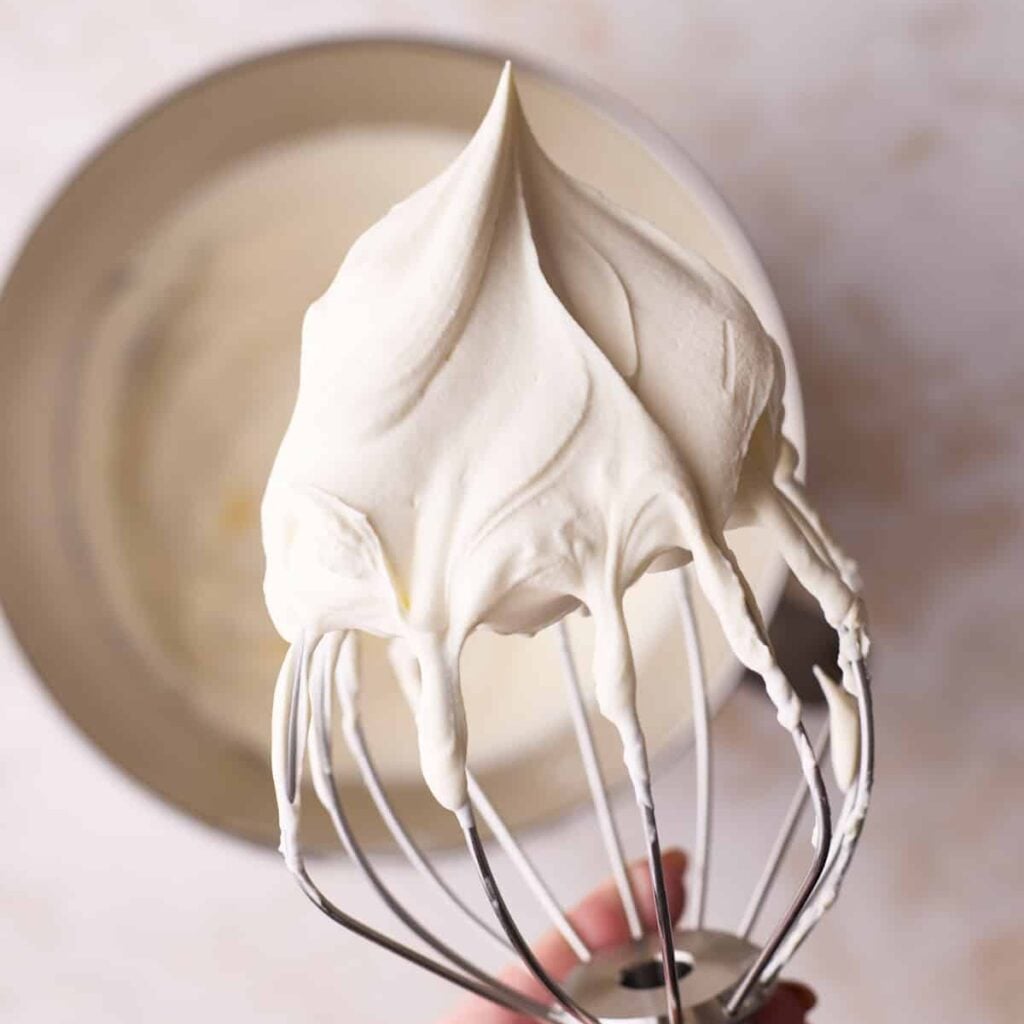
When you lift the whisk out of the bowl, the peak should stand up on its own, but the tip will still curl over slightly. The cream should look smooth and hold its shape well, while still feeling light and creamy.
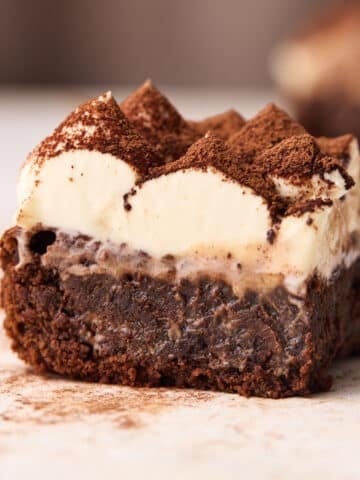
Medium peaks give you enough structure for the cream to hold its shape, but they're still soft enough to incorporate easily into other mixtures. This is perfect for when your layers need to set, like my tuxedo chocolate mousse cake. If the cream is whipped too stiff before folding, it can leave small lumps throughout your dessert and knock out more air during mixing.
What Medium Peaks Look Like
- Deep, clearly visible tracks left by the whisk
- Smooth and creamy texture
- Peaks mostly hold their shape
- The tip of the peak curls over slightly when the whisk is lifted
Best For
- Folding into batters and creams
- No-bake cheesecakes
- Dolloping on top of classic custard pie.
- Topping Angel Food Cake or Pavlova
- Most recipes that just call for "whipped cream"
Stiff Peaks
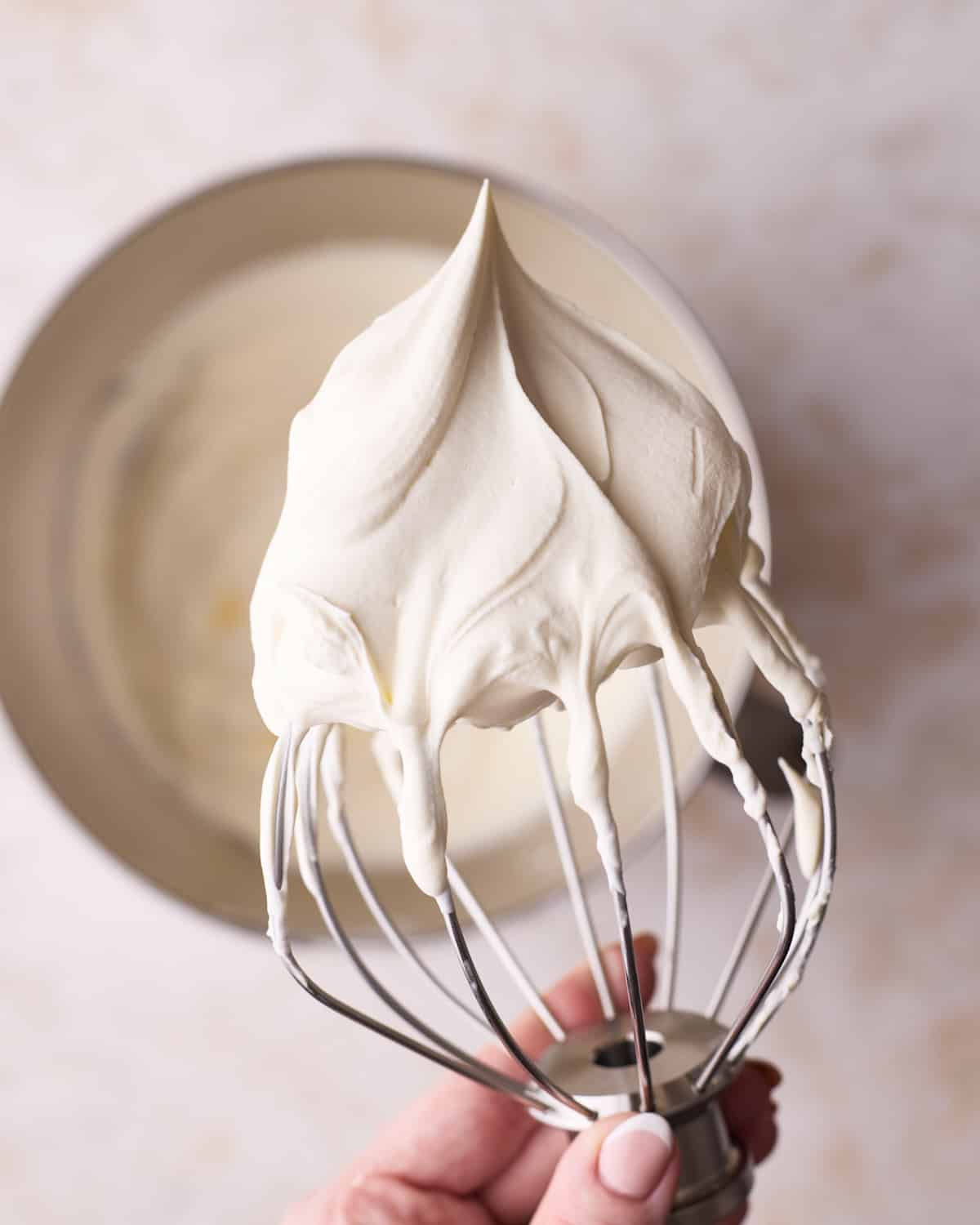
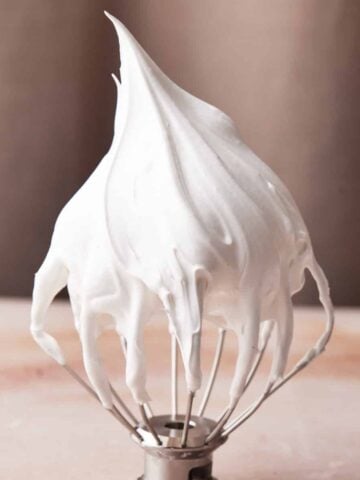
Stiff peaks are the final stage of properly whipped cream.
There is a very thin line between medium peaks and stiff peaks, and an even thinner line between stiff peaks and overwhipped cream. We're talking a matter of seconds that make the difference, especially if you're using a stand mixer.
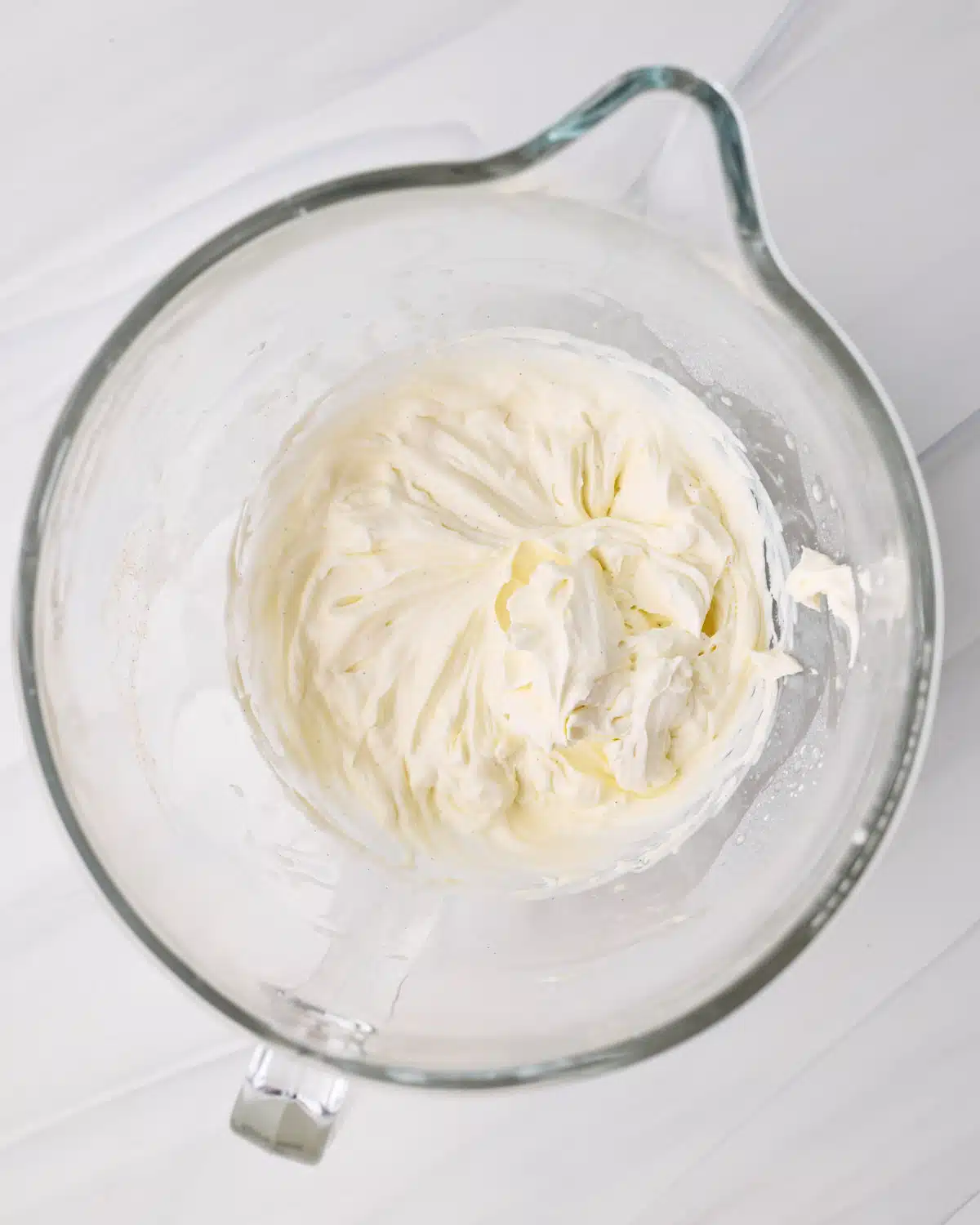
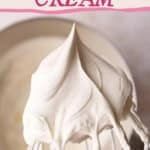
When you lift the whisk out of the bowl, the peak should stand straight up with little to no curl at the tip. The cream will feel noticeably firmer than medium peaks and hold its shape very well.
This is probably the stage most people think they need, but it's actually only necessary for certain things like piping or anything where you need a defined shape.
Once you reach stiff peaks, stop whipping immediately. Any further mixing risks overwhipping the cream and making it grainy.
What Stiff Peaks Look Like
- Very deep tracks left by the whisk
- Firm, stable texture
- Peaks stand upright when the whisk is lifted
- Little to no curl at the tip
- Holds its shape well for piping
Best For:
- Piping decorations
- Frosting cakes and cupcakes
- Stable Dessert Toppings
- Filling meringue cookies
Overwhipped Cream
Overwhipped cream is what happens when the fat in the cream starts clumping together instead of holding onto the air bubbles.
The first sign is a change in texture, the cream will stop looking smooth and silky, and start to look grainy or slightly curdled. If you continue whipping, it will eventually separate into butter and buttermilk (which is kinda cool!)
Over-whipping your cream can happen so quickly, so don't take your eyes off it for even a second once it starts thickening.
What Overwhipped Cream Looks Like
- Grainy or curdled appearance
- Rough texture instead of smooth and silky
- Very firm and difficult to spread
- Beginning to separate
Can You Save Overwhipped Cream?
It happens to all of us. I've done it more times than I can count.
If your cream has only just gone a little too far, adding a small amount of cold cream and folding gently by hand can sometimes bring it back together.
If it has already started to separate, though, there's no way to turn it back into whipped cream. At that point, you're making butter!
You might as well lean into it and use the buttermilk to make some yummy scones to spread your homemade butter on.
Piping Whipped Cream (Video)
When done properly, whipped cream at stiff peaks can be piped beautifully and holds its shape well. See the correct consistency in the video below:

Troubleshooting Whipped Cream
Whipped cream is simple to make, but it can also be easy to get wrong. If your cream isn't behaving the way you expected, here's what might be happening.
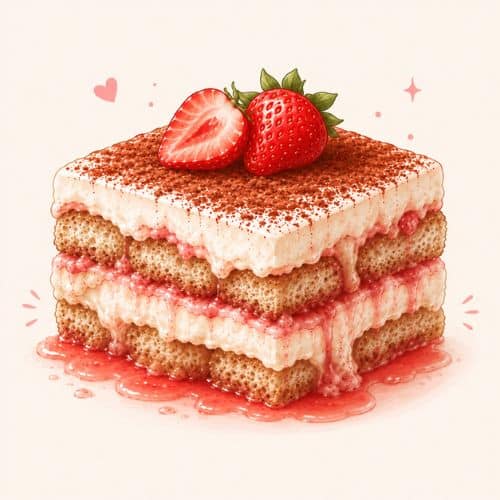
Cream Won't Whip
Most likely cause:
Cream is too warm or doesn't contain enough fat.
Fix:
Use at least 30% fat content cream and make sure it is fridge cold before whipping
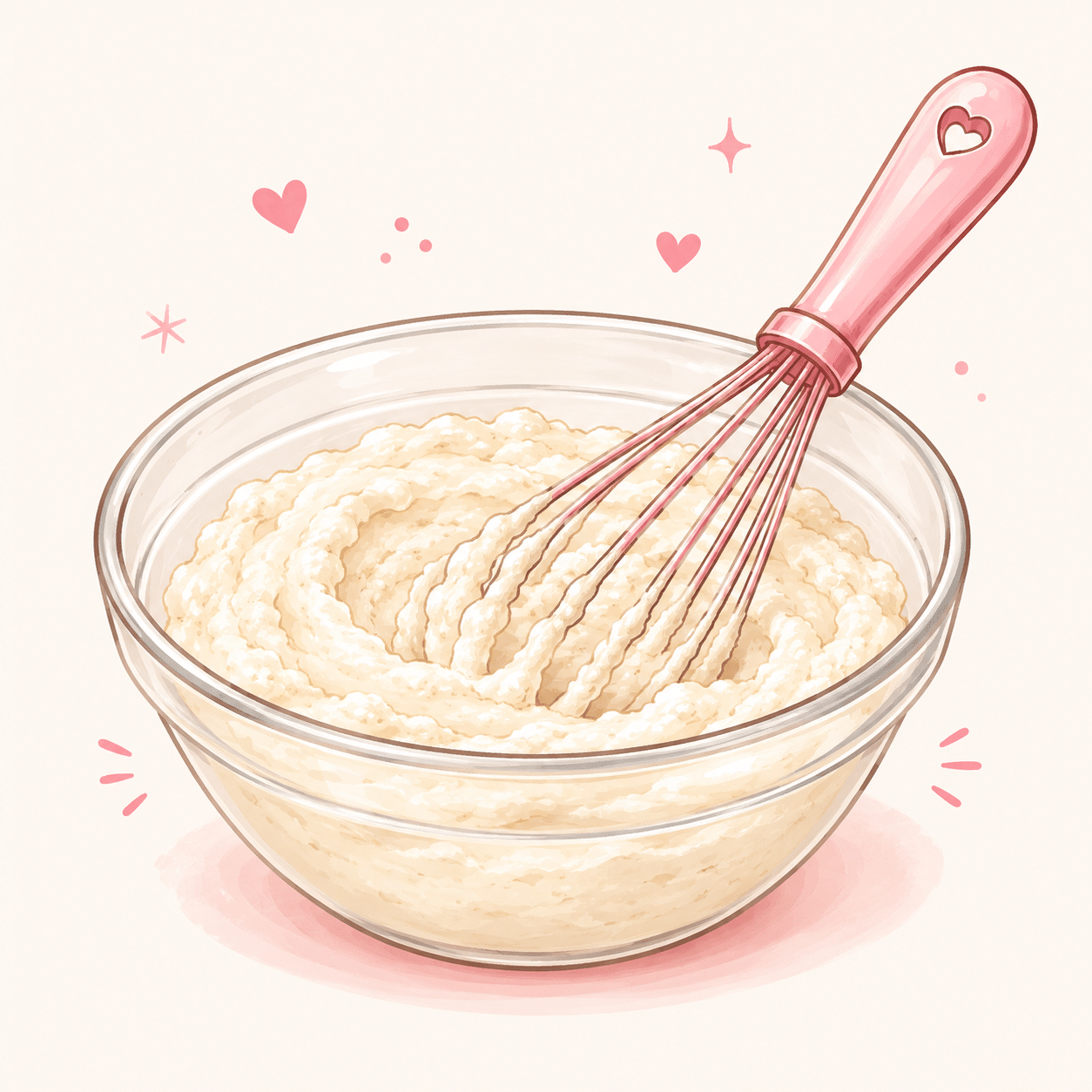
Cream Turned Grainy
Most likely cause:
Cream has been overwhipped
Fix:
Try folding in some cold cream, or embrace it and make butter!
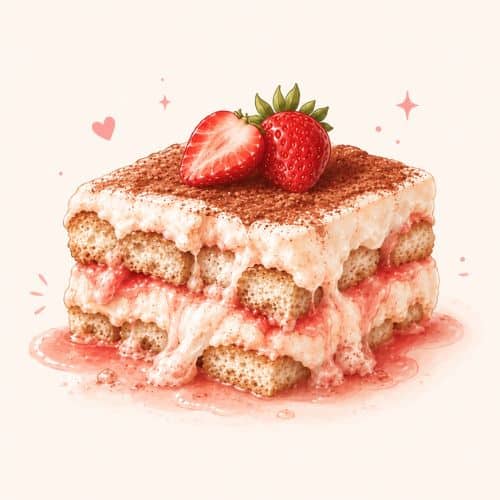
Cream Too Soft To Pipe
Most likely cause:
Cream hasn't been whipped enough to hold its shape.
Fix:
Whip the cream thicker, and consider adding a stabilizer like powdered sugar.
Cream Won't Fold In
Most likely cause:
Cream was whipped too firmly and is leaving lumps.
Fix:
Only whip to medium peaks so everything can combine smoothly.

FAQ
If you have a question about this recipe that isn't answered here, please write it in the comment section, and I will get back to you as soon as I can.
Absolutely! In fact, whipping cream by hand actually gives you the most control and makes it much harder to accidentally overwhip. It takes a little longer, but it's a great option when whipping small amounts of cream.
Heavy cream and double cream are not the same thing, but they are the closest equivalent products available in different parts of the world.
North American recipes tend to list heavy cream or heavy whipping cream in the ingredients, whereas UK recipes will use double cream.
For many recipes, they can be used interchangeably, but be aware that double cream has a higher fat percentage (48%) than heavy cream (36-40%). That means it is thicker and will be slightly more stable, but it can also overwhip more easily.
For more differences in ingredients between countries, check out my guide on UK vs US Baking Ingredients.
It depends on the amount of cream, the type of mixer, and the fat content of the cream. Rather than watching the clock, watch the cream. The visual cues in this guide will tell you far more than a timer ever will.
Use This Skill
Now that you know how to make perfect whipped cream, test out your new skill in one of these recipes:
Homemade Whipped Cream
Ingredients
- 240 ml (1 cup) Heavy Whipping Cream (double cream) cold
- 28 g (3 tablespoon) Powdered Sugar (icing sugar)
- 1 teaspoon Vanilla Bean Paste or vanilla extract
Equipment
- Stand Mixer with whisk attachment
- Balloon Whisk
Instructions
- Pour the cold cream into the bowl of a stand mixer. Sift in the powdered sugar and add the vanilla.240 ml (1 cup) Heavy Whipping Cream, 28 g (3 tablespoon) Powdered Sugar, 1 tsp Vanilla Bean Paste
- With the whisk attachment fitted, turn the mixer on medium speed, then gradually turn it up to high speed.
- Whip until you see thick grooves forming in the cream from the whisk. Check frequently until it reaches the desired thickness.
- Make sure you don't overwhip the cream - for the best results, whip it until it is nearly at the stage you need it, then finish it off by hand with a balloon whisk to avoid overwhipping.




Hi, I'm Jules!
I'm a Scottish ex-bakery owner sharing my tried and true dessert recipes and expert tips to help you whip up impressive desserts at home.
Check out my baking blog and try a few recipes.
Or just lick the screen a little...
Happy Baking!