
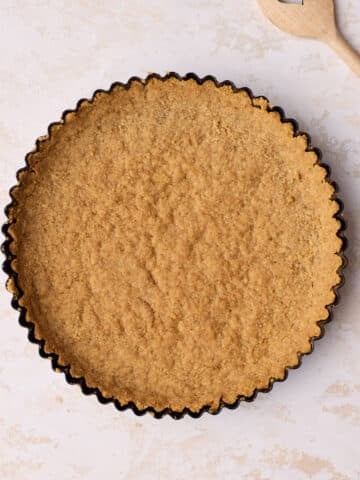
This easy shortbread tart crust is buttery like classic shortbread, but sturdy enough to hold fillings and slice cleanly - no rolling pin required!
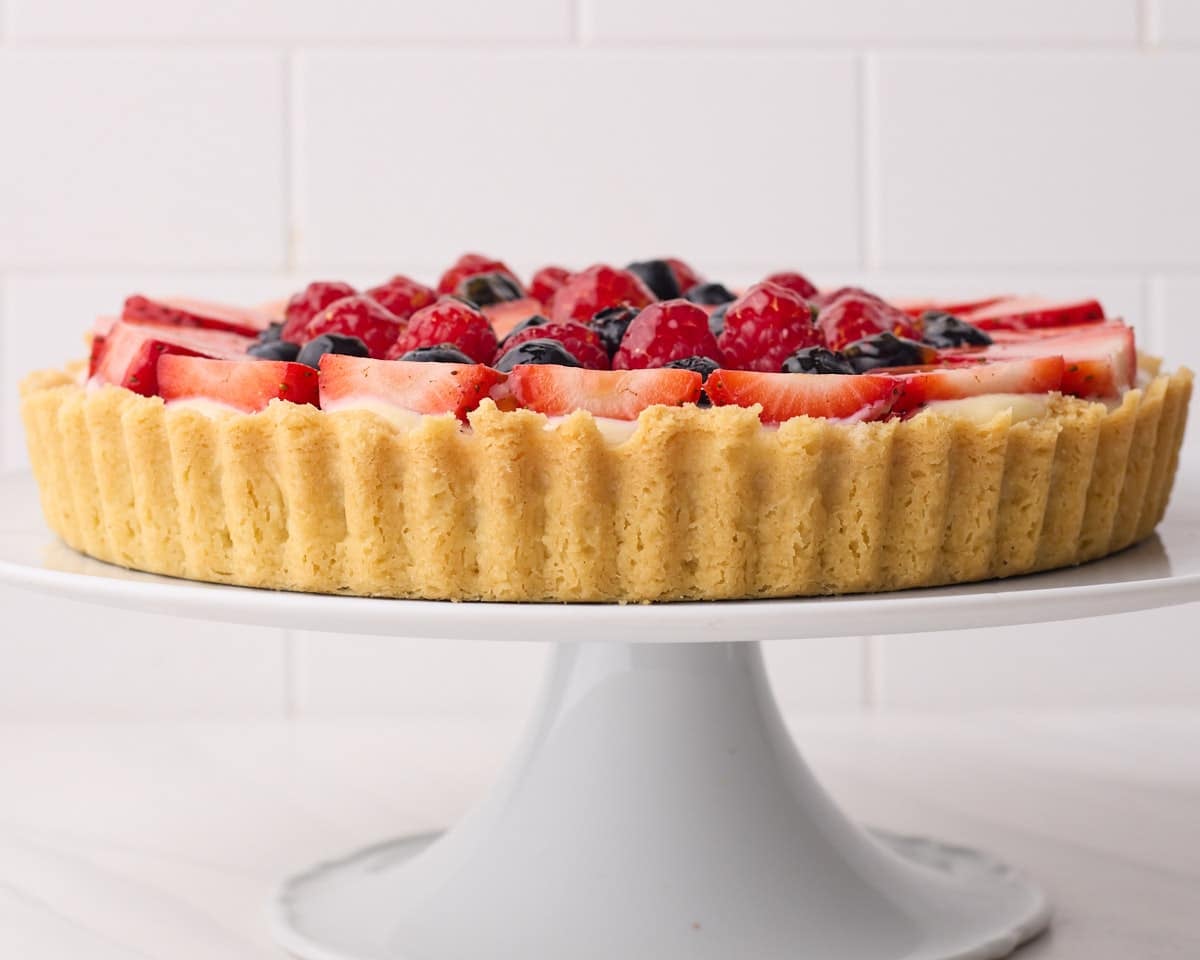
Shortbread Crust Recipe Snapshot
What it is: A buttery shortbread-based tart crust, designed to be both delicious and sturdy.
What makes it different: Developed to hold fillings and slice cleanly without crumbling - unlike traditional shortbread.
Things to note: No rolling pin needed - just press the dough into the pan for an easy, foolproof tart crust.
Classic shortcrust pastry is reliable and versatile, but when I want a tart with rich flavour in every layer, this is the crust recipe I use. It has all the buttery depth of traditional shortbread, but it's been adapted to be sturdy enough for fillings and to slice cleanly without falling apart.
It's also incredibly beginner-friendly - no cutting in butter, no rolling pin, and no crimping. Just press the dough straight into the pan with your hands and bake.
Jump to:
Why This Recipe Works
- Adapted shortbread recipe: Adding powdered sugar and egg yolk makes the shortbread pliable enough to work as a sturdy tart shell without losing flavor.
- Press-in method: Stops dough from being overworked so it stays tender after baking.
- Blind baking: Helps hold up the sides of the tart shell so they don't shrink in the oven.
- Docking the pastry: Releases steam so the tart crust bakes up crisp, not soggy.
Shortbread Crust vs Classic Tart Crust
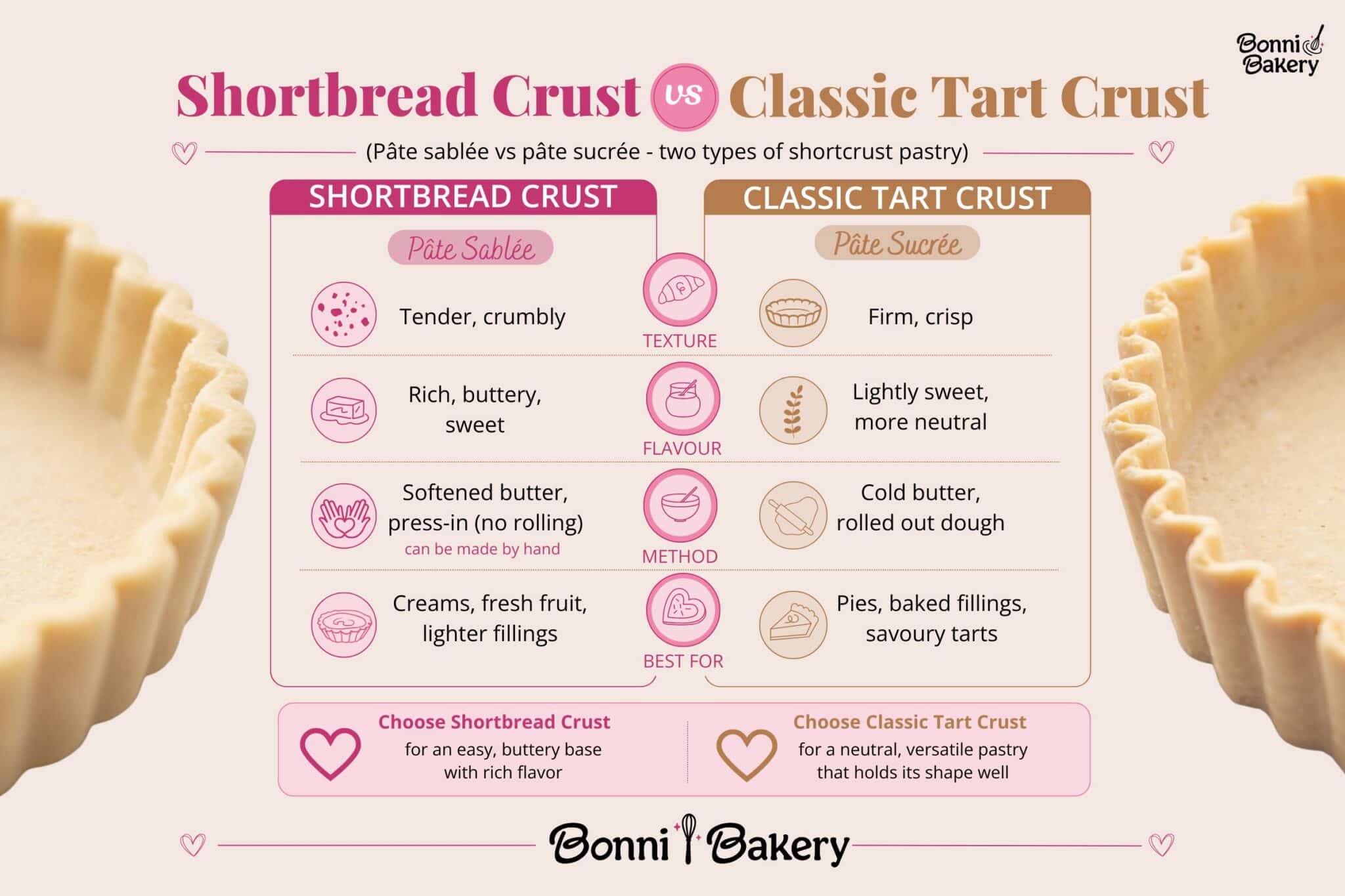
Shortbread crust (aka pâte sablée) and classic tart dough (aka pâte sucrée) are both types of shortcrust pastry.
Classic tart dough is super versatile, but when I really want a dessert to have that rich, buttery flavour in every bite, I go for a shortbread crust. It's softer, more delicate, and becomes part of the overall flavour of the tart - but that extra butter also means it's a little more fragile.
By comparison, classic tart dough is firmer and more neutral. It's made with cold butter and rolled out, so it holds its shape really well and works better for heavier fillings or anything that needs more structure.
Here's a visual comparison of the two kinds of shortcrust pastry:
As a Scottish baker, I also have to say - traditional shortbread is just butter, sugar, and flour. But to turn it into a tart crust that actually holds a filling and slices cleanly, we've had to tweak things a little!
Ingredients
This shortbread crust recipe has been adapted from my Scottish shortbread recipe, with a few ingredient tweaks to make it work as a tart shell.
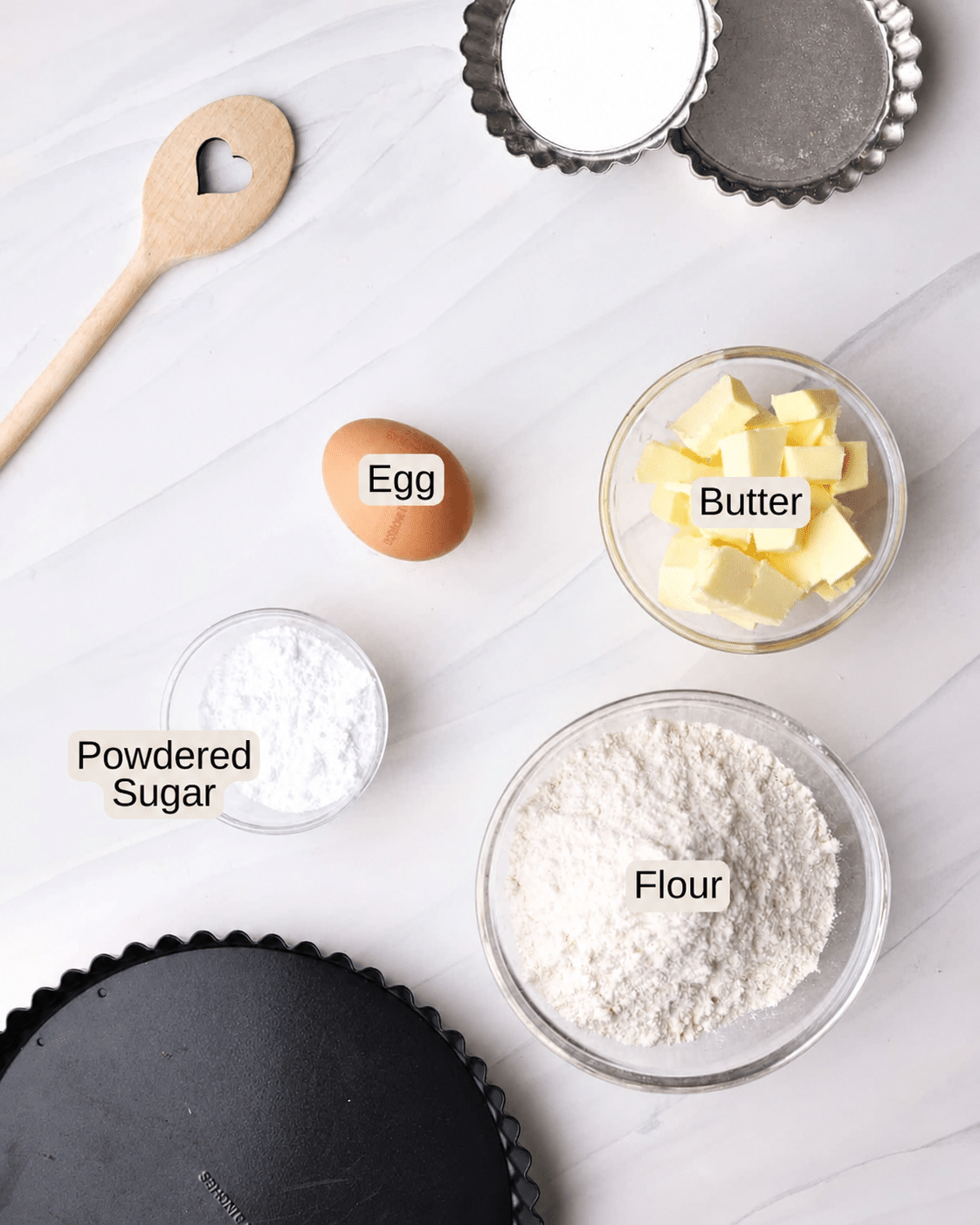
- Salted Butter - Good-quality butter really shines through in shortbread.
- Powdered sugar (icing sugar) - Powdered sugar makes a smoother dough that is less likely to shrink in the oven.
- Egg Yolk - Adding a yolk gives the crust structure so it slices cleanly without breaking.
- Flour - Use all-purpose flour (plain flour) for the best structure.
Make sure the refrigerated ingredients come up to room temperature before you begin.
See the recipe card for measurements in both cups and grams (though I always recommend using a kitchen scale).
Things You'll Need
This is a good recipe to make without a ton of equipment. You don't need a food processor, pastry cutter, or even a rolling pin. Just mix the ingredients in a bowl and press them into the pan.
- 9-inch tart pan - with a removable bottom.
- Pie weights - baking beans or uncooked rice.
How To Make A Shortbread Crust
The nice thing about the press-in method (other than being super easy) is that you can use any shape of pan. Press it into a square pan to make bars or slices with a shortbread base (like my Millionaire's shortbread).
This easy pie crust is a great recipe for beginner bakers who want to start making homemade tarts and pies.
Beat Butter and Sugar
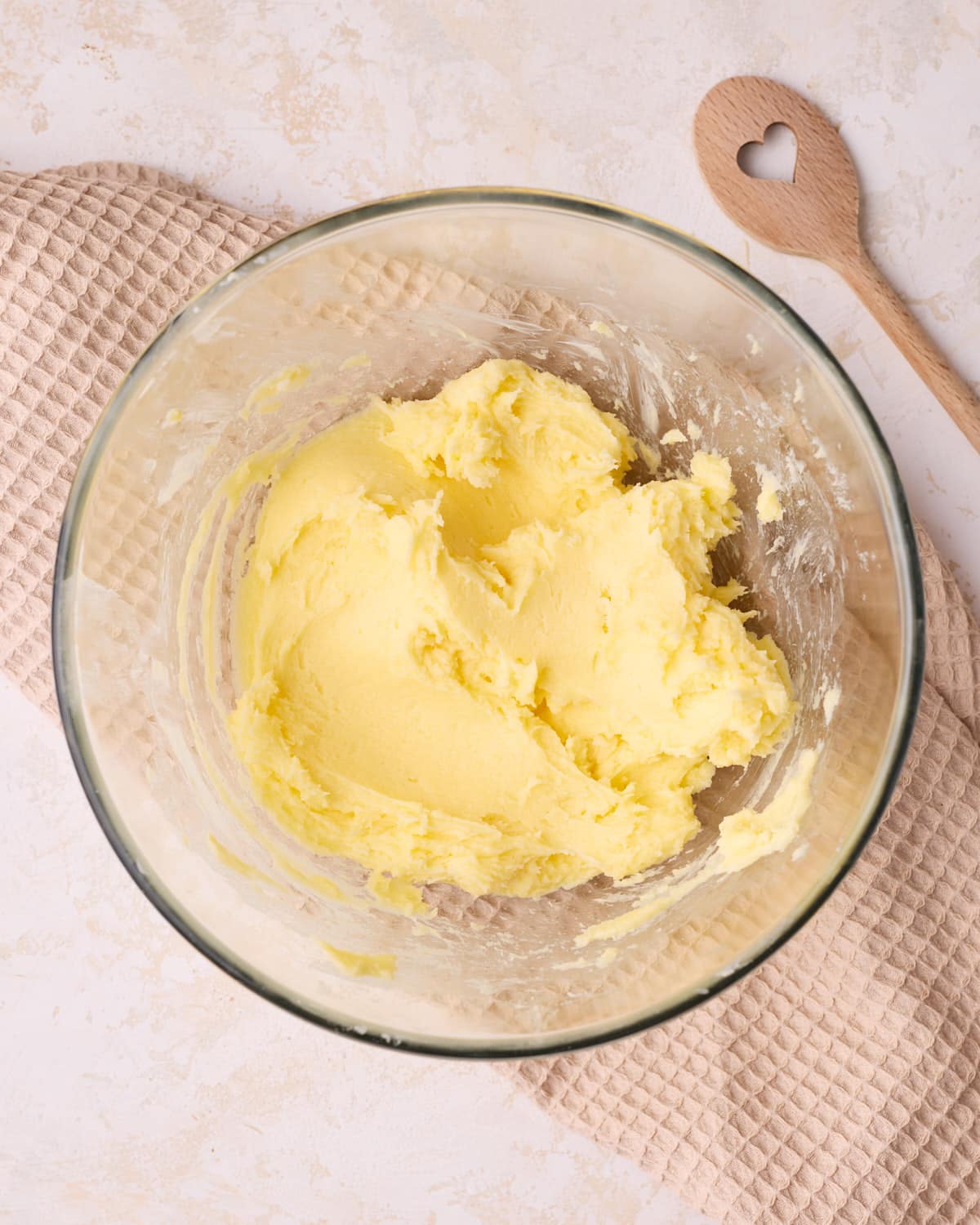
Mix the softened butter and powdered sugar just until smooth. Then, stir in the egg yolk until combined.
Add Flour
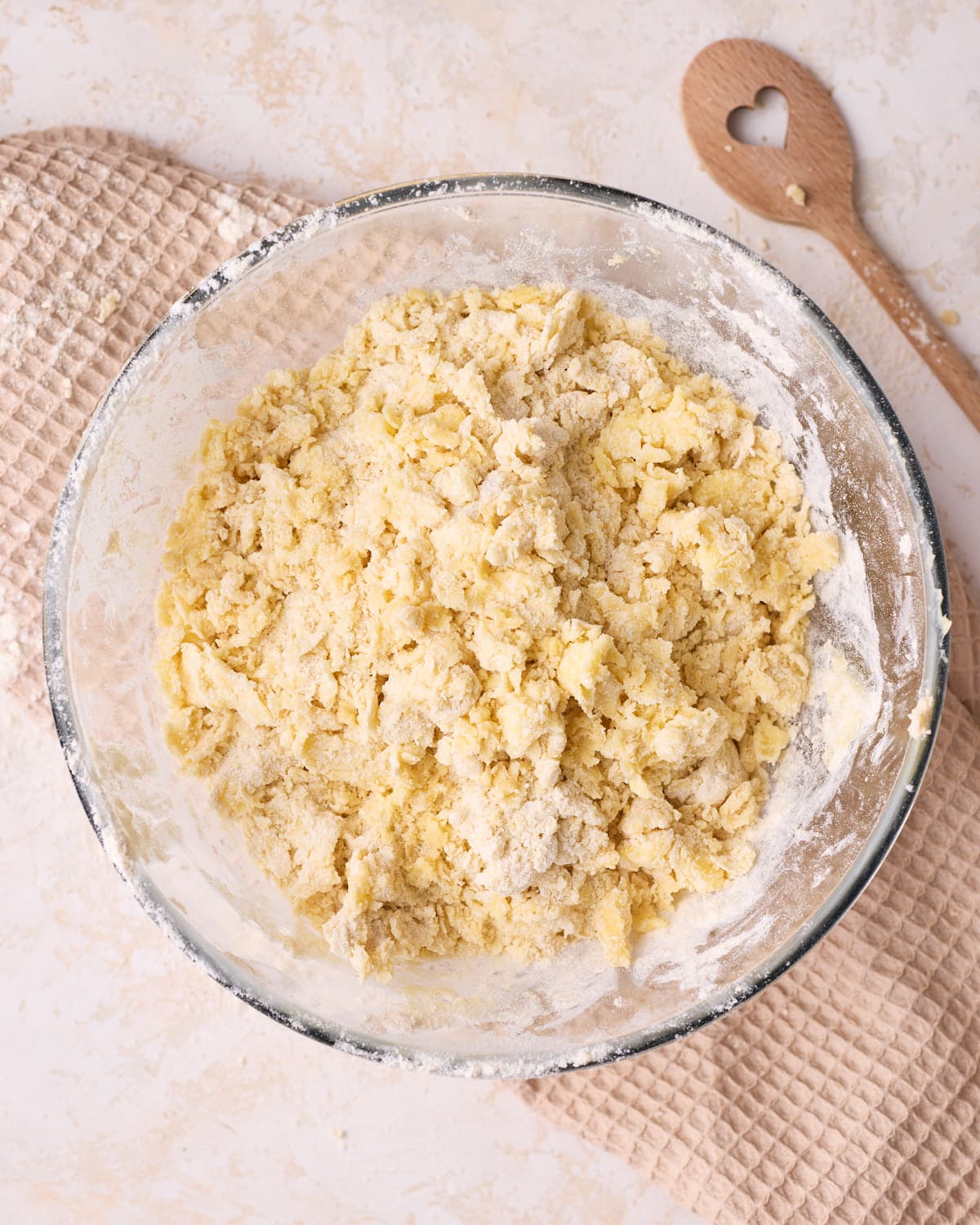
Pass the flour through a sieve into the butter mixture, and mix gently until a shaggy dough forms. Use your hands to bring it together until the flour is all incorporated - be careful not to overwork it.
Press into Pan
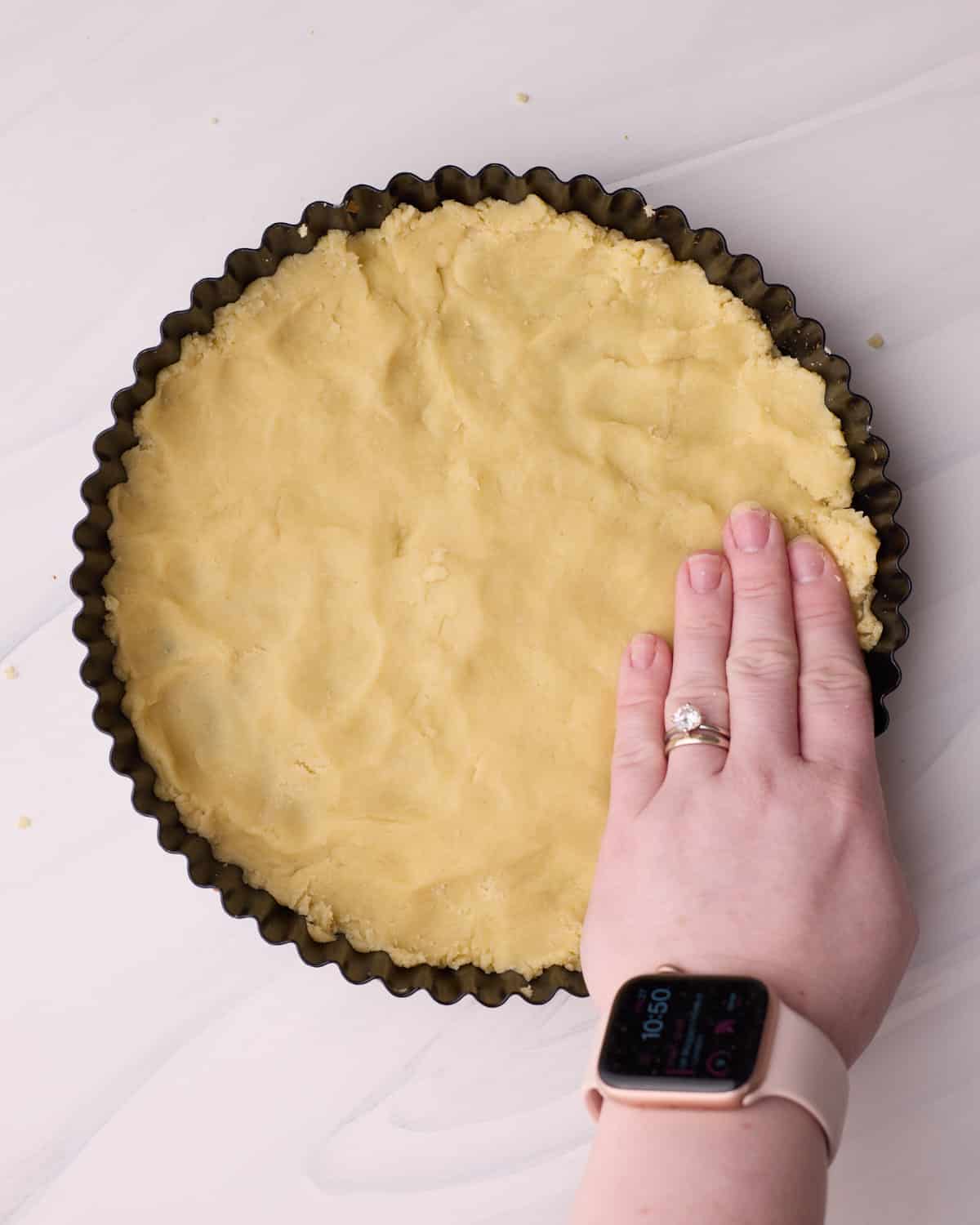
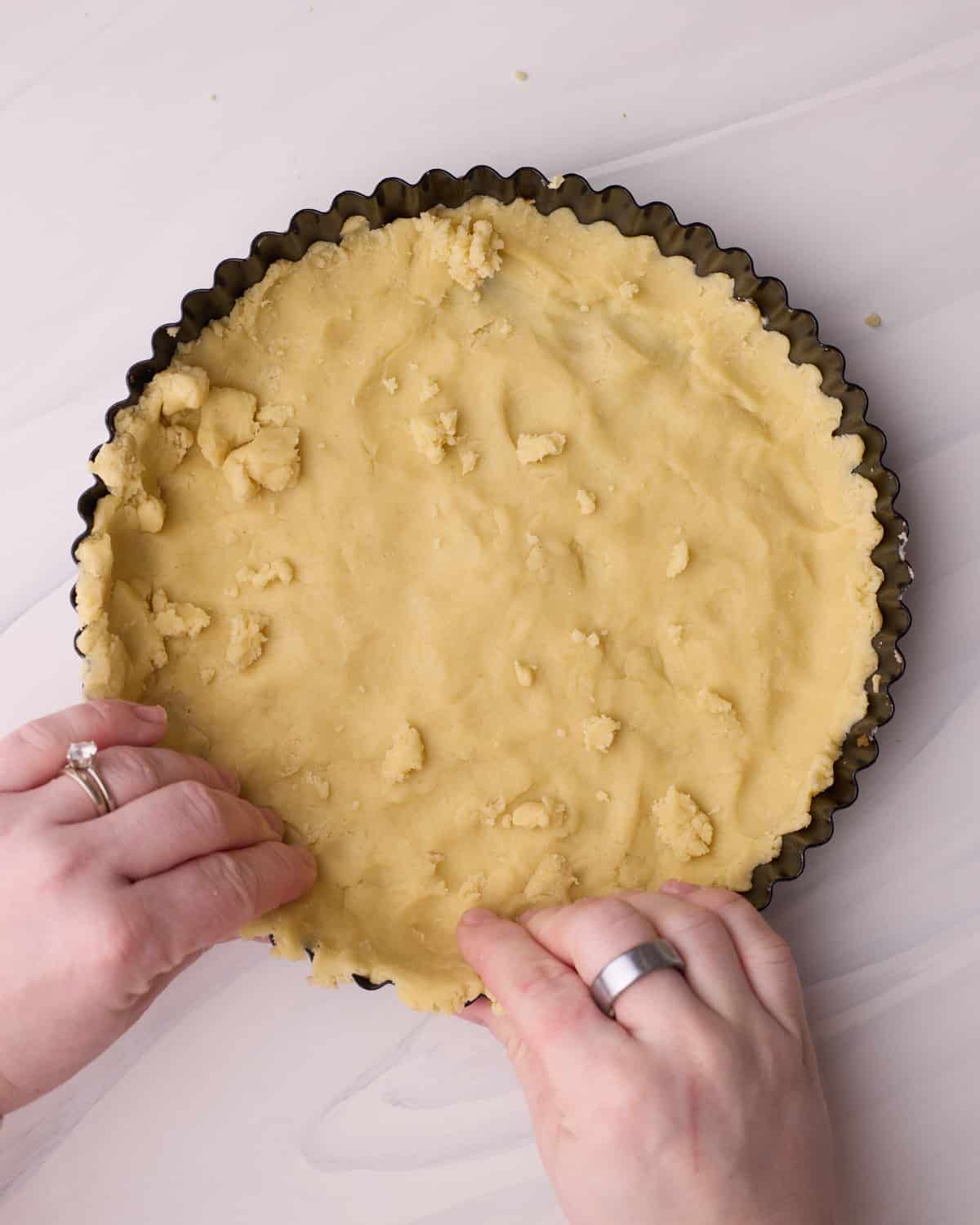
Place about two-thirds of the shortbread dough into a tart pan and use your hands to press it into the bottom of the pan in an even layer, about ⅛-inch - ¼-inch thick.
Build Sides
Use the remaining one-third of the dough to form the sides of the crust, pressing it into the sides with your fingers. Try to make it an even thickness all the way round.
You can trim the edges for a clean finish, or leave them as they are for a more rustic, natural look.
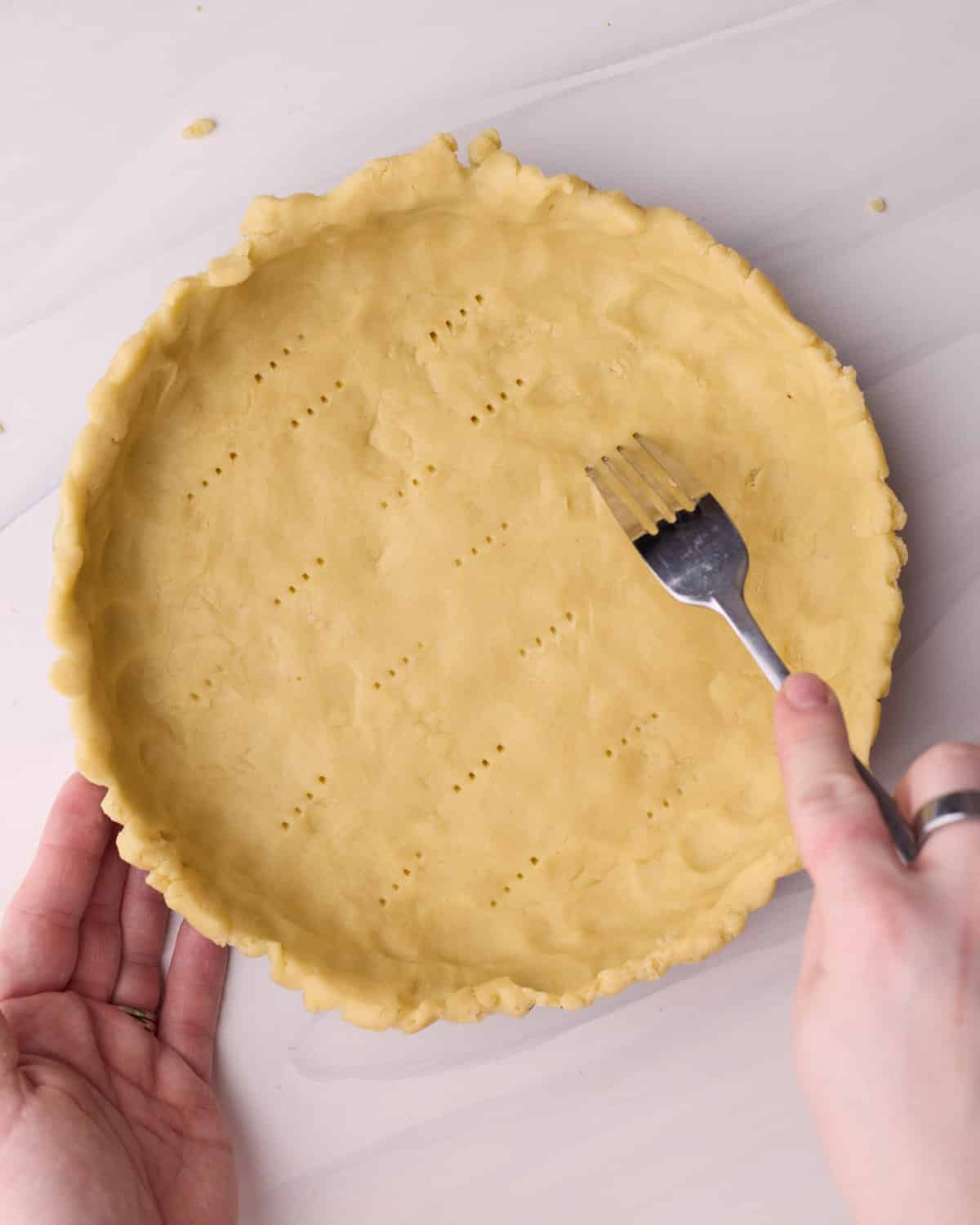
Dock the Dough
Use a fork to evenly prick holes in the bottom of the crust (don't pierce all the way through the dough). Chill the dough for 1 hour, then preheat the oven to 350°F / 180°C (160° fan).
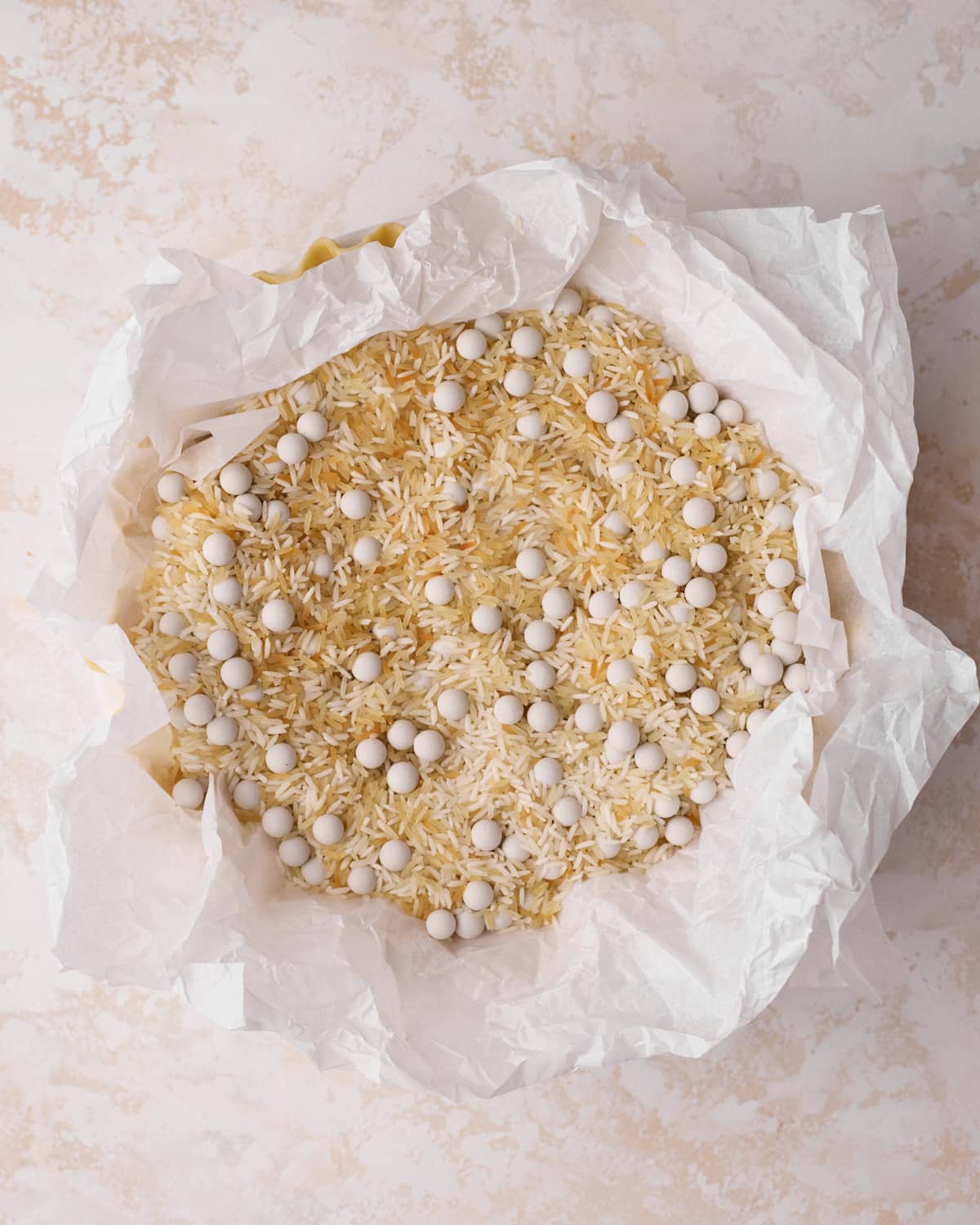
Blind Bake
Line the chilled tart shell with parchment paper and fill with pie weights. Blind bake for 15 minutes. If this is your first time blind baking, check out my guide on how to blind bake a tart shell.
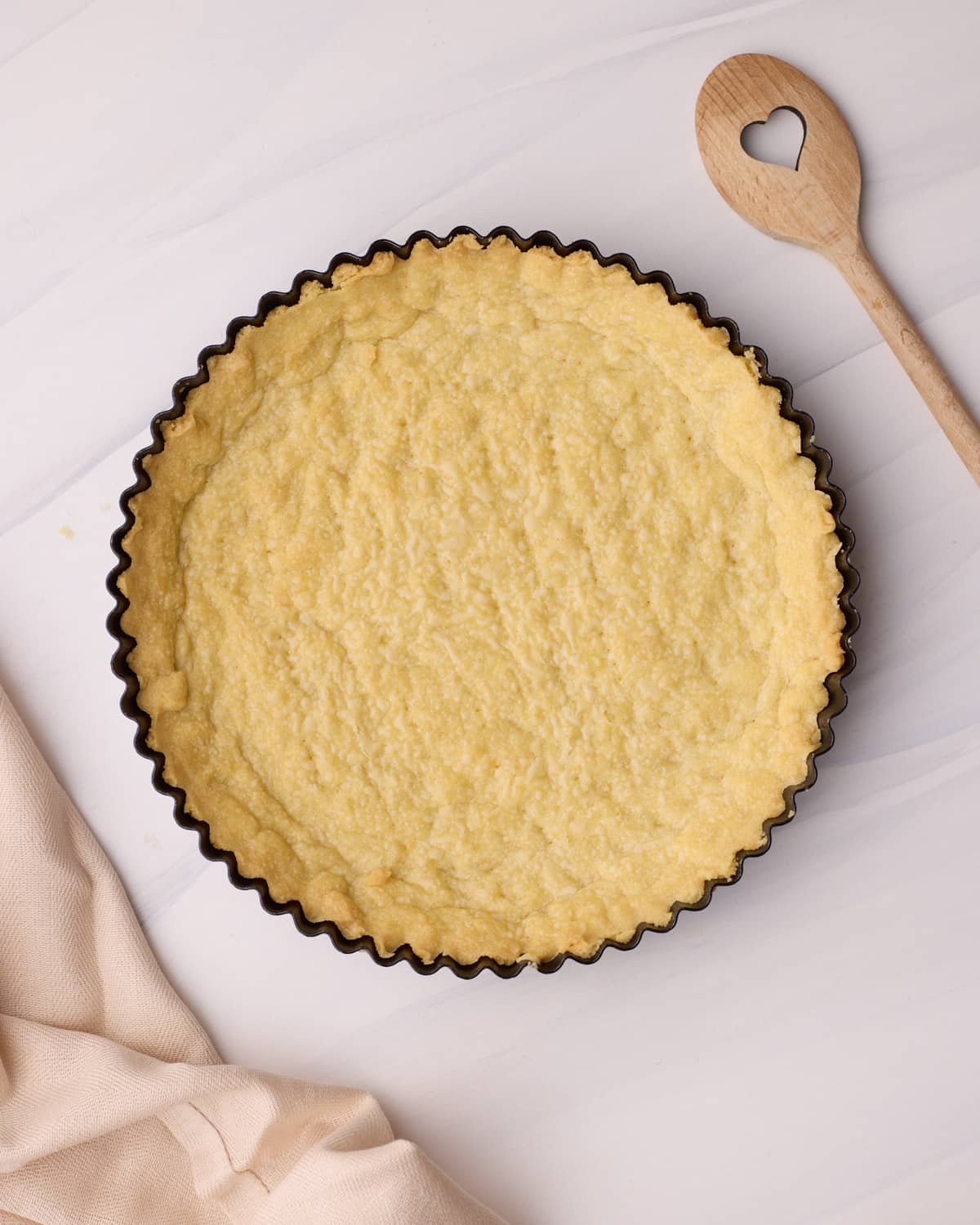
Fully Bake
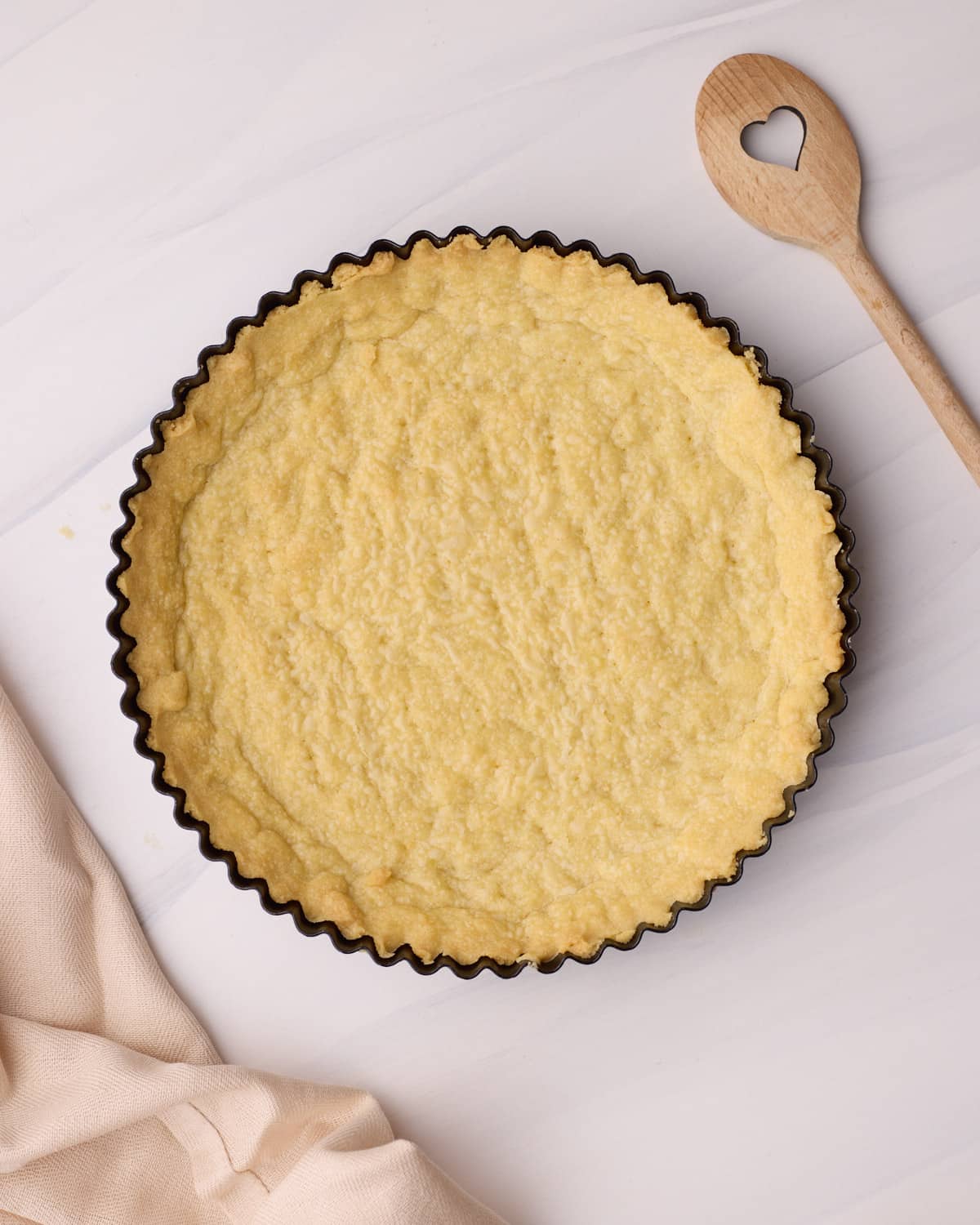
Remove the pie weights and parchment paper, and return the crust to the oven for a further 5-10 minutes. Bake until the edges start to turn a nice golden brown colour.
Cool
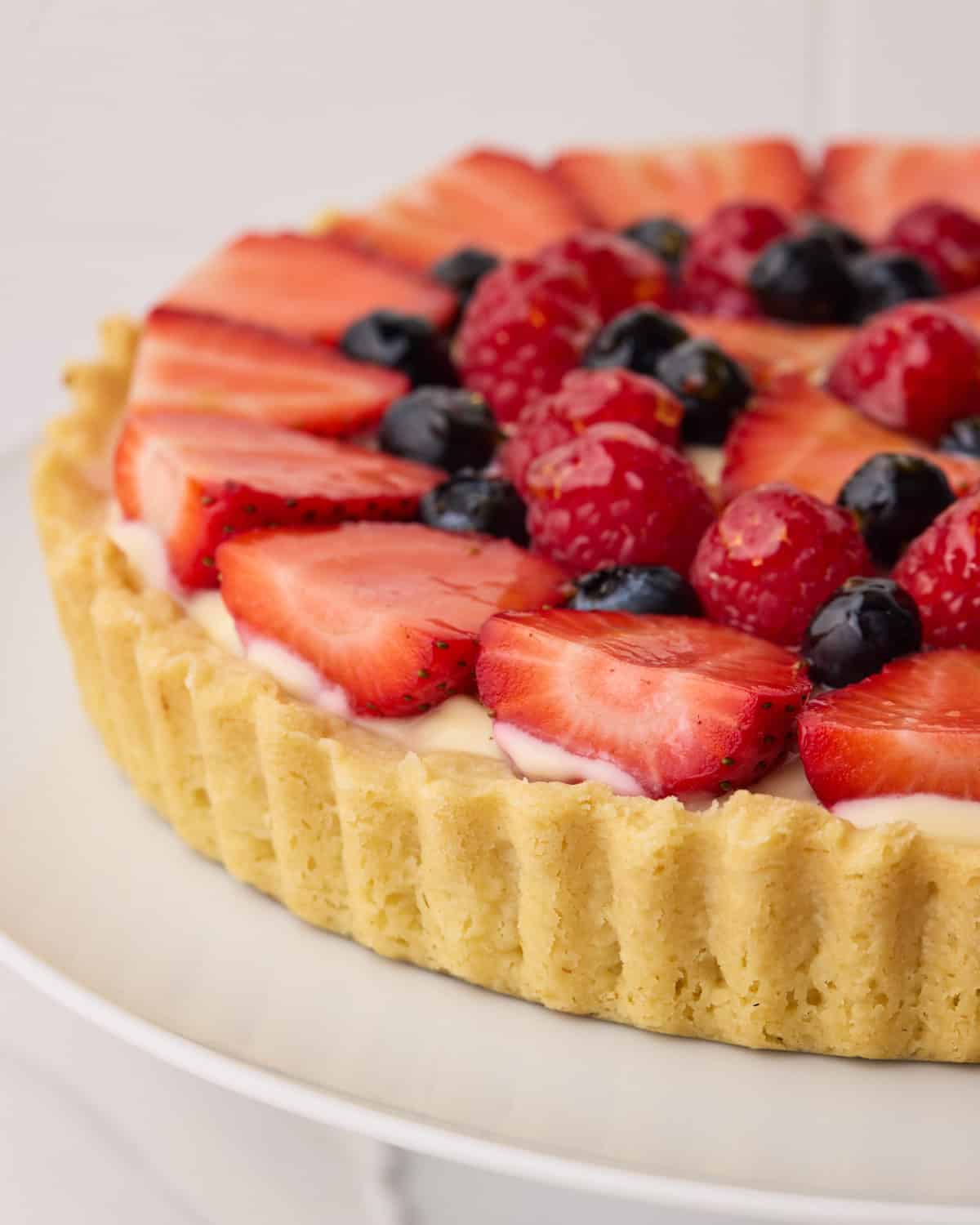
Let your crust cool in the pan completely before adding any filling and/or removing it from the tart pan.
Ways To Use Shortbread Crust
I love a classic flaky crust, but nothing beats the flavor of shortbread (maybe that's my Scottish bias!) Here are my favourite fillings to go with it:
No-Bake Fillings
- Chocolate mousse tart - A rich chocolate mousse that holds its shape.
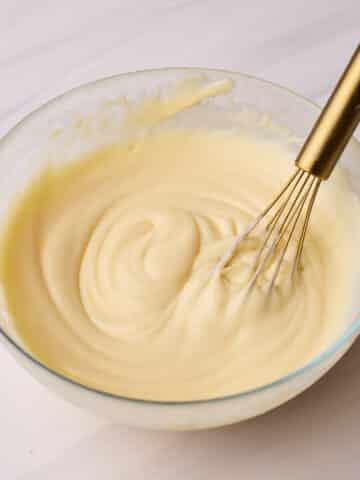
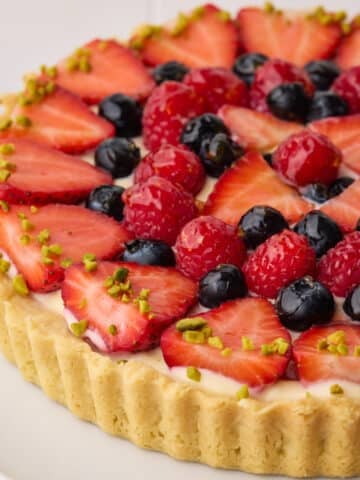
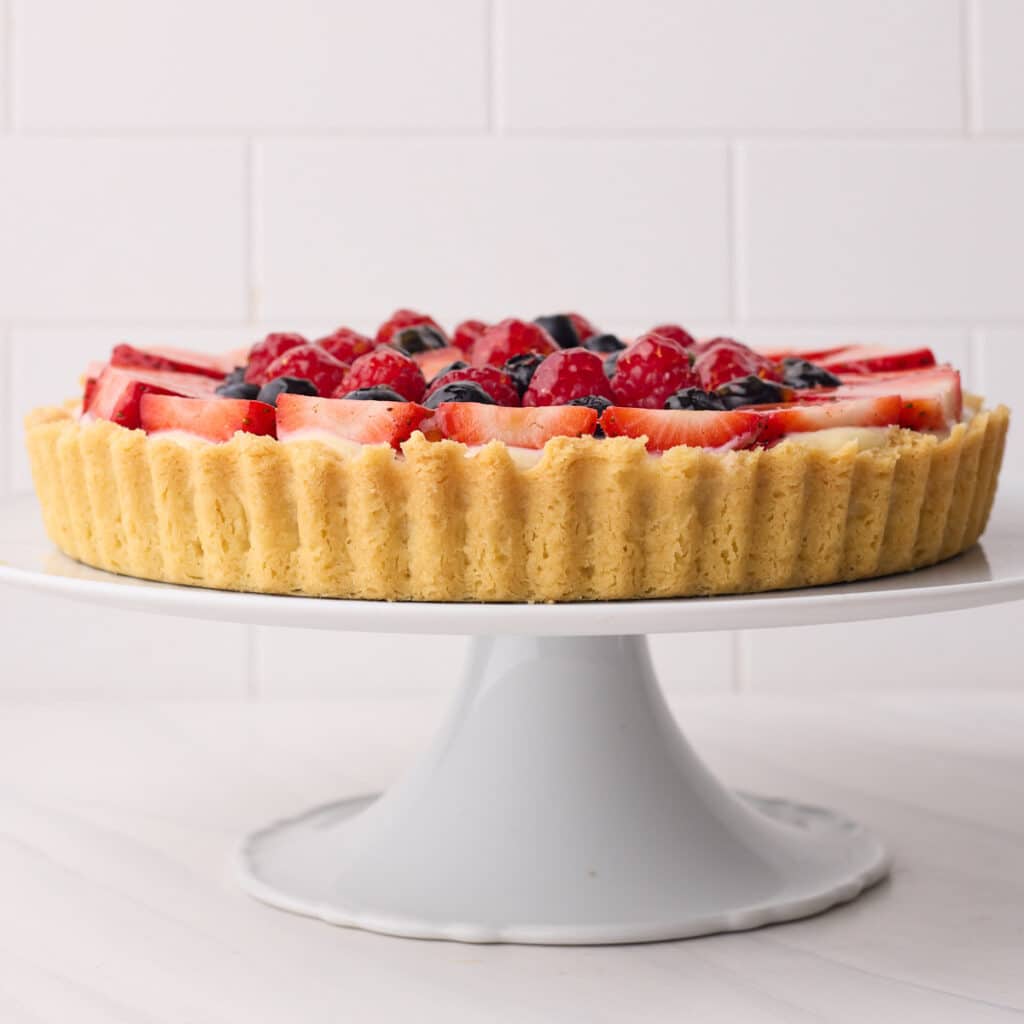
- Fresh fruit tart - Filled with crème pâttisière, topped with pretty patterns of your favourite fruits.
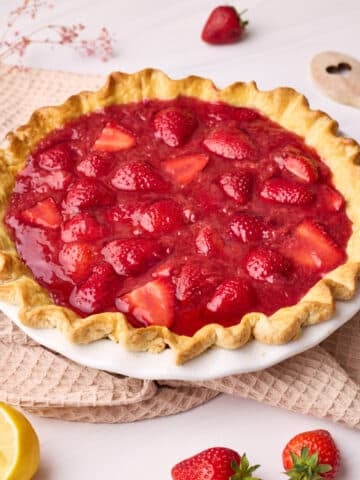
- Strawberry pie - Fresh strawberries swimming in a thick strawberry glaze.
- Chocolate Ganache - 2 ingredients for a super decadent dessert.
- Strawberry custard tarts - Individual desserts perfect for any occasion.
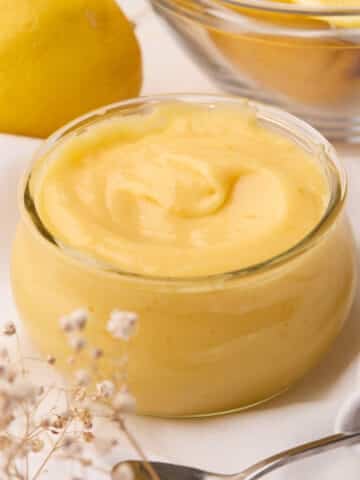
- Lemon tart - Fill with lemon curd, or mix the curd with whipped cream for something a bit lighter.
Baked Fillings
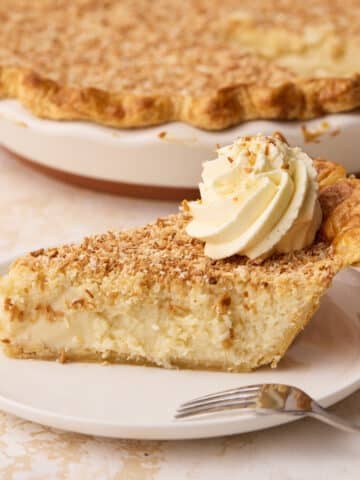
- Custard pie - Creamy baked custard filling that's not overly sweet.
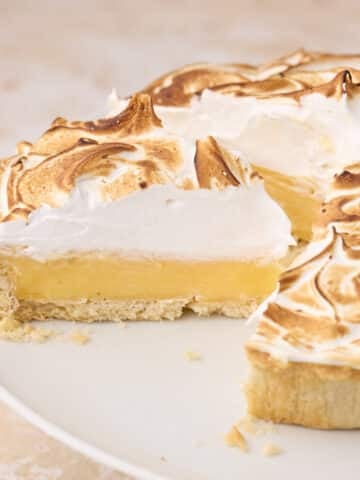
- Raspberry meringue pie - Tangy raspberry curd paired with fluffy toasted meringue.
- Almond Tart - Baked almond frangipane and shortbread are heavenly.
- Baked fruit pie - Apple pie, blueberry pie, peach pie, or cherry pie all work really well with this crust.
Storage
You can keep the baked tart shell in an airtight container at room temperature for up to 5 days.
Alternatively, you can make ahead and store the unbaked tart shell, or the dough in the fridge for up to 3 days, or in the freezer for up to 3 months.
FAQ
If you have a question about this recipe that isn't answered here, please write it in the comment section, and I will get back to you as soon as I can.
Shortbread crust (pate sablee) is a type of shortcrust pastry that has a high ratio of butter and sugar. This means it is very rich and crumbly, but also more delicate than other pastry cases.
Classic pie crust tends to use a flaky pie crust recipe (pâte brisée). It has large pieces of unmixed butter in the pastry dough, which create light layers as it bakes for a flaky, crunchy texture.
Shortbread crust (pâte sablée) uses a high ratio of softened butter in the dough to make a crumbly, melt-in-the-mouth texture with a delicious, rich flavor.
Both shortbread crust (pâte sablée) and classic tart crust (pâte sucrée) are
types of shortcrust pastry.
Classic tart crust is made with cold butter and a dough that is rolled out to make a versatile tart shell that is not too sweet and is sturdy enough for any fillings.
Shortbread crust is made with softened butter and pressed into the pan for a tart shell that is better in flavor but a bit more fragile.
See the graphic in the post above for a visual comparison of the two types of shortcrust pastry.
Show Me Your Bakes!
If you tried this recipe, I'd love to know how it turned out in the comments!
Want to share a photo? You can send me a pic or tag @bonni_bakery on Instagram - I love seeing all your creations.
More Tarts and Pies
Bake up a slice of something tasty with these tart and pie recipes:
Shortbread Crust Recipe
Ingredients
- 200 g (1¾ sticks) Salted Butter softened
- 90 g (¾ cup) Powdered Sugar
- 1 Egg Yolk
- 300 g (2½ cups) All-purpose Flour
Equipment
- 9-inch Tart Pan loose-bottomed
- Pie Weights baking beans or uncooked rice
Instructions
- Beat the softened butter and powdered sugar together just until smooth and combined - don't cream it.200 g (1¾ sticks) Salted Butter, 90 g (¾ cup) Powdered Sugar
- Add the egg yolk and mix until incorporated.1 Egg Yolk
- Sift in the flour and stir until it comes together into a shaggy dough.300 g (2½ cups) All-purpose Flour
- Use your hands to bring the dough together until all the flour is incorporated.
- Tip roughly ⅔ of the dough into a 9-inch tart pan and use your hands to press it into an even layer on the bottom of the pan.
- Use the remaining ⅓ of the dough to form the sides of the tart - try to make it an even thickness all the way around, and be sure to press right into the bottom corners of the pan to prevent shrinking in the oven.You can trim the edges if you like for a clean finish, or leave them for a more natural, rustic look.
- Chill the tart crust in the fridge or freezer for at least an hour before baking.
- Once chilled, line the tart shell with parchment paper and pie weights, then put back in the fridge (or freezer) while you preheat the oven to 350°F / 180°C (160° fan). If this is your first time blind baking, I have a step-by-step tutorial with process pictures on exactly how to blind bake a tart shell.
- Remove the pie weights and bake for a further 5-10 minutes until it is just starting to go light golden brown around the edges. A shortbread crust will be a little paler than other pastry crusts.
- Let the tart cool in the pan completely before filling.
Nutrition
Notes
Why This Recipe Works
- Adapted shortbread recipe: Adding powdered sugar and egg yolk makes the shortbread pliable enough to work as a sturdy tart shell without losing flavor.
- Press-in method: Stops dough from being overworked so it stays tender after baking.
- Blind baking: Helps hold up the sides of the tart shell so they don't shrink in the oven.
- Docking the pastry: Releases steam so the tart crust bakes up crisp, not soggy.









Jess says
I was making this shortbread crust and noticed you didn't put a baking time for the first bake of the blind baking. I assume it's less than with a regular pie crust since this is a cookie base. Otherwise this is a great recipe.