
Baking ingredients don't always mean the same thing in the UK and the US - even when they have the same name. Differences in flour, sugar, butter, and cream can drastically change how well the recipe works.
This guide breaks down the most common UK vs US baking ingredient differences, focusing especially on ingredient names and what they actually refer to, so you can quickly check what to use where you live.

I'm a Scottish baker, but I haven't always lived in Scotland.
Over the years, I've lived and baked in Canada, the US, Germany, and the UK, often using the same recipes I had been using for years - and getting very different results. Sometimes the changes were subtle. Other times, they were confusing enough to send me back to the drawing board.
What took me a while to realise is that most of those "mystery baking failures" weren't about technique at all. They came down to ingredient differences and naming differences between countries - especially in baking staples like flour, sugar, butter, and cream.
Some of these things I learned the hard way.
(Like the time I couldn't figure out why a recipe I'd made dozens of times suddenly felt drier - until I realised North American butter has a slightly lower fat percentage than what I'd been using before.)
This guide is the result of years of trial, error, and a lot of failed test bakes, all aimed at answering one question:
What actually changes when you bake the same recipe in the UK versus the US?
I write my recipes primarily for a US audience, but I know many of you bake in the UK - and this post is here so you can quickly check whether an ingredient name or substitution might affect your results.
If you've ever baked something that should have worked but didn't quite behave the way you expected, this may be why.
Jump to:
Quick Reference - US to UK Baking Ingredient Equivalents
This table is a quick, scannable guide for you to come back to and reference when reading recipes. Below, I go into detail about each of the ingredients, how they are different in different countries and how to effectively substitute them.
Bookmark this page for later so you can refer back to it!
| US Ingredient | UK Ingredient | Notes |
| All-purpose Flour | Plain Flour | |
| Cake Flour | No direct equivalent | Very low protein |
| Self-raising Flour | Self-raising Flour | Not common in US |
| Granulated Sugar | Caster Sugar | UK granulated sugar is coarser |
| Superfine Sugar | Caster Sugar | |
| Powdered Sugar | Icing Sugar | |
| Light Brown Sugar | Soft Light Brown Sugar | NOT Demerara Sugar |
| Dark Brown Sugar | Soft Dark Brown Sugar | NOT Muscovado Sugar |
| Baking Soda | Bicarbonate of Soda | |
| Cornstarch | Cornflour | Not US 'corn flour' |
| Heavy Cream | Double Cream | UK cream has more fat |
| Semi-sweet Chocolate | Dark Chocolate 50-60% | |
| Bittersweet Chocolate | Dark Chocolate 60-70% | |
| Milk Chocolate | Milk Chocolate | US version is sweeter |
| Graham Crackers | Digestive Biscuits | Closest Equivalent |
| Corn Syrup | Liquid Glucose | |
| Molasses | Treacle | Not Blackstrap |
| Almond Flour | Ground Almonds |
Flour
Flour is one of the most confusing ingredients when baking across the UK and US - mostly because the names don't always mean the same thing, and in some cases, the flour itself behaves differently.
All-Purpose Flour (US) vs Plain Flour (UK)
If a recipe calls for all-purpose flour, the closest UK equivalent is plain flour.
These two flours are very similar and can usually be swapped without issue, especially in cakes, cookies, and brownies. US all-purpose flour does tend to have a slightly higher protein content, which means it can produce a little more structure, but for most home baking the difference is small.
If you're baking a US recipe in the UK, plain flour is almost always the correct choice.
Self-Raising Flour (UK) vs All-purpose Flour (US)
This is where a lot of confusion comes in.
In the UK, self-raising flour is commonly used for baking. In the US, it's much less common (although it has become easier to find in recent years).
The key difference is that self-raising flour already contains baking powder and salt, while all-purpose flour does not. Because of this:
- You can't directly substitute self-raising flour for all-purpose flour.
- And you shouldn't use it in a recipe unless the recipe specifically calls for it.
How to Make a Self-Raising Flour Substitute
If a recipe calls for self-raising flour and you only have all-purpose (US) or plain flour (UK), you can make your own substitute.
For each 1 cup (120g) of flour, add:
- 1½ teaspoons baking powder
- ¼ teaspoon fine salt
Whisk very well to evenly distribute the leavening before using.
This substitute works well for cakes, muffins, and quick breads, but it's still best to follow the recipe's original flour type whenever possible.
Cake Flour (US): What It Is and Why It's Different
Cake flour is common in the US but much less so in the UK.
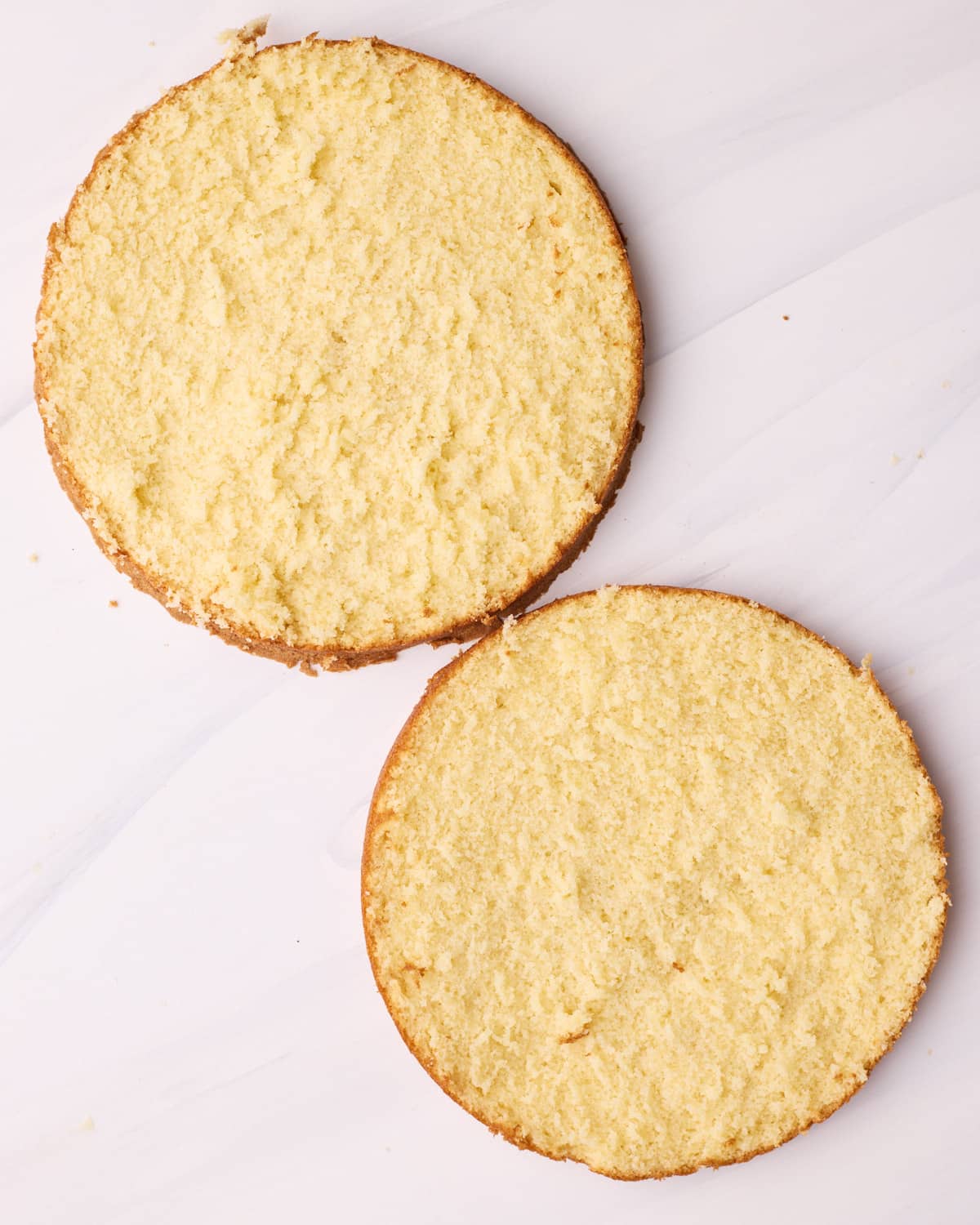
Cake flour is a fine, low-protein flour, which means it produces:
- Softer crumbs
- Lighter textures
- More delicate cakes
It's often used in sponge cakes, layer cakes, and recipes where a fine, tender crumb is the goal.
Because cake flour contains no leavening, it is not the same thing as self-raising flour.
Using Cake Flour in the UK
Cake flour can be hard to find in the UK, but you do have a few options:
- Buy cake flour online (most reliable if you bake with it often).
- Make a DIY substitute by replacing part of the plain flour with cornstarch (cornflour). Replace 2 tablespoon per 1 cup / 120g) of flour. This isn't an exact match, but it works well in a pinch.
- There are some European flour options available in most supermarkets, like 00 flour (pastry flour) as a substitute, though it's not a perfect equivalent.
For most recipes that call for cake flour, the bake will still work with other flours - though the texture may be a little less tender. So don't stress if you can't find it.
The Takeaway on Flour
- All-purpose flour (US) = plain flour (UK)
- Self-raising flour includes leavening and salt - adjust if substituting
- Cake flour is a specialty flour designed for softness, not just a naming difference
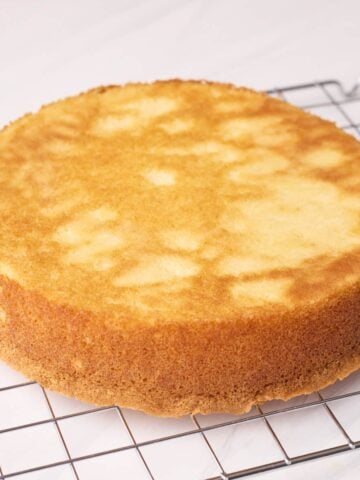
Most relevant in: vanilla cake and sponge cakes.
If a bake feels unexpectedly dense, dry, or crumbly, flour choice is often the reason.
Sugar
The naming of sugar across countries is one of my biggest bugbears.
A lot of recipes will call for granulated sugar, but this is actually a completely different thing in the US vs the UK - which can lead to a lot of confusion.
Granulated Sugar vs Caster Sugar
US granulated sugar is quite fine and the most common white sugar used in baking.
UK granulated sugar is coarse and typically only used for adding to our numerous cups of tea.
In delicate bakes (like sponge cakes or meringues), UK granulated sugar may not dissolve fully in a US recipe.
Best swap:
If you're baking a US recipe in the UK, use caster sugar instead. Caster sugar is the same as US Superfine sugar; it is a bit finer than US granulated sugar, but it is the best replacement.
Superfine Sugar (US) vs Caster Sugar (UK)
These are equivalents.
US: Superfine sugar = UK: Caster sugar
Caster sugar works perfectly anywhere a US recipe calls for granulated sugar or superfine sugar. Basically, you almost always want to use caster sugar as your white sugar if you are baking in the UK.
Powdered Sugar (US) vs Icing Sugar (UK)
Same thing, different name.
- UK: Icing sugar
- US: Powdered sugar / confectioners' sugar
This is the very fine, powder-like sugar that is often used to make frosting and icing. It also contains a little bit of cornstarch, which can help with thickening things like stabilised whipped cream.
Brown Sugar
The main difference between brown sugar in the US and the UK is that the UK has quite a few more varieties of brown sugar available, so it is easy to choose the wrong one.
In the US, brown sugar is basically white sugar with added molasses (less for light brown and more for dark brown sugar). In the UK we have several other options, such as Muscovado sugar and Demerara sugar - neither of these are the correct choice for a recipe that calls for brown sugar.
It matters because brown sugar is often an important ingredient for adding moisture and chew in a recipe (especially chocolate chip cookies), so choosing the wrong one could make your bakes turn out dry or dense.
Look specifically for SOFT 'light brown sugar' or 'dark brown sugar'. They should be fine and soft, and will look almost like wet sand.
The Takeaway On Sugar
- Granulated Sugar (US) = Caster Sugar (UK)
- Superfine Sugar (US) = Caster Sugar (UK)
- Always look for soft brown sugar - light or brown.
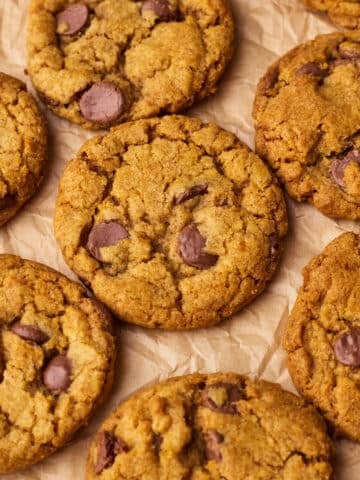
Most relevant in: Chocolate chip cookies, sugar cookies, meringue, and fudgy brownies.
Butter
The first thing that confuses people about butter is the way it is measured in the US vs the UK.
In the US, butter comes in 'sticks'.
1 stick of butter = 113g.
As all of my recipes are designed to give measurements in both cups and grams, I develop them to be easy to use with sticks of butter. (Though in my opinion, you should ALWAYS measure your ingredients in grams with a kitchen scale).
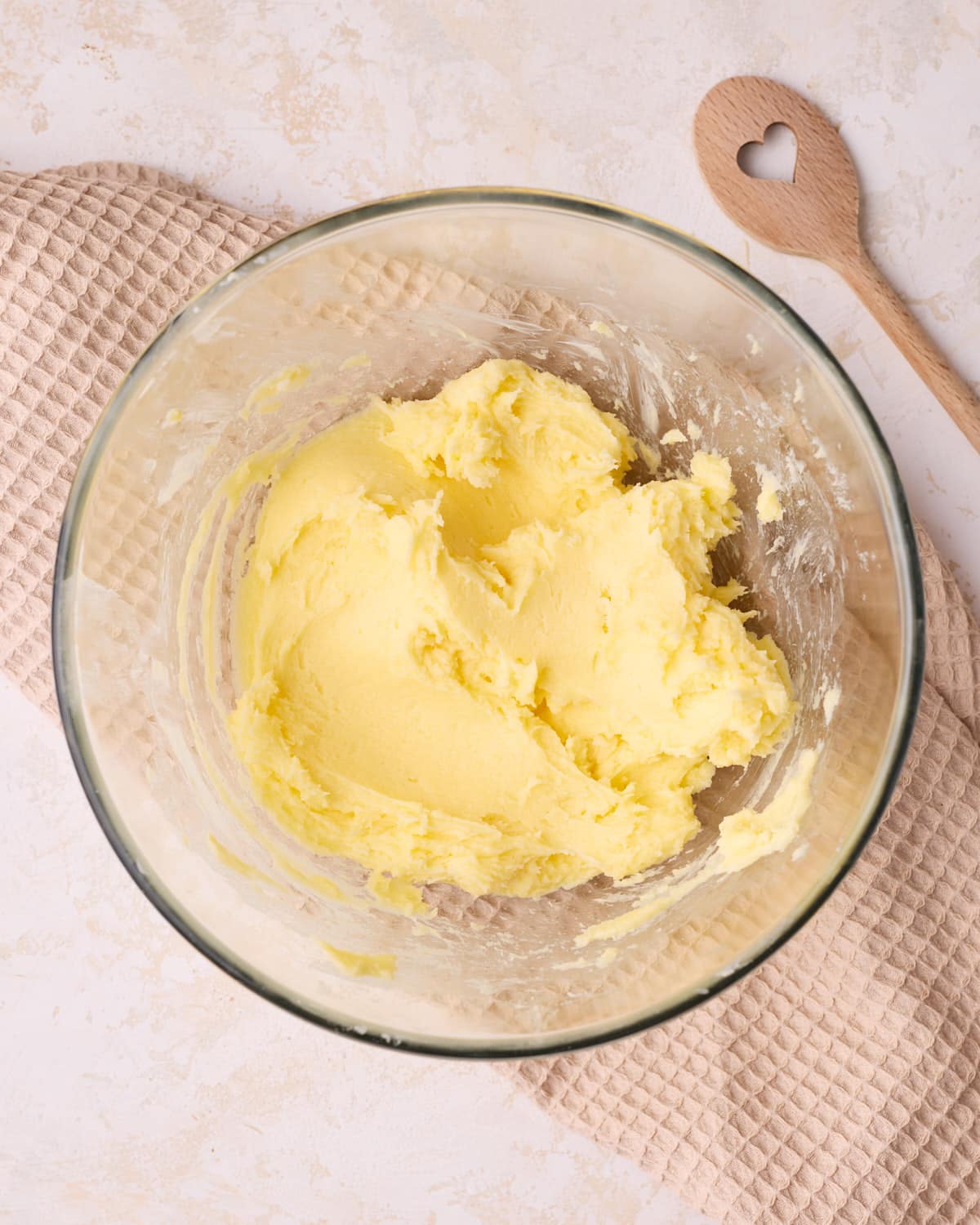
The second difference is a lot more subtle and a lot less talked about - I actually only discovered it through a frustrating series of failed bakes with my most trusted recipes shortly after moving to Canada.
In Europe, the regulations on butter are stricter,
- US butter must have at least 80% fat content.
- European butter must have at least 82% fat content (often ranges from 82% - 86%).
That sounds like a very small difference, but it can have a big impact. Even just that 2% difference can mean a creamier texture, richer flavor, and lower water content. In most recipes, it won't matter, but in some recipes that rely heavily on the butter for texture, it can make a big difference.
If you are in the US and a recipe isn't working out, try it with European-style butter instead.
Takeaway On Butter
- Opt for European-style butter if you can.
- Measure butter by weight for the most accuracy.
Most relevant in: Shortbread cookies, pastry, buttercream.
Leavening Agents
Thankfully, this part is simple - it's just a different name.
Baking powder is the same in both the UK and the US.
Baking Soda (US) = Bicarbonate of Soda (UK).
Same thing, different name - no substitutions needed.
Eggs
It may come as a surprise that our eggs in the UK are actually bigger than those in the US.
If a US recipe calls for Large eggs, this is actually closest to UK Medium eggs.
In most recipes, it won't make a huge amount of difference, but it's something to keep in mind. And if you are making something that requires a precise amount of egg (like choux pastry), you can measure the eggs by weight for accuracy.
Raw Eggs
Eggs in the UK are considered safe to eat raw, whereas US eggs have a slightly higher risk of salmonella. Many popular dessert recipes actually contain raw eggs (like tiramisu and chocolate mousse). Though the risk is relatively low, most American recipes tend to adapt them to either cook the raw eggs or leave them out entirely.
I do this for most of my recipes as well to make sure everyone feels safe eating them; however, if you are in the UK, you can confidently skip those parts of the recipe.
Cream
The difference between cream in the US and the UK is the biggest cause of dessert problems that I see. The readily available products are just vastly different.
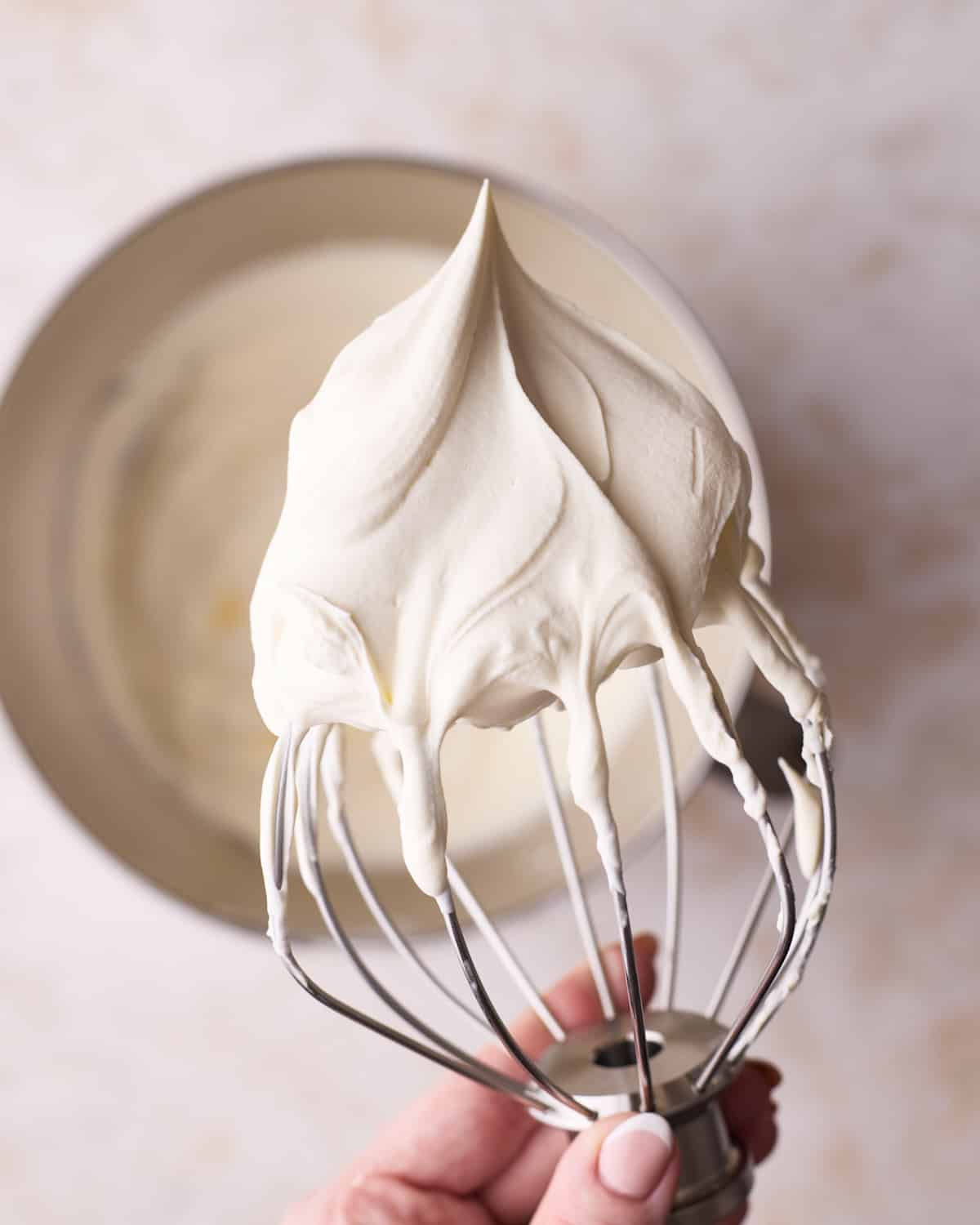
Heavy Cream (US) is the closest equivalent product to Double Cream (UK)
BUT the fat percentage varies drastically.
- Heavy Cream contains 36% - 38% fat.
- Double Cream contains 48% fat.
This really matters for all kinds of dessert recipes, like chocolate ganache, chantilly cream, unbaked cheesecakes, and chocolate mousse. The higher fat content means a thicker cream that will set firmly.
This has caused a bit of an issue with recipe testing, as something that sets well here doesn't always work the same for North American readers. I try to develop the recipes so that everyone's bakes will turn out well, so I develop them with the lower fat percentage in mind (adding more of other ingredients to compensate). If you are in the UK, you don't need to worry too much about this, but if you are in the US and using a British recipe, make sure you look for the highest fat percentage you can find.
The Takeaway On Cream
- Always use heavy cream or heavy whipping cream with at least 36% fat.
- British recipes made with Double cream may not set up as well with US cream.
- You can compensate for the cream by adding more of the other stabilising ingredients.
Most relevant in: Chocolate ganache, baked cheesecake, whipped cream.
Chocolate
Chocolate is a good example of how UK and US baking language has evolved differently.
In the US, recipes often use very specific terms like semi-sweet and bittersweet. In the UK, we tend to talk more broadly about dark or milk chocolate. The important thing is to focus on the cocoa percentage, rather than the name.

Semi-Sweet Chocolate (US)
Semi-sweet chocolate is extremely common in US baking, especially in cookies, brownies, and layer cakes.
It typically contains around 50-60% cocoa solids, though this varies by brand. In practice, this is the range most US recipes are written for when they call for "chocolate" without further detail.
UK equivalent:
Most UK plain chocolate or mid-range dark chocolate falls into this category once you check the percentage.
Bittersweet Chocolate (US)
Bittersweet chocolate is also a US-specific term and usually refers to chocolate with a higher cocoa percentage, often 60-70%.
It's less sweet and more intense than semi-sweet chocolate, and it's typically used when a deeper chocolate flavour is wanted (who wouldn't want that?!)
UK equivalent:
A darker UK chocolate with a similar cocoa percentage. Again, the name matters far less than the number on the wrapper.
Always check the percentage on the packaging if possible - it tells you far more than the name ever will.
Dark Chocolate (UK & US)
This is where things get vague.
"Dark chocolate" can describe anything from 50% to 85% cocoa, depending on the brand and country. That's a huge range in terms of sweetness, bitterness, and how the chocolate behaves in a recipe.
If a recipe simply says dark chocolate, it's usually written with a mid-range chocolate in mind - not something very high in cocoa solids.
When in doubt, aim for around 60% - 70%, unless the recipe specifies otherwise.
Milk Chocolate
Milk chocolate is named consistently across countries, but it still varies widely in sweetness.
US milk chocolate is often sweeter and lower in cocoa solids than many UK or European brands. This can affect the flavour and texture in your desserts.
If a recipe is designed around semi-sweet or dark chocolate, swapping in milk chocolate will usually make the result a lot sweeter, less chocolatey, and much softer. I don't typically recommend baking with milk chocolate, unless it is for something like a milk chocolate ganache.
Types Of Chocolate
Many people don't realise that the kind of chocolate you use in baking actually matters. If a recipe calls for real chocolate, don't ever use chocolate chips or a chocolate candy bar instead. Looking for the cocoa solid percentage is a good rule of thumb when choosing your chocolate. See my post about baking with chocolate for more information and tips on this.
The Takeaway on Chocolate
- Ignore the name and check the cocoa percentage
- "Dark chocolate" is not a precise instruction
- Chocolate format (chips vs bars) affects texture
Most relevant in: Tempered chocolate, chocolate mousse, chocolate frosting.
Other Confusing Ingredient Differences
- Cornstarch (US) = Cornflour (UK)
- Almond flour (US) = Ground Almonds (UK)
- Molasses (US) - Treacle (UK)
US vs UK Ingredient Swaps
If a recipe calls for:
- Golden Syrup (UK) - use dark or light Corn Syrup (US)
- Corn Syrup (US) - look for 'liquid glucose' in the UK.
- Graham Crackers (US) - use Digestive Biscuits (UK)
Keep Trying
I wish I'd had a guide like this years ago.
It would have saved me a lot of head-scratching, a few ruined bakes, and more than one moment of wondering whether I'd somehow "forgotten how to bake."
The truth is, baking across countries isn't harder - it just requires a little translation. Once you understand the language of the ingredients, the rest falls into place.

Francesca
I'm Francescq -- I posted a question about recommendations for baking spread in US recipes.
I'm not sure if I provided my Email. So, here it is!
Jules Grasekamp
Hi Francesca,
No worries at all! I did reply but it won't have gone to you if you didn't put email in. Here is what I said:
Hi Francesca,
Yes baking spread is a kind of margarine. The best alternative in the US I think is Land O'Lakes.
Not to contradict the great Mary Berry, but I rarely find that margarine/baking spread is better in baking than using real butter. Do you mind me asking what recipe you are trying to make? I might be able to recommend some options for you!
Jules
Francesca
Hello, I've been looking at Mary Berry's recipes. She lists the ingredient 'BAKING SPREAD' and I don't know what to use as a substitute in the US. Would this possibly be margarine in a tub? There are tub margarines that contain a bit of dairy in the formulation I guess to make it creamier. What are your recommendations? I really appreciate any help you can give me. I love to expand my use of recipes by using ones from other countries.
Thank you!
Jules Grasekamp
Hi Francesca,
Yes baking spread is a kind of margarine. The best alternative in the US I think is Land O'Lakes.
Not to contradict the great Mary Berry, but I rarely find that margarine/baking spread is better in baking than using real butter. Do you mind me asking what recipe you are trying to make? I might be able to recommend some options for you!
Jules
Lewis
Such a useful article thank you!