
How to make homemade cream puffs that are perfectly puffed, crisp, and light. I'll walk you through how to make, pipe, bake, and fill your own cream puffs.

Cream Puff Recipe Snapshot
What it is: Crisp, hollow choux buns with a creamy filling.
Why you'll love it: It's a bakery-tested recipe with clear visual cues to help your choux puff up light, crisp, and hollow.
How to make it: Make choux pastry, pipe into medium-sized mounds, bake, and fill.
The first time I made cream puffs, I didn't realise how much the little steps mattered, and ended up with sad, flat rounds. Since then, I have made choux buns hundreds of times, both at home and in my bakery kitchen, and could now probably make them in my sleep.
I wanted to share a cream puff recipe that clearly shows which steps matter, why they matter, and what to look out for to make sure your buns turn out golden, hollow, and crisp every time.
Reader Review:
I made these and used the Creme diplomat-they were outstanding! Your directions and tips were so helpful!
⭐⭐⭐⭐⭐ - Lisa
Jump to:
What Are Cream Puffs?
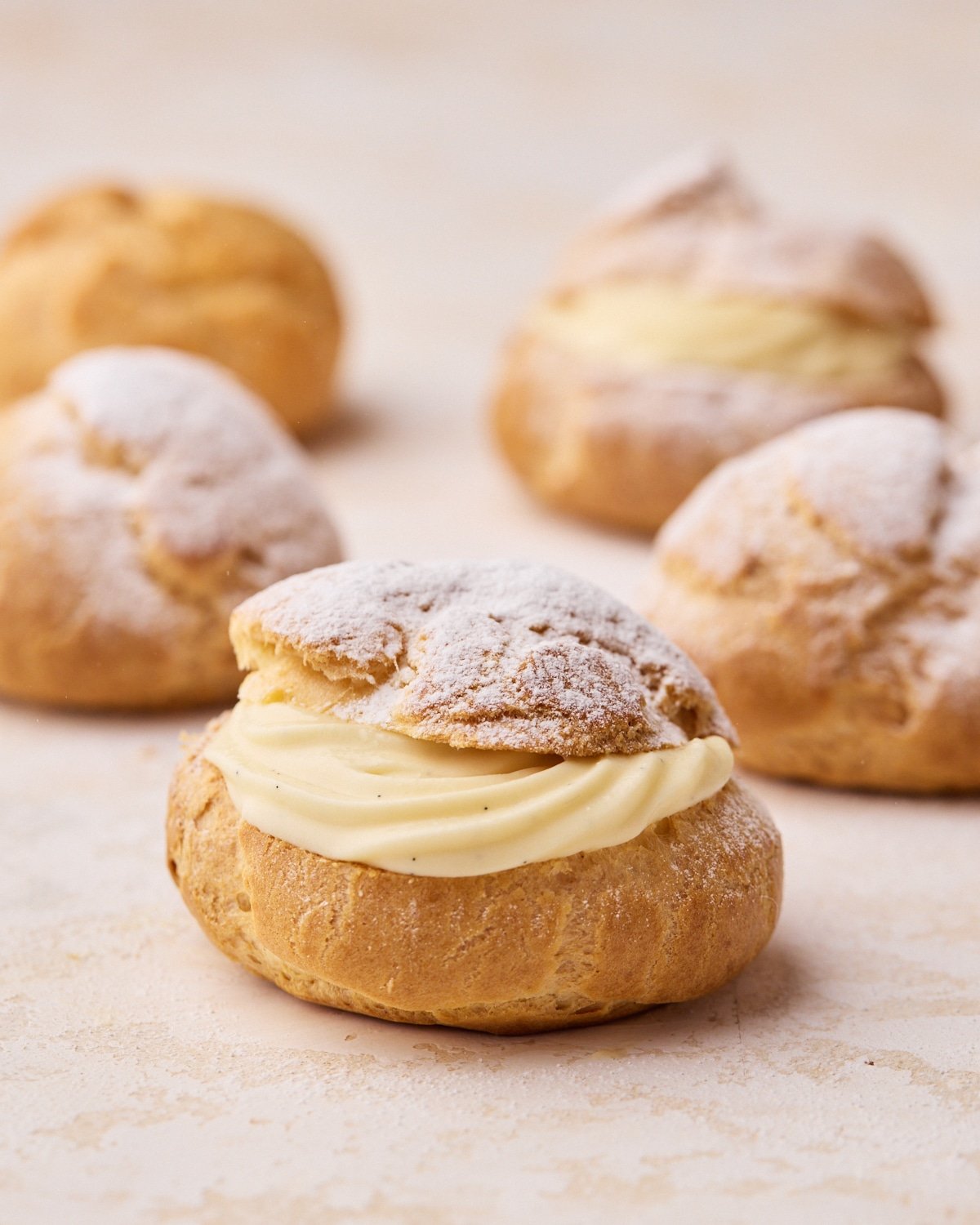
Cream puffs are light balls of choux pastry (the same pastry that makes profiteroles and French crullers). A good cream puff should be crisp on the outside, hollow in the middle, and filled with all sorts of creamy goodness.
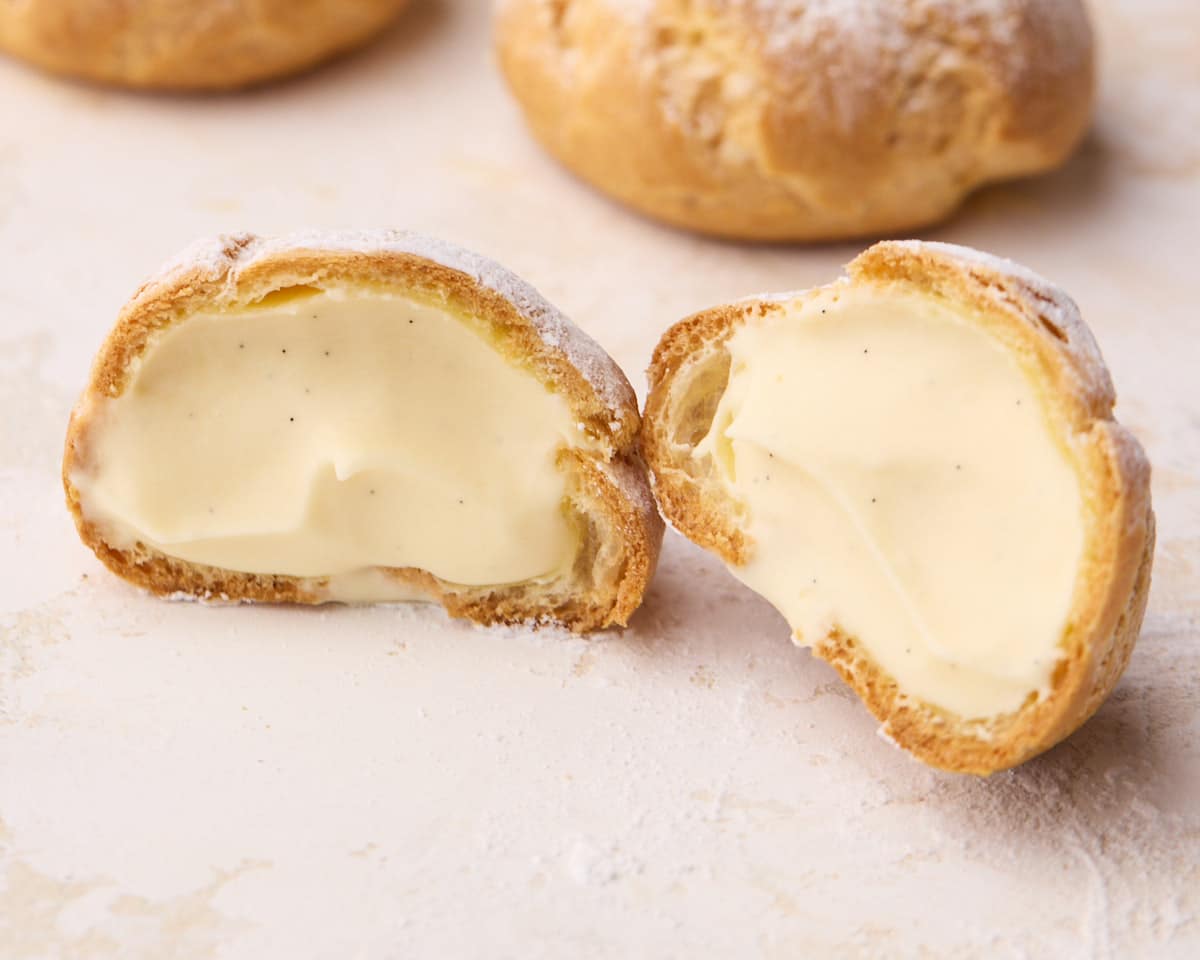
You can fill them through a hole in the bottom, or slice them open with the filling on display.
Cream Puffs vs Profiteroles
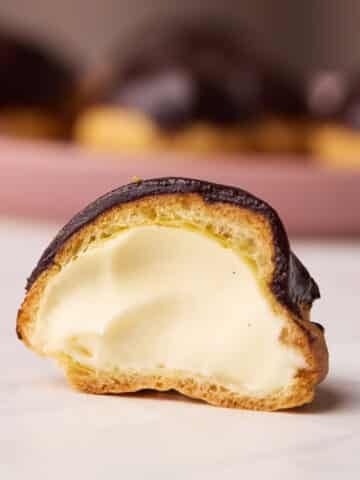
Cream puffs are bigger and served as an individual portion - usually filled with whipped cream or crème diplomat. Profiteroles are mini choux buns, often filled with pastry cream and dipped in glossy chocolate ganache. Cream puffs are casual everyday treats, while profiteroles are a little fancy - perfect for dessert tables or finger food.
Basically, profiteroles are the sleek, sexy French cousin of cream puffs.
Ingredients
A classic cream puff recipe is made with choux pastry - these are the basic ingredients to make the choux buns. You can find links to various filling recipes below.
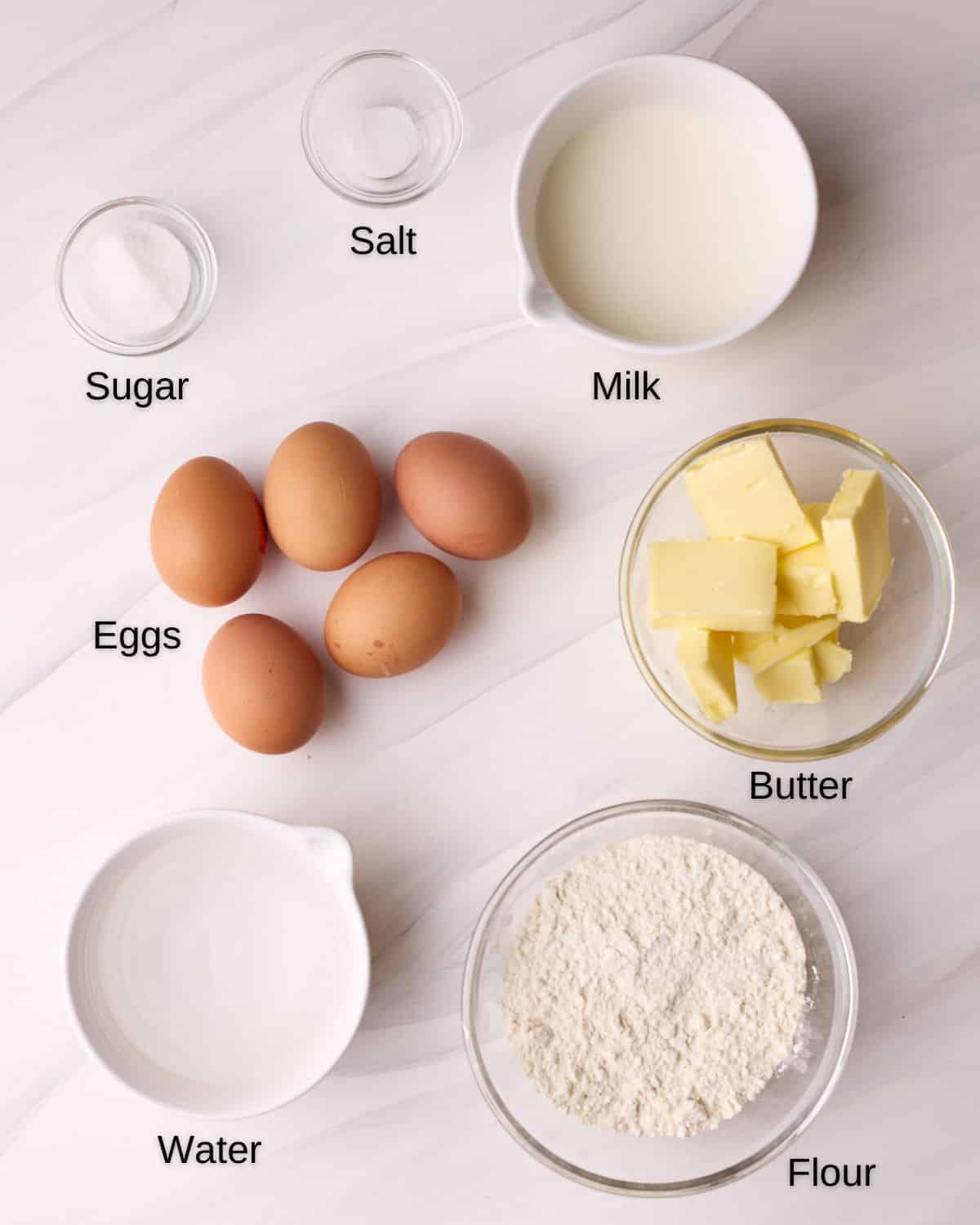
- Water & Milk - you can use all water, all milk, or a mixture of both. I like to use a mix - the water makes them puffy, and the milk gives a richer flavor and a bit of colour.
- Butter - Use unsalted butter.
- Sugar - a little granulated sugar (caster sugar in the UK) helps with browning without making the pastry sweet.
- Flour - All-purpose flour (plain flour) works best for giving enough structure while still staying light and airy.
- Eggs - Use large eggs and pay close attention to the instructions about how much egg to add, as this is crucial.
The eggs should be at room temperature before beginning.
See the recipe card for quantities and the full recipe.
What You'll Need
- Saucepan
- Wooden Spoon
- Stand Mixer - with paddle attachment
- Baking Sheet
- Piping bag
- Piping tip (or snip the end off of a disposable pastry bag
How To Make Cream Puffs
This post will walk you through every stage of making cream puffs, including making, piping, and baking the choux pastry, as well as how to fill and serve the baked cream puffs.
How To Make Choux Pastry
If this is your first time making cream puffs, you can take a look at my choux pastry recipe for detailed instructions on how to make pate à choux - but here is an overview:
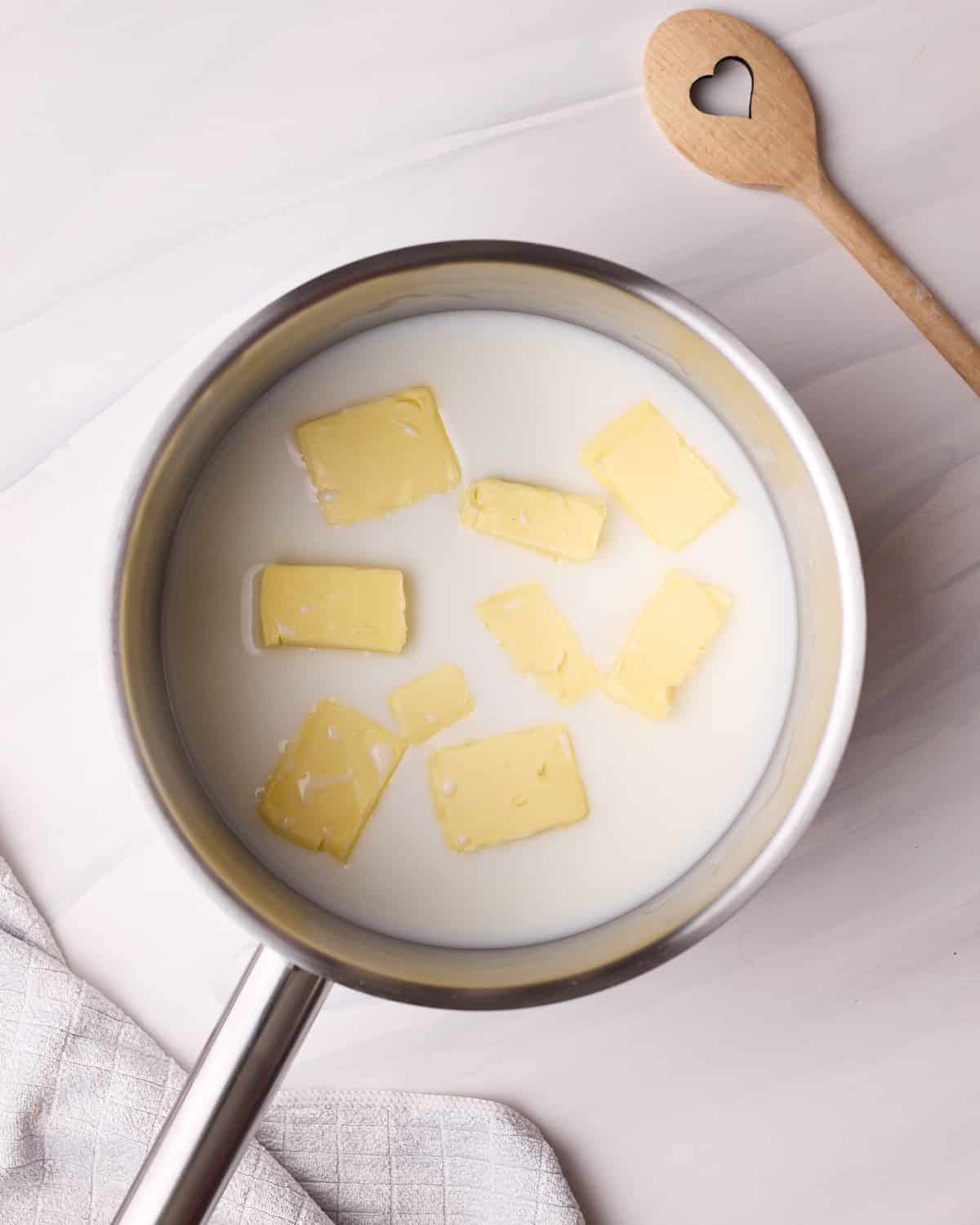
- Step 1: Heat the water, milk, sugar, and salt in a medium saucepan over medium heat and bring to a rolling boil. Take off the heat.
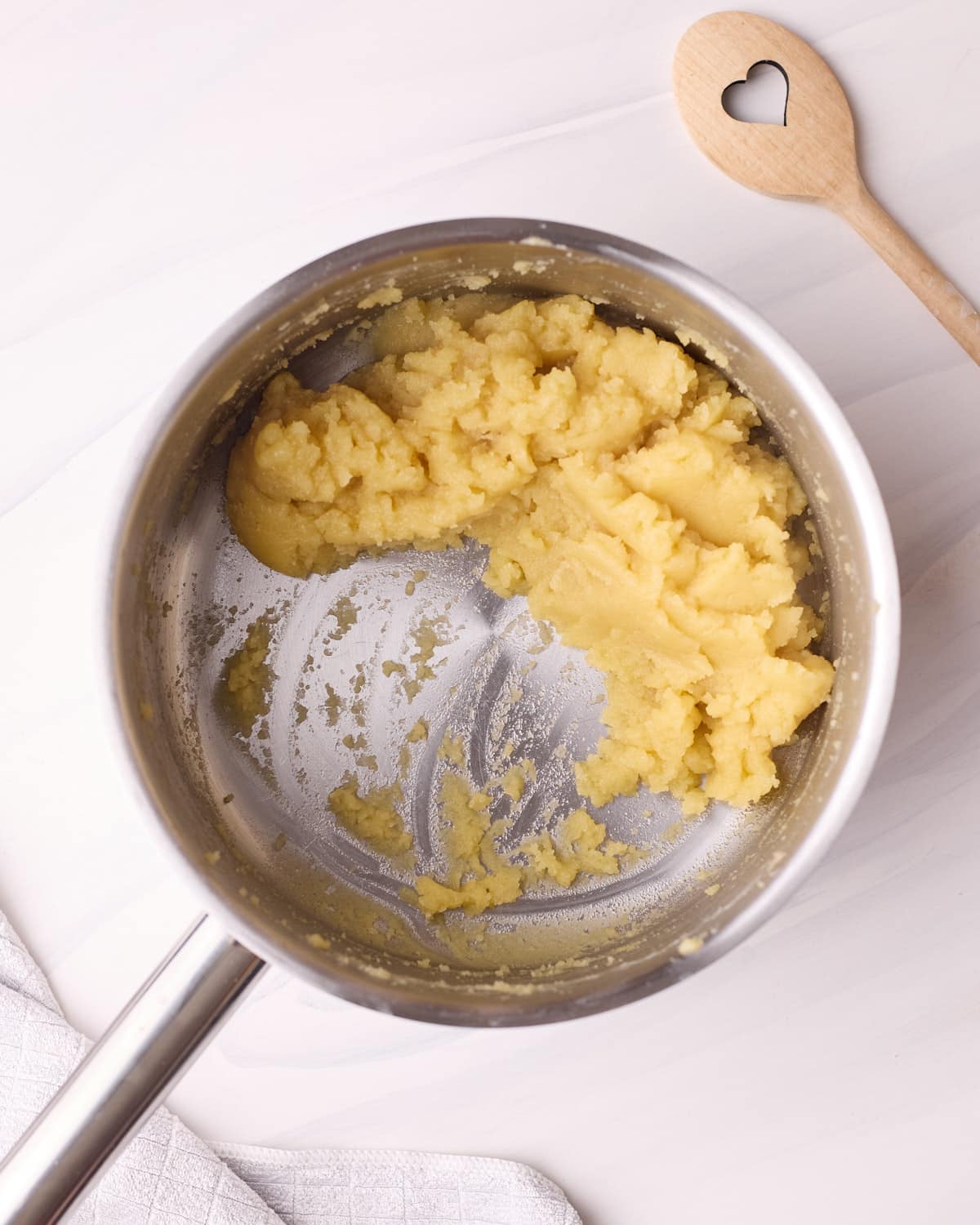
- Step 2: Quickly mix in the flour with a wooden spoon, then return to the heat and stir vigorously for a few minutes until it forms a smooth dough and leaves a thin film on the bottom of the pan.
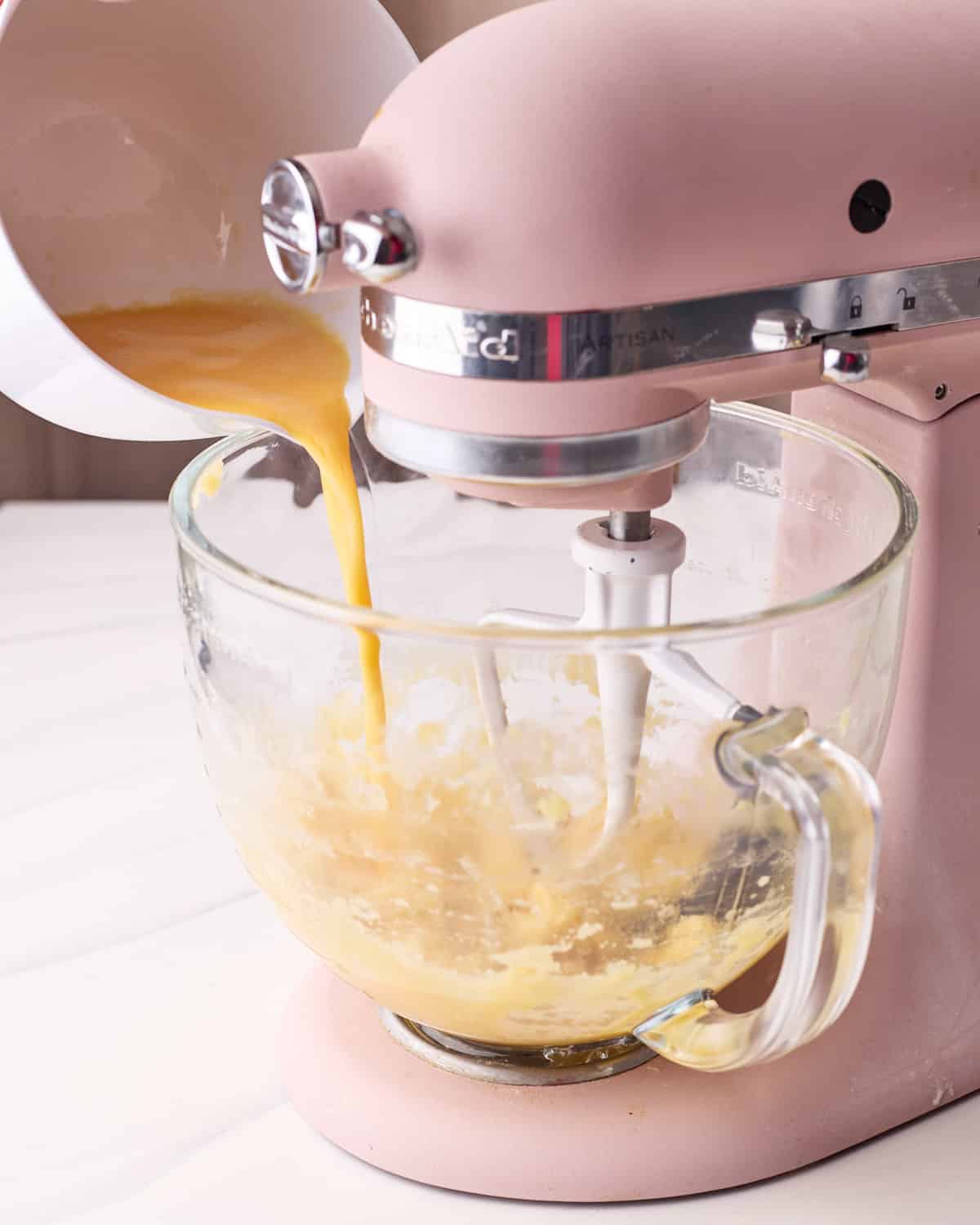
- Step 3: Transfer to a stand mixer bowl and let it cool, then turn on low speed and add the eggs one at a time, letting each one incorporate fully before adding the next.

- Step 4: For the last egg, beat it lightly with a fork, then pour it in a little at a time, testing the pastry in between until it is smooth, glossy, and falls off a spatula in a 'V' shape. Once it does, don't add any more egg.
How To Pipe Cream Puffs
The first thing that differentiates the various desserts made from choux pastry is how they are piped. This is exactly how to pipe it to make cream puffs.

Pipe Mounds
Transfer the choux pastry dough to a piping bag with a large round tip.
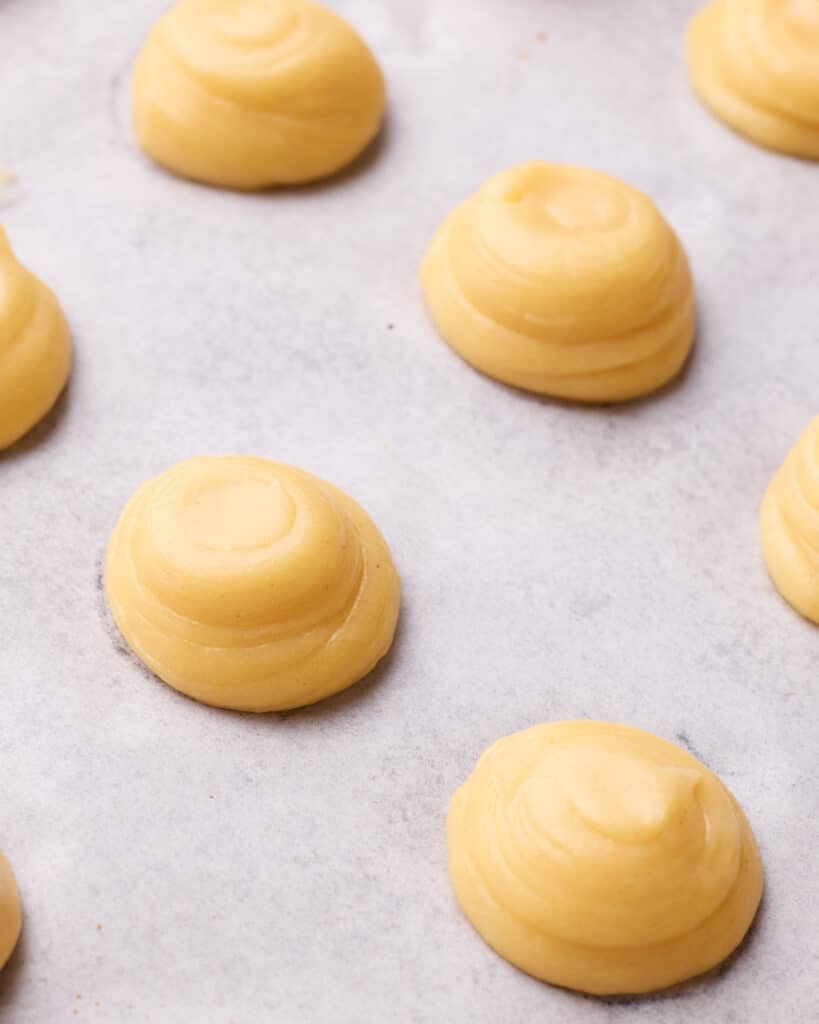
Hold the piping bag at a 90° angle to the pan and squeeze with even, steady pressure without moving the bag until you have a little mound, roughly the size of a golf ball.
Stop squeezing, then flick your wrist to break the flow of pastry.
Leave plenty of space in between, as they will puff up a lot.
Flatten Peaks
Dip your finger in water and gently flatten the little peaks to make a nice, smooth dome.
Let the piped choux buns sit on the baking sheet for 10 minutes while you preheat the oven.
Extra Tips for Piping
- Parchment paper: Dot a little bit of pastry under the corners of the parchment paper to help stick it down so it doesn't move as you pipe.
- Use a guide: You can place a template under the parchment to guide you on sizing and keep the puffs consistent. Alternatively, you can trace circles on the underside, or dip a round cookie cutter in powdered sugar to make circle markings on the paper.
- Pipe tall: Make your mounds taller rather than flatter to give them the best chance of rising.
How To Bake Choux Buns
Baking is the most common part that people get wrong when it comes to cream puffs. It doesn't have to be complicated; you just need to know a few important steps to make sure your buns bake properly.

Bake
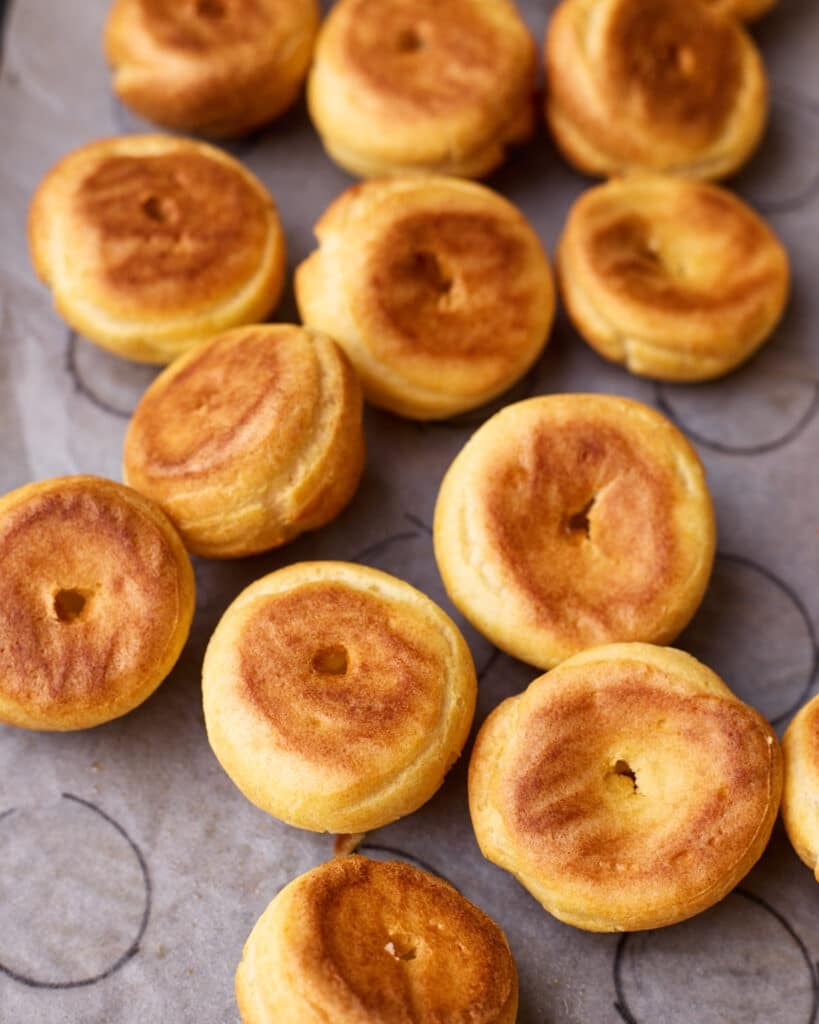
Put the cream puffs into a fully preheated oven and let them bake at 400°F / 200°C (180° fan-assisted) for 10-12 minutes, until they have puffed up.
Turn the oven down to 375°F / 190°C (170°C fan-assisted) and bake for a further 25 minutes or until the choux buns are golden brown all over.
Do not open the oven door at all before they are set, or they will collapse.
Release Steam
Pierce a hole in the bottom of each of the cream puff shells and put them back on the tray upside down. Then place them back into the switched-off oven for 15 minutes to dry out completely.
When cream puffs are perfectly baked, they should be golden brown all over, light, and have completely hollow centers. If you pick one up, it should feel dry and crisp, not sticky or soft.
How To Fill Cream Puffs
Cream puffs can be filled in two different ways: piping through the bottom or slicing and filling. Both are good options; it just depends on the final look you want.
Note: Whichever method you choose, it's best to fill your cream puffs right before serving so the pastry stays crisp.


Method 1: Piping through the bottom
This is the traditional method for a classic French dessert that is served whole and looks clean and professional. It's great for smooth, pipeable fillings like chantilly cream and pastry cream.
Put your filling in a piping bag with a small round tip and push it through the bottom of the pastry shells. Squeeze until the puff feels full and heavier in your hand.
Method 2: Slice and fill
This is a quick and easy way to fill cream puffs and is great if you want to show off the filling, are using a filling that can't be piped, or want to add layers to your filling like fresh fruit or curd.
Slice each choux bun horizontally (like a sandwich), then pipe or spoon your filling into the bottom half and replace the little lid on top.

Cream Puff Filling Ideas
Cream puffs are such a versatile dessert, as you can really fill them with anything you like. Here are some of the classic cream puff fillings:
- Chantilly Cream - Sweetened whipped cream is a common filling for profiteroles in the UK, but it works well with cream puffs too.
- Creme Patissiere - For a custard filling with rich flavor, use vanilla pastry cream.
- Crème Diplomat - My personal favorite, crème diplomat folds whipped cream into pastry cream for a lighter, more elegant option.
- Ice Cream - If you are slicing your cream puffs, you could fill them with a scoop of ice cream and top with some chocolate sauce.
- Caramel - You could pipe a little caramel sauce in the middle, alongside another filling for a surprise centre.
Sprinkle with a dusting of icing sugar (powdered sugar) for a finishing touch.
Baker's Notes: What Matters Most
If you only read one section of this cream puff recipe, these are the most important tips to pay attention to.
- Ingredients: Accuracy is important here, so it's best to weigh your ingredients with a kitchen scale.
- Eggs: The amount of egg needed in each batch of choux pastry varies, so add the last egg gradually and stop once the right consistency is reached.
- Water mist: For an extra boost of steam, you can lightly mist the choux buns and tray with water right before going into the oven.
- Don't open the door: The shells need to fully set before you open the oven door, or you will end up with very flat cream puffs.
- Steam holes: Pierce the bottom of your choux buns after baking and put them upside down in a switched off oven to help them to dry out completely.
How To Store Cream Puffs
Once filled, cream puffs should ideally be eaten within a few hours - that's why it's best to fill them right before serving.
Make Ahead:
You can make both the choux buns and the filling ahead of time so they are ready to go when you want to serve.
Unbaked pâte à choux dough can sit at room temperature for a couple of hours if you don't use it right away. You can also make it ahead and store it in the fridge, covered with plastic wrap, for up to two days.
The unfilled shells can be stored in an airtight container at room temperature overnight or frozen for up to 3 months. Lay the frozen puffs out at room temperature to thaw.
If your pastry shells go a little soft, you can pop them back in the oven for 10 minutes to crisp them up again.
Show Me Your Bakes!
If you make this recipe, please tag @bonni_bakery on Instagram or send me a photo - I love seeing all your creations.
Want your bake featured on the blog? You can also upload a photo here.
More Creamy Dessert Recipes
If you love this cream puff recipe, you might be inspired by some of these desserts:
Recipe

Cream Puffs Recipe
Ingredients
- 113 g (1 stick) Unsalted Butter
- 120 ml (½ cup) Milk
- 120 ml (½ cup) Water
- 2 teaspoon Granulated Sugar (caster sugar)
- ¼ teaspoon Salt
- 130 g (1 cup + 1 tbsp) All-purpose Flour (plain flour) sifted
- 5-6 Large Eggs (medium if in the UK) room temperature
- Chantilly Cream
- Creme Diplomat (my favourite)
- Pastry Cream
Equipment
- Stand Mixer with Paddle Attachment
Instructions
- Add all the ingredients except the flour and eggs to a saucepan over medium heat. Stir together until the butter has melted and the mixture starts to boil.113 g (1 stick) Unsalted Butter, 120 ml (½ cup) Milk, 120 ml (½ cup) Water, 2 teaspoon Granulated Sugar, ¼ teaspoon Salt
- As soon as the mixture is boiling, remove it from the heat and quickly add all of the sifted flour. Mix quickly with a wooden spoon until the flour is totally incorporated.130 g (1 cup + 1 tbsp) All-purpose Flour
- Return the pan to the heat and continue to beat it vigorously for 2-4 minutes until it comes together into a smooth, shiny ball and you can see a thin film on the bottom of the pan.
- Transfer the dough to the bowl of a stand mixer and use your spoon to spread it up the sides of the bowl to help it cool faster. Leave to cool for at least 10 minutes until it is no longer hot to touch.
- Turn the stand mixer on low speed with a paddle attachment fitted. Add the eggs one at a time, letting them mix until completely incorporated in between each egg until you have one egg remaining. The amount of egg needed varies according to multiple factors, so you may not need all of the eggs to reach the right consistency.5-6 Large Eggs
- Crack the last egg into a bowl and beat it with a fork to break it apart. Add it to the mixer a little at a time, testing the pastry in between to see if is ready. You are aiming for a paste-like dough that is smooth, glossy, and pipeable. You can test if it is ready by putting a spatula into the bowl and lifting it out - if the dough is the right consistency, it will fall off the spatula in a V-shape. See my choux pastry recipe for more tips on how to know exactly when it's ready. Once the right consistency is reached, do not add any more eggs.
- Transfer the choux pastry to a piping bag with a round tip. Squeeze any air bubbles out of the bag.
- Pipe a tiny amount of pastry into the four corners of a baking sheet and line it with parchment paper. This holds the paper in place as you pipe.
- Hold the piping bag at a 90° angle to the pan, squeeze steadily while holding the tip of the bag just slightly under the surface of the pastry to make little mounds of pastry on the sheet.
- Stop squeezing before moving your piping bag away, and flick your wrist to break the flow of the pastry. Make sure to leave plenty of space in between each one as they will puff up a lot as they bake.
- Dip your finger in a little cold water and gently dab down the little peaks to flatten them. Let the piped choux sit on the baking sheet for 10 minutes while you preheat the oven.
- Important: Bake time varies massively depending on size, shape, and moisture content - so it's best to learn the signs that your choux pastry is baked, rather than relying on arbitrary recipe times. See the post above for more information on this.
- Preheat the oven to 400°F / 200°C (180° fan-assisted). Bake the choux at this temperature for 10-12 minutes until they have risen.
- Once the buns have puffed up, turn the temperature down to 375°F / 190°C (170° fan-assisted) and bake for a further 25 - 35 minutes, or until the buns are golden brown all over and fully baked. Do not open the oven door in the first 20 minutes or the shells will collapse!
- Remove them from the oven and turn the oven off. Pierce a hole in the bottom of each choux bun with a skewer to let steam escape, then place them back on the sheet, hole-side-up and put back in the switched off oven with the door propped open to allow them to dry out for 15 minutes.
- Remove from the oven and let them cool completely on a wire rack before filling.
- Fill the cream puffs with your chosen filling. I like to use creme diplomat, but chantilly cream is another popular choice. See the post above for more ideas.Creme Diplomat
- There are two ways to fill cream puffs: by piping through a hole in the bottom or by slicing and filling. Both are good - it just depends on the look you want. To pipe through the bottom:Put your filling in a piping bag with a small round tip, push it through the bottom of the cream puff shell, and squeeze gently until it feels full and heavy. To slice and fill:Cut the top third off of the cream puff shells, horizontally like a little hat. Pipe or spoon your filling into the bottom of the puff, then place the top back on.
- Finish with a dusting of powdered sugar.
Nutrition
Notes
Most Important Tips for Choux Success:
- Cook the panade properly - After adding the flour, make sure you keep cooking until a smooth ball forms, and you can see a thin film on the bottom of the pan. It's crucial that you cook enough moisture out of the dough to prevent flat choux buns.
- Cool the hot dough before adding the eggs so the heat doesn't cook or scramble the eggs. You put the dough in your mixer bowl and spread it up the sides to cool it down faster.
- Judge the amount of egg by consistency - every time you make choux pastry dough, it will need a slightly different amount of egg. Learn to know when it has reached the right consistency using the guide above.
- Pipe steadily, holding your pastry bag at a 90° angle to the baking tray, apply steady, even pressure, and try to keep the sizes consistent.
- Rest the dough for 10-15 minutes after piping and before baking. Even better if you can chill it.
- Spray with water - Use a spray bottle to give the choux and parchment paper a fine mist of water just before baking, to encourage steam and help them to puff up evenly.
- Don't open the oven door - if you take the choux out too early or open the oven door before they have fully set, they will collapse.













Lisa McBride
I made these and used the Creme diplomat-they were outstanding! Your directions and tips were so helpful!
Jules Grasekamp
Thank you Lisa!
I put a lot of time into trying to explain things thoroughly so it means a lot to hear that people appreciate them!
So happy you enjoyed the cream puffs!
Jules
Sameena Yasmeen
Best