
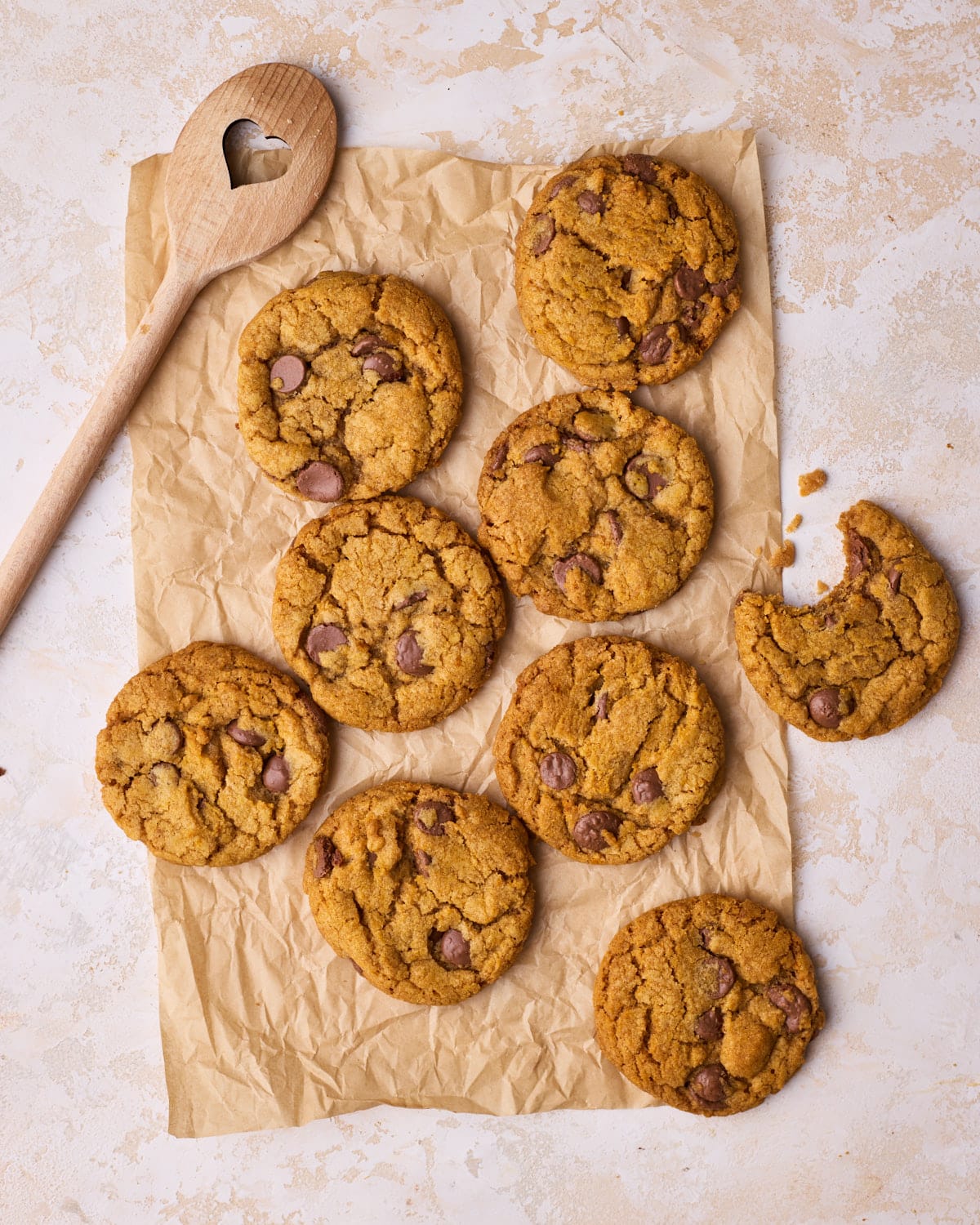
Ever pulled a tray of cookies out of the oven only to find they've spread into flat, greasy discs? Not cool, cookies! Cookie spreading is one of the most common baking problems - but the good news is, it's almost always easy to fix once you know what's causing it.
As a professional recipe developer and former bakery owner, I've tested and baked hundreds of cookie batches over the years - including plenty that didn't turn out as planned. Through hands-on testing and recipe development, I've learned exactly what makes cookies spread too much and, more importantly, how to prevent it.
In this guide, I'll walk you through the most common reasons cookies spread in the oven and show you how to fix each one, so your cookies hold their shape and bake up perfectly every time.
Quick Answer
- Wrong ratio of white and brown sugar
- Too much baking soda
- The dough is too warm
- Too much liquid
- Not enough flour
- Oven temperature too low
Scroll down for fixes and the baking science behind each one.
Jump to:
Types of Sugar
Different types of sugar play different roles in cookie baking.
- White sugar - produces crispier, thinner cookies that spread more.
- Brown sugar - produces softer, chewier cookies with deeper caramel flavor.
Both contribute things we want in a perfect cookie. When developing my chocolate chip cookie recipe, I spent a long time testing different ratios of white to brown sugar to get the perfect balance. If you play around with the recipe ratios without compensating with the other liquid and dry ingredients, your cookies may spread too much or not enough.
Fix: Don't change the recipe ratios unless you have an understanding of how it will affect the other ingredients.
Too Much Baking Soda
Baking soda is an important ingredient as it encourages the cookies to spread. This is a good thing; without it, the cookies may not spread enough, but if you add too much, they will spread more than you want them to.
Fix: Measure carefully - consider using an accurate measuring tool that has ¼ teaspoon and ½ teaspoon measures, like these measuring spoons.
Dough Temperature
Whether you're using the creaming method or the melted butter method, most cookie doughs benefit from a short chill before baking. Chilling allows the butter to firm up again and gives the flour time to absorb moisture, which helps the dough hold its shape in the oven.
If you skip this step, the butter will be too soft, causing the cookies to spread too quickly and sometimes leak out into an oily mess before they have a chance to set.
Fix: Follow the chill time in your recipe. Even an hour or two of chilling is usually enough to make the dough firm and manageable. Though a full 24-hour chill can give extra flavor and texture, a shorter chill will still prevent runaway cookies and improve their shape.

Too Much Liquid
Too much liquid in your cookie dough can cause cookies to spread excessively. While milk or other obvious liquids are the usual suspects, there are a few "hidden" sources of liquid you might not realize.
- Sugar: Sugar is actually considered a liquid ingredient in baking because it melts when heated. Using too much sugar can make cookies spread more than intended.
- Eggs: Eggs, particularly the whites, add moisture to dough. Even using an extra-large egg instead of a large one can be enough to affect spreading.
Fix: Measure all ingredients carefully (preferably with a kitchen scale) and pay attention to egg size.
Too Little Flour
Flour gives structure to cookies. Too little flour = flat, thin cookies.
Fix: Weigh your flour for accuracy or measure carefully. If the dough seems too wet, add a small amount of flour to help it hold together.
Oven Temperature
If your temperature is too low, your cookies may spread before the edges set. Even if your oven says it's at the right temperature, this is often inaccurate and you might need to calibrate it.
Fix: Use an oven thermometer to check your temperature. Bake cookies on the middle rack for even heat and predictable spreading.
Tips for Cookies That Don't Spread
- Chill the dough before baking.
- Measure all the ingredients carefully (preferably with a scale).
- Don't skip or substitute ingredients without considering their effects.
- Use a mix of sugars for balance.
- Bake at the correct temperature on the middle rack.
- Space cookies well on the tray to allow for natural spreading.


Hi, I'm Jules!
I'm a Scottish ex-bakery owner sharing my tried and true dessert recipes and expert tips to help you whip up impressive desserts at home.
Check out my baking blog and try a few recipes.
Or just lick the screen a little...
Happy Baking!