

If your buttercream has split, curdled, or gone all soupy on you, don't worry - this is one of the most common baking problems, and it's almost always fixable.
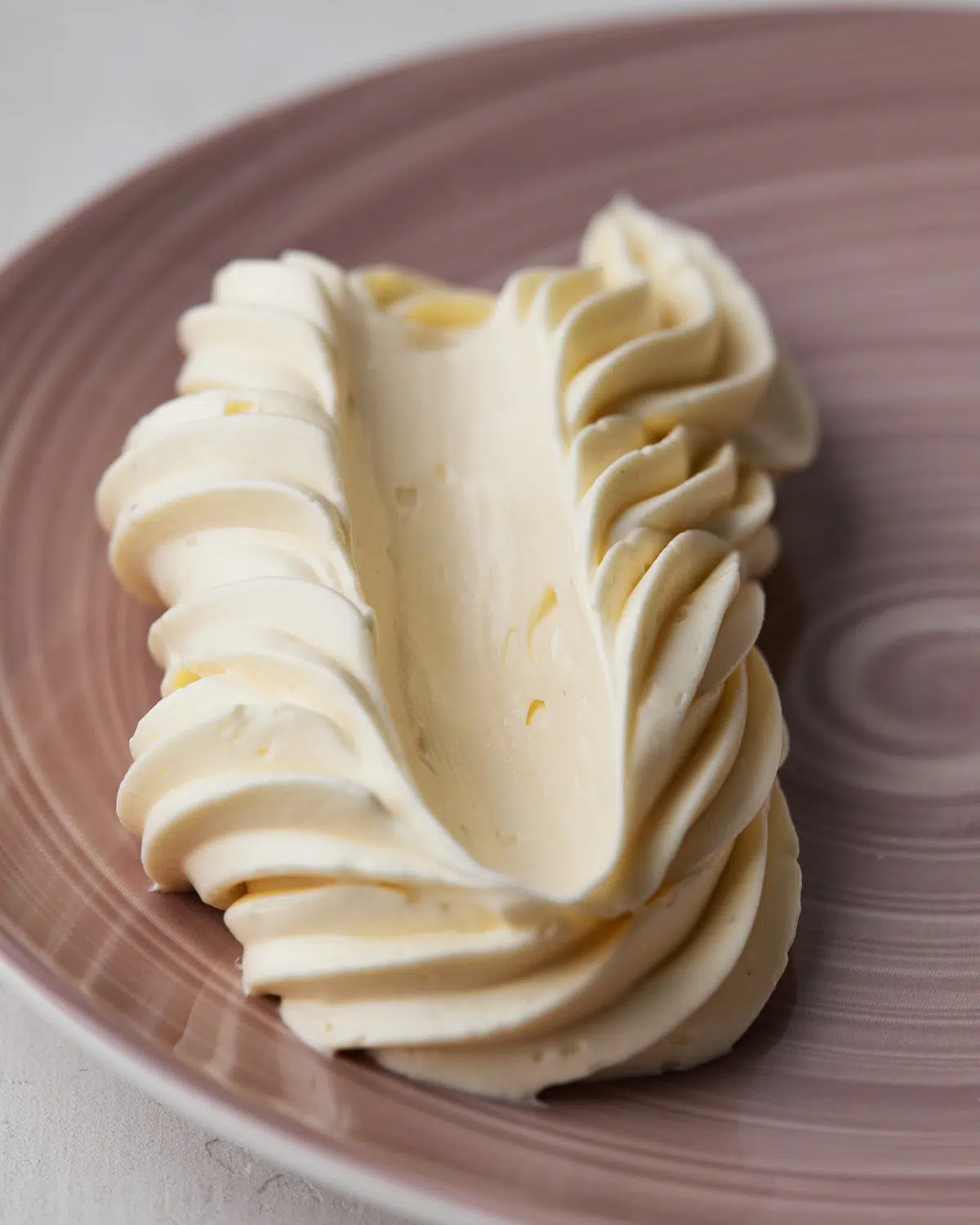
Buttercream is an emulsion - basically a delicate balance of fat, sugar, and liquid. When that balance is off, your frosting can look lumpy, thin, or greasy. But once you understand how buttercream works, you can usually bring it back to silky perfection.
Over the years of running my bakery and testing hundreds of recipes, I've had my fair share of broken buttercream. It can split for all kinds of reasons: butter that's too cold or too warm, liquids added too quickly, or even a quick panic mix when the frosting looks a bit off. The good news is that even the most dramatic-looking batch can be saved - you just need to know the right tricks.
In this guide, I'm going to show you exactly how to troubleshoot and fix broken buttercream, so you can restore any batch of Swiss, Italian, French, German, or Russian buttercream into a smooth, glossy masterpiece.
Jump to:
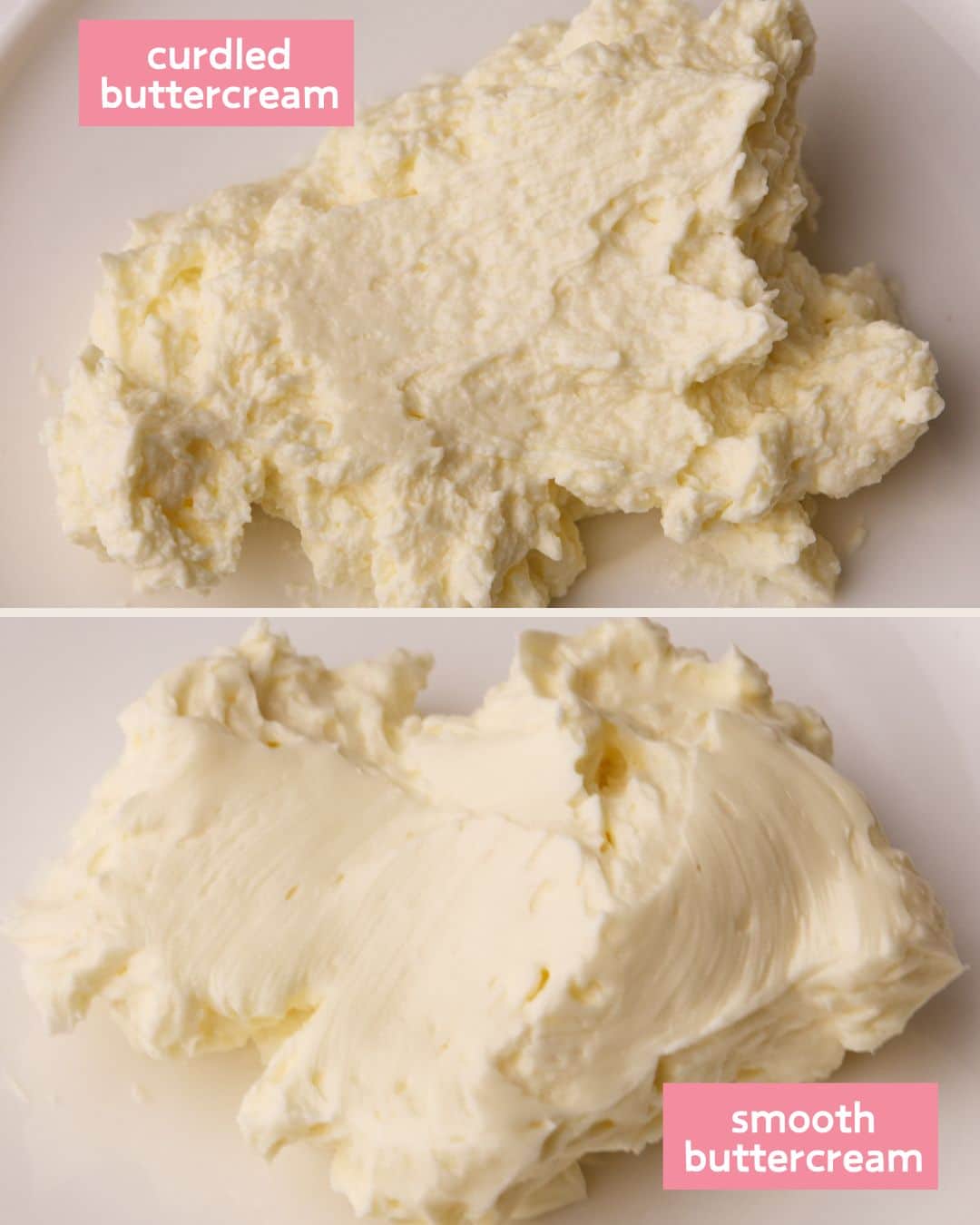
What Broken Buttercream Looks Like
Broken buttercream usually shows up in one of three ways:
- Curdled or grainy: looks lumpy or separated, like it fell apart.
- Soupy or loose: shiny, very thin, and doesn't hold its shape.
- Greasy or oily: butter melted too much, losing structure.
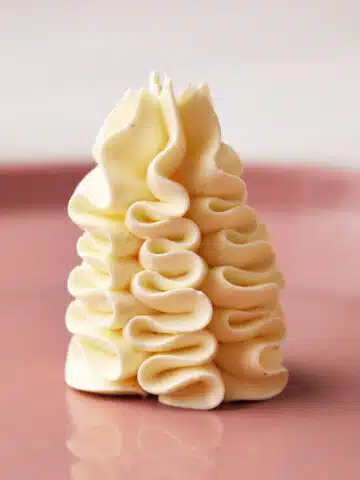
When your buttercream is done right, it should be smooth, glossy, and hold its shape beautifully - that's what you're aiming for. If you are unable to pipe it in a beautiful, smooth swirl, then it is curdled.
Why Buttercream Breaks
Most buttercream problems come down to temperature or technique:
Butter too cold → frosting curdles or looks grainy.
Butter too warm → frosting becomes loose or greasy.
Liquids added too quickly → prevents proper emulsification (common in Russian buttercream.
Overmixing or undermixing → can break the emulsion or leave lumps.
Even experienced bakers (myself included) run into these issues - it's completely normal.
How to Fix Curdled or Separated Buttercream
If the buttercream looks lumpy, curdled, or a bit like scrambled egg, either the butter was too cold, or the liquid was added too quickly.
- First, try just adding in 1-2 tablespoons of recently boiled water and whipping on medium-high for a minute. If your buttercream isn't too far gone, a tiny bit of warmth can be enough to bring it back together.
- If that doesn't work, place the buttercream over a double boiler (place the bowl over a saucepan of simmering water). Whisk by hand while gently warming the buttercream until it re-emulsifies into a smooth creamy texture.
- Re-whip in the mixer until silky, fluffy, and stable. If the frosting got too warm, put it in the fridge to firm up for 15 minutes before whipping again. Once emulsified, it's fine if it gets cold.
How to Fix Soupy or Loose Buttercream
If your buttercream is shiny but very thin or soupy, it usually means the butter was too warm.
- Chill the whole bowl in the fridge for 10-15 minutes.
- Re-whip on medium-high speed until it thickens and holds its shape.

How To Know If It's Fixed
It should be very obvious once your buttercream re-emulsifies - it's a bit like magic happening before your eyes. Once it has been fixed, it will look cohesive, silky-smooth, and glossy. You should be able to spread it without separating and pipe it without it falling apart.
What Not to Do
- Don't panic and dump in extra butter or sugar immediately.
- Don't microwave it or melt the butter aggressively.
- Don't crank the mixer at full speed from the start.
- Don't throw it out before trying gentle temperature adjustments.
Most broken buttercream just needs a little patience and the right technique - not a full restart.
Tips to Avoid Broken Buttercream
It's great to know that broken buttercream can be fixed, but it's even better to know how to avoid it splitting in the first place. Always follow these simple tips when making buttercream frosting to ensure it turns out perfectly smooth every time:
- Make sure your butter is perfectly room temperature - I like to take it out of the fridge 1-2 hours before using, so it is soft but not melty.
- Add liquids SLOWLY - my buttercream used to break all the time because I was too impatient adding other ingredients. You need to combine everything very gradually to give it time to adjust and emulsify. This is especially true with Russian buttercream when adding the condensed milk.
- Once emulsified, buttercream can easily be chilled and re-whipped without losing its glossy texture.
Watch Buttercream Troubleshooting Video
Watch my Russian buttercream recipe video to see exactly how it should look when made correctly and hear about methods for fixing broken buttercream.
Best Buttercream Recipes
These are some of my favorite buttercream frosting recipes. The tips in this post will work with all of them.











Hi, I'm Jules!
I'm a Scottish ex-bakery owner sharing my tried and true dessert recipes and expert tips to help you whip up impressive desserts at home.
Check out my baking blog and try a few recipes.
Or just lick the screen a little...
Happy Baking!