
Tired of soggy bottoms and overbaked crusts? Say hello to your new baking bestie: the ultimate handbook on how to blind bake pie crust to perfection.
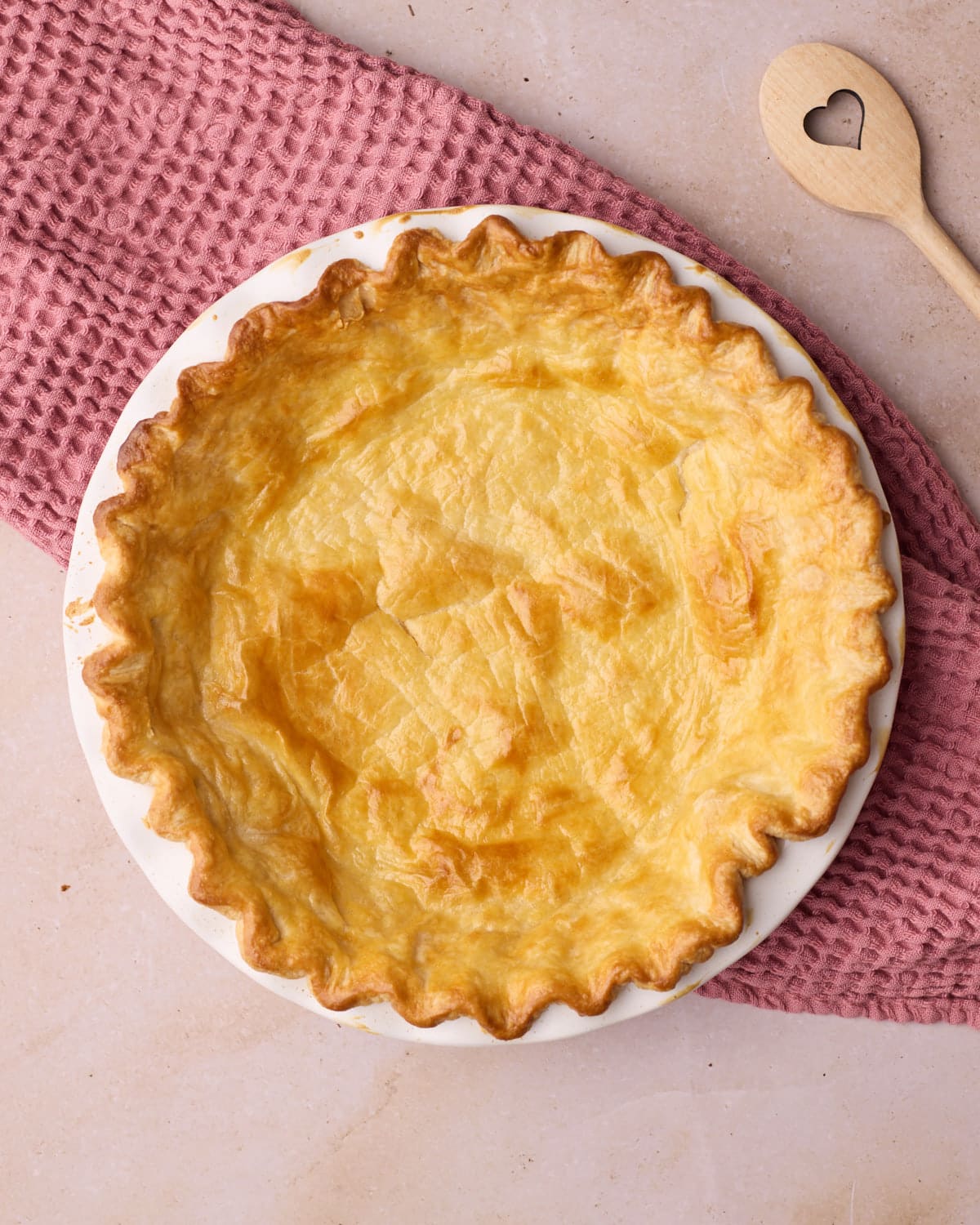
Blind Baking Pie Crust Snapshot
What it is: A complete guide to when and how to blind-bake pie crust, plus helpful tips and filling ideas.
Why you'll love it: Clear, reliable guidance based on real baking experience, so your pies will always be baked to perfection.
How to make it: Fill your pie crust with paper and baking weights, bake just until lightly golden, then add egg wash and bake according to recipe instructions.
Blind baking a pie crust can feel intimidating, especially if you're already taking on a pie completely from scratch (be sure to browse my pie recipes for some tasty inspo). As a professional recipe tester and former bakery owner, I've had my fair share of pie flops - shrunken crusts, soggy bottoms, overbrowned edges...you name it. The silver lining is that every mistake taught me exactly what works and what doesn't when it comes to getting a perfectly baked crust.
I present to you my 'Pie Crust Encyclopedia'! This guide is your exclusive deep dive into blind baking, with techniques that work for both buttery, flaky pie crust and tender shortcrust pastry.
Inside, you'll find exactly which recipes require blind-baking, step-by-step instructions for how to do it properly, and the essential tips that make all the difference. With the right technique, blind baking isn't complicated, and this post makes it simple.
What is Blind Baking?
Blind-baking is simply pre-baking your pie crust before adding the filling. The crust is lined with parchment and pie weights to keep it from puffing or shrinking, then baked until partially or fully set.
It's used for pies with very wet fillings, short bake times, or no-bake fillings - making sure your pies are crisp and fully cooked rather than soggy.
When Do You Need to Blind Bake a Crust?
It's necessary to blind bake your pie anytime a recipe calls for a pre-baked or par-baked crust. However, not every pie requires this step.
If your filling bakes for a long time, the crust will have plenty of time to cook through on its own. In those cases, you can skip blind-baking entirely. But for shorter bake times - or no bake time at all - blind-baking ensures a fully cooked, crisp instead of a soggy bottom.
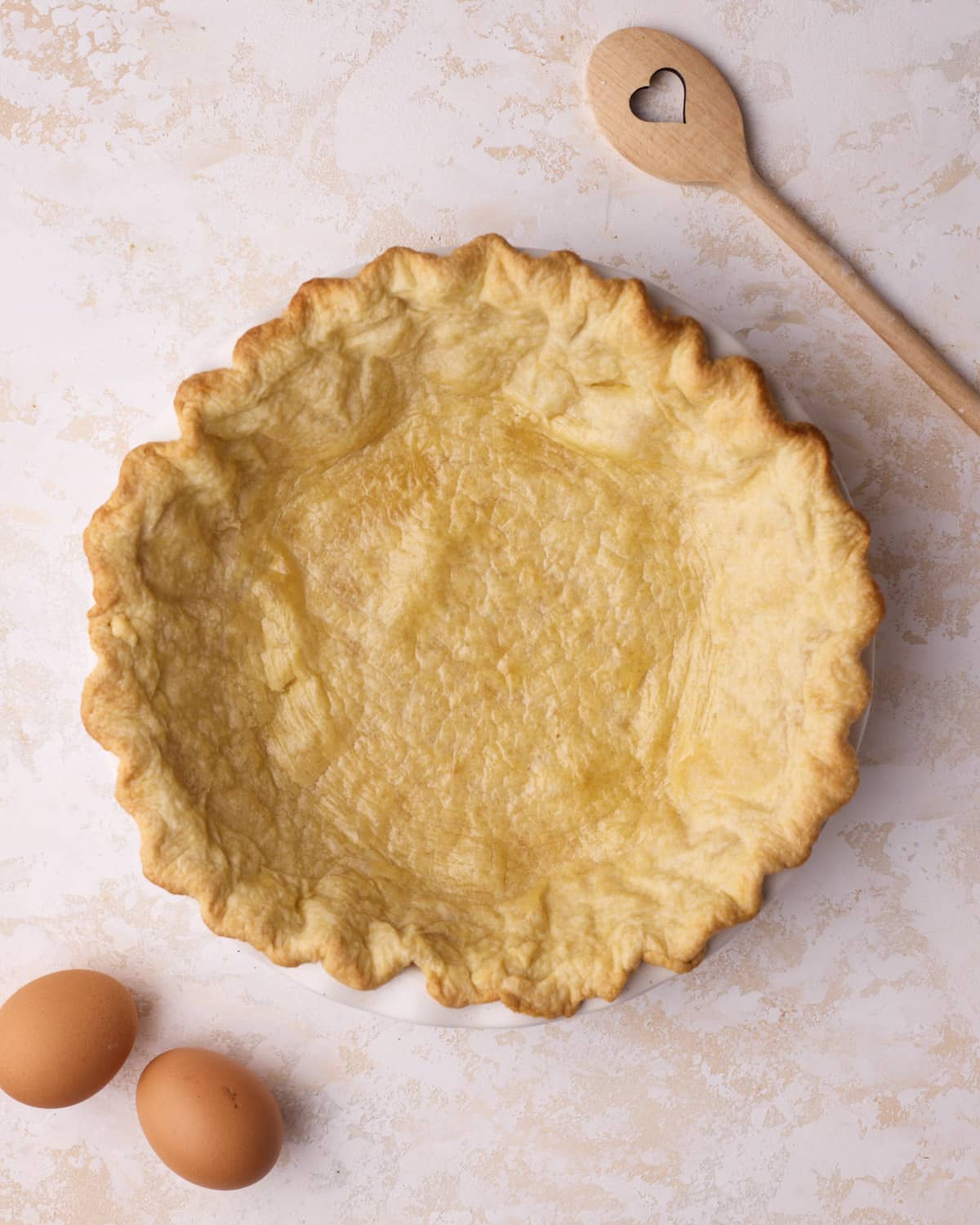
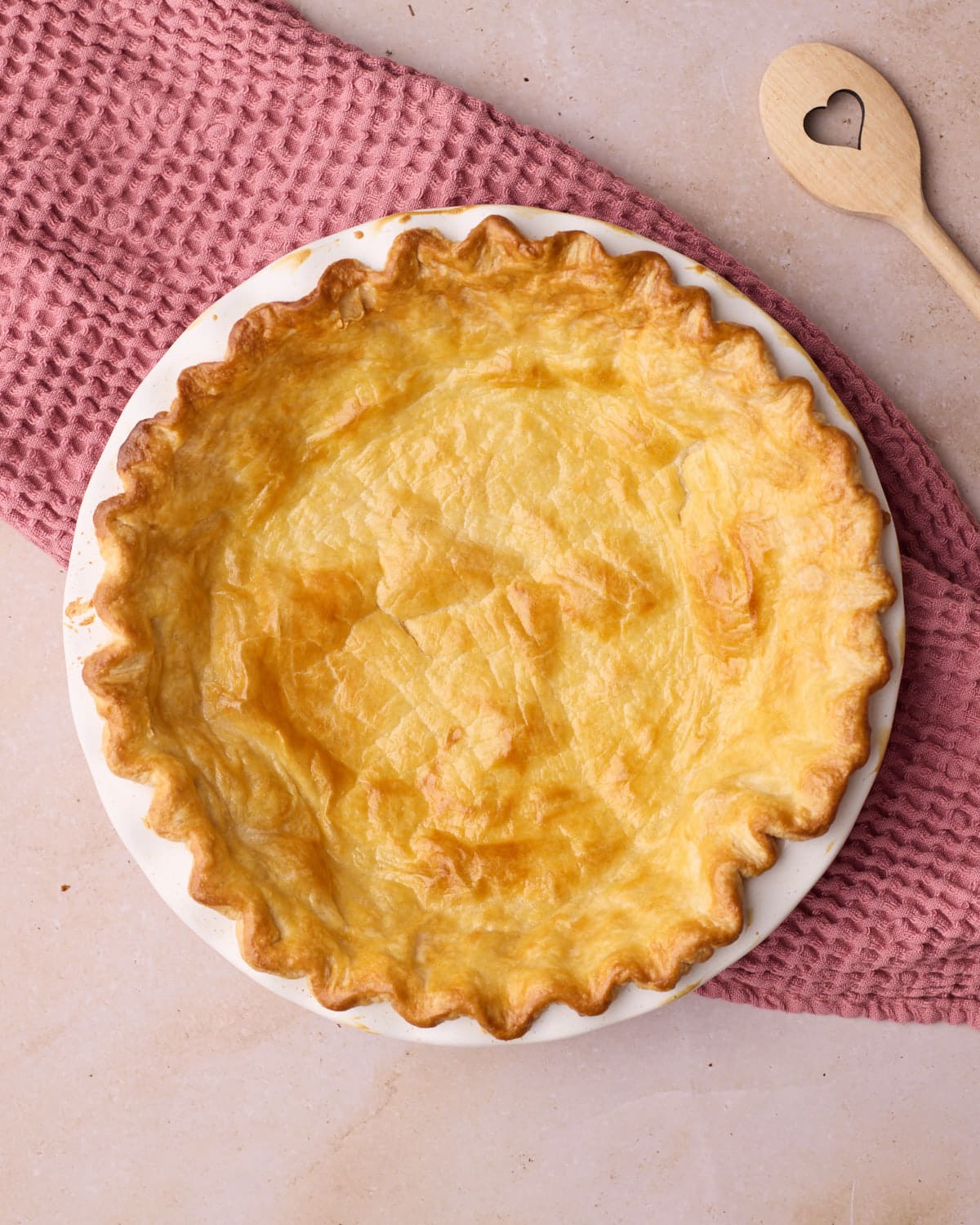
Here's a simple guide to help you decide:
No Blind Baking Needed
Pies that bake for a long time and have sturdy fillings can go straight into the oven with a raw crust.
- Apple pie
- Cherry pie
- Peach pie
- Blueberry pie
Partial Baking Needed
Pies that will be filled and then returned to the oven benefit from an initial bake.
Full Baking Needed
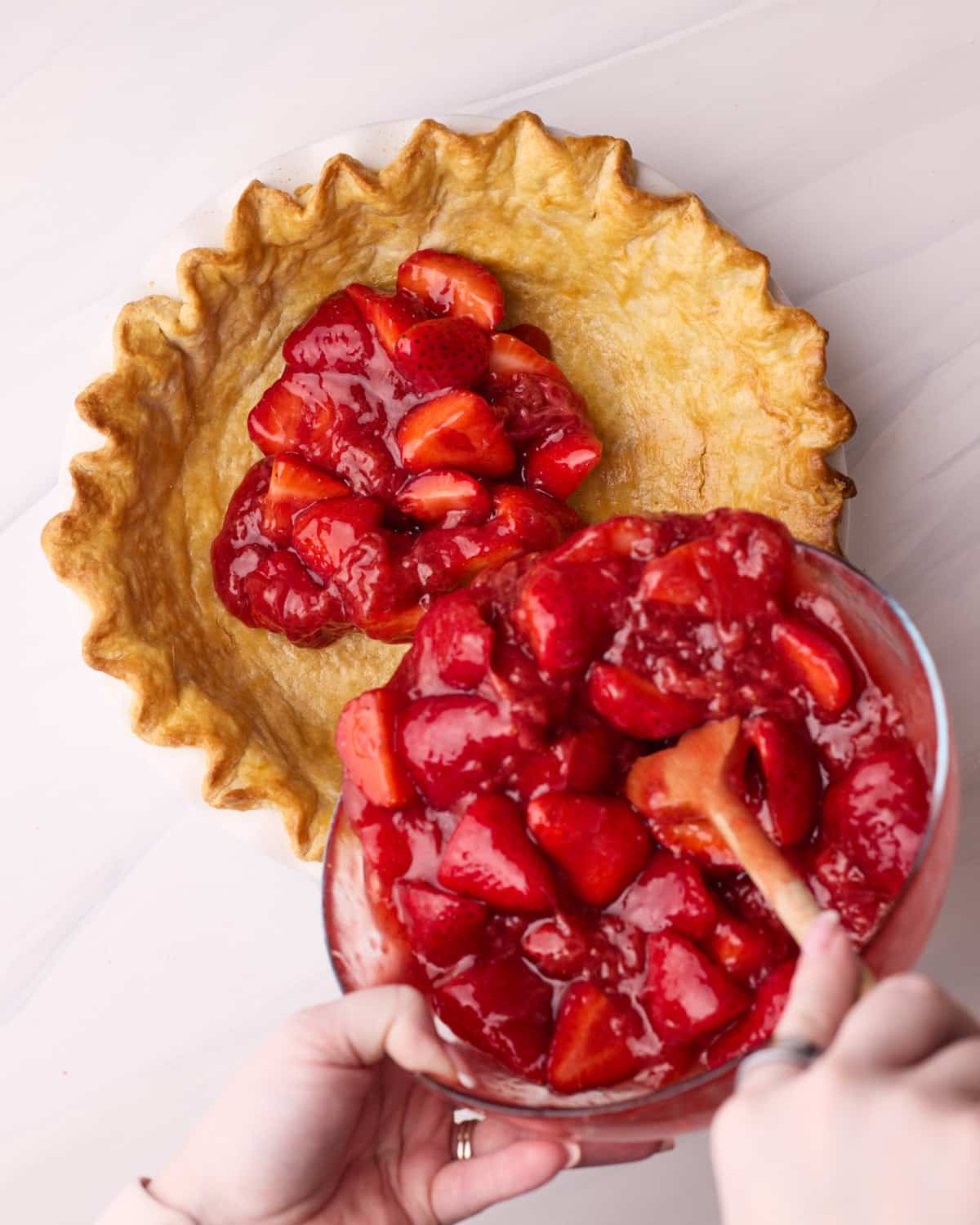
Pies with unbaked or chilled fillings require a fully baked crust before filling.
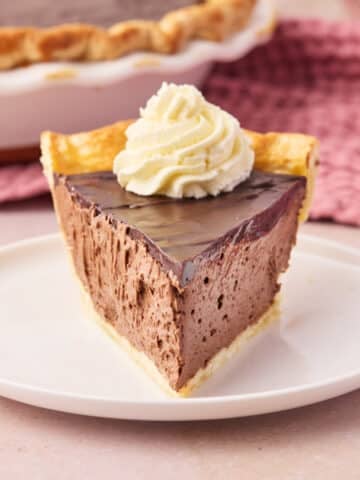
- Chocolate mousse pie
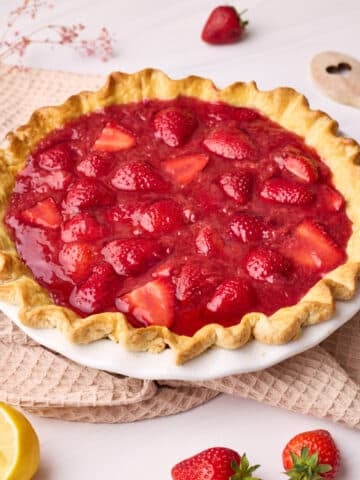
- Fresh fruit desserts that won't be baked, like my strawberry pie and strawberry custard tarts
- Cream-based pies filled with components like pastry cream
Equipment You'll Need
- Parchment paper - This creates a barrier between the pastry and the pie weights. Avoid using aluminum foil, as it conducts heat and could over-brown your crust.
- Pie weights - I like to use a combination of baking beans and dry rice.
- Tart pan or pie dish
- Pastry brush - For the egg wash.
How to Blind Bake a Pie Crust
The method below shows you the best way to blind-bake a flaky pie crust or shortcrust pastry, how to par-bake it, and how to bake it fully.
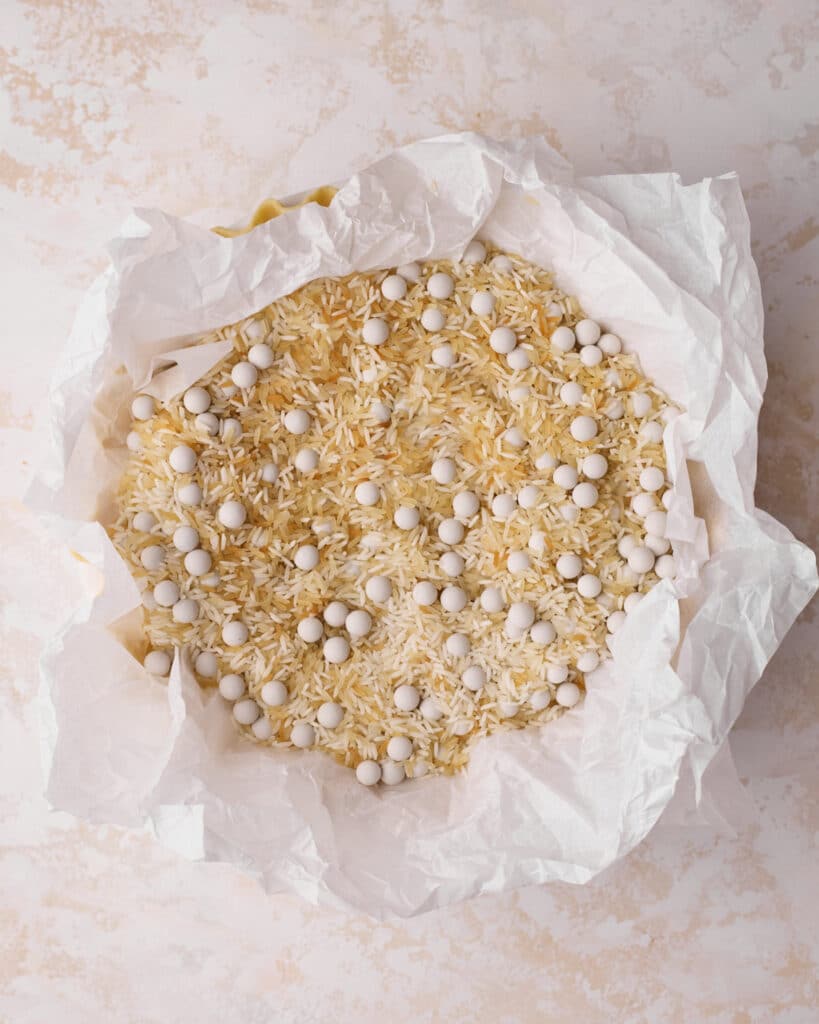
Pie Weights
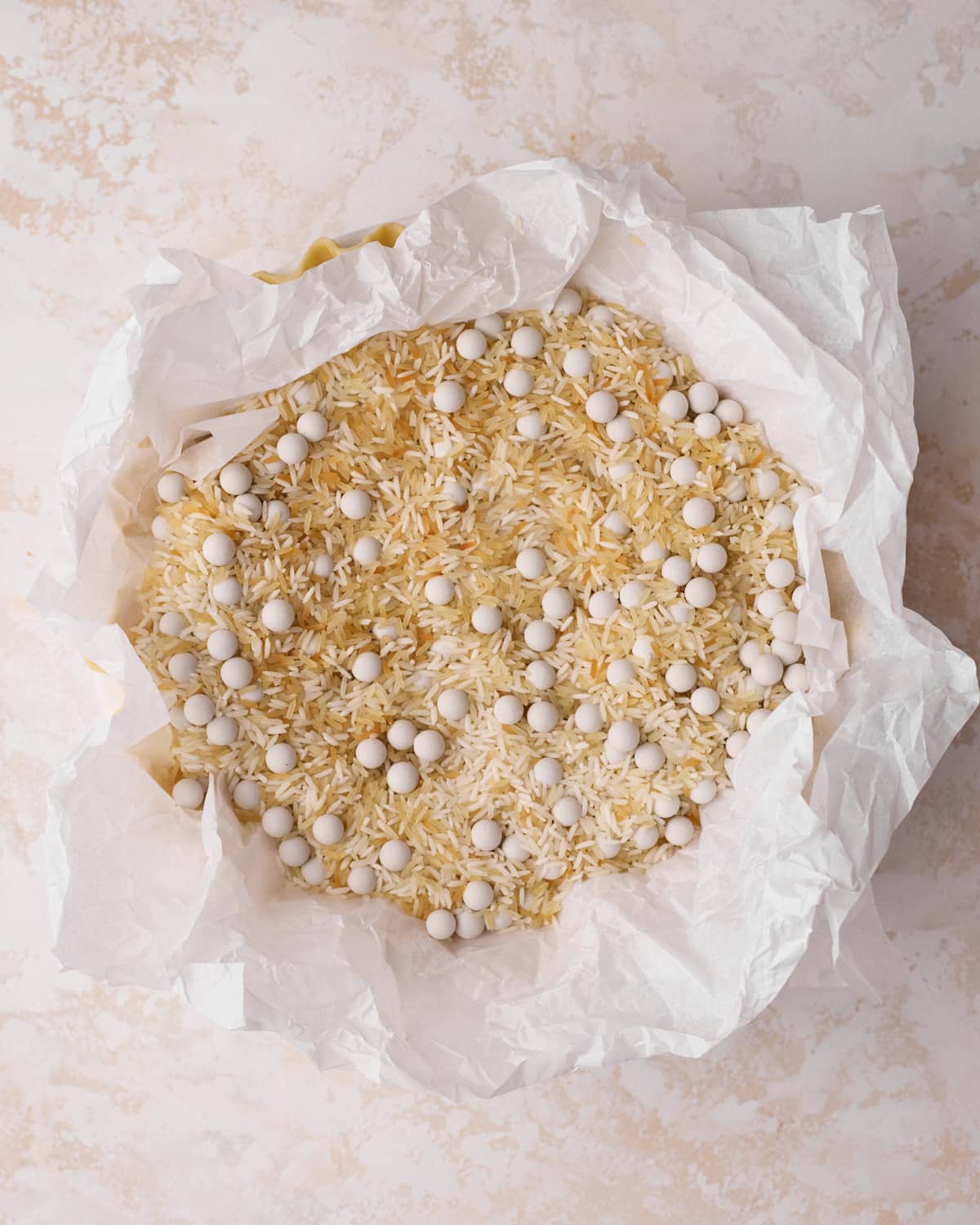
Lay two long pieces of parchment paper crosswise into your pie shell. It's best to scrunch and un-scrunch them first so they can fit into the corners easily.
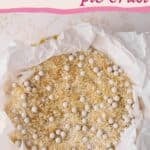
Fill the shell with pie weights or rice (I use a combination of both), making sure it fills all the way to the top of the dough. This will help to stop the edges from shrinking.
Put it back in the fridge (or freezer if you have room) for 10 minutes while you preheat the oven.
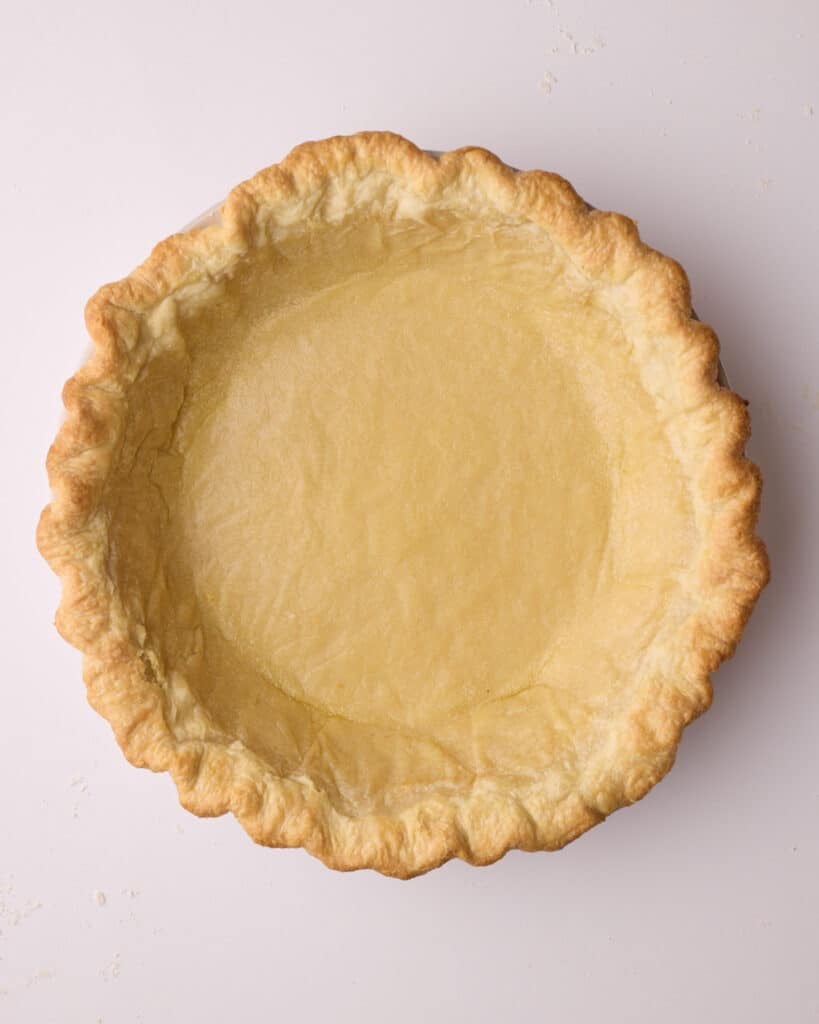
Blind Bake
Bake the pie crust according to the recipe - I bake mine at 425°F / 220°C (200°C fan-assisted) for 15-18 minutes, just until the edges are starting to turn lightly golden.
Remove from the oven and turn the temperature down to 375°F / 190°C (170°C fan assisted).
Carefully lift out the parchment paper and baking beans.
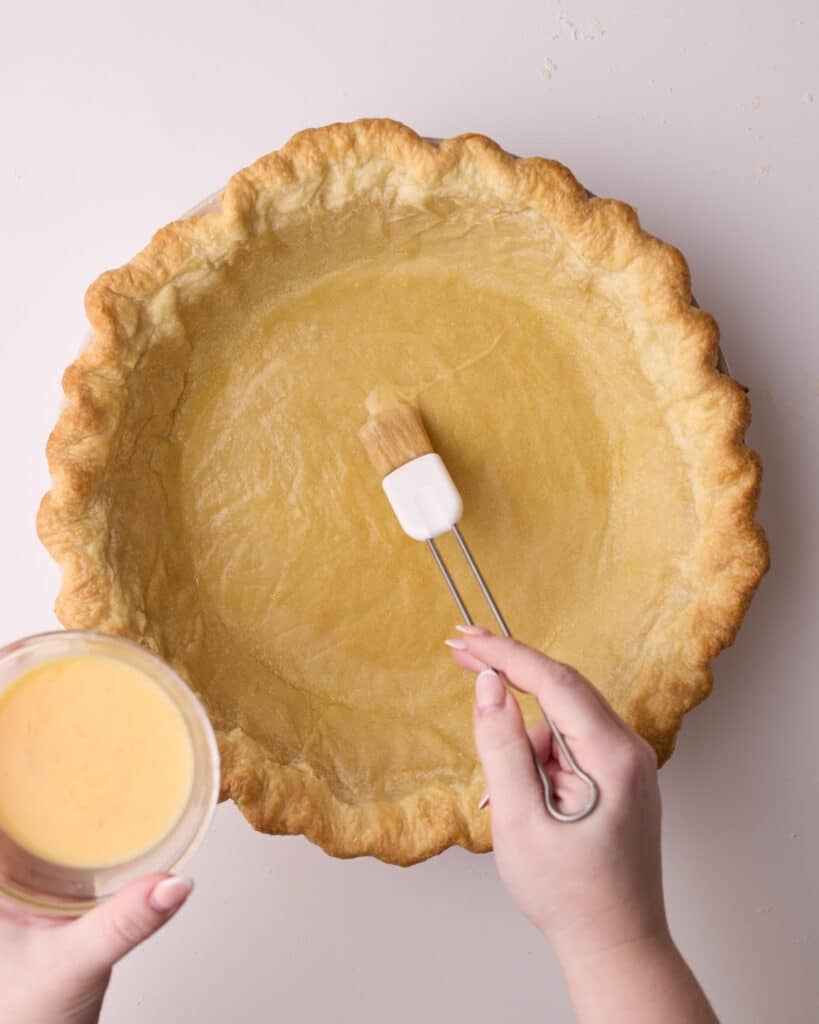
Egg Wash
Brush the crust with a layer of egg wash. It should be a thin layer, but thick enough to seal the docking holes.
This is especially important if you will be adding a liquid filling (like custard pies).
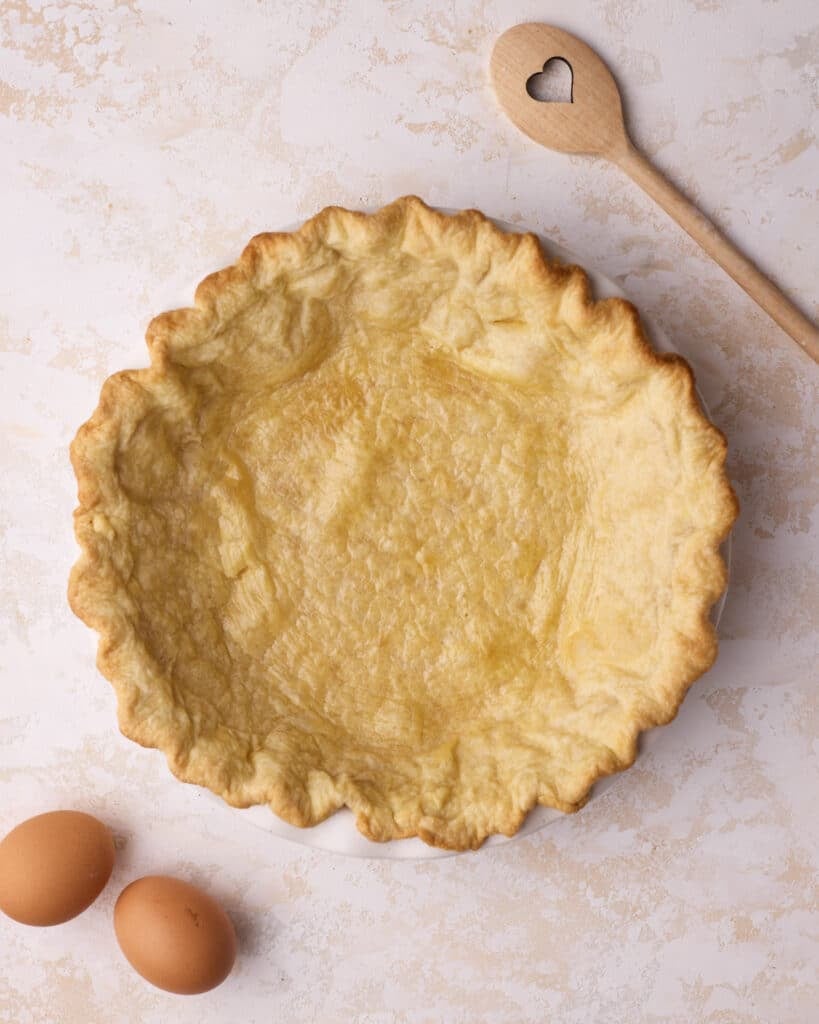
Bake More
Put the crust back in the oven:
To par-bake: bake for a further 5-7 minutes or until the inside of the pie looks dry and lightly golden brown.
To fully bake: bake for a further 10-12 minutes or until the entire pie is golden brown all over.
Blind Baking Tips
These are my top tips for the best blind bake, and how to avoid common mistakes:
- Use the right dough - the biggest factor in a successful pie crust is getting the pie dough right. Try my flaky pie dough or shortcrust pastry.
- Tuck the edges - Tucking the pie edges under themselves instead of trimming the excess pastry helps to avoid stretching the dough. It also gives a thicker edge for better crimping that holds its shape.
- Chill before baking - Cold pie dough will hold its shape much better, and it also puffs up better when it hits the hot air in the oven.
- Add enough pie weights - Fill your pie weights all the way up the sides of the crust. They don't just stop the bottom from puffing up; they also support the sides of the crust to stop them from shrinking and slipping down.
- Parchment paper overhang - Let the end of your parchment paper hang over the outer crust of the pie for an extra layer of protection from browning while blind baking.
- Egg wash to fill holes - Adding an egg wash makes the pie shiny and pretty, but it is also practical. It seals any holes in the pastry (from docking or tearing) to stop the pastry from getting soggy when you fill it later.
More Pie Recipes
Ready to put your skills into action? Here are some more tasty pie recipes for you to try:
Storage
Once your pie crust has been blind baked, par-baked, or fully-baked, I would recommend filling it on the same day. Storage instructions will then depend on your filling, so it's best to follow recipe instructions.
FAQs
Docking your pie crust is a way to stop the pastry from puffing up too much in the oven. You can prick it all over with a fork. If you are adding a liquid filling, you may want to eggwash the crust after the holes have set, to avoid a soggy bottom.
To blind bake pastry, bake for 15-18 minutes initially at 425°F / 220°C (200°C fan-assisted). Remove from the oven to add egg wash, then turn the temperature down to 375°F / 190°C (170°C fan-assisted) and bake for a further 5-8 minutes to par-bake, or 10-12 minutes to fully bake
Yes! If you don't have any pastry weights, you can substitute them for uncooked rice or dry beans/lentils to blind bake your pie.
Shrinking is a common issue when making homemade pie crust. It's usually caused by dough that's overhydrated, overworked, or not rested long enough. Stretching the dough to fit the pan, skipping the chill time, or not using enough pie weights can also cause it to shrink in the oven.
My flaky pie crust recipe explains exactly how to avoid a shrunken pie crust, and all the techniques you can use in case this happens.
Now that you're a pie crust pro, you can bake all the delicious pie recipes you like, knowing your crust will bake the way it should. If you have a question, leave it in the FAQs above, and I'll reply as soon as I can. Happy baking!










Hi, I'm Jules!
I'm a Scottish ex-bakery owner sharing my tried and true dessert recipes and expert tips to help you whip up impressive desserts at home.
Check out my baking blog and try a few recipes.
Or just lick the screen a little...
Happy Baking!