

If you've ever wondered, 'Why did my cake sink in the middle?' you're not alone. Cake sinking is one of the most common problems I see - but it's totally preventable once you understand what's going on.
Let's talk about why cakes sink, what's actually happening in the oven, and how to stop it from happening again.
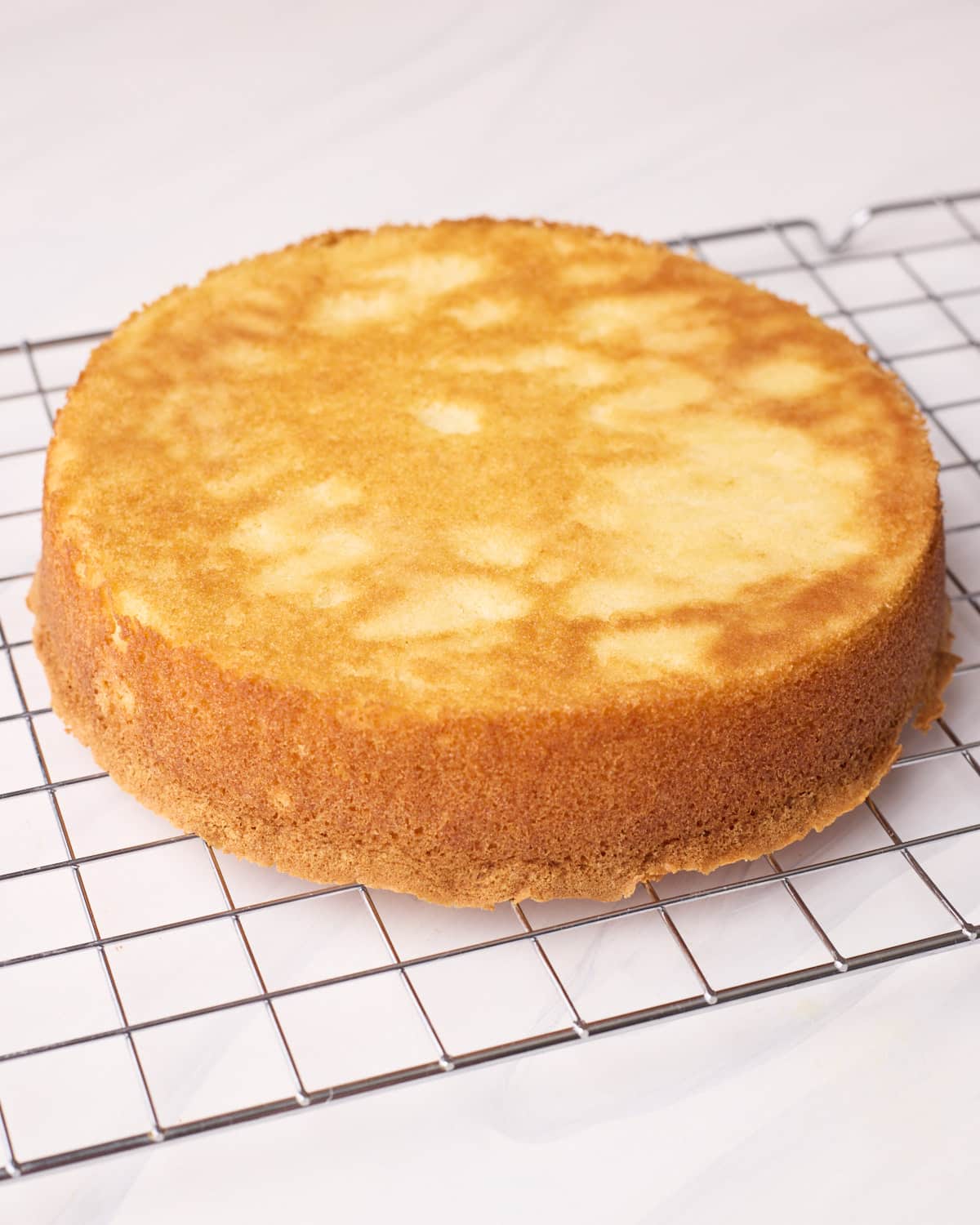
What Causes Cake To Sink?
When a cake bakes, it rises because air, steam, and leavening agents expand in the heat of the oven. At the same time, the structure of the cake (from eggs, flour, and fat) slowly sets and firms up.
A cake sinks when it rises before that structure has had a chance to fully set.
So when the heat drops - either because the cake is removed from the oven or the oven door is opened - the cake simply can't support itself and collapses in the middle.
Almost every sinking cake problem comes back to that.
Jump to:
The Cake Was Underbaked
This is by far the most common reason cakes sink - even when they look done.
The edges may be set and golden, but if the center hasn't finished baking, it won't hold its shape as the cake cools.
Signs this might be the issue:
- The centre looks a little shiny or wet.
- The cake sinks as it cools, not immediately.
- A skewer comes out with wet batter rather than crumbs.
How to prevent it:
- Always test the very centre of the cake.
- Look for a skewer that comes out clean or with a few moist crumbs.
- Learn what to look for and prioritise visual cues over recipe bake times.
Opening The Oven Door Too Early
I know it's tempting to obsessively check on your cake to see if it's done, but opening the oven door causes a sudden temperature drop, and if the cake hasn't set yet, that drop in heat can make it sink almost instantly.
This usually happens when:
- The oven door is opened in the first ¾ of the bake time.
- The cake has risen but still looks pale or wobbly in the middle.
How to prevent it:
- Keep the oven door closed until the cake looks set all over.
- Wait until most of the baking time has passed before testing.
- Shut the oven door quickly after testing to keep the temperature up.
Too Much Baking Powder Or Baking Soda
This one surprises a lot of people: more leavening does not mean a taller cake.
Too much leavening agent makes the cake rise very quickly, then collapse once it can't support that rise.
Common ways this happens:
- Not using measuring spoons.
- Using heaped teaspoons instead of level ones.
- Mixing up baking powder and baking soda.
How to prevent it:
- Use measuring spoons for accuracy
- Always level your measuring spoons.
- Read the recipe carefully and follow it exactly.
Overmixing The Batter
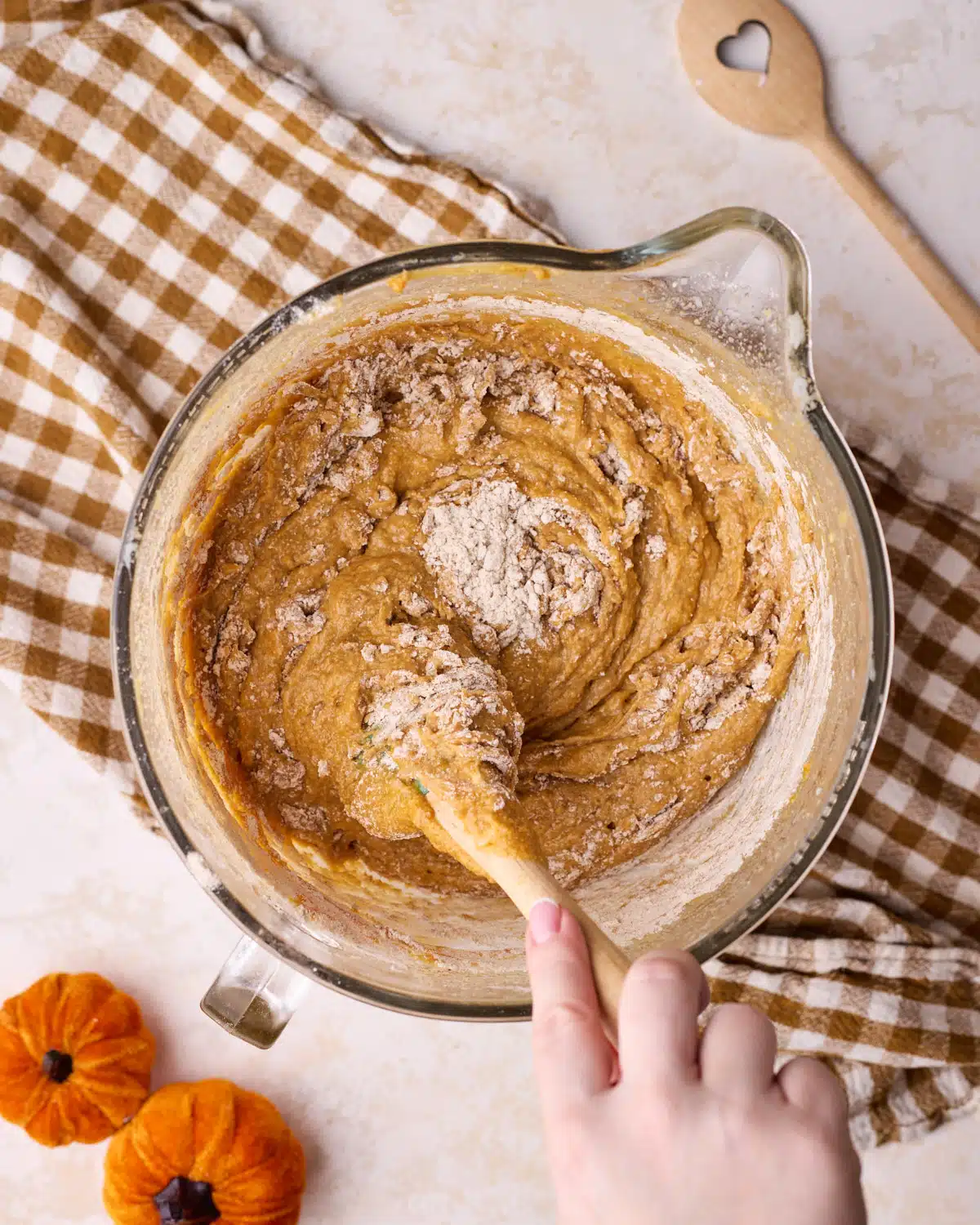
Overmixing is probably the biggest culprit of all baking issues. With cake batter, mixing too much once the flour has been added develops too much gluten, so the cake rises rapidly and then sinks once the fragile structure gives way.
This often happens right at the end of mixing.
This often happens when:
- Mixing for too long after adding flour.
- Using high speed on a stand mixer.
- Trying to "make sure it's fully mixed".
How to prevent it:
- Mix gently once the flour goes in, preferably by hand where possible.
- Stop as soon as the batter comes together.
- A few small lumps are much better than an overmixed batter.
Oven Temperature Is Off
Even thoroughly tested cake recipes can sink in different ovens. All ovens are different, and although the gauge might show the correct temperature, it could be way off. If the oven is cooler than the bake temperature, even by 10°, cakes can rise without ever fully setting, which makes sinking much more likely.
This is something I see all the time, and people rarely realise the issue.
Signs this might be the issue:
- Cakes sink often, even with reliable recipes.
- Baking times are always longer than expected.
- Centres stay pale or soft.
How to prevent it:
- Use an oven thermometer to check accuracy.
- Fully preheat the oven (at least 20 minutes).
- Calibrate your oven regularly.

Using The Wrong Cake Pan
There are two major things to keep in mind when choosing bakeware for your cakes: the pan size and the pan material.
Pan sizes are listed on recipes for good reason - using a pan that is too small or too deep can leave the centre of the cake underbaked while the edges set.
There is often a little wiggle room with pan sizes, but don't deviate too much unless you are confident you know how to adjust the bake time accordingly.
The second factor is the pan material. I see a lot of bakers comment that their bakes didn't turn out because they were using glass or silicone pans. Glass takes longer to heat up than metal, so it can mean your cakes are accidentally underbaked.
To avoid this:
- Stick to the pan size listed in the recipe.
- Always opt for a metal cake pan.
- Don't overfill pans (about ⅔ full is ideal)
- If the batter is deep, lower the oven temperature slightly and bake longer.
How to Tell When A Cake Is Actually Done
One of the biggest reasons cakes sink is that they come out of the oven just a little too soon. Bake time is only a guide, and can vary massively depending on your oven, ingredients, and bakeware. That's why it is so important to learn the visual cues that your cake is done baking.
Signs your cake is baked:
- The edges look set and slightly pulled away from the pan.
- The centre no longer looks shiny or wet.
- The top springs back lightly when gently pressed and doesn't leave a dent.
- A skewer or cake tester inserted into the very centre comes out clean or with a few moist crumbs.
If you're unsure, give the cake another 3-5 minutes. A slightly longer bake is far less risky than pulling a cake out too early.
What Not To Do
These are the habits I see most often when cakes sink - and they're easy to avoid once you know them.
- Don't rely on bake time alone - Ovens vary more than most people realise. Always check doneness visually and with a skewer.
- Don't open the oven door repeatedly - Each peek drops the oven temperature and can cause an unset cake to collapse.
- Don't add extra baking powder or baking soda "just in case" - More leavening usually leads to a dramatic rise followed by a dramatic sink.
- Don't overmix the batter after adding flour - Mix gently and stop as soon as the batter is combined.
- Don't change the pan size without adjusting bake time - A deeper cake needs longer in the oven, at a slightly lower temperature.
- Don't rush cooling - Let the cake sit in the pan for 10-15 minutes so it can finish setting before turning it out.
Can You Save a Cake That Has Sunk?
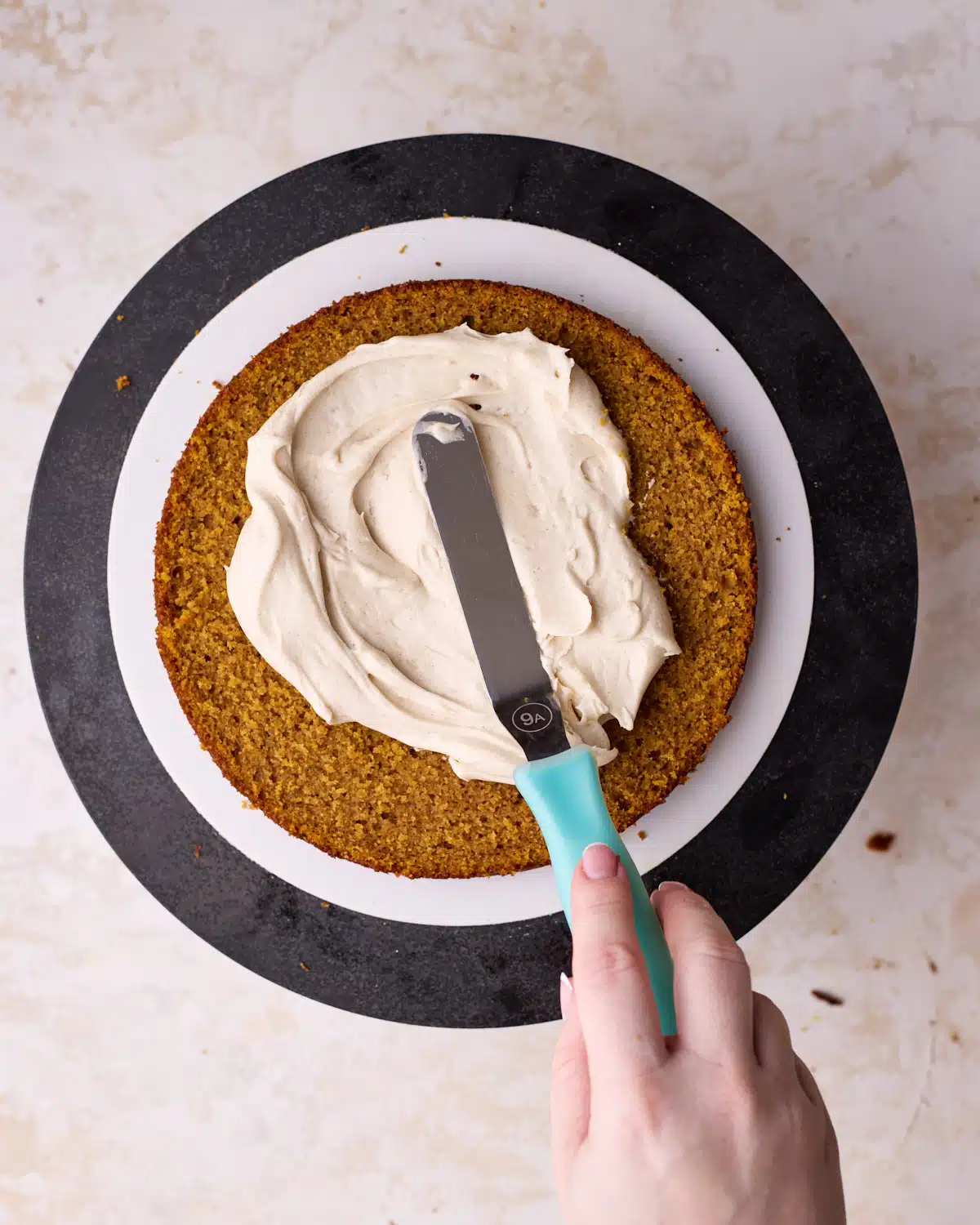
Absolutely. Some of my best-tasting cakes weren't my prettiest ones straight out of the oven. You can:
- Level the cake and fill the dip with frosting.
- Slice and stack layers strategically.
- Add extra decoration and lean into it.
Once it's frosted, no one will ever know - and it will still taste just as good.
And if all else fails, you can crumble it up into a trifle or sundae, or even mix with frosting to make cake pops!
Hi, I'm Jules!
I'm a Scottish ex-bakery owner sharing my tried and true dessert recipes and expert tips to help you whip up impressive desserts at home.
Check out my baking blog and try a few recipes.
Or just lick the screen a little...
Happy Baking!