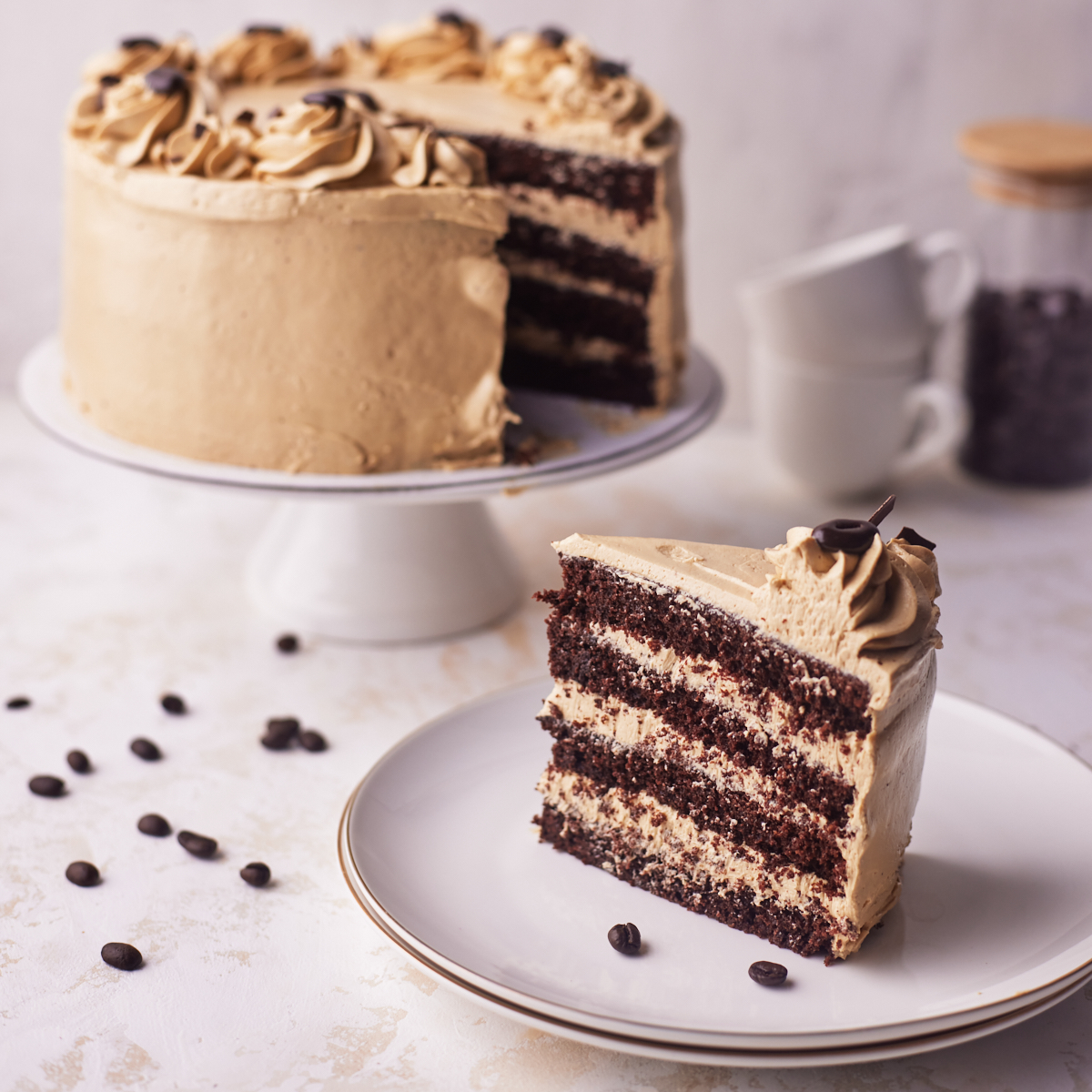

Chocolate Espresso Cake Recipe
Rich and moist chocolate and espresso cake layered with glossy espresso frosting.
Servings: 12 slices
Ingredients
For the Chocolate Espresso Cake
- 240 g (2 cups) All-purpose Flour, (Plain flour)
- 400 g (2 cups ) Granulated Sugar, (Caster sugar)
- 2 teaspoon (2 teaspoon) Baking Powder
- ¾ teaspoon (¾ teaspoon) Salt
- 3 (3) Large Eggs, room temperature
- 65 g (⅔ cup) Dutch Processed Cocoa Powder
- 120 ml (½ cup) Vegetable Oil
- 120 ml (½ cup) Whole Milk, room temperature
- 1 teaspoon (1 teaspoon) Vanilla Extract
- 3 tablespoon (3 tablespoon) Espresso Powder
- 120 ml (½ cup) Hot Water
For the Espresso Buttercream
- 790 g (28 oz) Sweetened Condensed Milk
- 452 g (4 sticks) Unsalted Butter, room temperature
- 1 teaspoon (1 teaspoon) Vanilla Extract
- ½ teaspoon (½ teaspoon) Salt
- 3 tablespoon (3 tablespoon) Espresso Powder
- 1 tablespoon (1 tablespoon) Hot Water
Instructions
To Make the Chocolate Espresso Cake
- Preheat oven to 350°F / 180°C (160° fan-assisted) and grease and line two 8-inch cake pans.
- Sift the dry ingredients (except the espresso powder) into a large bowl and mix together.
- Stir the wet ingredients (except the hot water) together in a separate bowl until combined, then pour them into the dry ingredients and whisk gently until combined and free from lumps. Make sure to scrape down the bottom of the bowl. You can use a stand mixer for this if you want, but it's very easy to do with just a bowl and a hand whisk.
- Stir the espresso powder into a cup of recently boiled water, then add it to the cake batter and mix it in. The batter will be quite runny, don't worry, this is how it's supposed to be!
- Divide cake batter evenly between cake pans and bake for 30 - 40 minutes. The cakes are ready when the centres spring back when gently pressed and a toothpick comes out with a few moist crumbs but no wet batter.
Make the Espresso Russian Buttercream Frosting
- Whip butter with a whisk attachment on high speed for 5 full minutes until pale and creamy. Make sure to pause periodically to scrape down the sides of the bowl.
- Turn the mixer down to medium-high speed and drizzle in the condensed milk very slowly and gradually, a little at a time, whipping in between additions. It is important not to add the condensed milk too quickly, or it won't emulsify and the buttercream will split.
- Add the vanilla and salt and whip on high speed for a minute. The frosting should be smooth, thick and glossy.
- Mix the espresso powder in 1 tablespoon of hot water and add it to the buttercream, whip until combined.
- Check my Russian Buttercream recipe post for more details on this buttercream and a troubleshooting guide.
Assemble the Cake
- Once the chocolate cakes have completely cooled, use a cake leveler or serrated knife to cut off the tops to make them level. Slice each cake in half horizontally to make four thin layers.
- Put one layer of your cake onto a cake plate or board and add an even layer of coffee buttercream, then add the next layer and repeat until all your layers are used.
- Cover the cake with the remaining buttercream and decorate as desired.
Notes
- Espresso powder: Use a fine, soluble espresso powder or instant espresso - not ground coffee or espresso beans.
- Batter consistency: Once the hot espresso mixture is added, the batter should be thin and pourable. This is normal. If it remains unusually thick, check that the flour was measured accurately.
- Cake pans and layers: This recipe was developed for two 8-inch cake pans. For the four-layer cake shown, slice each cooled cake horizontally in half. Alternatively, leave them whole to make two thicker layers.