
Fruit Tart Recipe
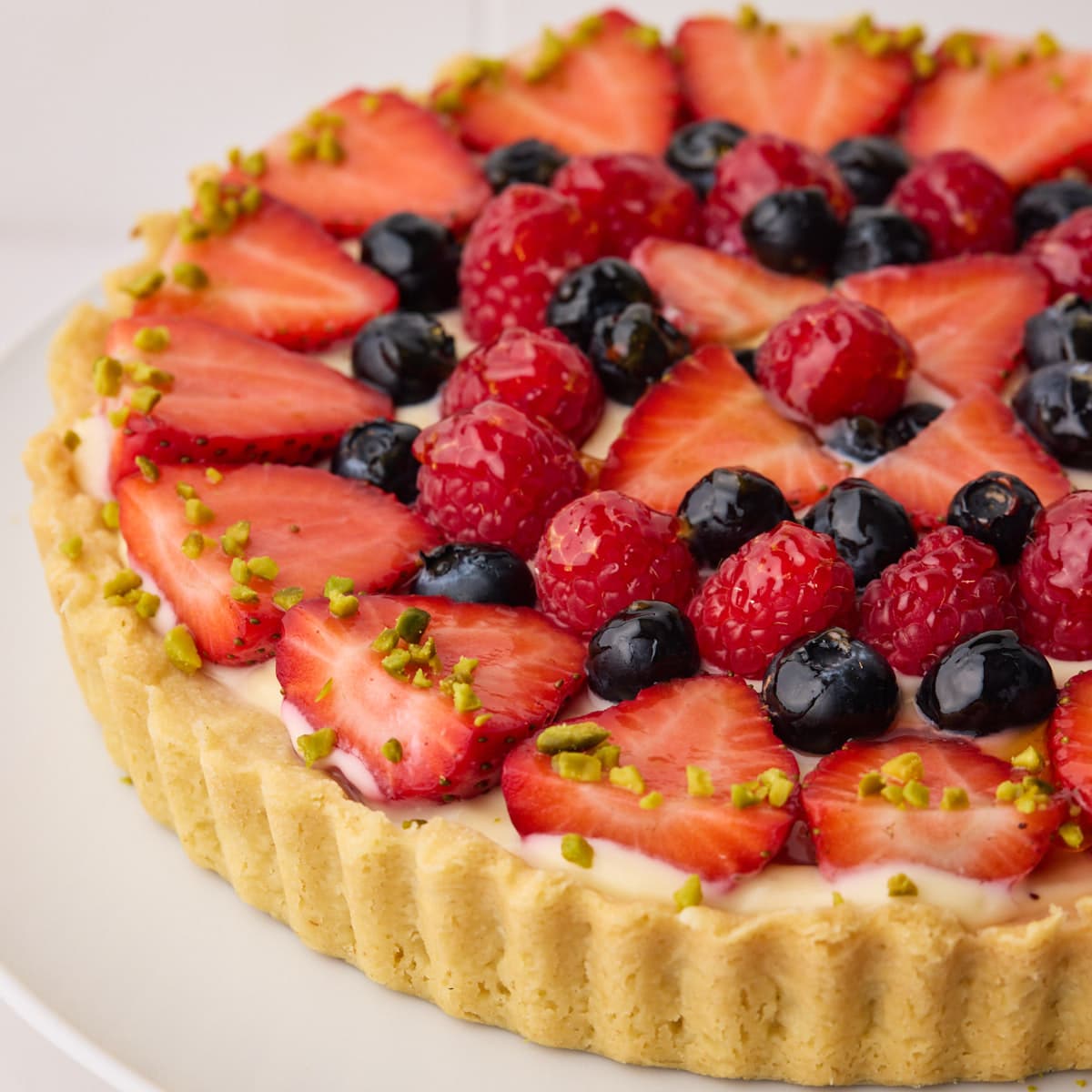
Silky vanilla pastry cream inside a buttery shortbread crust, topped with fresh fruit and a glossy glaze.
Servings: 8 slices
Ingredients
Vanilla Pastry Cream
- 5 (5) Large Egg Yolks
- 100 g (½ cup) Granulated Sugar, (Caster Sugar)
- 40 g (⅓ cup) Cornstarch, (Cornflour)
- 480 ml (2 cups) Whole Milk
- 2 teaspoon (2 teaspoon) Vanilla Bean Paste, or vanilla extract
- ⅛ teaspoon (⅛ teaspoon) Salt
- 30 g (2 tablespoon) Unsalted Butter
Shortbread Tart Crust
- 200 g (1¾ sticks) Salted Butter, room temperature
- 90 g (¾ cup) Powdered Sugar , (Icing Sugar)
- 1 (1) Egg Yolk, room temperature
- 300 g (2½ cups) All-purpose Flour, (Plain Flour)
For Decoration
- 450 g (3 cups) Fresh Fruit, like strawberries, raspberries and blueberries.
- 3 tablespoon (3 tablespoon) Apricot Jam, to glaze
Instructions
Make the Vanilla Pastry Cream
- *As it needs time to cool, it's important to make the pastry cream at least a few hours in advance. You can also make it up to 3 days ahead of time. If this is your first time making pastry cream, you can check out my extensive pastry cream guide for lots of tips and tricks.
- Whisk the egg yolks, sugar, and cornstarch together until pale and thick.
- Heat the milk in a saucepan over medium heat until scalding hot. This means you can see steam rising from it and tiny bubbles appearing on the surface. Do not let it boil.
- Once the milk is scalding, slowly drizzle it into the egg yolk mixture a little at a time, whisking in between. This will bring up the temperature of the eggs slowly so they don't scramble.
- Pour the whole custard mixture back into the saucepan and return to the heat, whisking constantly, until it begins to thicken and boil with thick, bursting bubbles. Let it bubble for 1-2 minutes. You may need to stop whisking for a few seconds at a time to let it bubble properly - if it doesn't have at least 1 minute of active bubbling then the starches will not be activated and the custard won't set properly.
- Remove from the heat and transfer into a bowl to stop the cooking process - if you have any lumps in the pastry cream you can pass it through a fine-mesh sieve to remove them.
- Stir in the vanilla and salt, then add the butter one small chunk at a time, letting it incorporate fully before each chunk.
- Cover with plastic wrap so that the plastic is touching the surface of the custard - this prevents a skin from forming on it. Let it come to room temperature, then chill in the fridge for at least 2 hours, or up to 72 hours, until ready to use.
Make the Shortbread Crust
- Beat the butter and powdered sugar together just until smooth - don't try to cream it.
- Add the egg yolk and mix until combined.
- Sift in the flour and stir it carefully until it starts to form a dough. Be careful not to overmix.
- Tip roughly ⅔ of the dough into a 9-inch tart pan and use your hands to press it into an even layer on the bottom of the pan.
- Use the remaining ⅓ of the dough to form the sides of the tart - try to make it an even thickness all the way around, and be sure to press right into the bottom corners of the pan to prevent shrinking in the oven.
- Chill the tart crust in the fridge or freezer for at least an hour before baking.
- Preheat the oven to 350°F / 180°C (160° fan) and line the tart shell with parchment paper and pie weights for blind baking. If this is your first time using this method, I have a step-by-step tutorial with process pictures on exactly how to blind bake a tart shell.
- Blind bake the crust for 15 minutes, then remove the pie weights and bake for a further 5-10 minutes until it is just starting to go light golden brown around the edges. Shortbread crust will be a little paler than other pastry crusts.
- Let the tart cool in the pan completely before filling.
Assemble the Fruit Tart
- It is best to assemble your tart as close to serving time as possible for maximum freshness.
- Wash, dry, and slice the fruit.
- Take the chilled pastry cream out of the fridge and whisk it gently until smooth to bring back the silky texture.
- Spread the pastry cream into an even layer in the tart crust and smooth the top.
- Arrange the fruit in whatever way you like - this can be an elaborate pattern or a casual pile. I have a section in the post above with tips on choosing how to arrange your fruit.
- Once all the fruit is in place, microwave the apricot jam for a few seconds to melt it, or stir it with a little boiled water. Use a pastry brush to add a thin layer of jam to all of the fruit for a shiny, professional finish.
Notes
- Make ahead: Preparing the pastry cream and tart shell ahead of time will make it a lot easier to put this fruit tart together before serving without any stress.
- Bubbling custard: Make sure you let the custard boil with thick, bursting bubbles for at least 1 minute to activate the starch; otherwise, it won't thicken and will ooze out when slicing the tart. I have a full pastry cream guide with detailed steps, expert tips, and troubleshooting.
- Crust thickness: The tart shell should be about ⅛-inch to ¼-inch thickness - try to get it an even thickness all the way around the sides.
- Blind Bake: Don't skip the baking beans; they will stop the sides of the pastry from shrinking in the oven.
- Glazed Fruit - Brushing the fruit with glaze not only gives the tart a shiny, professional finish, but it also helps to keep the fruit looking fresh and stop it from drying out.