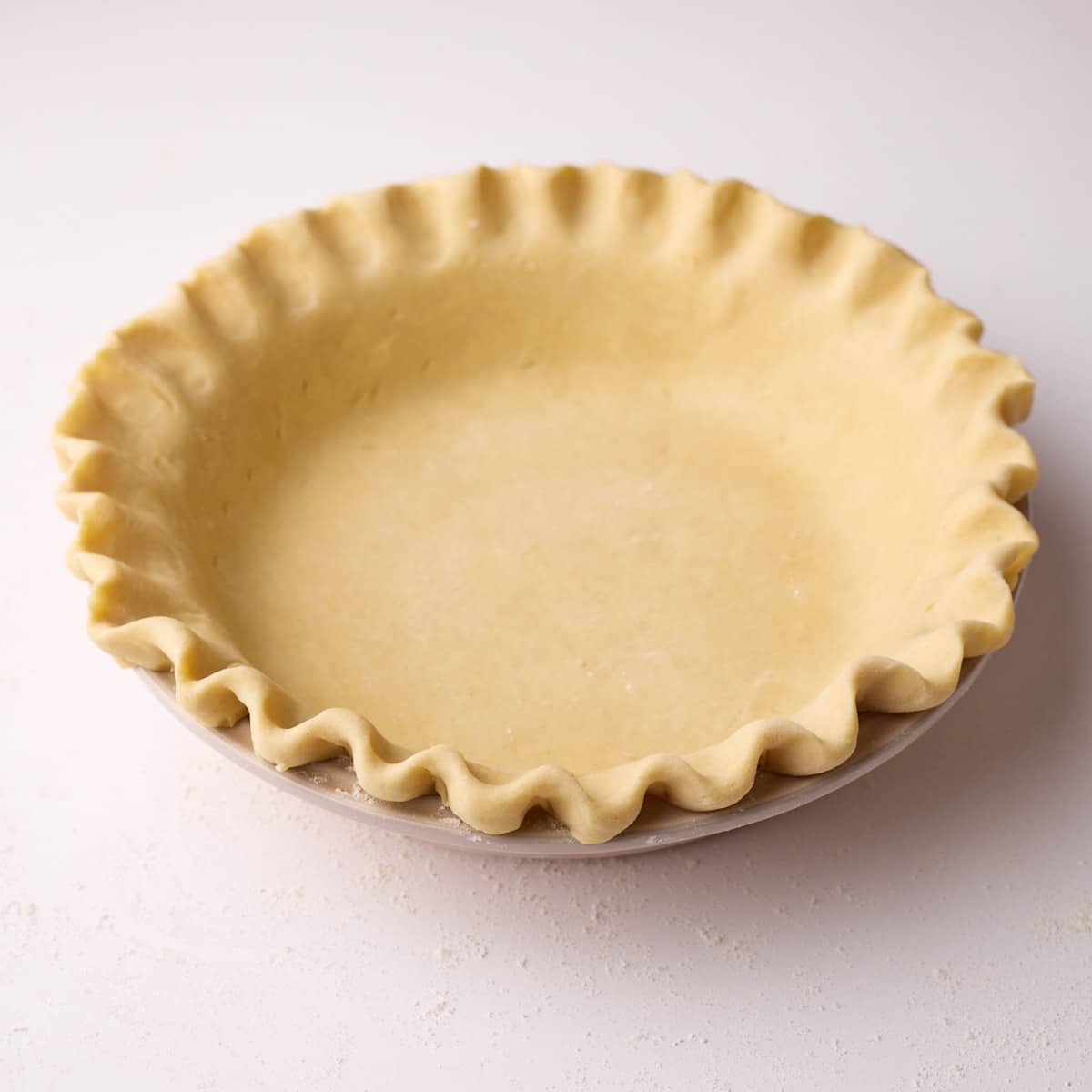

Flaky Pie Crust Recipe
A beautifully flaky homemade all-butter pie crust for sweet or savory pies.
Servings: 2 9-inch Pie Crusts
Ingredients
- 360 g (3 cups) All-purpose Flour, (plain flour)
- ¼ teaspoon (¼ teaspoon) Salt
- 1 tablespoon (1 tablespoon) Granulated Sugar, (caster sugar) optional
- 255 g (2¼ sticks) Unsalted Butter, cold
- 1½ tablespoon (1½ tablespoon) Apple Cider Vinegar, (or white wine vinegar)
- 120 ml (½ cup) Cold Water
Instructions
- Note: I recommend letting the pie dough rest for at least 2 hours, preferably overnight, before lining your pie dish, so factor that into your timing.
Make the pie dough
- Cut the butter into small cubes. Combine the water and apple cider vinegar in a small bowl. Place the butter and the water/vinegar mixture into the freezer for 10 minutes while you measure out the dry ingredients.
- Add the flour, sugar, and salt to a food processor and pulse a couple of times to combine.
- Take the butter out of the freezer and add it to the food processor. Pulse until the butter is dispersed throughout the flour, but there are still some small, pea-sized chunks of butter visible.
- Pour in about half of the water/vinegar mixture and pulse the mixture. Do not overwork the dough, pulse it just enough to combine.
- Keep gradually adding water, a little at a time, until the mixture is hydrated enough that it clumps together when you squeeze it with your fingers. You may not need all of the water.
- Dump the mixture out onto a lightly floured work surface and bring it together with your hands. If it is too dry to stick together, you can splash a little more of the water mixture onto it.
- Knead the dough by flattening it and folding it in half a few times, just until it comes together smoothly.
- Divide the dough in half (this recipe makes enough for 2 pie crusts. Shape into two round, flat discs. Wrap them in plastic wrap and put them in the refrigerator for at least 2 hours, preferably overnight.If you don't need both pie crusts at once, you can keep one for later for up to 3 days in the fridge or 3 months in the freezer.
Line the Pie Dish
- When you are ready to make the pie crust, take the dough out of the fridge and leave it on the countertop for 10-15 minutes to warm up a little so it's easier to roll.
- Roll the dough out on a floured work surface to about ⅛ inch thickness. Make sure it is larger than your pie dish by 1-2 inches in each direction (depending on the depth of your pie dish). I like to cut a rough circle with a sharp knife just to get rid of any scraggly edges and make it a little neater.*
- Transfer the pastry to your ungreased pie dish and gently press it into the corners. Do not stretch the dough. If you have long nails, you can use a little ball of scrap pastry to do this, so you don't mark up the dough.
- Gently tuck the outer edges of the pastry underneath so the crust is neat all the way around. Crimp the edges if desired and dock the bottom of the pie shell a few times with a fork.
- Chill for at least 30 minutes until the pastry is cold and firm.
Baking Instructions
- If you are using a recipe that calls for a baked filling with an unbaked pie crust, use the baking instructions on that recipe.If you need to blind bake your pie crust, the best temperatures for this dough are: Initial bake: 425°F / 220°C (200°C fan) - 15-18 minutes.Second bake: 375°F / 190°C (170°C fan)To par-bake the pie crust - bake for a further 5-7 minutes or until the inside of the pie looks dry and slightly golden brown. To fully bake the pie crust - bake for a further 10-12 minutes or until the entire pie is golden brown all over. For full step-by-step instructions on blind baking, see my post - 'How To Blind Bake A Pie Crust'.
Notes
This recipe makes enough dough for two 9-inch pie crusts or one double-crust pie (a top crust and a bottom crust). If you are making a single-crust pie, you can store the other disk in the fridge for 3 days or in the freezer for 3 months.
For best results, always weigh your ingredients with a kitchen scale, not measuring cups.
To make by hand:
I like to make my pie crust in the food processor just because my hands cramp easily, but you can definitely do this by hand if you prefer. Just use a pastry cutter to cut the butter into the flour and knead by hand to incorporate the water.
What to do with the pastry scraps:
You don't have to throw away your pastry scraps when you cut the edges off. You can re-roll them and cut them out with cookie cutters to add some decorative details to the edges of your pie. Or you can just cut them into fingers and bake them as a snack to enjoy with dip or cheese, or even to crumble on top of yogurt or ice cream.
Make ahead
You can make the pie dough ahead of time and wrap it tightly in plastic wrap to store for up to 3 days in the refrigerator or 3 months in the freezer.
You can form the pie crust in the dish, cover with plastic wrap, and refrigerate it up to 24 hours in advance.